

-

Antique Oushak Turkish Allover Geometric Warm Tan With Classic Taupe Hand-Knotted Wool Runner – Circa 1900 BB8934
Size: 2'5" × 23'5" (73 × 713 cm) -
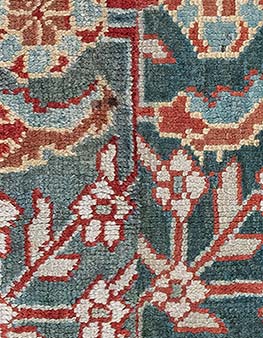
Antique Oushak Turkish Floral Allover Blue Hand-Knotted Wool Runner – Circa 1930 (Fragment) BB8287
Size: 2'2" × 8'5" (66 × 256 cm) -
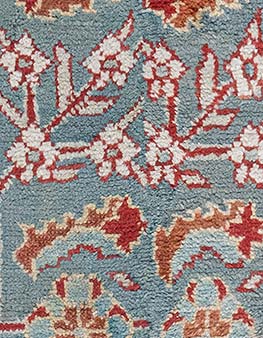
Oushak Turkish Antique Floral Allover Ivory Hand-Knotted Wool Runner – Circa 1930 (Fragment) BB8164
Size: 2'2" × 11'6" (66 × 350 cm) -
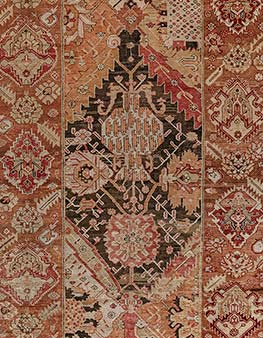
Antique Oushak Turkish Allover Floral Geometric Light Beige Hand-Knotted Wool Runner – Circa 1900 BB7506
Size: 7'10" × 18'10" (238 × 574 cm)
Oushak Rugs FAQ
What makes Oushak rugs different from other Turkish rugs?
Oushak rugs come from the Uşak weaving tradition of western Anatolia and are known for spacious designs, soft wool, large medallions, stylized florals, geometric borders, and decorative palettes. Compared with many Turkish or Persian carpets, they often feel more open, relaxed, and adaptable to luxury interiors.
Are antique Oushak rugs suitable for contemporary interiors?
Yes. Antique and vintage Oushak rugs are frequently used in contemporary interiors because their scale, softened colors, and open patterns complement modern furniture and architecture. Pale beige, gray, tan, blue, and muted gold examples can add warmth and texture without making a room feel overly traditional.
How should I choose the right size Oushak rug?
Start with the room plan and furniture layout. Large and oversized Oushak rugs work well under seating groups or dining tables, while runners suit hallways and long transitions. Check the listed dimensions carefully and allow the rug to relate to the architecture, not just the furniture footprint.
What should buyers inspect in an antique Oushak carpet?
Important factors include age, origin, weave, wool quality, pile height, repairs, color stability, pattern clarity, and overall condition. Antique rugs are generally considered 100+ years old, so natural wear and patina can be desirable, but the carpet should still suit the intended room use.
Can Oushak rugs be made in custom sizes?
Yes, made-to-order Oushak rugs can be a strong option when a project requires a specific size, color palette, or design scale. Custom Oushak rugs are especially useful for oversized rooms, unusual dimensions, or interiors that need the Oushak look with more precise architectural control.