

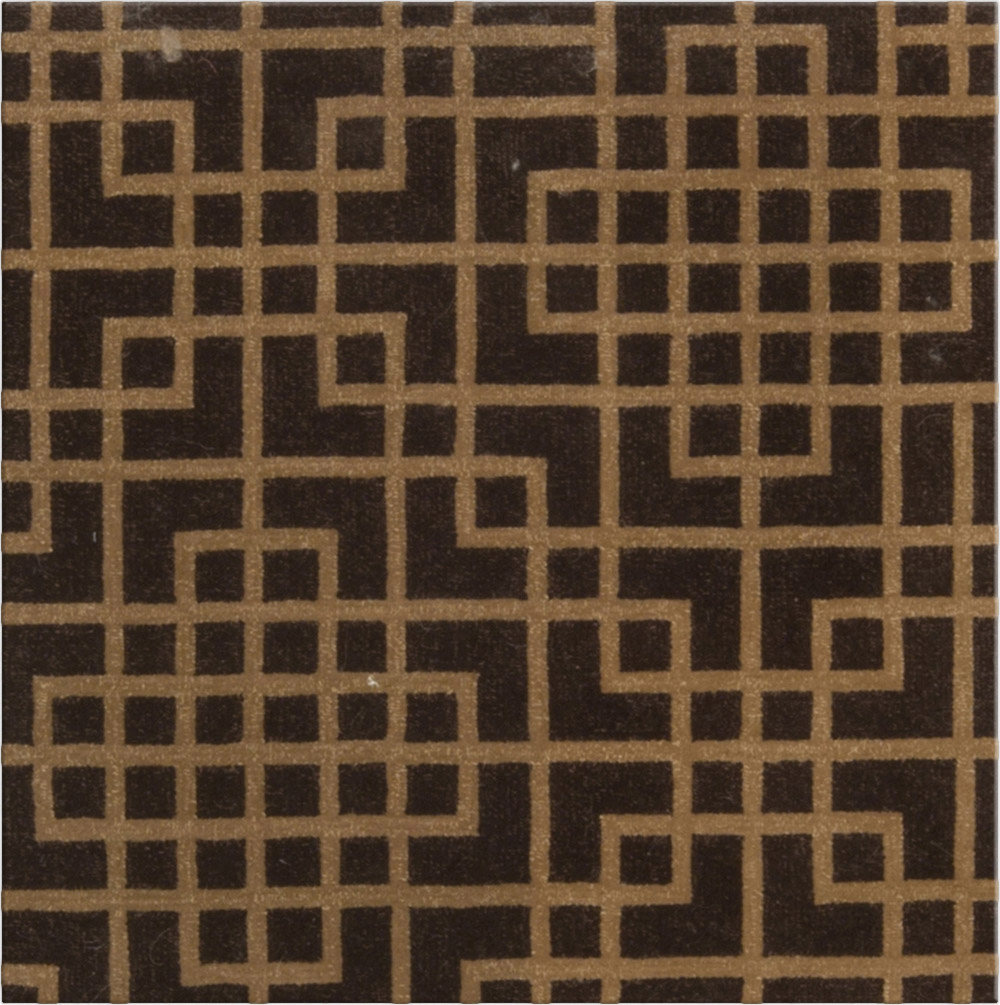
Among custom rugs, few material pairings are as carefully considered as wool and silk. The blend changes how a rug feels underfoot, how it catches light, and how pattern reads from across the room. For designers and homeowners choosing for a salon, library, or formal seating area, those differences are not abstract; they affect daily use, visual balance, and the relationship between the floor, furniture, and architecture.
Wool and silk rugs occupy a specific place in interior design because they combine two fibers with very different personalities. Wool gives body, resilience, and a grounded matte quality, while silk introduces a finer surface, greater reflectivity, and a more precise edge to pattern. In custom rugs, that contrast can be used to sharpen a motif, soften a large room, or create a sense of depth without relying on heavy color contrast. The result is often quieter and more architectural than a purely decorative surface, which is why the blend is so often specified for refined residential rooms.
Explain the tactile and visual differences between wool and silk
The first difference is tactile. Wool has a springy, slightly cushioned hand that supports the structure of the rug and makes it suitable for larger fields of color or pattern. Silk, by contrast, feels smoother and finer; it can appear almost luminous when the pile is cut evenly and the surrounding room receives natural light. In a wool-and-silk composition, the wool typically forms the body of the rug while silk is used for highlights, outlines, or areas where the designer wants greater definition. That division of labor is one reason the blend is prized in hand-knotted rugs, where the surface can be controlled knot by knot.
Visually, silk changes the way the eye reads detail. It can make a border sharper, a medallion more dimensional, or a field pattern seem to float rather than sit flat on the floor. Wool absorbs light more softly, so it helps prevent the rug from looking overly glossy or brittle, especially in rooms with lacquered furniture, polished stone, or strong daylight. When the balance is correct, the rug does not look shiny for the sake of shine; it appears layered, with the silk acting like a precision tool rather than a decorative flourish.
That distinction matters when selecting custom rugs for interiors that already contain strong material contrasts. A room with velvet upholstery, bronze lighting, and dark wood paneling may benefit from silk accents that echo the sheen of surrounding finishes, but a minimal room with pale plaster and honed oak often needs silk used more sparingly. The best specifications treat the fibers as part of a broader composition, not as a novelty. This is where a designer’s eye for rug texture becomes essential, because the same blend can read formal, restrained, or highly decorative depending on how it is placed and what it sits beside.
Describe where the blend performs best and where it can be too delicate
Wool and silk rugs perform best in rooms where the floor is part of the visual composition but not the primary wear surface. Libraries, salons, formal living rooms, and adult sitting rooms are natural candidates because they tend to have more controlled traffic and more intentional furniture arrangements. In those settings, the blend can support a layered palette, bridge antique and contemporary furnishings, or introduce a subtle sheen that flat wool would not provide. It is especially effective when the room needs polish without the hardness of a purely reflective material.
The blend can be too delicate in spaces that take constant abrasion. Hallways, family rooms with frequent movement, and dining areas where chairs are pulled in and out daily ask more of a rug than silk is usually comfortable with. Even where wool provides resilience, the silk content may show wear faster along traffic lanes or under furniture legs that shift repeatedly. If a room demands both softness and durability, the answer is often not to abandon the blend altogether but to adjust the specification: lower silk content, tighter construction, or a pattern that disguises expected wear.
Climate and maintenance also shape where silk is appropriate. Direct sun can alter how the rug is perceived over time, not because the material fails instantly, but because the shift in sheen can expose differences between high and low areas of the pile. Pets and young children do not make a silk rug impossible, but they do change the risk profile, especially in light colors or delicate motifs. For rooms where the rug must work hard, many designers turn to custom-made rugs with wool-dominant construction and reserve silk for controlled spaces that reward visual precision.
Show how pile height changes the reading of pattern and light
Rug pile height is one of the most overlooked variables in wool-and-silk rugs, yet it has an immediate effect on how the floorplane reads. A shorter pile tends to sharpen pattern, reduce shadow, and make silk highlights feel crisp and graphic. A higher pile softens edges, increases tactile depth, and can make the same motif seem more atmospheric, especially when viewed from across a room. The choice is not merely aesthetic; it changes how light moves over the surface and how furniture settles into the composition.
Low to medium pile is often the most useful choice for formal rooms because it keeps the pattern legible beneath tables, sofas, and chairs. In a room where the rug must connect multiple seating pieces, a flatter surface supports cleaner sightlines and prevents the floor covering from feeling overly plush or isolated from the architecture. Higher pile can be beautiful in a quieter setting, but it needs more breathing room around it because deep texture can complicate crisp geometric motifs. If the pattern is dense or finely drawn, a lower pile usually preserves its intelligence better than a lofty one.
The interaction between pile height and fiber also affects color perception. Silk on a lower pile tends to flash more distinctly because the tips catch light at a uniform angle, while wool’s softer finish keeps the composition from becoming too bright. On a deeper pile, the same silk may appear subtler and more dispersed, as if the motif were partially submerged in the surface. Designers specifying custom-made rugs often use this to their advantage: a formal room with a strong architectural frame may call for low pile and controlled sheen, while a more intimate salon may benefit from a slightly higher, more tactile surface that tempers the room’s hard edges.
Offer selection notes for libraries, salons, and formal seating rooms
In libraries, wool and silk rugs work best when the surface supports concentration rather than competing with books, cabinetry, and reading light. A restrained motif with silk used as a contour or low-key highlight can give the room enough refinement without becoming visually noisy. If the library is anchored by dark wood or extensive shelving, a rug with modest sheen can help lift the floor plane and prevent the room from feeling heavy. Pile height should usually stay controlled so chairs glide properly and the rug maintains its profile beneath the furniture group.
Salons benefit from a slightly more expressive use of the blend because these rooms often depend on layered textures and a sense of poised hospitality. Here, rug texture can echo silk drapery, a mohair sofa, or polished wood details, creating a visual rhythm that feels deliberate rather than overworked. If the room receives afternoon light, silk can be placed where it will catch the sun at an angle, but not so broadly that the surface becomes distracting. A good salon rug often uses wool to stabilize the palette and silk to give the composition an edited, gallery-like finish.
Formal seating rooms present a different challenge: the rug must support symmetry, proportion, and conversation distance. Because the furniture arrangement is usually more deliberate, the rug can use silk to emphasize borders, corners, or a central field without needing to withstand constant rearrangement. Scale is critical here, since a wool-and-silk rug that is too small will look precious in the wrong way, while one that is properly sized will allow the room to read as composed and intentional. In this context, the surface finish should complement the architecture, not announce itself before the rest of the room does.
How designers think about color, sheen, and room temperature
Color behavior in wool and silk rugs is more nuanced than many buyers expect. Two rugs can share the same dye palette and still read very differently because silk reflects more light and wool absorbs it more evenly. That means a pale ivory or muted taupe can look warmer, cooler, or more contrasted depending on where silk is placed and how much of the field it occupies. In rooms with strong daylight, silk may brighten the composition significantly; in lower light, it may become the element that keeps the rug from disappearing into the floor.
Room temperature also affects perception. Cool interiors with stone, steel, or pale oak often benefit from the subtle warmth wool provides, while silk keeps the surface from becoming too flat or rustic. Warmer rooms with walnut, leather, and brass may need silk used carefully so the rug does not become visually dense. A thoughtful specification considers not just the rug itself but the upholstery, wall finish, and even window treatment, because all of these elements influence whether the blend feels calm, crisp, or overly luminous.
Practical selection cues before you specify
- Choose wool-dominant construction if the room sees regular traffic or frequent furniture movement.
- Use silk to clarify borders, motifs, or focal areas rather than to cover every part of the rug.
- Match pile height to the room’s formality: lower for crisp geometry, slightly higher for softer, more atmospheric rooms.
- Consider light exposure carefully, since silk changes most noticeably where sunlight shifts across the surface.
- Let the furniture plan decide scale first; material choice should support proportion, not compensate for it.
Why the blend matters in made-to-order work
The advantage of wool and silk becomes clearest when the rug is made for a specific room rather than chosen as a compromise. With made-to-order rugs, the designer can calibrate fiber ratio, pile height, pattern density, and finish to suit the architecture and the intended use. That level of control is especially useful in rooms with unusual dimensions, strong axial symmetry, or a need to connect antique furniture with contemporary seating. It is also where the difference between a pleasant rug and a truly resolved one becomes visible, because the surface can be adjusted to the room instead of asking the room to adapt to the surface.
For homeowners considering custom rugs, the question is rarely whether wool or silk is better in isolation. The more useful question is how much sheen the room can support, how much texture the composition needs, and whether the rug should anchor the furniture or quietly frame it. Wool provides the structure; silk provides the punctuation. When those roles are well balanced, the rug reads as tailored rather than decorative, and the room feels more deliberate as a result.
FAQ
Is wool and silk practical for everyday use?
It can be, but practicality depends on the room. In a low-traffic library, salon, or formal living room, wool and silk can perform well because the rug is not exposed to constant abrasion. In busier spaces, a wool-heavier construction is usually the wiser choice, especially if chairs move often or children and pets use the room daily.
Does silk always make a rug more reflective?
Silk is naturally more reflective than wool, but the final effect depends on pile height, knot density, dye color, and room light. Shorter pile and higher-density construction usually make the sheen read more clearly. In deeper pile or lower light, silk may appear softer and less mirror-like than expected.
How does pile height affect the final look?
Pile height changes how sharply pattern appears and how much shadow the surface holds. A lower pile usually creates a cleaner, more defined look, while a higher pile softens edges and makes the rug feel more tactile. It also affects how furniture sits on the rug and how the room’s light moves across it.
Are wool and silk rugs better for formal rooms than casual ones?
Often yes, because formal rooms can accommodate the visual delicacy and controlled sheen of the blend. That said, a carefully specified wool-and-silk rug can also work in a more relaxed room if the palette is restrained and the construction is durable enough for the intended use. The key is matching the material to the room’s actual habits, not just its style.
For a room that needs the right balance of texture, sheen, and proportion, a specialist review can make the difference between a beautiful rug and the right rug. Doris Leslie Blau’s gallery expertise can help translate the needs of the room into a thoughtful specification, whether you are exploring hand-knotted rugs or considering a tailored direction for your next floor covering.