

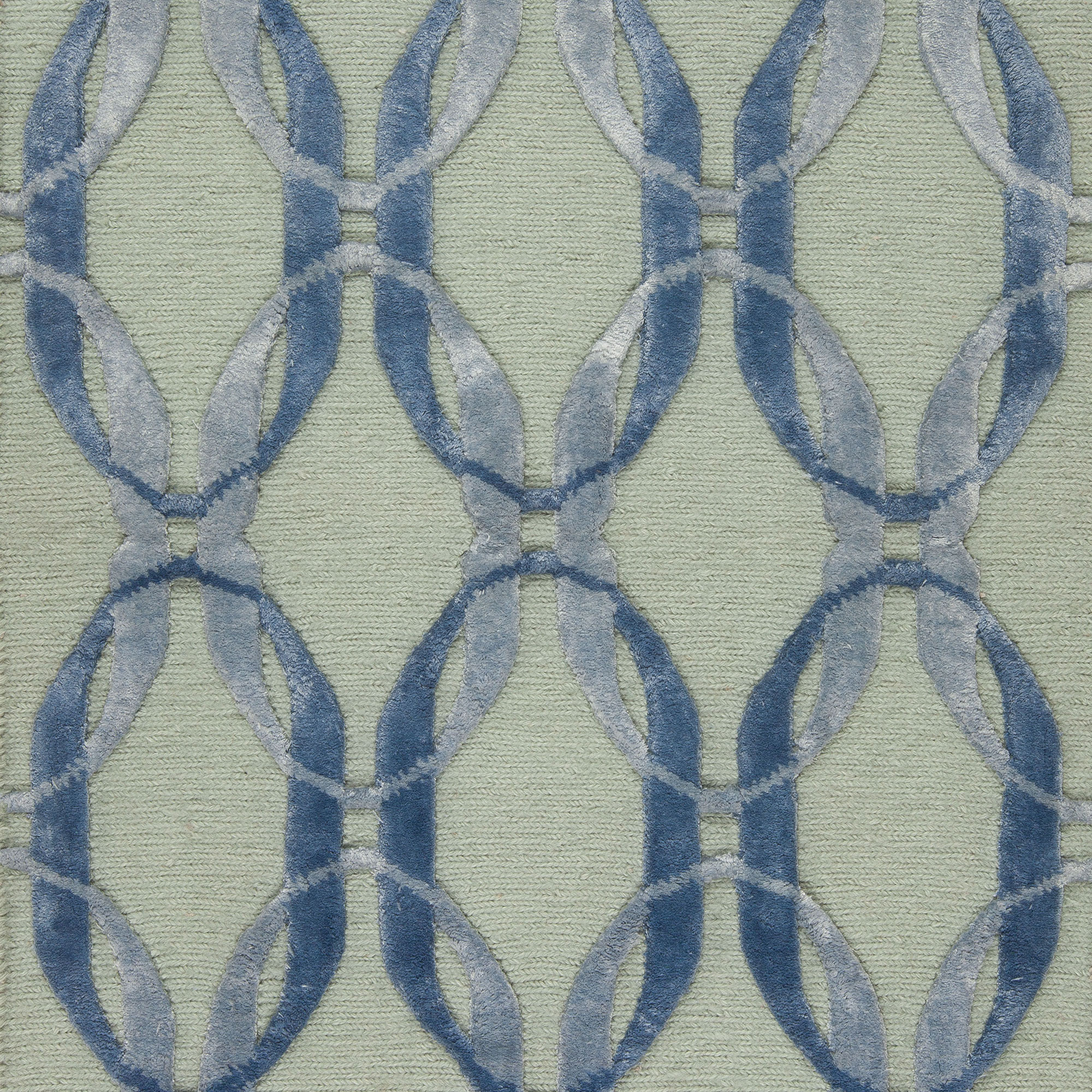
When designers specify wool and silk rugs, they are usually solving two problems at once: how a room should feel underfoot, and how it should read in changing light. The blend can sharpen pattern, soften outlines, and introduce a controlled sheen that wool alone cannot produce. It can also change how a rug behaves in use, especially when pile height, traffic, and furniture placement are part of the decision. For custom rugs, that balance matters because the same composition can look restrained in one room and highly dramatic in another.
Wool and silk are often discussed as if the difference is only visual, but the more useful comparison is tactile and structural. Wool brings resilience, body, and a slightly springy hand, which helps a rug keep its shape in rooms with anchored furniture and regular use. Silk, by contrast, introduces a smoother surface, a sharper line at the edge of motifs, and a light response that can make color appear deeper in some angles and brighter in others. Together, they create a rug that can feel tailored rather than rustic, especially when the design asks for precision in border work, floral detail, or geometric rhythm.
That said, the blend is not automatically appropriate for every interior. In a room where shoes, pets, or constant circulation are part of daily life, a high-silk composition can become too demanding because silk highlights wear more visibly than wool. The best applications tend to be places where the rug is respected as a furnishing rather than treated like a utility surface. Think formal seating rooms, libraries, bedrooms, or reception-style living spaces where the visual payoff is worth the extra care. When clients explore custom-made rugs, this is often the point where material choice and room behavior need to be discussed together, not separately.
Explain the tactile and visual differences between wool and silk
Wool is valued for its forgiving structure. It compresses, rebounds, and tends to disguise minor irregularities in use, which is one reason it remains the backbone of many hand-knotted rugs. Silk behaves differently: it is finer, smoother, and more reflective, so even a modest amount can alter the perception of detail. On a well-made rug, silk can make outline work appear almost drawn, while wool gives the field and ground a fuller, softer presence. That contrast is what makes the blend so effective in refined interiors where the rug is expected to support the architecture rather than compete with it.
In practice, the eye reads wool and silk differently depending on direction, light source, and pile height. Wool absorbs light more quietly, which can calm a saturated palette or stabilize a busy room. Silk catches light at a different angle and can shift as someone walks past, which gives the surface a livelier, almost animated effect. This is especially noticeable in rooms with tall windows, directional sconces, or low evening lighting, where the rug may appear more subdued at noon and more luminous after dusk. Designers often use that variability to their advantage, especially when they want a floor covering to bring depth without adding another loud color.
Why the blend can feel both soft and exact
The hand is often the first clue. Wool gives a rug a cushiony, grounded feel, while silk can make the surface seem smoother and more precise underfoot. Visually, the blend often reads as controlled luxury because it combines softness with definition. In a pattern-heavy rug, silk can tighten the edges of ornament, while wool protects the overall composition from looking too slick. That balance is particularly useful in interiors that mix antiques with contemporary upholstery, because the rug can bridge different visual languages without feeling forced.
Describe where the blend performs best and where it can be too delicate
The strongest placements for wool and silk rugs are rooms where the rug is part of a deliberate seating composition. Libraries, salons, formal living rooms, and primary bedrooms are all natural candidates because they usually involve slower traffic and a more considered furniture arrangement. In these settings, the material blend supports atmosphere: wool contributes warmth and practical structure, while silk adds the polished surface designers often want around wood paneling, lacquer, velvet, stone, or highly tailored upholstery. The rug can become a visual anchor without needing to be oversized or heavily patterned.
Rooms with hard daily wear are less forgiving. Entry halls, playrooms, family dens, and dining zones with frequent chair movement can expose silk to abrasion in a way that diminishes the rug’s crispness over time. That does not mean the blend is off-limits, but it does mean the silk content, pile height, and knot density should be evaluated with care. A shorter, tighter pile can help the surface remain more legible, while a taller pile in a high-silk ratio may show footprints, crushing, or directional shading more readily. For households that want the look but need a tougher footprint, a designer may specify a wool-forward composition or reserve silk for restrained accents rather than broad fields.
Placement also changes how delicate the rug feels. A wool and silk rug beneath a formal sofa grouping can be protected by the furniture itself, especially when the edges extend far enough to unify the seating area. By contrast, the same rug used as an exposed centerpiece in a high-traffic circulation path will have a harder life simply because more of the surface is constantly visible and used. This is why scale and proportion matter as much as fiber content. A well-sized rug can reduce stress on the most vulnerable parts of the field by distributing use across a larger area, which is one reason buyers considering bespoke rugs are often advised to think first about the room plan and only then about the weave.
Show how pile height changes the reading of pattern and light
Pile height is one of the most overlooked decisions in rug specification, yet it strongly affects how wool and silk look in a finished interior. A lower pile keeps pattern crisp, especially in rugs with medallions, lattice work, or finely drawn borders. It also reduces the amount of shadow trapped between yarns, which can make silk’s sheen feel cleaner and more controlled. A taller pile creates a softer edge and a more enveloping surface, but the same height can blur small motifs and make subtle contrast harder to read from across the room.
The relationship between pile height and light is especially important in rooms with natural illumination. In a sunlit salon, a slightly lower pile can prevent silk from becoming overly mirror-like and can help the rug hold its coloration more evenly throughout the day. In a dimmer library or evening-use room, a somewhat plusher pile may be welcome because it adds depth and visual warmth without requiring strong pattern contrast. The point is not that one pile height is better than another; it is that the chosen height should support the room’s viewing distance, light temperature, and furniture mass. A rug viewed mostly from across the room benefits from a different construction than one intended for close appreciation beside a reading chair.
Construction also determines how much the blend announces itself. On a hand-knotted rug, a firmer, more compact pile can make silk highlights appear as precise glints instead of a generalized shine. That distinction matters in interiors with architectural restraint, where a floor covering should contribute texture without overwhelming the room. If the pattern is already elaborate, a shorter pile may protect legibility; if the pattern is sparse, a more varied pile can give the surface needed presence. Designers specifying rug texture often work through these decisions with the same care they apply to upholstery grains or wall finishes, because the floor is part of the overall material sequence, not an isolated object.
Offer selection notes for libraries, salons, and formal seating rooms
In a library, wool and silk can be especially effective when the goal is quiet refinement rather than obvious shimmer. Dark-stained millwork, leather, and paper surfaces tend to absorb light, so a rug with moderated silk content can introduce just enough movement to keep the room from feeling static. A lower or medium pile usually works best because it keeps chairs stable and helps the rug sit visually close to the architecture. If the room is long and narrow, the rug should reinforce the axis of the seating plan rather than compete with it, which is where correct rug scale becomes just as important as fiber blend.
Salons invite a different reading. These rooms often live at the intersection of formality and comfort, so the rug may need to support both entertaining and extended conversation. Here, silk can be used more confidently because the space is typically curated and the furniture arrangement is more settled. A rug with a bit more sheen can brighten a room with heavy upholstery, while wool keeps the overall effect from becoming brittle or overly polished. If the seating is arranged around a focal point such as a fireplace, the rug should extend enough to unify the front legs of the principal pieces so the composition feels intentional rather than floating.
Formal seating rooms often benefit from the most measured treatment of all. The rug must work with symmetry, sightlines, and the room’s approach to daylight. A wool and silk blend can make a symmetrical plan feel richer without adding extra pattern density, which is useful in interiors that rely on restrained furniture silhouettes. In these settings, the designer may choose a rug with a clearer border, a calmer ground, or a motif that becomes visible only when the light shifts. That kind of subtlety is difficult to achieve in flat materials, and it is one reason the blend remains so persuasive in higher-end residential work. For clients comparing options across wool, silk, and other handcrafted constructions, the material conversation is often guided by the same concerns outlined in a thoughtful custom rug sizing guide: proportion, placement, and how the room will actually be used.
How to judge wool and silk rugs before you specify one
Start by standing where the rug will be seen most often. If the main view is from a doorway or across a room, you need to know how the field reads at distance, not only how it feels in the hand. Next, consider the amount of natural light and whether it falls directly onto the surface or arrives indirectly through drapery and reflected walls. Then think about furniture weight: a heavy sofa, a pair of club chairs, or a long console can all change how much of the rug remains visible and how much wear the field is likely to take. These practical checks often reveal whether silk should be dominant, restrained, or used only in selected areas of the design.
It is also worth considering the room’s palette temperature. Cool interiors can make silk appear brighter and more metallic, while warmer rooms may soften that effect and let the blend read as satin-like rather than reflective. If the rug is intended to sit among antique wood, brass, or stone, the fiber mix can either reinforce those materials or pull too much attention away from them. Designers often test this mentally by asking whether the rug should recede, support, or articulate the room. That question leads to better specifications than simply asking whether a rug is “luxurious,” because luxury alone does not solve proportion, use, or legibility.
Why the wool-silk combination remains useful in custom rugs
The enduring appeal of wool and silk lies in how precisely it can be tuned. Through knot structure, pile height, yarn ratio, and finish, the same material pairing can yield a rug that looks graphic, painterly, luminous, or hushed. That flexibility makes it particularly valuable for bespoke interiors, where a floor covering has to answer to the architecture instead of following a preset formula. For many rooms, the goal is not to make the rug the loudest object; it is to make the room feel finished at the ground plane, with texture and sheen working in measured balance.
For homeowners and designers alike, the real advantage is control. Wool and silk offer more nuance than a simple either-or material choice, which means the rug can be adapted to the room’s light, scale, and furnishing style. In a relaxed family space, that may mean keeping silk minimal. In a salon or library, it may mean letting the sheen do more work. Either way, the specification should be grounded in how the room lives, not just how the sample looks flat on a table.
FAQ
Is wool and silk practical for everyday use?
It can be practical in the right room, but it is usually best for spaces with moderate traffic and more controlled use. Wool provides durability, while silk brings a more refined surface that can show wear sooner if the rug is exposed to heavy circulation. For everyday family activity, a wool-forward construction is often safer than a high-silk blend.
Does silk always make a rug more reflective?
Silk usually increases reflectivity, but the effect depends on pile height, knot density, dyeing, and room light. In a lower pile, silk can read as a precise highlight rather than a glossy finish. In indirect light, the sheen may be subtle; in direct sunlight or evening lamp light, it can become much more noticeable.
How does pile height affect the final look?
Lower pile height tends to sharpen pattern and make the surface feel more tailored, while higher pile height softens edges and adds a deeper hand. With wool and silk rugs, pile height also influences how much the silk catches light and how clearly the motif reads from a distance. The right choice depends on whether the room needs definition, softness, or a balance of both.
Are wool and silk rugs a good choice for formal rooms?
Yes, they are often excellent for formal seating rooms, libraries, and salons because they can add depth without resorting to heavy ornament. The blend works especially well when the furnishings are carefully arranged and the rug is sized to support the seating plan. In those rooms, the material relationship can quietly strengthen the whole composition.
For projects where the rug needs to answer to architecture, furniture, and light with equal care, Doris Leslie Blau can help shape the specification with gallery-level attention to material, scale, and finish. A considered consultation is often the fastest way to determine whether wool and silk is the right language for the room, or whether another construction would serve the design more accurately.