

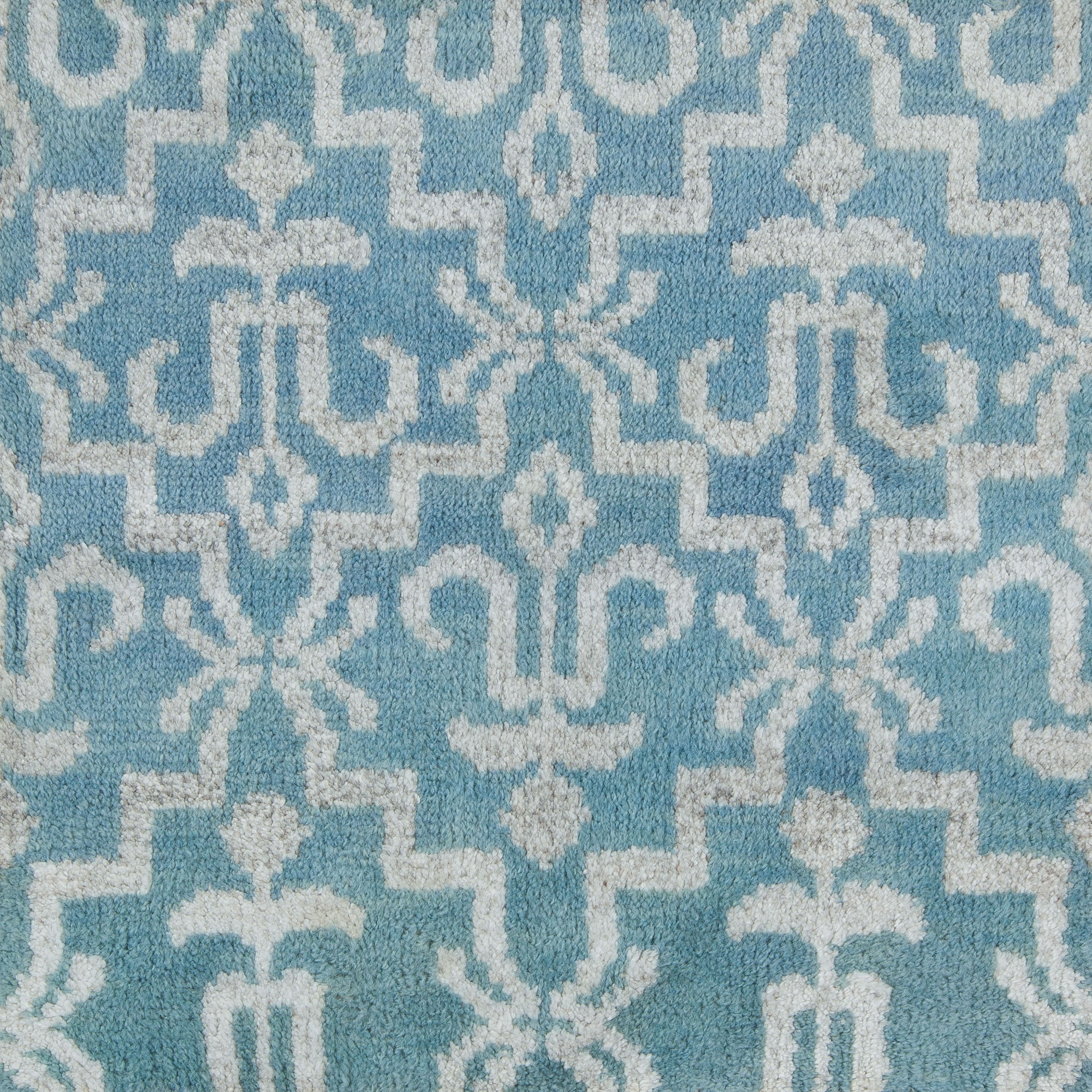
Specifying custom rugs is rarely about choosing a pattern first. For interior designers, the real work is translating a concept into dimensions, materials, edge treatment, and approval-ready details that hold up once furniture, circulation, and lighting are all in play. A disciplined rug specification checklist keeps the project aligned from moodboard to rug design, so the final piece feels intentional rather than improvised.
When a room needs a rug, designers are often solving several problems at once: anchoring seating, defining zones, softening acoustics, and balancing finish materials that may already be doing a lot visually. That is why custom rugs are so useful in practice. They can be built around the room instead of forcing the room to adapt to a stock size, which matters in spaces with unusual proportions, generous circulation, or tightly planned furniture layouts. A good brief prevents the usual drift between concept images and the realities of scale, traffic, and maintenance.
This checklist is designed for the specification stage, when the room is still malleable and decisions can be made before approvals become expensive. It works whether you are sourcing custom rugs for interior designers in a private residence, a hospitality suite, or a formal living room where the rug has to read quietly but precisely. The goal is simple: preserve the scheme’s intent while giving enough technical clarity for fabrication and client review.
Define the room role, traffic level, and visual priority
Start with what the rug must do in the room, not what it should look like in isolation. A rug under a conversational seating group carries different requirements from one in a hallway, bedroom, or dining area. In a family room, for instance, the piece may need a denser construction, darker grounding tones, or a pile that tolerates frequent use without losing its outline. In a formal salon, the emphasis may shift toward proportion, symmetry, and a quieter surface that supports furniture rather than competing with it.
Traffic level should be recorded in practical terms, not as a vague descriptor. Note whether the rug will sit under rolling chairs, near exterior doors, beneath dining chairs, or in a zone where shoes are worn regularly. These details influence fiber choice, pile height, and pattern density as much as style direction does. A low-pile hand-knotted rug may be ideal where table legs, doors, or transitional thresholds require cleaner clearance, while a more textured wool ground can soften a room that otherwise feels too hard or reflective.
It is also worth identifying the rug’s visual priority. Some rugs are meant to disappear into the architecture and furniture, supporting the scheme with texture and tone. Others are intended to set the rhythm of the room, especially in more expressive interiors where color or pattern carries the composition. If the rug is expected to be the main visual anchor, the design brief should say so clearly, because that decision affects contrast, motif scale, and how much quiet space should remain around the edges.
Record dimensions, thresholds, and adjacent finishes
Before any concept is translated into a made-to-order specification, record the room dimensions with care and measure the furniture that will sit on or around the rug. A rug that looks generous in elevation may feel narrow once sofas, chairs, and tables are placed over it. Designers know that the edge condition matters as much as the field size: the relationship between rug and baseboard, rug and fireplace, or rug and adjacent flooring can make a room feel resolved or slightly off balance. A precise note on rug scale and proportion will save time later in the approval process.
Thresholds deserve the same attention. Door swing, transition strips, hearth projections, vents, and built-in millwork can all affect the final dimensions and construction choices. In open-plan interiors, rugs often need to define zones without creating awkward breaks in circulation, so the measurement should include the way people move through the space rather than only the static footprint of furniture. This is especially important when the project requires a single rug to relate to multiple seating areas or when one edge must terminate cleanly against a corridor or glazed opening.
Adjacent finishes should be documented as well, because they shape how the rug is read. Pale limestone, oiled oak, polished plaster, lacquered millwork, and dark bronze each affect perceived contrast differently, especially in rooms with strong daylight or warm evening lighting. A rug that appears calm in a moodboard can feel much busier beside a highly figured floor or a reflective table base. If the room uses several tactile materials, the rug brief should specify whether the piece needs to be the softest layer in the composition or the one that introduces the strongest textural counterpoint.
For designers refining room size against furnishing layout, a custom rugs resource can be a useful reference point when judging how proportion, border width, and placement decisions affect the final composition. That kind of context is especially helpful when you are moving from concept drawing to client presentation and need confidence that the rug size supports the room rather than merely fitting it.
Translate the moodboard into structure, texture, and edge details
The hardest part of spec development is often the translation from image references to buildable rug language. A moodboard may suggest atmosphere, but the specification has to define structure. If the concept leans toward quiet luxury, for example, that may mean tonal variation, restrained pattern scale, and a surface that rewards close inspection rather than immediate contrast. If the room is more graphic, the brief may call for stronger linework, tighter motif repetition, or a border that clarifies the rug’s perimeter within a larger seating arrangement.
This is where the moodboard to rug design process becomes practical. Rather than asking what the rug “feels like,” identify what material behavior supports the feeling. Does the room need a soft matte wool ground, a silk accent that catches light, or a combination of fibers to create depth without glare? Does the design call for a hand-knotted construction because the motif requires precision, or would a more textural weave better support an organic, layered interior? These decisions affect not only appearance but how the rug performs under daylight, lamps, and seasonal shifts in use.
Edge details should be discussed early, because they define how finished the rug will read once installed. A narrow border may sharpen a room with many lines, while an open field can calm a dense interior. Fringe, binding, and subtle perimeter transitions should all be considered in relation to adjacent furniture and architecture. If the scheme already includes strong millwork or sculptural upholstery, an understated edge is often the more disciplined choice. If the room needs definition, the border can carry that role without adding unnecessary ornament.
Color translation deserves equal rigor. Moodboard swatches are rarely enough on their own because they do not account for pile direction, material absorption, or the way a rug sits next to surrounding finishes. A palette that seems neutral on screen may turn cool under daylight or warmer near brass and walnut. Designers should note whether the room needs a color that recedes, bridges two finishes, or subtly repeats a tone found elsewhere in the scheme. That level of specificity makes it easier to compare samples and avoid approvals based on vague impressions.
Use a rug specification checklist that captures more than appearance
- Room function and primary users
- Furniture layout and intended rug placement
- Exact dimensions, including clearance and threshold notes
- Preferred construction and fiber direction
- Pile height, texture, and maintenance expectations
- Color family, contrast level, and finish compatibility
- Edge treatment, border needs, and binding preferences
- Approval images, sample references, and revision notes
Prepare client-facing approval notes and sample questions
Clients approve rugs more confidently when the presentation explains why a specific option belongs in the room. A good approval note should describe the design in relation to architecture, furniture, and use rather than relying on decorative language. Explain how the scale relates to seating, why the palette supports the surrounding finishes, and what the chosen construction contributes to durability or softness. This approach turns the rug into a considered part of the interior design rather than an isolated purchase.
Sample questions also improve the quality of feedback. Instead of asking whether the client likes a design, ask whether they want the rug to lead the room or sit quietly beneath it. Ask if the current palette should read warmer, cooler, lighter, or more grounded. Ask whether the room needs a stronger boundary around the furniture group or a more seamless transition into the floor. These questions are more useful because they relate directly to decisions that affect the final specification.
For clients comparing options, it helps to present no more than a few highly relevant directions, each with a clear rationale. Too many samples can obscure the purpose of the rug and invite decisions based only on isolated color preference. A concise presentation also makes it easier to explain tradeoffs: a denser pattern may provide better visual masking in a high-traffic room, while a quieter field may better support a sculptural sofa or patterned drapery. In other words, the approval package should make the design logic visible.
When the project calls for custom rug design, the designer should also note what is non-negotiable and what can flex. Some projects require an exact width because of furniture alignment or architectural symmetry, while others allow experimentation in border width, motif spacing, or tone. Distinguishing these points in writing reduces confusion during revisions and helps the workshop understand where precision matters most.
How to move from concept to fabrication without losing intent
The strongest specifications are built from disciplined observation. Measure the room, assess the light, document the finishes, and translate the moodboard into material and structural decisions that can be executed accurately. Once those elements are in place, custom rugs become a controlled part of the design process rather than a late-stage compromise. That is especially valuable in rooms where proportion, silence, and tactile nuance matter as much as color.
If you are working across multiple rooms, keep the language consistent so each specification can be reviewed quickly. One room may call for a bold field, another for a restrained ground, but the brief format should remain clear enough that decisions are easy to compare. This is where designer-grade process pays off: the more precisely you define the problem, the more efficiently the right rug emerges.
FAQ
What belongs in a rug brief?
A strong rug brief should include room function, dimensions, furniture layout, traffic level, adjacent finishes, preferred construction, fiber or material direction, pile height, color targets, edge treatment, and any special clearance concerns. It should also note whether the rug is intended to anchor the room, define a zone, or remain visually quiet. The more clearly you define the room’s demands, the easier it is to specify a rug that performs well and looks intentional.
How do I keep a custom rug aligned with the rest of the scheme?
Start by translating the moodboard into specific choices about scale, texture, and contrast. Then check the rug against the actual room conditions: daylight, floor finish, upholstery tones, and circulation paths. A rug stays aligned when it supports the architecture and furniture rather than competing with them, so the specification should always reflect the room’s hierarchy of visual priorities.
How should I present options to a client?
Present a small, well-edited set of options with clear rationale for each one. Explain how each rug handles scale, color temperature, and wear, and state what changes from one option to another. Clients respond better when the comparison is framed around room performance and design intent rather than around isolated sample swatches.
For projects that require careful proportion, material judgment, and a confident path from concept to approval, Doris Leslie Blau can be a valuable design resource. When the specification needs to be precise and the room leaves little room for error, specialist guidance can help you choose with clarity and keep the final rug aligned with the entire interior.