

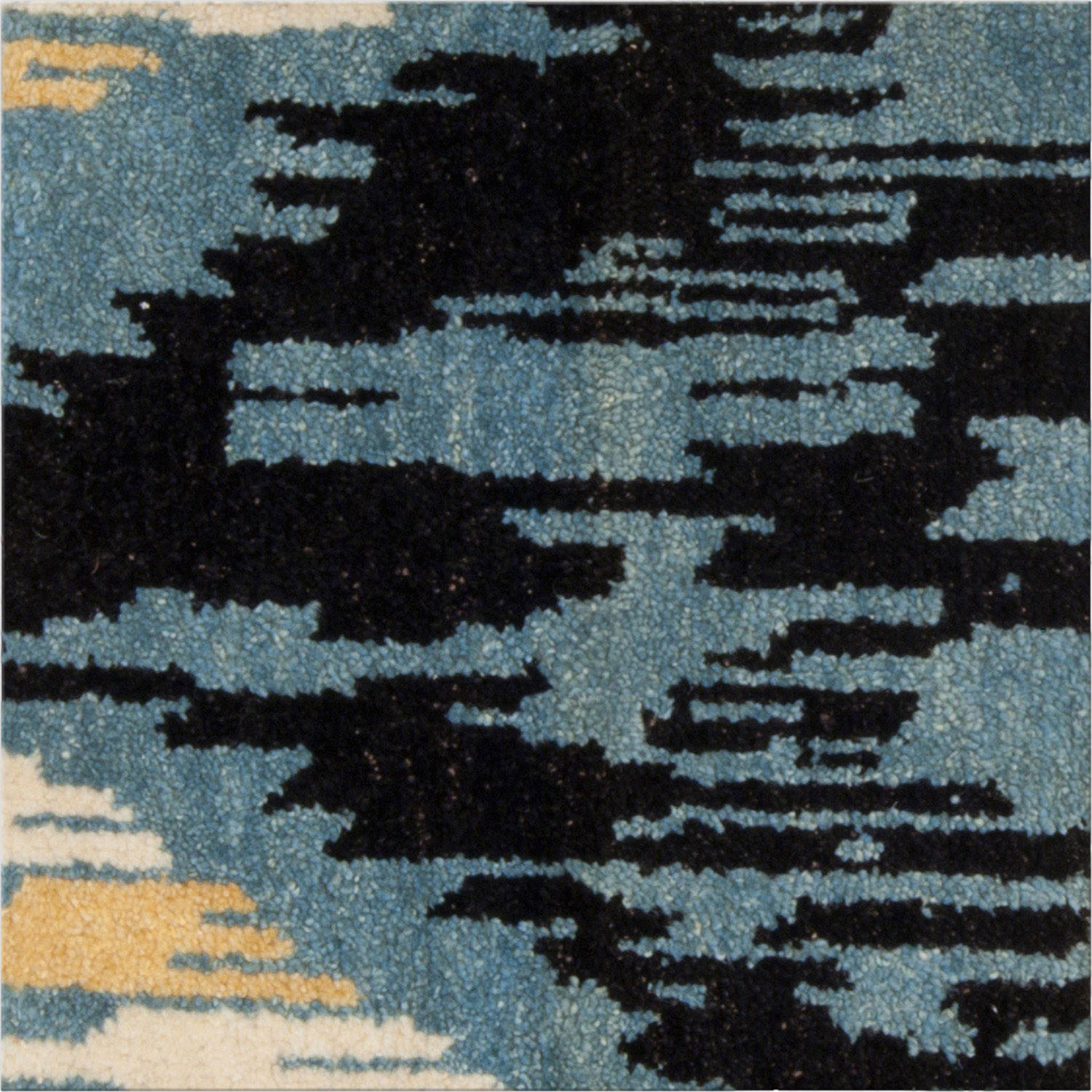
Antique rugs have presence, patina, and the kind of character that cannot be manufactured overnight. But in many interiors, custom rugs solve the problems that antique pieces cannot: exact dimensions, reliable condition, controlled color, and a pattern that respects the architecture instead of fighting it. For clients who love history but need precision, the right answer is not always older—it is often smarter.
That distinction matters most when a room has to do more than look beautiful. A dining room may need a rug that extends far enough for every chair leg to stay on the textile when pulled back. A long living room may need a proportion that echoes the length of a sofa wall without leaving the composition feeling stranded. A hallway, loft, or open-plan space may need a made-to-order format that fits around thresholds, fireplaces, or furniture zoning with no visual compromises. This is where designer custom rugs become less of a luxury indulgence and more of an architectural tool.
At Doris Leslie Blau, the conversation often begins with the same tension: the client wants the soul of an antique but the performance of a contemporary solution. That tension is not a problem; it is a design brief. When handled well, made-to-order rugs can reference historic motifs, subtle wear, hand-drawn borders, or softened palettes while still delivering the exact size, fiber mix, and construction the room requires. The result is not imitation. It is a thoughtful translation.
Compare uniqueness, condition, and size flexibility
Antique rugs are unique by definition, but their uniqueness is tied to a fixed object that already exists. You can admire the weave, the age, and the irregularities, yet you cannot adjust the border to fit a sectional, widen the field to support a seating arrangement, or lengthen the composition to suit a gallery-like room. Custom rugs, by contrast, are designed around the room’s proportions from the outset, which means the rug can feel unusually specific rather than merely decorative. For interiors where furniture placement is deliberate, that control is often more valuable than an unpredictable one-of-a-kind find.
Condition is the other major difference. A beautiful antique may carry repairs, thinning, past color migration, or wear in the center field that is visually charming but structurally limiting. In a low-traffic sitting room, that may be acceptable. In a family room, under a dining table, or in a hospitality setting, it can become a liability, especially if the client wants durability without sacrificing refinement. Custom luxury rugs allow the designer to choose a weave and fiber balance that better matches the room’s actual use, rather than forcing a fragile object into a demanding environment.
Size flexibility also changes how the room reads from the first step inside. An antique that is too small will make furniture appear to drift, while one that is too large may overwhelm moldings or interrupt circulation. A tailored rug can correct those problems precisely, whether the room calls for a large border, a centered medallion, a restrained all-over pattern, or a near-solid field with quiet texture. In luxury interiors, those millimeters matter because proportion is often the difference between a room that feels composed and one that feels improvised.
Discuss when antiques are too fragile or too small
There are rooms where an antique rug is simply the wrong tool. High-traffic family spaces with pets, daily entertaining, or heavy furniture often demand a more durable construction and a more forgiving surface. If the rug will live under dining chairs, near exterior doors, or in direct sun, the practical risk increases quickly. Handmade antiques are valuable precisely because they have survived; asking them to absorb contemporary wear can shorten that life in ways that are difficult to reverse.
Scale is another common reason to move away from antique sourcing. Many historic rugs were woven for rooms with different furniture patterns, different ceiling heights, and different ideas about spatial hierarchy. Modern layouts often need broader margins around sofas, more generous landing space beside beds, or a composition that bridges multiple seating zones in an open-plan interior. In those cases, a rug that is physically beautiful can still be visually wrong. A tailored rug is not a compromise; it is a correction that honors the room’s actual geometry.
There is also the question of visual rest. Some antiques are richly detailed enough that they become the dominant object in the room, which can be brilliant in a highly layered interior but distracting in a quieter one. If the architecture is already strong, or the furniture includes sculptural pieces and expressive upholstery, the rug may need to support rather than compete. Custom rugs let the designer dial down motif density, soften contrast, or adjust border width so the floor covering works as part of a broader composition rather than as a standalone artifact. That restraint often reads as more luxurious than visual insistence.
Explain how custom can echo historic character responsibly
The best custom pieces do not copy antique rugs; they study them. That means looking at what gave the original textile its authority: the balance of field and border, the pace of the repeat, the softness of the palette, the degree of abrash, and the way age transformed the surface. Those details can be reinterpreted in a fresh rug without creating something that feels derivative or theatrical. The goal is not to simulate age but to preserve the qualities that made the older piece compelling in the first place.
Material choice is central to that process. Wool can provide warmth, resilience, and a naturally matte finish that suits historic references without appearing overly glossy. Silk accents may be useful when a design needs finer definition, especially in borders or motifs that should catch light with restraint. Hand-knotted construction, particularly in the style of custom luxury rugs, gives the designer control over line clarity, density, and the subtle irregularity that keeps a pattern from feeling mechanical. The weave is not just a technical decision; it shapes how the design ages visually in the room.
Color also determines whether a historic reference feels authentic or forced. A palette taken directly from an antique can be too saturated for a modern envelope, while a palette stripped too far can lose its depth. Responsible customization usually means translating, not flattening: muted madder tones become warm rusts, faded indigo becomes a softened slate-blue, and ivory fields are tuned to the surrounding stone, plaster, or millwork. When the hues are calibrated to the room’s light exposure and color temperature, the rug can feel rooted in history without looking like a museum reproduction.
Pattern density deserves the same care. Some interiors benefit from a visual rhythm that is barely perceptible from across the room and more rewarding up close. Others need a stronger motif to anchor expansive furnishings or prevent the floor from disappearing under too much negative space. A good custom rug design process evaluates that rhythm in relation to upholstery scale, curtain fullness, artwork placement, and the architectural lines of the room. The most successful result often feels inevitable because it has been measured against real life, not against a mood board alone.
Offer questions to ask before choosing
Before deciding between an antique and a made-to-order piece, clients should ask practical questions that go beyond style preference. What is the actual traffic pattern in the room? Will the rug sit under fixed furniture, loose seating, or both? How much direct sunlight reaches the floor during the day? Is the room meant to feel hushed and layered, or more animated and pattern-forward? These questions reveal whether the priority is preservation, performance, or a balance of both.
- Does the room require exact dimensions to support furniture layout and circulation?
- Will the rug need to withstand family use, pets, dining chairs, or frequent cleaning?
- Is the desired look about historic character, or about the patina of a real antique object?
- Would a custom palette better coordinate with wall color, upholstery, and lighting temperature?
- Is the space large, irregular, or open-plan enough that standard sizes feel visually off?
It also helps to consider how much visual control the project really needs. Some rooms thrive on the unpredictability of an antique, including slight wear and irregular edge lines. Others depend on precision, especially when the rug must align with a fireplace, a bay window, a central chandelier, or a tight seating arrangement. If the design relies on symmetry and clean sightlines, designer custom rugs are often the more disciplined answer. If the room wants romantic irregularity and a sense of collected history, an antique may still be the better fit.
For clients who are unsure, a good design process starts with the floor plan, not the inventory. A drawing can reveal whether the room wants a border to frame the furniture, a field large enough to calm busy upholstery, or a narrower composition that preserves circulation in a tight passage. In many cases, the final answer is hybrid thinking: an antique-inspired design with modern construction, chosen fibers, and proportions tailored to the architecture. That approach gives the room the character of something discovered and the functionality of something commissioned.
How to keep custom from looking generic
The biggest risk with custom work is not that it will look new; it is that it will look undecided. Generic rugs usually fail because they borrow recognizable motifs without adjusting them to a specific room. To avoid that, the design should begin with constraints: the size of the seating group, the edge of a bed, the distance between columns, the tone of the wood floor, the amount of daylight, and the intended mood of the interior. When those variables shape the concept, the rug gains specificity before any pattern is even chosen.
Texture is one of the best ways to prevent a custom rug from feeling flat or anonymous. A finely knotted wool field with a subtle abrash will register very differently from a high-sheen, evenly colored surface. Low-relief pattern, carved detail, and a carefully handled border can create depth without turning the rug into a busy focal point. In quiet luxury interiors, that textural intelligence often matters more than a bold graphic gesture because it rewards close attention while staying composed at a distance.
Another useful safeguard is to design around the architecture rather than around trend language. A rug that echoes a ceiling beam, a fireplace surround, or the geometry of a doorway will almost always feel more grounded than one chosen for novelty alone. In older homes, a custom piece can nod to historic proportions without mimicking a specific era. In modern interiors, it can introduce softness and tactility while keeping the lines disciplined. Either way, the floor covering should seem inevitable within the room, not pasted into it.
If the project needs further detail on fit and scale, a practical custom rug design conversation can clarify everything from proportion to material performance before any weaving begins. That step is especially valuable when the brief includes an unusual room shape, a hard-to-match palette, or a desire to reference antiques without committing to one fragile object. The best result is usually not the most ornate option; it is the one that solves the room cleanly and beautifully.
Where custom luxury rugs win most often
Custom wins when the room is specific enough to demand it. That includes oversized living rooms, dining areas with fixed lighting centers, bedrooms with irregular alcoves, and open-plan homes where each zone needs its own visual boundary. It also includes projects that mix antiques and contemporary furnishings, because the rug often has to act as the bridge between different design languages. In those settings, a carefully made piece can bring order without flattening personality.
Antiques remain irreplaceable when the design calls for true historical patina, rare weaving traditions, or the emotional resonance of a singular object with a past. But when the brief is about fit, durability, and controlled interpretation, custom luxury rugs offer more leverage. They let the designer respond to scale and proportion with precision, choose materials based on actual use, and echo historic character without inheriting someone else’s limitations. That is why, in the right project, custom does not replace the antique category; it simply solves a different problem better.
FAQ
Can custom rugs feel as special as antiques?
Yes, when they are designed with enough specificity. A well-made custom rug can feel deeply special because it responds to the room’s architecture, the client’s palette, and the intended use in a way no ready-made piece can. The individuality comes from the brief, the materials, the weave, and the final proportion, not only from age. For many interiors, that kind of tailored relevance is more meaningful than owning an old object for its own sake.
When is an antique the wrong choice?
An antique is often the wrong choice when the room needs exact sizing, when traffic is heavy, when sunlight is intense, or when the rug will sit under furniture that demands clean coverage. It can also be the wrong choice if the piece is too fragile, too small, or visually too busy for the rest of the scheme. In those situations, a made-to-order rug may protect the design from compromise while better supporting daily life.
How can I keep a custom rug from looking generic?
Start with the room’s actual proportions, not a decorative trend. Choose materials, pile height, and pattern density based on the furniture layout, light levels, and how much texture the interior already has. Avoid copying a familiar motif without adjusting it to scale, border width, or color temperature. The most convincing custom rugs look as though they were drawn for one room only, because they were.
Are made-to-order rugs only for modern interiors?
No. Made-to-order rugs are often excellent in traditional rooms, especially when the client wants antique character but needs a cleaner fit or better durability. They can reference classic borders, medallions, faded fields, or restrained palettes while still aligning with the room’s dimensions and furnishing plan. That flexibility is one reason they work so well in interiors that mix old and new pieces.
Choosing between an antique and a bespoke floor covering is rarely about which one is more valuable in the abstract. It is about which one serves the room with more precision, more restraint, and more longevity. If you are weighing those options for a specific space, a specialist can help you compare scale, construction, and design direction before the project moves forward.