

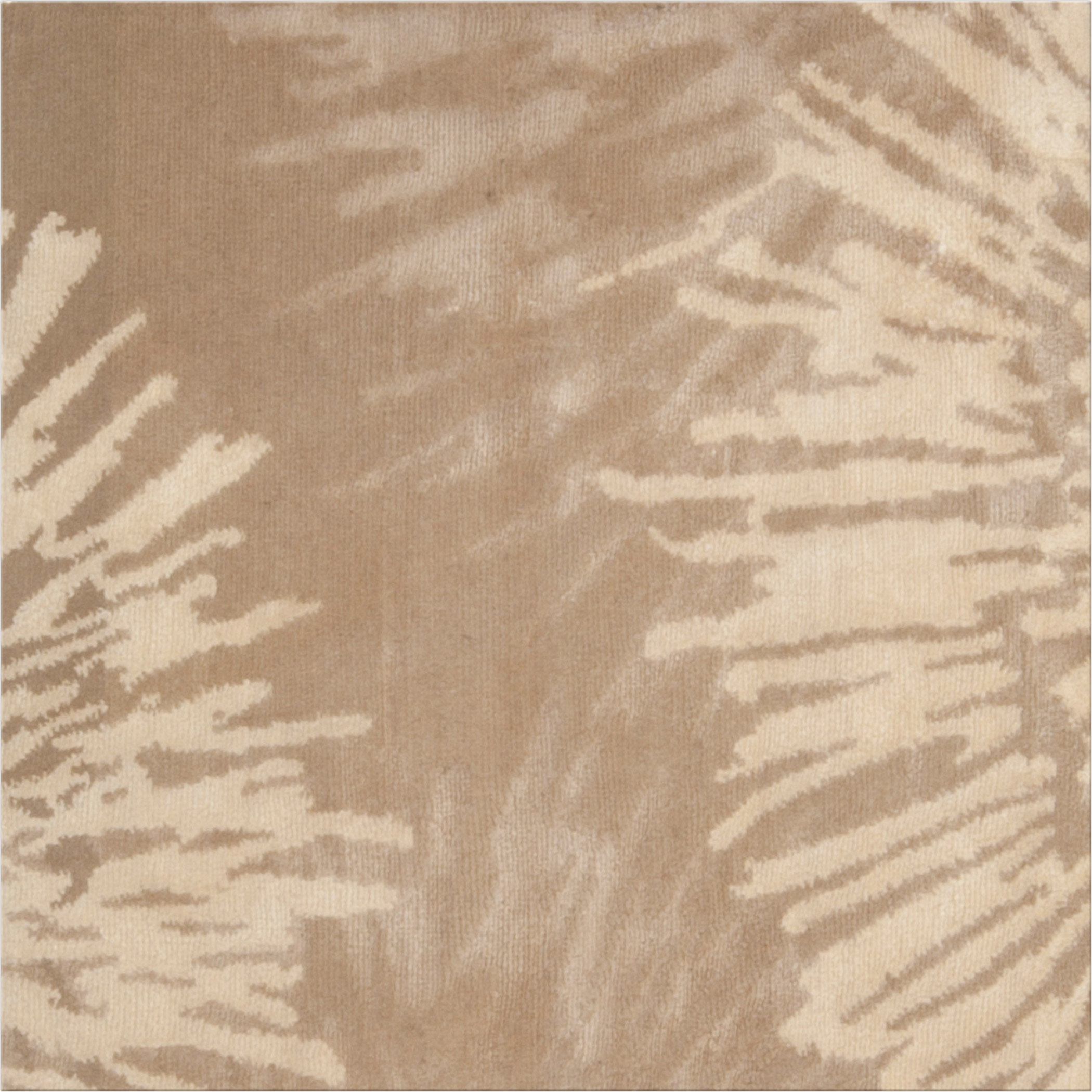
Earthy palettes can do something many interiors need but rarely get from a rug: warmth with structure. In rooms that feel too pale, too polished, or slightly acoustically empty, custom rugs in clay, umber, sand, muted green, and softened brown can anchor the architecture without swallowing the light. The key is not choosing the darkest color available, but selecting the right undertone, texture, and scale so the rug reads as grounded rather than heavy.
When designers talk about earthy color palettes, they are usually not thinking about one flat brown field. They are thinking about layers of mineral and soil-based tones that behave differently depending on light, pile, and weave. A rug in deep brown and chocolate tones can feel elegant and tailored if it has enough visual movement, while terracotta and clay tones can warm a room without pushing it into a rustic register. The best results come from color decisions made alongside proportion, furniture layout, and natural light, not as an afterthought.
Identify the undertones that make earthy colors feel rich
The difference between a sophisticated earthy rug and one that feels dull often comes down to undertone. Brown can lean red, yellow, gray, or almost plum, and each version will change how the room reads. A brown with red or umber undertones feels fuller and more architectural, while a brown pushed too far toward black can flatten under low light. Likewise, muted green works best when it carries a soft olive or moss cast rather than a bright botanical one, because that slight graying keeps it compatible with stone, wood, linen, and leather.
In practice, this means looking at the rug against the surfaces it will live with, not just against a white sample board. Oak floors may intensify a yellow-brown and make it feel too warm, while walnut paneling may welcome the same tone and create continuity. A limestone fireplace or travertine wall often benefits from something with a little red or clay in it, because that undertone prevents the room from feeling washed out. If you want the palette to feel collected rather than themed, a rug with subtle striation or abrash usually looks more considered than one single, static color.
Use contrast and texture to keep palettes lively
Earthy color needs texture to stay interesting. A hand-knotted wool rug with a low, compact pile will hold color differently than a cut-and-loop construction, and that difference is important when the palette is intentionally restrained. Wool reflects light softly and can keep deep tones from reading as a flat block, while silk accents or blended yarns can introduce a slight shift in sheen that becomes visible as you move through the room. If the furniture is already visually heavy—think a sectional in mohair, a walnut coffee table, and drapery in dense linen—the rug should contribute texture, not just more saturation.
Contrast does not have to mean bright white. It can be the difference between matte and sheen, coarse and smooth, tightly woven and softly brushed. A rug in terracotta and clay tones looks particularly strong when paired with plaster walls, tobacco leather, or pale stone, because those materials amplify the warmth without matching it exactly. In a quieter scheme, a patterned field with broken borders or faded geometry can keep the eye moving even when the palette stays close to the ground.
For clients comparing custom rugs to off-the-shelf options, this is often where made-to-order construction matters most. When the room needs a precise level of contrast, the pile height, fiber blend, and edge detail can be adjusted to avoid a color looking too dense under the furniture. That level of control is especially useful in open-plan spaces, where a rug has to define a zone without becoming the loudest thing in the room.
Choose the right warmth for north- or south-facing rooms
Light direction changes how earthy tones perform, and this is one of the most overlooked parts of rug selection. North-facing rooms tend to receive cooler, bluer daylight, which can drain warmth from beige and gray-brown surfaces. In those settings, earthy colors with red, rust, clay, or chestnut undertones tend to feel more balanced because they counteract the cool cast. A rug in muted green can also work well here if it is sufficiently softened, because it brings a natural note without looking cold.
South-facing rooms, by contrast, can intensify warmth. That is helpful when you want a rug to feel sunlit, but it can make some browns or terracottas read more saturated than expected. If the room already gets strong natural light, choose earth tones with a little gray in them or introduce pattern to break up the color field. A heathered surface or a slightly faded finish can keep the room from feeling overly baked, especially if the surrounding finishes are cream, brass, or honey-toned wood.
Artificial lighting matters too. Warm LED lighting can deepen deep brown and chocolate tones, while cooler bulbs may pull the same rug toward taupe or slate. If a rug is being selected for evening use—such as a living room, library, or dining space—test it under the actual lighting plan whenever possible. The most successful earthy palette is rarely the one that looks strongest in daylight alone; it is the one that remains legible after sunset.
Explain how to keep darker tones from feeling heavy
Darker rugs become heavy when all their visual weight is concentrated in one uninterrupted surface. Breaking that mass with pattern, border articulation, or woven movement is often enough to make the room feel grounded rather than closed in. A rug with a softened medallion, a tonal lattice, or a washed-out geometric frame can give structure without feeling decorative in an obvious way. Even in minimalist interiors, a little internal variation helps a dark palette breathe.
Scale is equally important. A rug that is too small tends to feel darker because it is visually isolated from the rest of the room, while a properly scaled rug allows the eye to read the furnishings as one composition. In a seating area, the front legs of the sofa and chairs should comfortably sit on the rug, and there should be enough visible floor around the perimeter to frame the color. This is one of the reasons designer-specification rugs are so useful in large or awkward rooms: the proportions can be tailored to the architecture rather than forcing the furniture to adapt to an arbitrary rectangle.
Fiber choice also affects perceived weight. Dense wool in a low pile can look refined and controlled, but if the color is very dark and the room is compact, a slightly more open weave or a softer finish may be easier on the eye. In a formal dining room, for instance, a grounded brown rug with a modest pattern can define the table without making the space feel smaller. In a bedroom, the same depth of color can be calming if the rug has enough tactile softness to offset its visual weight.
Match earthy color to the room’s function, not just its style
A rug in an earthy palette can be adapted to almost any interior style, but it should serve the room’s use first. In a living room, the color can be slightly more nuanced and textural because the rug will be read from multiple seating positions and under changing light. In a study or library, deeper tones often work beautifully because they support concentration and make books, wood, and leather feel intentional. In a family room, however, a rug with too much uniform dark color can show every crumb and scuff, so a melange surface or broken pattern is usually a smarter choice.
For open-plan interiors, earthy rugs are especially effective when they help zone the architecture. A dining area may call for a clay-inflected field that echoes upholstered chairs or a stone tabletop, while the adjacent seating area can lean into muted green or umber to create distinction without visual noise. This kind of coordination is far more compelling than repeating the same brown throughout, because it gives each zone a distinct atmosphere while keeping the overall scheme cohesive. It also prevents the room from feeling monotonous, which is a common risk when warm neutrals are used too uniformly.
Material and construction shape how color reads
Color is not separable from construction. Hand-knotted rugs often have a depth that machine-made surfaces cannot replicate, because the yarn structure allows light to land unevenly and produce a more nuanced read. That subtle irregularity is especially valuable in earthy palettes, where too much perfection can make brown feel synthetic or flat. A hand-knotted wool rug with careful finishing can make even a restrained palette feel dimensional, which is one reason designers often look first at construction before refining the shade.
Pile height changes the impression as well. A plush pile absorbs light and can make dark tones appear richer, but it can also make them feel denser if the room is already visually packed. A medium or low pile, by contrast, can keep the palette crisp and architectural, especially in interiors with strong lines and sculptural furniture. If the goal is quiet luxury rather than softness alone, this balance is often more important than choosing the “right” shade of brown.
For clients working with Doris Leslie Blau, the advantage of a tailored approach is the ability to align color, weave, and proportion in one specification. That is particularly useful when the room needs a rug that supports a stone hearth, a curved sofa, or a long dining table without introducing a competing note. If you are still refining the scale, the custom rug sizing guide can be a useful starting point for thinking about placement alongside palette.
Practical combinations that keep earthy rugs looking refined
- Brown and ivory: Best when the brown has visible variation, so the contrast feels tailored rather than stark.
- Clay and sand: Useful in rooms that need warmth but already have strong architectural texture.
- Muted green and oak: A calm pairing when the green leans olive or moss and the wood tone is not too orange.
- Umbers and brass: Strong in studies and living rooms where lighting and hardware can echo the depth of the rug.
- Terracotta and stone: Effective when the rug’s saturation is softened enough to avoid competing with masonry or plaster.
How to decide when a brown rug needs more or less color
If a room already has strong color in upholstery, artwork, or drapery, a brown rug should usually serve as the calmest element in the composition. In that case, look for a brown with gray-brown or smoky undertones, and let texture do the work. If the room is mostly neutral and feels unfinished, deeper rust, clay, or chocolate tones can supply the missing weight and make the room feel anchored. The decision is less about whether the color is “neutral” and more about how much visual responsibility you want the rug to carry.
One realistic example: imagine a north-facing living room with pale plaster walls, a camel sofa, and blackened steel accents. A flat beige rug could disappear, while a very dark brown might feel abrupt. A hand-knotted piece in softened umber with a faded border or subtle abrash would give the room a middle register of warmth, tying together the soft upholstery and the sharper metal lines. That sort of solution is rarely accidental; it comes from reading the room as a whole system of color temperature, light, and function.
FAQ
Which earthy colors are easiest to live with?
Clay-brown, sand-beige, olive-muted green, and softened umber are among the most adaptable because they work across changing daylight and do not feel overly seasonal. The easiest colors are usually the ones with some gray in the undertone, since that keeps them flexible next to wood, stone, upholstery, and metal.
How do I keep a brown rug from feeling flat?
Look for movement in the pile, abrash, pattern, or fiber sheen. A brown rug with tonal variation, a low-relief motif, or a slightly varied weave will read as richer than a perfectly even surface, especially in a room with strong natural light.
Can muted green still feel neutral?
Yes, if it is softened enough. Olive, moss, sage-gray, and similarly subdued greens can function almost like neutrals because they sit comfortably with wood, plaster, stone, linen, and leather without becoming the dominant color.
Are terracotta and clay tones too warm for modern interiors?
Not if they are controlled and well proportioned. In modern interiors, terracotta and clay tones often work best when their saturation is softened and the rug has a clean outline or restrained pattern, which keeps the result architectural rather than rustic.
Earthy rugs reward careful editing. When the undertone, construction, and scale are calibrated together, the room gains depth without losing air or clarity. For guidance on a piece that feels tailored to the architecture, the furnishings, and the way you actually live, Doris Leslie Blau can help shape a rug specification with the right balance of color, texture, and proportion.