

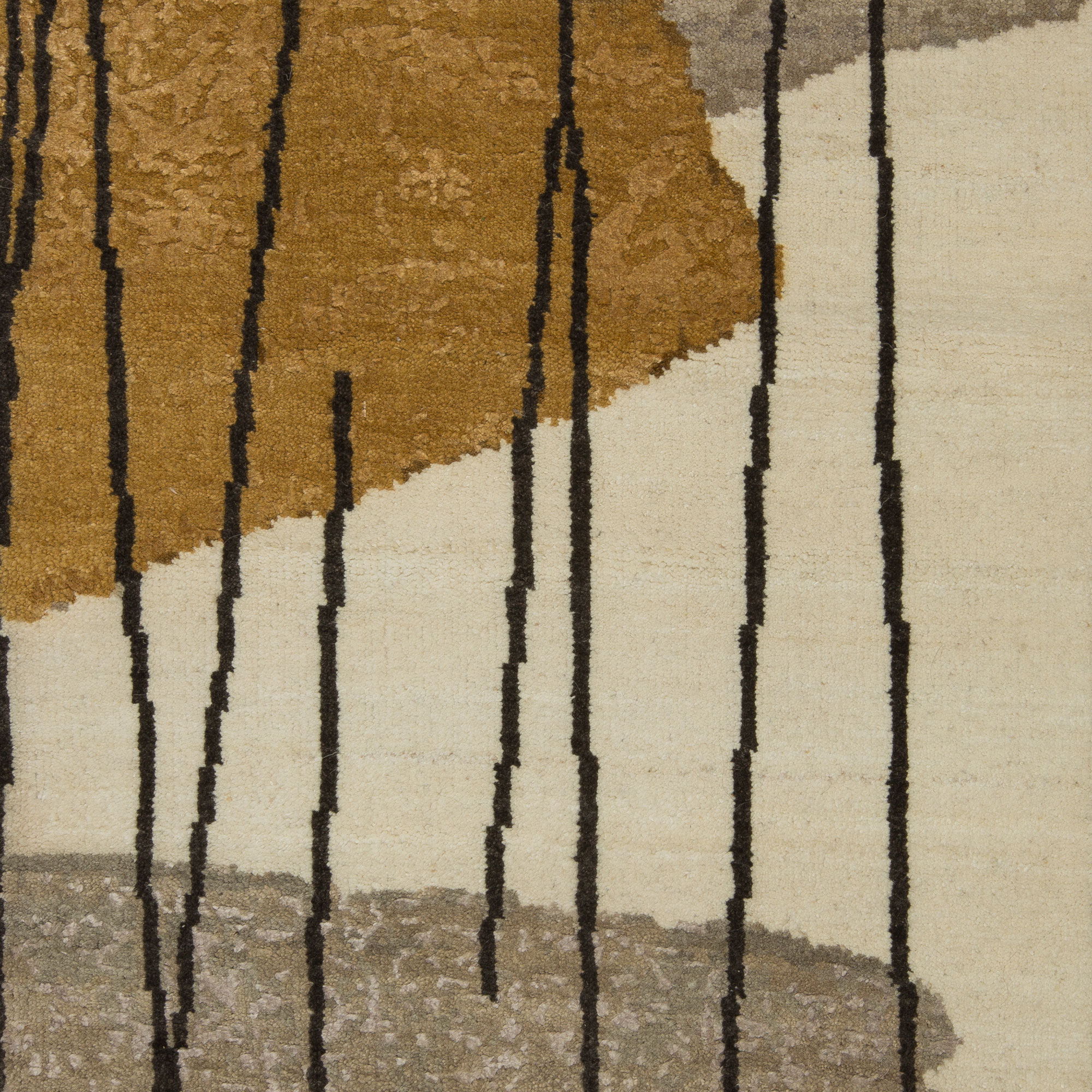
Commissioning custom rugs is most successful when the design brief is specific before the first drawing is made. A well-prepared client or designer does not begin with pattern alone; they begin with function, proportions, materials, and the room’s real-life conditions. The goal is to give the workshop enough information to solve the space properly, not just to make something attractive on paper. That is where a focused decision roadmap saves time, reduces revisions, and leads to a rug that feels intentionally integrated with the architecture and furnishings.
At Doris Leslie Blau, the strongest custom projects usually begin with a clear understanding of how the rug will work in the room, not simply how it will look from above. A rug in a formal living room, a family den, a primary bedroom, or a hospitality setting will face different demands, even before color is considered. The more accurately those demands are described, the more precise the resulting custom rug design can be. Think of the brief as a working tool: it should help determine scale, pile height, fiber choice, and the visual rhythm of the final piece.
Clarify function, room type, and traffic level
The first decision is the simplest and often the most overlooked: what is the rug expected to do in the room? A rug beneath a dining table must tolerate chair movement and occasional spills, while one in a sitting room may need to handle constant foot traffic and anchor multiple seating groups. In a bedroom, comfort underfoot may matter more than abrasion resistance, whereas in a foyer, performance and visual clarity usually take priority. If you define the room’s use clearly, you can narrow material and construction choices before they become confusing.
Traffic level also affects how the rug should be built. High-traffic spaces often benefit from denser construction, stronger fibers, and surfaces that hold their structure instead of flattening quickly. Lower-traffic rooms may allow for more delicate fibers, finer detailing, or softer textures that would be impractical elsewhere. This is where a rug specification checklist becomes useful, because it forces you to note not only beauty goals but also wear patterns, maintenance comfort, and whether the room needs acoustic softening or a more durable ground plane.
It helps to think in terms of behavior, not room labels alone. A formally furnished living room can still be heavily used if it is the family’s main gathering space, and a guest room can still need a resilient rug if it doubles as a home office. Designers often create better custom carpets when they account for how people actually move through the space: shoes on or off, pets present or absent, sunlight exposure, and whether the room remains set as a display space or changes frequently. Those details shape fiber selection and construction much more than style adjectives do.
Choose size, shape, and placement intent
Size is one of the most important decisions in custom rug design because it changes the way a room reads spatially. A rug that is too small can make furniture feel disconnected and the room look unfinished, while a rug that is too large can flatten circulation or overwhelm architectural details. Before commissioning, measure the room, but also map the furniture arrangement you expect to keep. The best custom rugs are proportioned to the layout, not just to the dimensions of the walls.
Placement intent matters just as much as the measurements themselves. Decide whether the rug should define one seating group, connect multiple zones in an open-plan interior, or create a centered field that aligns with a fireplace, bed, or dining table. In a rectangular living room, for example, an oversized rug can visually quiet a space with multiple windows and irregular traffic paths, while a more carefully bounded rug may help separate conversation from circulation. In open layouts, the rug often acts as a zoning device, so its edges and shape should reinforce the architecture rather than compete with it.
Shape should support how the room is experienced from different viewpoints. Rectangular rugs are the default, but square, round, and even custom-shaped compositions can solve problems that standard sizes cannot. A round rug can soften a room dominated by hard lines, while a square rug may work better under a square dining table or in a centered seating arrangement. When the architecture is unusual, the rug should usually respond to the room’s strongest geometry rather than ignore it. That is often where custom rugs become the most effective design solution, because they can be tailored to both proportion and circulation.
If you are unsure about exact dimensions, start by testing the intended footprint with tape on the floor or with a scaled plan. A practical rule is to consider how much of the floor should remain visible around the perimeter and whether key furniture legs will sit fully on the rug or partly off it. The answer changes with room type, but the principle is consistent: the rug should look deliberate in relation to the objects around it. For buyers comparing options, a reliable custom rug sizing guide can help translate those measurements into a more polished specification.
Set palette, texture, and construction priorities
Once function and scale are defined, the next step is deciding what kind of visual and tactile presence the rug should have. Color should not be chosen in isolation from the room’s light, wall finish, upholstery, and wood tones. A palette that looks warm in a north-facing room may appear cooler in strong daylight, while a richly saturated field may need restraint if the furniture already carries a lot of visual weight. Good custom rug design does not just match a sofa; it considers how the rug behaves under changing light throughout the day.
Texture is equally important because it affects both appearance and comfort. A low, dense pile gives a sharper outline to pattern and works well in formal settings or under dining furniture, while a plusher surface can bring softness to a bedroom or lounge. Hand-knotted rugs can offer exceptional definition and longevity, but the knot count, pile height, and fiber blend all affect how the finished piece looks and wears. If the room calls for subtle depth rather than obvious pattern, texture can do much of the work through tone-on-tone variation, abrash-like movement, or a matte-versus-lustrous contrast.
Construction priorities should be decided before the design is finalized, not after. Wool is often chosen for resilience and ease of maintenance, while silk or silk-blend accents can introduce sheen and precision in areas where the rug is treated as a focal point rather than a work surface. Flatweave, hand-knotted, hand-tufted, and carved constructions each create different edges, shadows, and levels of pattern control. In a room with strong architecture and minimal furnishings, a more refined surface may be appropriate; in a busy household, durability and repairability usually matter more than delicate detail.
This is also the stage to decide how much contrast the room can support. Some interiors need a quiet ground that lets artwork, upholstery, and millwork lead, while others benefit from a rug with stronger pattern density or a more animated border. The right answer depends on the rest of the room, not on a trend line. If the space already contains sculptural furniture, veined stone, or expressive textiles, a rug with subtle movement may be enough; if the room is disciplined and pared back, a more graphic composition can add structure without creating clutter.
Prepare the reference images and measurements
The most efficient briefs usually combine precise measurements with a small, well-edited group of reference images. One image should show the room as it is now, one should clarify the desired furniture layout, and one or two should indicate the visual direction you want the rug to support. Avoid sending too many references that point in contradictory directions, because that makes it harder to identify the real design intent. A focused set of images is more useful than a sprawling mood board with beautiful but incompatible ideas.
Measurements should include more than the room’s overall length and width. Note door swings, built-ins, fireplace projections, floor registers, major circulation paths, and any fixed furniture that will remain in place. If the room has asymmetry, slopes, or architectural interruptions, document them clearly. The more exact the plan, the easier it is to specify border widths, field proportions, and placement margins. Designers working on bespoke area rugs often use this information to ensure the finished piece aligns correctly with seating, tables, or centered architectural axes.
A useful example is a long, narrow living-dining room where one end receives strong afternoon sun and the other sits in softer light. In that case, the rug may need a color strategy that reads consistently across both zones, plus a construction choice that can handle the more exposed area without fading visually or feeling overly brittle. The reference images should show both ends of the room, not just the most photogenic corner. When the brief reflects how the room actually behaves, the custom rug can solve a planning issue instead of simply decorating around it.
It also helps to state what the rug must not do. Perhaps the room cannot tolerate a high pile under doors, or maybe the client wants to avoid a border that competes with a patterned wallcovering. These exclusions are valuable because they narrow the design field quickly. The best briefs are not overly literary; they are specific enough that a workshop can translate them into a practical proposal without guessing at the underlying priorities.
FAQ
Do I need final furniture plans first?
Final plans are helpful, but you do not need every last accessory selected before starting. What matters most is a stable furniture layout, because rug size and placement depend on where the major pieces will sit. If the sofa, chairs, bed, or dining table are still changing, the rug specification can become inaccurate very quickly. A good rule is to finalize the core arrangement first, then commission the rug around that structure.
What if I am unsure about color?
If color feels uncertain, start by defining temperature rather than exact hue. Decide whether the room needs warmth, coolness, contrast, or quiet continuity with existing finishes. From there, a designer can test combinations against wall paint, flooring, upholstery, and daylight conditions. Many successful custom rugs begin with a restrained palette and build interest through texture, border treatment, or subtle shifts in tone rather than highly saturated color.
How detailed should my brief be?
Detailed enough to remove guesswork, but not so crowded that the main priorities disappear. Include room dimensions, furniture layout, traffic level, desired feel, preferred materials, and any limits on pile height or pattern intensity. Attach a few reference images that point in the same direction, not twenty that conflict with one another. The best brief functions like a strong rug specification checklist: concise, practical, and clear about what success looks like.
Can I commission a rug if the room is still in progress?
Yes, provided the foundational decisions are already stable. Rooms in progress often still have enough information to determine proportion, palette range, and construction requirements. If the architecture or furniture plan may change dramatically, it is wiser to wait or to begin with a more flexible sizing concept. Early guidance from a specialist can help you avoid costly revisions later.
Before a custom project begins, the most valuable choices are the ones that define the rug’s job, scale, construction, and relationship to the room. When those decisions are clear, the design process becomes much more precise and far less speculative. If you are preparing a project and want expert help translating measurements, materials, and visual goals into a workable brief, Doris Leslie Blau can provide the design guidance needed to move from idea to specification with confidence.