

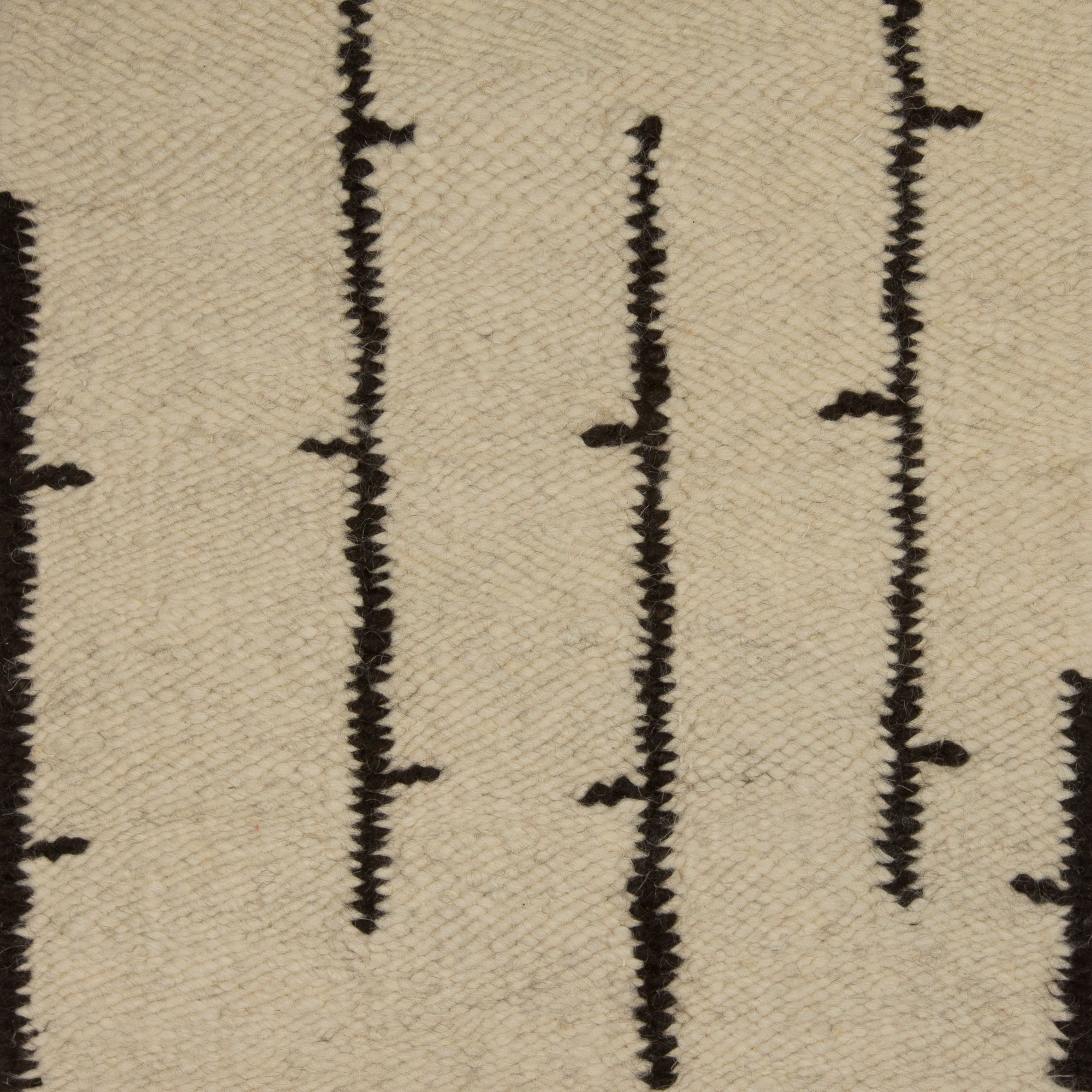
For trade buyers specifying custom rugs, the sampling stage is where a concept becomes a coordinated design decision. A good sample should confirm more than color: it should show how the weave reads at room distance, how the fiber handles light, how the border behaves against adjacent furnishings, and whether the rug supports the architecture of the space. When the goal is a confident approval, the rug sampling process has to be organized, comparative, and grounded in the realities of the finished room.
Sampling is often treated as a quick checkpoint, but for designers and procurement teams it is closer to a working model. The sample may represent a material direction, a knot density, a palette adjustment, or a pattern scale test, and each of those questions requires a different kind of evaluation. With custom-made rugs, the value of a sample is not simply that it looks attractive on a table or pinned to a board. It is that it helps everyone involved decide whether the proposed construction, tone, and proportion can stand up to the room, the client brief, and the way the rug will actually be used.
That distinction matters because rugs are not read in isolation. They sit under furniture, absorb or reflect light, and interact with millwork, upholstery, stone, and wall color. A successful sample should therefore be assessed as part of a larger design system, not as a standalone object. This is especially true when choosing designer custom rugs for rooms with strong architecture, unusual dimensions, or a carefully restrained palette, where even a slight shift in tone or pattern density can change the balance of the whole interior.
Clarify what the sample should prove
The first step in the rug sampling process is defining the specific question the sample must answer. If the brief is about tone, the sample should be viewed for color temperature, saturation, and how the hue behaves under the project’s actual light conditions. If the brief is about structure, the sample should show pile height, weave clarity, and whether the construction creates the right tactile depth without overwhelming nearby furnishings. If the brief is about pattern, the sample needs to demonstrate repeat, scale, and visual rhythm at both close range and across the room.
Trade buyers benefit from separating these issues early. A sample that looks excellent in color may still be too dense in pattern, or a weave that feels beautifully refined may not give enough presence in a large open-plan room. Before requesting anything, write down the single most important decision the sample is meant to support. For example, a hospitality suite might need proof that the rug will hold its own beneath substantial case goods, while a residential dining room may need confirmation that the border will not compete with the chairs when they are pulled out. Clear intent keeps the process efficient and prevents approvals from drifting into vague preference statements.
It also helps to think in terms of risk. A small sample can verify finish and fiber, but it cannot fully predict how a large custom rug will read across a wide plane. That is why many teams use sampling in stages: first a color or material memo, then a larger strike-off or weave sample, and finally a room-based review if the project requires extra certainty. When the brief involves custom rugs for a difficult site, such as a long gallery, a narrow primary bedroom, or a double-height seating area, the sample should be asked to prove proportion as much as appearance.
Compare color, hand, scale, and construction
Color is usually the first thing people notice, but it should not be the only thing they compare. A rug sample may appear warmer or cooler depending on the direction of the light and the surrounding surfaces, so it is useful to place it near the wall finish, upholstery, and any wood or stone that anchors the room. A quiet beige can turn sandy beside limestone and pink beside walnut; a muted blue can read crisp in daylight and subdued under evening lighting. The right sample is the one that stays coherent across those conditions, not the one that looks best in a single photograph.
Hand is equally important, especially when the project calls for handcrafted or hand-knotted rugs. A refined hand is not only about softness. It also affects how the pile takes light, how the edges sit, and how much texture the room needs to feel finished. In a minimal interior, a subtle irregularity in the weave can add warmth and depth without introducing visual noise. In a richer scheme, a tighter and cleaner hand may be needed so that the rug supports the room without competing with upholstery, drapery, or decorative objects.
Scale and construction should be evaluated together. A pattern that seems balanced on a swatch can become too compressed once it spans several feet, while a broad motif may lose its structure if the room is divided by furniture. Designers often test this by laying the sample alongside floor plans, seating layouts, and elevation drawings, then checking how the motif aligns with a sofa run, a dining table, or a bed placement. If the design needs directional clarity, the sample should show whether the pattern has enough resolution to read from the main entry point and enough restraint to remain composed in close view.
Construction affects all of this. Fiber choice, pile height, and knotting method influence durability, sheen, and the amount of visual relief on the surface. Wool can provide body and resilience, while silk content can introduce luminosity and a finer level of detail. Lower pile may suit contemporary furniture and clean architectural lines, whereas a slightly higher pile can soften a formal room with hard surfaces. The sample should make these differences legible, because the finished rug will be judged not just by color accuracy, but by how convincingly it supports the room’s material language.
If the project requires comparing multiple proposals, a simple evaluation method helps. Look at each sample in the same lighting, place it against the same reference materials, and note three things: what reads immediately, what changes with distance, and what happens when the sample is placed under furniture. That keeps the conversation focused on design performance rather than taste alone. It also makes it easier to distinguish between a beautiful sample and the right sample for the architecture.
Useful points to check during review
- Does the color remain stable in morning, midday, and evening light?
- Does the pile height feel appropriate beside the furniture profile?
- Does the pattern density suit the room size and ceiling height?
- Do the borders, edges, or transitions feel resolved rather than decorative for their own sake?
- Does the construction suggest the level of refinement expected for the project?
Organize feedback from clients and teams
Sampling often slows down because too many people are looking for different things without a shared framework. The most efficient trade workflow assigns roles before the sample is circulated. A designer may focus on proportion and visual balance, while the client may be asked to react to warmth, atmosphere, or comfort. The procurement team may be responsible for checking whether the sample aligns with the approved specification, and the site team may flag practical issues such as traffic level, maintenance, or compatibility with adjacent finishes. When those perspectives are gathered separately and then combined, approvals tend to be clearer and faster.
It is helpful to capture comments in language that can be acted on. “Too busy” is vague; “the border is competing with the drapery” is useful. “Feels too flat” is less actionable than “the pile is not giving enough depth for the amount of stone in the room.” Good feedback ties aesthetic reaction to design consequence. That approach matters whether the project is a private residence, a model suite, or a hospitality interior, because the sample is being used to make a production decision, not to win a popularity contest.
For a realistic example, consider a large living room with a low sofa, a pair of wood-framed chairs, and strong daylight from one side. One sample may read perfectly when viewed on a table, but once placed on the floor it might look too cool against the upholstery and too faint against the architecture. Another may have the right color family, yet the motif could disappear beneath the furniture grouping. In that situation, the best feedback from the team is not simply “yes” or “no.” It is a clear note about what the sample achieves, where it falls short, and whether the issue can be solved by adjusting tone, scale, or construction.
Doris Leslie Blau often approaches these decisions as part of the broader specification conversation, not as a separate decorative step. That is where custom-made rugs can be evaluated with a sharper eye for proportion, material, and room logic. The sample becomes most valuable when it is read alongside drawings, finish schedules, and furniture plans, because then the team can see whether the rug is quietly anchoring the room or asking for too much attention.
Know when to request another sample or move forward
Not every concern requires starting over. Sometimes the sample is fundamentally right and only needs a slight adjustment in color warmth, border contrast, or surface texture. Other times the sample exposes a structural mismatch that cannot be resolved with minor edits. The key is to decide whether the issue is cosmetic, proportional, or technical. If the overall design language is right but the palette needs softening, a revised sample may be enough. If the pattern scale feels off in relation to the room, it may be wiser to test a new composition before approving production.
Another sample is worth requesting when there is a clear, describable reason for uncertainty. That might include a wool-and-silk blend that looks excellent but needs to be checked against glare, a border that needs to be narrowed to support a cleaner furniture layout, or a motif that should be enlarged so it reads properly from the entry. On the other hand, if the sample already answers the design brief and the remaining objections are subjective or contradictory, moving forward may be the better choice. Excessive sampling can delay the project without improving the result.
The most effective trade buyers use sampling to reduce ambiguity, not to eliminate every possible preference. They know when a sample confirms the right scale, when it supports the intended mood, and when it proves that the material can perform in the room. They also know that approval is not just about liking the sample in isolation; it is about trusting that the finished rug will belong to the space. For projects involving custom rugs, that is the moment when design judgment and specification discipline meet.
If the room is unusually complex, it can also be useful to revisit the measurements before moving ahead. A precise rug plan should account for circulation paths, furniture legs, door swings, and how the composition relates to architectural features. When those variables are being checked at the same time as the sample, the approval process becomes much more reliable. A project may still require revisions, but they are more likely to be purposeful revisions than last-minute corrections.
How to evaluate a sample in a room
Viewing a sample in a room is less about staging and more about reading relationships. Place it where the rug will actually sit, or as close to that position as possible, and assess it from the main entry, the principal seating area, and any secondary approach. If the sample is small, move it under or beside key furniture pieces so the eye can judge proportion rather than guessing. This is especially important in open-plan interiors, where a rug must define a zone without interrupting the broader visual flow.
Lighting should also be considered carefully. Natural light, warm artificial light, and mixed light can each change the way a sample reads, especially if the material includes sheen or tonal variation. A sample that appears soft and neutral in daylight may become more contrasty after dark, while a textured weave may seem flatter under bright overhead lighting. The room test should therefore include more than one time of day if possible. That habit catches issues early and prevents unpleasant surprises after installation.
For projects that involve multiple rooms, compare samples not only within each room but also across the suite or residence. A corridor rug may need a quieter pattern than a formal sitting room, while a bedroom rug might need a warmer tone and a gentler hand. Keeping those relationships consistent helps the interiors feel curated rather than assembled room by room. It also helps the client understand that the rug choices are part of a larger design system, not isolated purchases.
If you are coordinating with a showroom, studio, or specification partner, ask for the information that supports a final decision: material content, weave method, any relevant construction notes, and clear references for the approved palette. That documentation makes approvals easier to track and gives the production team a stronger foundation. A thoughtful sampling process does not need to be complicated, but it does need to be disciplined. In custom rugs, discipline is what protects the quality of the final result.
FAQ
What does a good rug sample tell me?
A good rug sample should confirm the points that matter most to the project: color accuracy, tactile hand, visible construction, and how the design reads at room scale. It should also indicate whether the rug works with adjacent finishes, furniture height, and the intended light conditions. For trade buyers, the best sample is the one that reduces uncertainty enough to approve the direction with confidence.
How many samples are enough?
There is no fixed number, because the right amount depends on the complexity of the brief. A straightforward room with a clear palette may only need one or two samples, while a large or highly detailed project may require several stages of review. The goal is not to gather the most samples, but to gather enough information to make a defensible decision without delaying production unnecessarily.
How should I evaluate a sample in a room?
Place the sample where the rug will live, then look at it from the main entry, the seating area, and any other important vantage points. Check it in daylight and artificial light, and compare it against the wall color, upholstery, wood, and stone in the room. If possible, view it under furniture so you can judge scale and proportion rather than treating it as a flat object.
When should I ask for another sample?
Request another sample when the current one leaves a clear unresolved question about tone, scale, or construction. If the issue can be described precisely, a revised sample may solve it quickly. If the sample already supports the design intent and only subjective preference remains, it may be better to move forward.
For trade buyers, the sampling stage is where a good concept is protected from avoidable mistakes. If you are specifying custom rugs for a project that depends on exact proportion, material nuance, and a disciplined approval process, Doris Leslie Blau’s gallery expertise can help guide the review with the right level of technical and design insight.