

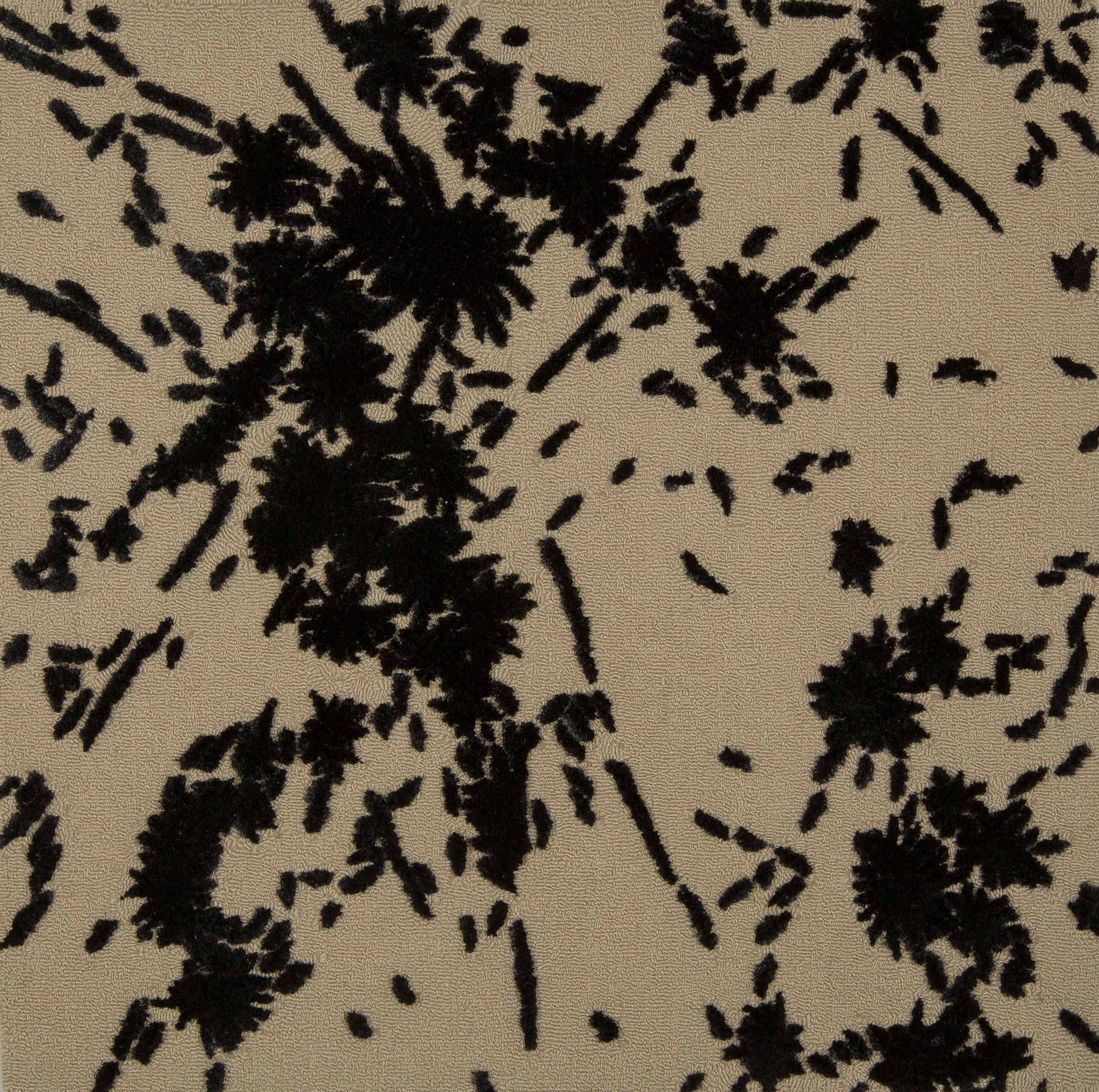
The rug sampling process is where a specification becomes tangible. For trade buyers working on custom rugs, it is the stage that reveals whether a concept will hold up in daylight, under furniture, and next to the finishes already approved for the room. A good sample is not just a smaller version of the final piece; it is a working tool for checking color, construction, scale, and surface behavior before a larger commitment is made.
Sampling matters because rug decisions are rarely isolated. A carpet has to relate to upholstery, wall color, millwork, stone, metal finishes, and the circulation pattern of the room. A drawing can confirm dimensions, but it cannot tell you how a wool pile will soften a palette or how a silk highlight will read beside lacquer at different times of day. For interior designers, developers, and purchasing teams, the sample is the most efficient place to catch those mismatches early, when changes are still practical.
That is especially true when specifying custom-made rugs for rooms with strict proportions or unusual layouts. A sample helps test whether the chosen field color disappears or grounds the furniture, whether the border is too assertive for the architecture, and whether the weave suggests refinement or visual weight. In luxury residential work and hospitality settings alike, the sampling stage reduces ambiguity. It also creates a shared reference point for clients and teams who may be reviewing the design from different angles and with different priorities.
Clarify what the sample should prove
Before a sample is ordered, define the one or two questions it needs to answer. If the room is already busy, the sample may be there to confirm restraint: does the pile stay quiet enough for the architecture and furnishings to lead? If the room feels too flat, the sample may need to prove whether a more textured weave adds depth without visual noise. When the purpose is clear, the review process becomes more disciplined and less subjective.
Trade buyers often benefit from separating aesthetic questions from technical ones. A sample may need to show the exact weave structure, border ratio, or pattern repeat, while a larger memo board or finish set handles the palette conversation. In practice, that means identifying the decision the sample is supposed to support: color approval, material approval, proportion approval, or all three. Without that framework, feedback can drift toward vague opinions that are difficult to translate into revisions.
For custom-made rugs, this is also the moment to confirm whether the specification matches how the room will actually be used. A family room with pets, for example, may call for a different pile height and fiber balance than a formal sitting room with limited traffic. In a hospitality suite, the sample should prove not only how the rug looks but how it behaves under repeated use, where seams sit, and how much surface texture the lighting will exaggerate. Sampling should answer the project’s real-life conditions, not only its presentation board.
Compare color, hand, scale, and construction
Color is usually the first thing people notice, but it is rarely the only thing that matters. A rug can match a paint chip and still feel wrong because the undertone is cooler, the weave is denser, or the pattern carries more contrast than expected. Evaluate the sample in the actual room whenever possible, and look at it in morning light, afternoon light, and artificial light. Neutral rugs are particularly sensitive to this step, because beige, ivory, greige, and taupe can shift dramatically depending on the surrounding finishes.
The hand of the rug matters just as much as its color. A hand-knotted rug with a firm, compact structure will reflect light differently from a looser construction, and that changes the reading of the surface. Silk accents can give a pattern a crisp outline, while wool may soften transitions and make the design feel more grounded. When comparing designer custom rugs, pay attention to how the pile catches at the edge of a chair leg, where the eye sees the nap in motion, and whether the tactile quality supports the room’s level of formality.
Scale is where many approvals go astray. A pattern that looks elegant in a small sample can feel overworked once it expands across a large room, especially if the repeat is tight or the motif is highly directional. The same is true in reverse: a broad geometric can seem balanced in a studio memo but lose clarity when placed under a sectional and coffee table. Use the sample to infer how much visual rhythm the full rug will generate, then compare that rhythm to the scale of the furnishings around it.
Construction is the quiet part of the specification, but it often determines whether a project feels resolved. Review fiber content, knot count or weave type when relevant, edge finishing, binding, and any transitions between field and border. If the project requires a rug to sit beneath low seating or case pieces, the build should support that load without creating awkward height differences. For many interiors, hand-knotted rugs offer a useful balance of durability and detail, but the best choice still depends on use, color behavior, and the level of refinement the room demands.
A practical room example
Imagine an open-plan living and dining area where the client wants one rug to anchor both zones. The sample may need to prove that the border is subtle enough to avoid chopping the room visually, while the field color remains distinct enough to define the seating area. If the dining chairs sit partly on the rug, the hand must be tight and resilient; if the living zone includes deeper upholstery and a lower coffee table, the surface can tolerate more softness. In that case, the sample is not only a material reference but a test of zoning, sightlines, and furniture hierarchy.
Organize feedback from clients and teams
Once the sample arrives, feedback should be gathered with the same discipline used for the rest of the specification set. Interior designers usually need the client’s aesthetic response, but they also need input from architects, procurement teams, and sometimes the project manager responsible for installation. A shared review sheet or annotated PDF can prevent repeated conversations and reduce the risk of one stakeholder approving a detail that another has not yet seen. The goal is not to collect more opinions; it is to collect clearer ones.
It helps to separate comments into categories: color, proportion, texture, and function. A client may say the sample feels “too busy,” but that can mean the pattern density is too high, the contrast is too sharp, or the scale is simply out of sync with the room. By translating impressions into design language, the team can decide whether the issue is a true problem or a matter of presentation. This is especially important for made-to-order rugs, where small changes in tone or repeat can make the difference between a near miss and a precise fit.
For collaborative projects, establish who has final approval before the sample review begins. That simple step can save time when a project includes multiple decision-makers with different priorities, such as a client focused on comfort and a designer focused on composition. It is also wise to record what was approved: yarn direction, border width, palette, and placement assumptions. If the final room includes custom upholstery, millwork, or window treatments still in development, the sample record becomes a valuable reference when other elements shift later in the process.
- Confirm the sample’s purpose before reviewing it.
- Assess it in the room and under the final lighting conditions.
- Record color, scale, and construction notes separately.
- Identify the final approver early in the workflow.
- Keep annotated images or notes for future revisions.
Know when to request another sample or move forward
Not every sample needs to be perfect, but it should be good enough to support a confident decision. If one variable is still unresolved while the rest are clearly working, a second sample may be the right move. That is often the case when the color is close but not ideal, or when the pattern scale is promising but needs to be tested in a broader repeat. Requesting another strike is not a sign of indecision; in custom rugs, it is often the most efficient way to protect the finished result.
Move forward when the sample answers the original brief and the remaining concerns are minor enough to manage in production or installation. If the room has already been measured accurately and the scale looks correct against the furnishings, additional sampling may only delay the schedule without improving the outcome. The same applies when the material reads correctly, the hand feels right, and the palette supports the rest of the scheme. At that point, the project benefits more from clear sign-off than from one more round of uncertainty.
There are also moments when a sample should prompt a broader design correction. If a rug feels too heavy for a compact room, no amount of color adjustment will solve the proportion issue. If a pale wool sample is already reading too cool under warm lighting, the better answer may be a different fiber blend rather than a tiny tint adjustment. Good specification is not about forcing a near-fit to work; it is about recognizing when the design needs a structural change.
For buyers managing larger orders or multiple room types, the sampling process can become a useful standard across the whole project. A repeatable review method helps keep custom carpet solutions aligned from one space to the next, especially when the interiors vary in use, light, and formality. Whether the project calls for bespoke rugs in a private residence or designer custom rugs in a hospitality setting, the same principle applies: the sample should reduce risk, sharpen the design, and make the final approval easier to defend.
FAQ
What does a good rug sample tell me?
A good sample should confirm more than color. It should show how the rug handles texture, how the pattern reads at close range, and whether the construction supports the room’s use. It also gives you a sense of how the material behaves under the project’s actual lighting conditions. If the room is highly furnished, the sample should help you judge whether the rug feels grounded or visually crowded.
How many samples are enough?
That depends on what still needs to be resolved. In many cases, one strong sample and one alternate are enough to compare the key variables. If the project involves a difficult palette, unusual scale, or a high-stakes client approval process, a second or third reference can be useful. The best approach is to request only the samples needed to answer specific design questions.
How should I evaluate a sample in a room?
Place it where the rug will actually sit, then view it from the main seating positions and from the entry to the room. Check it in daylight and with the intended artificial lighting, since color and sheen can shift noticeably. Compare it against the upholstery, wall finish, and surrounding materials, not in isolation. If possible, test it under or beside furniture to see whether the scale and proportion still feel correct.
What if the sample is close, but not quite right?
First identify what is off: color temperature, pattern density, pile feel, or scale. If the issue is isolated, a revised sample may solve it efficiently. If the problem is structural, such as the wrong proportions or an unsuitable material, the design may need a more substantial adjustment. The value of sampling is that it reveals these issues before production, not after installation.
For trade buyers, a well-run sample review is one of the most reliable ways to protect both design intent and project efficiency. It brings the conversation back to specifics: proportion, texture, lighting, use, and the way a rug will live with the rest of the interior. If you are developing a project that calls for custom rugs, a specialist team can help you refine the sample set, interpret the results, and move toward a final specification with more confidence and less guesswork.