

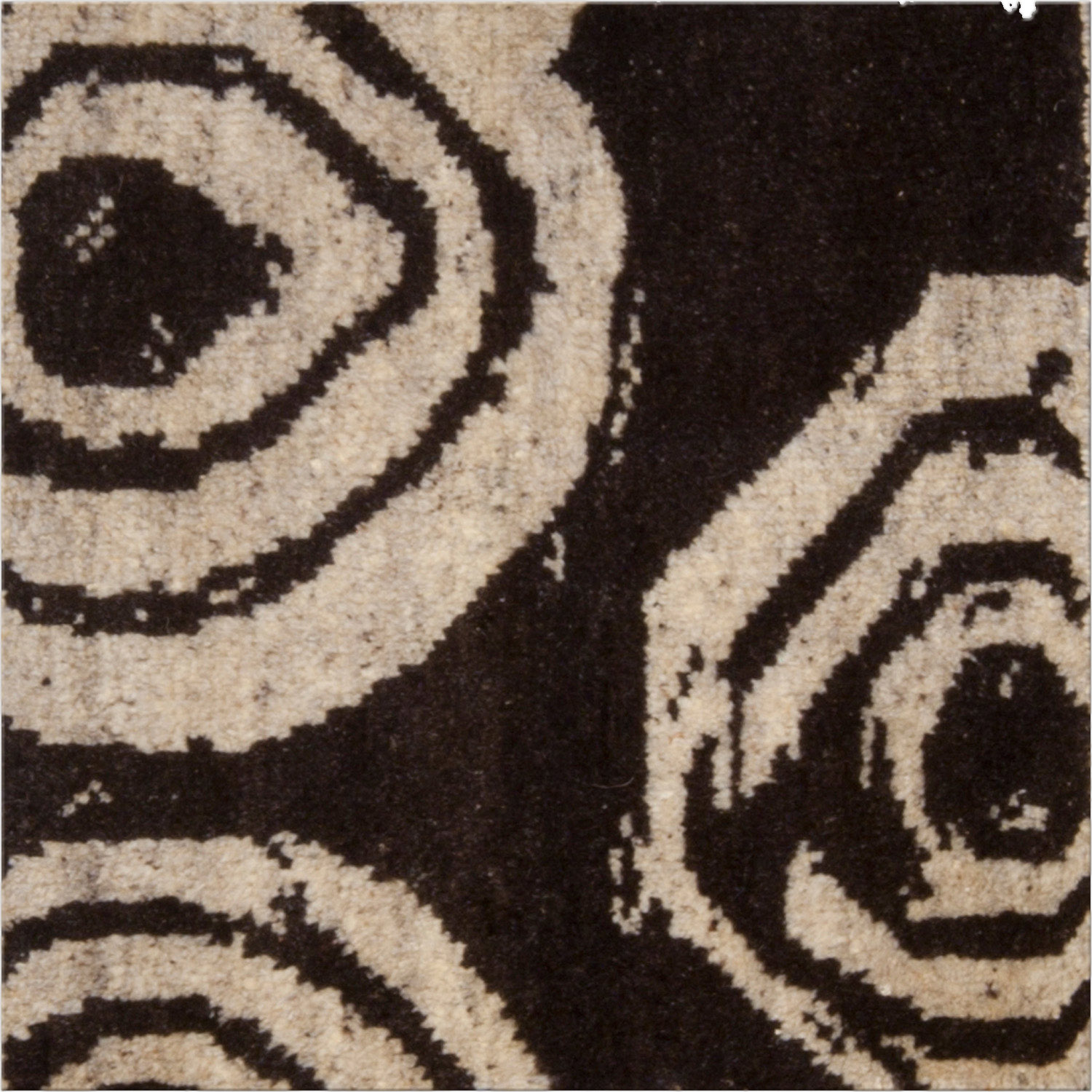
Silk rugs are chosen for the way they handle light, not just for their softness or fine detailing. In a room with controlled daylight, a silk field can make pattern appear sharper, quieter, or even more dimensional depending on the angle of view. That shifting surface is one reason silk remains such a compelling option in custom-made rugs, especially when the goal is to shape atmosphere with precision rather than volume.
Unlike wool, which tends to read with a steadier matte presence, silk catches light and releases it in bands, flashes, and subtle tonal changes. The result is not simply “shine,” but a visual movement that can change the way a room feels from morning to evening. In a formal living room, that quality can make a rug feel architectural, almost like a low horizontal plane of reflected light. In a quieter setting, it can soften the boundaries between pattern and ground, which is why silk is often specified when the design brief calls for nuance rather than high contrast.
That same sensitivity also means silk behaves differently under pressure, traffic, and placement. A rug with a dense silk pile can appear crisp and luminous in a dining room, but the same rug may be less practical in a family room where chairs are moved constantly or where shoes, pets, and direct sun all compete with the surface. Designers working with silk often think less about “Is it beautiful?” and more about where the rug’s visual properties will be read most clearly. In that sense, silk is not just a material choice; it is a light-management choice.
Why Silk Reads Differently from Wool in Daylight
Silk fibers have a naturally reflective quality that gives the surface a distinct sheen, especially when the pile is finely executed and the weave is tight. Wool, by contrast, absorbs more light and tends to present color in a fuller, softer register. That difference matters in rooms with tall windows, skylights, or strong directional light because the rug will not stay visually static throughout the day. A pale silk rug may appear almost luminous in direct sun, then settle into a cooler, more restrained tone as the light shifts across the room.
Daylight can also reveal construction details that might disappear in a more matte material. On a silk rug, pile direction, knot density, and surface finish become visible design elements. Even a restrained pattern can gain depth because the raised and lowered areas reflect differently, creating a slight relief effect. For interiors that rely on subtle layers rather than bold contrast, this quality can be invaluable, especially when coordinating with polished stone, lacquered millwork, or bronze accents.
There is another practical reason designers pay attention to light when specifying silk: the rug’s color temperature changes with its environment. Under warm artificial light, a champagne or taupe field may feel richer and more saturated; in cooler daylight, the same rug may look more silvery and composed. That means a silk rug should be evaluated where it will live, not under neutral assumptions. In custom rugs, this evaluation is essential because the exact hue, pile height, and pattern density can be adjusted to suit the room’s exposure and furnishing palette.
How Sheen Can Sharpen or Soften Pattern
Sheen is often discussed as if it were only a surface effect, but in silk rugs it directly changes how pattern is perceived. A motif with fine outlines can look cleaner and more legible because the light picks out its edges; the same motif can also soften if the pile direction is used to blur its boundaries. This is one reason silk is so effective for rugs that need to feel detailed without looking busy. The material can add definition without adding visual weight.
When the design includes curving vines, medallions, or geometric repeats, sheen can either emphasize symmetry or reduce rigidity. A high-luster silk may make the pattern feel more formal and exact, which suits rooms with strong axes, centered furniture arrangements, or decorative symmetry. A lower, more diffused silk finish can make the same composition feel gentler, especially in spaces where the rug must bridge multiple seating zones or reconcile older architecture with contemporary furnishings. The distinction may sound subtle, but in a finished room it often determines whether the rug reads as refined or overly assertive.
Color also changes under sheen. Deep tones may appear more layered, while soft neutrals can develop an almost pearly vibration. This is useful when a room needs a rug to support the palette without flattening it. In a scheme built from stone, linen, walnut, and bronze, a silk rug can introduce a controlled glimmer that keeps the composition from becoming visually dense. For designers, that glimmer is a tool: it can sharpen edges, relieve heaviness, or create a measured contrast against matte upholstery.
Where Silk Works Best, and Where It May Be Too Delicate
Silk performs best in rooms where the rug is seen clearly and used with care. Formal living rooms, private studies, bedrooms, dressing rooms, and low-traffic sitting areas are all natural candidates. These are spaces where furniture placement is usually stable and where the rug’s surface can be appreciated without constant wear. In a bedroom, for example, silk can bring a calm, luminous note under a bed and bedside arrangement, especially when the surrounding materials are quieter—bouclé upholstery, linen drapery, or a simple wood floor.
In dining rooms, silk can work well when the rug is sized generously and the table shape is carefully considered, because the surface is visible beneath the furniture and not exposed to the heaviest traffic patterns. The key is proportion: too small a rug, and chairs will drag the edges; too large a sheen-dominant field, and the room may feel overly reflective. By contrast, an entryway, family room, mudroom, or busy corridor often asks too much of a silk surface. Those spaces may benefit more from wool, wool-silk blends, or other constructions better suited to abrasion and shifting use.
That does not mean silk is off-limits in active homes. It means placement must be intentional. In a large open-plan interior, silk can be used in the quieter zone of the plan, such as a lounge area that is visually connected to the rest of the room but not used as the primary circulation path. If the room is furnished with careful boundaries—sofa backs, side tables, and a clear passage around the rug—silk can hold its own beautifully. The material simply asks for a degree of discipline in layout that more forgiving fibers do not require.
Scale, Proportion, and the Role of Sheen in the Room
One of the most overlooked aspects of silk is that its sheen can change how large a rug appears. A highly reflective surface may read as larger because it draws attention and extends visual energy across the floor, while a soft matte rug can recede more quietly. That makes rug scale and proportion especially important in silk. In a room with low ceilings, too much reflection can intensify the sense of compression; in a generous room, the same shine can help define the seating area more clearly and keep the composition from feeling flat.
Furniture layout matters as much as the material itself. If a silk rug sits beneath a tightly clustered seating group, it can act as a luminous anchor, giving the arrangement a more deliberate focus. If the same rug is placed in a room with scattered furniture and weak zoning, its sheen may feel disconnected from the rest of the interior. This is why many designers consider silk most successfully when the rug is part of a broader plan for circulation, sightlines, and hierarchy. The rug should support the room’s structure, not compete with it.
For clients exploring custom rugs, this is often the stage where precise sizing becomes decisive. A rug that is only slightly underscaled can make silk look precious in the wrong way, as though it were floating without purpose. A properly scaled rug, by contrast, gives the sheen a role: it defines the conversation area, frames the furniture, and introduces controlled light exactly where the eye needs it. The difference is rarely dramatic in theory, but it is immediately visible once the room is installed.
Construction, Pile, and the Feel of a Silk Surface
Not all silk rugs behave the same way. Hand-knotted silk pieces, especially those with a fine knot count and a closely controlled pile, can deliver crisp pattern resolution and a very elegant surface response. In some cases, silk is blended with wool to balance luster with resilience, which can be an effective solution when the design brief wants both visual clarity and a more grounded hand. A pure silk rug may feel more delicate underfoot, but it often rewards close viewing with exceptional detail and a polished finish.
Pile height also changes how the rug reads. A shorter pile tends to emphasize pattern and reflection, while a slightly taller pile may scatter light more softly, producing a gentler rug sheen. In an interior with highly polished furniture finishes, a restrained pile can prevent visual competition. In a room with heavier upholstery and thicker window treatments, a slightly more substantial surface may help the rug register as a distinct plane rather than disappearing into the fabric surround. The choice should be made in relation to the room’s materials, not in isolation.
Texture matters even when the primary effect is smoothness. A silk rug with subtle abrash-like variation, careful carving, or directional pile changes can introduce a sophisticated surface rhythm that keeps the room from feeling static. Designers often use this to echo other interior elements: fluted millwork, ribbed glass, or the veining in stone. The rug becomes part of the room’s tactile vocabulary, and its sheen works as one layer within a larger composition instead of as a stand-alone feature.
Placement, Care, and Long-Term Preservation
Silk asks for more deliberate care than wool, but good placement can reduce unnecessary stress. Direct, prolonged sunlight should be treated carefully, especially in rooms with strong western exposure. UV-sensitive drapery, rotation where practical, and thoughtful furniture placement can all help preserve the surface. Because silk can show crushing or tracking more quickly than wool, heavy objects should be positioned thoughtfully, and chair movement should be considered before the rug is specified. These practical details matter as much as the design itself.
Routine care should be light and consistent rather than aggressive. Gentle vacuuming with appropriate settings, prompt attention to spills, and periodic professional cleaning are usually preferable to overhandling the surface. It is also wise to think about shoes, pet claws, and humid conditions, all of which can influence the appearance of the pile over time. Silk rugs are not meant to be treated like decorative objects in a display case, but they do benefit from a level of stewardship that matches their refinement. For many homeowners, that balance is reasonable when the rug is placed in the right room.
One important point about rug patina is that silk develops it differently from wool. Wool often matures into a softer, more lived-in texture that can disguise wear naturally. Silk can show change more clearly, which some designers value because the surface slowly acquires character rather than simply fading. The key is to distinguish desirable patina from damage. A graceful softening of tone and pile direction can be part of a rug’s life; flattening in traffic paths or permanent dulling from poor exposure is not. Knowing the difference helps preserve both appearance and value.
Design Scenarios Where Silk Earns Its Place
Consider a restrained living room with a limestone fireplace, low-profile seating, and drapery that filters daylight rather than blocking it. A silk rug in a muted ivory and silver palette can give the room enough optical movement to keep it from feeling severe. The sheen would play against the stone and soften the linearity of the furniture without adding extra color noise. In that setting, silk becomes a quiet organizing device, not an ornamental flourish.
Now picture a contemporary bedroom with dark oak nightstands, a tailored bed, and a limited palette of cream, slate, and bronze. A silk rug beneath the bed can echo the room’s calm precision while adding a touch of light at floor level. If the pattern is subtle—perhaps an understated trellis or a faded botanical—the rug can deepen the room without drawing attention away from the architecture. The result is particularly effective in rooms designed around rest, where the goal is not drama but controlled visual ease.
By contrast, imagine a household with young children, pets, and constant movement between kitchen, family room, and terrace. Silk may still appear in a secondary sitting area, but not as the primary workhorse rug. In that environment, a designer might specify a more durable construction for the active zone and reserve silk for a quieter adjacent room. This layered approach is often the most intelligent way to use luxury materials: place them where they can contribute fully, rather than asking them to solve every problem at once.
When to Choose Silk, and When to Look Elsewhere
Silk is the right choice when a room needs precision, luminosity, and a finely calibrated surface response. It is especially effective when the interior already has strong architectural bones and the rug’s job is to sharpen, soften, or connect those elements. If the design needs softness without heaviness, or detail without visual clutter, silk can be remarkably effective. If, however, the room requires rugged durability, frequent rearrangement, or a forgiving finish, another material may be more suitable.
That decision is often best made in tandem with the broader specification process: scale, traffic, sunlight, and material pairing should all be reviewed together. In many cases, the ideal answer is not “silk or wool” in the abstract, but a rug tailored to the room’s actual conditions. For clients and designers exploring custom rugs, that is where the material conversation becomes most productive. The right construction is the one that serves the room’s use pattern as well as its visual intent.
FAQ
Is silk always too fragile for homes?
No. Silk is best understood as a selective material rather than a universal one. In low-traffic rooms, formal settings, bedrooms, and carefully planned seating areas, it can perform very well. The key is to match the rug to the room’s use pattern, sunlight exposure, and furniture arrangement so the surface is not exposed to unnecessary wear.
Why does silk look different from one angle to another?
Silk fibers reflect light directionally, so the pile can appear lighter or darker depending on the viewing angle and the direction of the light. This is not a flaw; it is one of the defining qualities of the material. Designers often use that shifting effect deliberately to add depth, reduce visual flatness, or create a sense of movement across the floor.
How much maintenance does a silk rug need?
Silk rugs need regular but gentle care. That usually means careful vacuuming, prompt spill response, limited exposure to harsh sunlight, and professional cleaning when appropriate. They do not need constant attention, but they do benefit from a more considered maintenance routine than many wool rugs, especially in rooms with heavy use.
Can silk be used in a custom rug for a large room?
Yes, provided the scale, zoning, and traffic conditions are well planned. In large rooms, silk can be especially effective when it anchors a defined seating area or supports a formal circulation path. Its sheen can help clarify the room’s layout, but only if the rug is proportioned correctly and placed with the architecture in mind.
Silk rewards rooms that are designed with intention, and it performs best when its light-reactive surface is treated as part of the architecture rather than as decoration alone. If you are evaluating silk for a specific room, the most useful next step is usually a conversation about size, exposure, and construction—precisely the kind of guidance Doris Leslie Blau offers when selecting custom rugs for elegant interiors.