

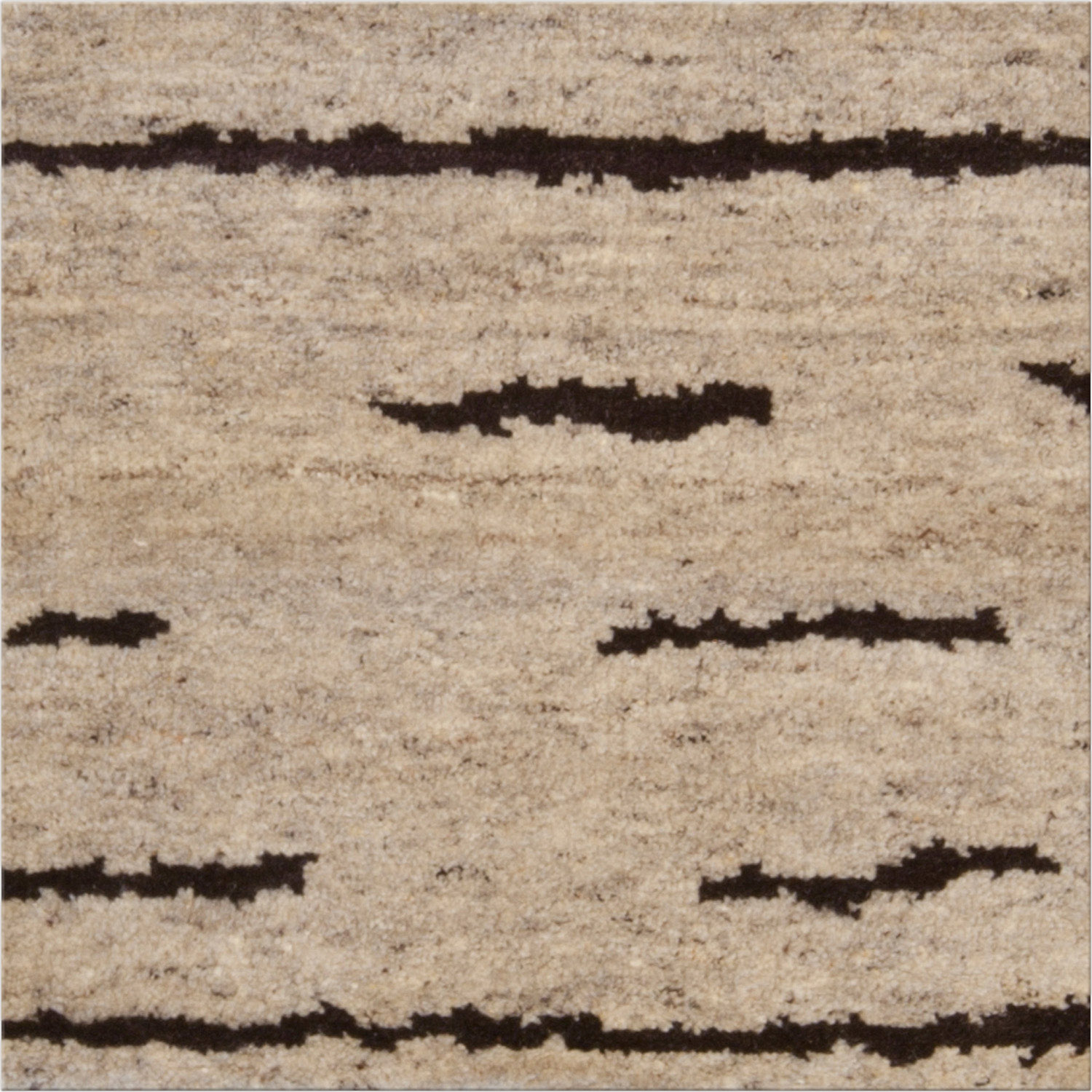
A foyer has a difficult job: it must feel welcoming, absorb the first impression of the home, and still leave enough room for coats, bags, shoes, and movement. The right foyer rug does not simply decorate the entry; it clarifies the architecture, organizes circulation, and keeps the space from feeling abrupt. For many homes, especially those with narrow halls, paired doors, or a square landing, custom rugs are the most reliable way to get the proportions right. Standard sizes often come close, but an entryway usually needs something slightly more deliberate to feel composed rather than crowded.
At Doris Leslie Blau, the best foyer solutions are rarely chosen for decoration alone. They are specified with the route of the body in mind: where you step after opening the door, how the eye reads the room beyond, and how much visual weight the floor can carry before it starts to compete with millwork, stairs, or a console. That is why entryway custom rugs tend to outperform off-the-shelf options in foyers that are unusually shallow, especially grand, or shaped by an awkward turn in the circulation path. A good entry rug should look as if it belongs to the architecture, not as if it was inserted into it.
Measure the path from door to main circulation
The first measurement in a foyer is not the rug size itself; it is the path people actually take. Stand at the front door and trace the route to the next major decision point, whether that is a stair landing, a hallway opening, or the transition into the living room. The rug should support that movement without forcing anyone to step awkwardly off the edge or bunch up around furniture. In a narrow vestibule, that may mean a runner-like proportion, while in a square foyer it may mean a centered rectangle or round rug that leaves a clear border on all sides.
Clearance matters more than coverage. A foyer rug should usually stop before the door swing, and it should also leave enough exposed floor for baseboards, paneling, or stone borders to read properly. If the rug extends too close to the threshold, the entry can feel compressed and the door becomes harder to open without visual clutter. If it ends too early, the room loses continuity and the first few steps feel disconnected from the rest of the interior. The most successful custom rugs are sized to hold the space together while preserving an easy, intuitive route through it.
Decide whether the foyer should feel expansive or intimate
Not every foyer should announce itself in the same way. Some entries are meant to feel generous and architectural, with more visible floor area and a rug that behaves almost like a framed composition. Others work better as intimate thresholds, where a denser rug softens echo, warms stone or tile, and creates a quieter pause before the rest of the house opens up. The design decision is less about fashion than about how the foyer is supposed to function in relation to the rest of the home.
In a grand foyer with high ceilings and strong sightlines, a rug with a restrained field and crisp border can reinforce scale without swallowing the room. In a smaller entry, the opposite may be true: a more tactile weave, a slightly deeper tone, or a subtle allover pattern can make the space feel grounded without reading as heavy. This is where rug proportion and color temperature work together. Cool, pale stone may call for a warmer ground color; dark wood paneling may need a lighter field to keep the entrance from feeling tunnel-like. The right choice depends on whether the foyer is meant to introduce drama or to calm it.
Select finishes that welcome dirt without looking utilitarian
Foyers need durability, but durability does not require a compromise in refinement. The entry sees grit, moisture, and repeated foot traffic, so the best materials are those that can handle wear while still reading as intentional. Wool is often a strong foundation because it offers resilience, color depth, and a surface that does not immediately look tired. In some cases, a tighter weave, lower pile, or a more structured construction will serve the space better than a plush texture that traps debris and flattens quickly.
Pattern is equally practical. A foyer rug should be able to absorb a little visual noise from shoes and daily use without becoming muddy. Fine geometric repeats, softened borders, abrash in natural fibers, or a worn antique-style surface can all mask entry wear elegantly. By contrast, a very flat solid with no variation may show every mark, while an overly busy pattern can make a small entry feel fussy. The sweet spot often lies in a rug that has enough movement to disguise dirt, but enough clarity to remain composed from the doorway.
For households that want both polish and performance, custom area rugs allow more control over pile height, edge finishing, and fiber selection than a ready-made entry piece. That matters when the foyer opens directly into a larger entertaining room, because the rug must be robust enough for daily use but refined enough to coexist with better upholstery, stone, or lacquer. The entry should feel like part of the home’s designed sequence, not a service zone with nicer trim.
Coordinate the rug with console, mirror, and lighting
Furniture placement can make or break a foyer rug. A console table should not sit so far onto the rug that the floor disappears, and it should not float so far away that the composition feels split. Ideally, the rug anchors the console visually while leaving enough exposed border to preserve the shape of the room. If there is a mirror above the console, the rug should help create a vertical axis so the eye understands the entry immediately upon arrival.
Lighting changes how the rug reads, especially in foyers that receive mixed daylight and artificial light. Warm bulbs can make cream, camel, and gold tones feel richer, while cooler light can flatten those same tones if the rug is too pale or too matte. A foyer with brass sconces and a reflective mirror may benefit from a rug with quieter texture so the room does not become overly glossy. In a darker entry, a rug with a little luster or variation in pile can keep the floor from disappearing entirely. The goal is not to match every finish; it is to create a balanced visual hierarchy so the entry feels deliberate from the first step.
If the foyer connects to a more formal sequence of rooms, consider how the entry rug will read from the adjacent space. A strong color block can help define the threshold, while a more nuanced antique tone can act as a bridge between rooms with different palettes. Doris Leslie Blau often approaches these decisions through the lens of circulation and sightline first, then style second. That order prevents the entry from becoming either too decorative to function or too practical to feel gracious.
Choose a shape that suits the architecture
Shape is one of the most underestimated tools in foyer design. Rectangles work well when the entry is directional, especially in hall-like spaces where movement runs in a straight line. A square foyer may benefit from a square or round rug, depending on whether the room feels static or dynamic. A round rug can soften sharp corners, especially when the architecture includes paneled walls, a square ceiling detail, or a central light fixture. It is particularly effective when the room needs a focal point without adding another hard edge.
When the foyer is irregular, custom sizing becomes less of a luxury and more of a necessity. An entry that widens near the stairs or narrows by the door can require a rug that is slightly tapered by proportion, not by shape alone. In those cases, a tailored solution can preserve circulation while still giving the floor a finished presence. This is one reason designers turn to custom rugs for transitional spaces: the foyer rarely rewards a generic answer.
A practical example of proportion in a real home scenario
Consider a square city foyer with stone floors, one console against the wall, and a view straight into a living room. A large ornate rug might crowd the baseboards and make the space feel smaller, while a small accent rug would look lost beneath the console. The better choice is often a rug sized to leave a consistent frame of exposed stone, with enough visual density to hold the center of the room but not so much pattern that it competes with the mirror or the lighting. If the adjacent rooms are calmer, the foyer can carry a slightly stronger motif; if they are already layered, the entry rug should be quieter and more tonal.
That same approach translates to a narrow townhouse entry where the door opens almost directly into a stair hall. Here, the rug needs to guide traffic rather than gather attention. A longer, structured form with modest pattern keeps the passage clear and helps the space feel intentional even when it is being used constantly. In both cases, the right specification comes from understanding the room’s role, not from choosing the most decorative option available.
Why custom specification often solves foyer problems better than standard sizes
Foyers are among the hardest rooms to fit with ready-made rugs because their dimensions are often slightly off from common retail proportions. A room may need an inch or two more at the door swing, a narrower border to preserve paneling, or a longer field to connect visually to the next room. Those adjustments sound small, but in an entry they change everything. The difference between a foyer that feels designed and one that feels improvised is often a matter of proportion by just a few inches.
That is where a made-to-order approach becomes especially useful. custom area rugs can be specified to suit a specific floor plan, traffic pattern, and decorative intent, which is important in entries where the rug has to do more than look attractive. It may need to soften sound, hide wear, and relate to other materials such as marble, oak, brass, or plaster. When the scale is exact, the foyer gains calm immediately, and the rest of the house benefits from that visual order.
What to remember before you place the rug
- Leave enough exposed floor for the threshold, trim, and door swing to read clearly.
- Match the rug’s proportion to the route people actually walk, not just the room’s outer measurements.
- Choose a construction and pile height that can handle traffic without looking industrial.
- Use pattern and tone to disguise day-to-day wear while keeping the entry polished.
- Coordinate the rug with the console, mirror, and lighting so the foyer feels unified.
Frequently Asked Questions
How big should a foyer rug be?
The right size depends on the room’s circulation, but a foyer rug should generally anchor the space without touching every wall. Leave a visible border of floor around the perimeter so the entry feels intentional and the architecture can still breathe. In practice, that often means sizing the rug to the furniture and walk path rather than simply filling the whole room.
Should the rug stop before the door?
Yes, in most cases it should stop before the door swing so the rug does not interfere with opening the door or visually crowd the threshold. The entry should read as a transition, not as a mat placed too close to the hardware. A small buffer at the doorway also helps the foyer feel cleaner and more resolved.
What shape works best in a square foyer?
A square foyer can work well with either a square rug, a round rug, or a centered rectangle, depending on the architecture. If the room is very symmetrical, a square or round shape often reinforces that balance. If the space needs direction toward another room or staircase, a rectangle may be the stronger choice.
Are custom rugs worth it for an entryway?
For foyers with unusual dimensions, strong sightlines, or high traffic, custom rugs are often the most practical solution. They allow you to fine-tune scale, border width, shape, and material so the rug supports the room instead of competing with it. That level of control is especially useful in entries where a small sizing error becomes immediately visible.
When a foyer is carefully measured, well proportioned, and matched to the home’s materials, it feels calm before anything else is said about the interior. If you are refining an entry or planning a new one, Doris Leslie Blau can help with thoughtful design guidance, gallery expertise, and a tailored rug specification that suits the architecture from the first step.