

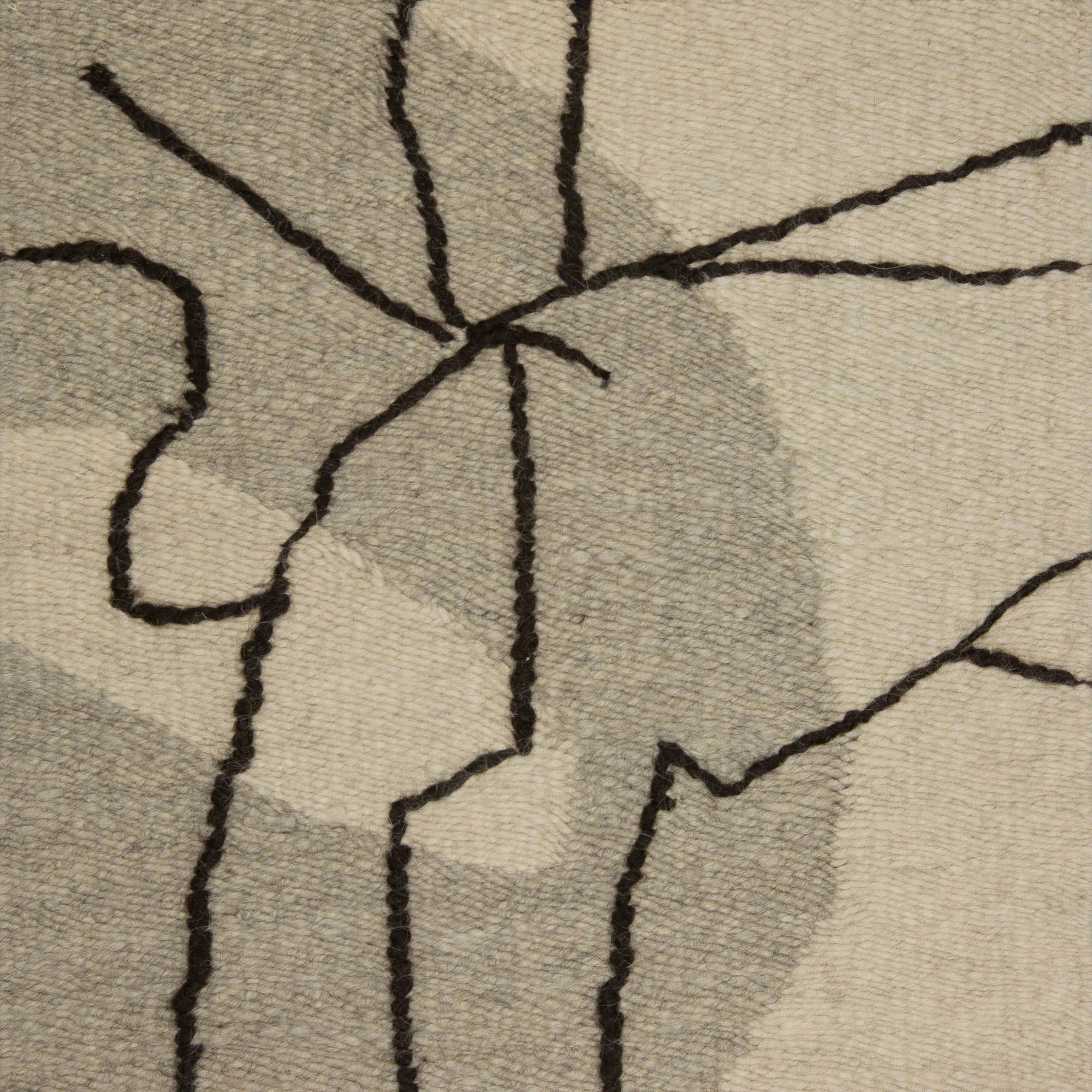
Wabi-sabi interiors reward materials that look lived with, not overworked. When the room calls for quiet restraint, custom rugs can do more than fill the floor: they can introduce tactile depth, soften hard lines, and bring warmth without interrupting the calm. The best pieces in this style do not try to look polished in a glossy sense; they feel considered, grounded, and a little irregular in a way that signals handwork rather than accident. That distinction matters, because a rug with genuine character can make a sparse room feel complete while preserving the discipline that wabi-sabi depends on.
For designers and homeowners drawn to wabi-sabi interiors, the challenge is rarely finding texture. The harder task is choosing a rug that reads as authentic, not unfinished. Hand-made surfaces with slight tonal shifts, abrash, uneven yarn uptake, or subtle changes in pile direction can enrich a room because they mirror the unevenness found in plaster, wood grain, stone, and aged metal. By contrast, a rug that looks visually random or mechanically distressed can undermine the serenity of the space, because it introduces noise instead of depth. The most successful choices feel deliberate, understated, and materially honest.
Explain which imperfections feel authentic rather than accidental
In a wabi-sabi setting, imperfection is not a design gimmick; it is evidence of the hand and evidence of time. A rug with a slight irregularity in weave tension, a softly varied border, or color that shifts from one end to the other can feel beautifully aligned with this sensibility because the variation is coherent, not theatrical. What should be avoided is distortion that looks like a production flaw: buckling, uneven edges that feel unstable, patchy dye absorption that creates visual confusion, or a motif that appears unresolved. The key is to ask whether the irregularity creates calm or creates distraction.
One useful test is distance. From across the room, an authentic handmade rug should read as composed and quiet, even if its surface becomes more complex up close. That layered experience is part of the appeal of hand-knotted rugs: they reward proximity without demanding attention from a distance. In a living room, for example, a low-contrast rug with softly variegated wool can anchor a sofa arrangement while allowing an imperfect plaster wall or reclaimed oak table to remain central. If the room already contains strong architectural character, the rug should support that story rather than compete with it.
Another marker of authenticity is restraint in pattern. Wabi-sabi interiors rarely need a graphic design to express personality; instead, they benefit from pattern that behaves almost like texture. A faint lattice, a faded field, or a barely visible border can create structure without making the floor feel busy. This is where handmade irregularity becomes an asset, because the surface appears nuanced rather than decorated. In practical terms, the rug should look as though it belongs to the room’s material language, not as though it was inserted to “add interest.”
Choose materials that show tactility and depth
Material selection shapes how a rug participates in the room’s atmosphere. Wool is often the most reliable starting point for wabi-sabi interiors because it offers softness, resilience, and an inherently matte quality that absorbs light rather than reflecting it harshly. In the right construction, wool can display subtle tonal variation that makes a room feel warmer and less rigid. Silk, by contrast, is usually more appropriate as an accent fiber than as the dominant material, since its sheen can become too polished for a room that relies on quiet surfaces. Blends can be effective when they preserve softness while introducing a faint, controlled glow.
Natural fibers in interiors often resonate with wabi-sabi because they age visibly and gracefully. Wool, jute, hemp, and certain vegetal fibers develop a kind of lived texture that suits the philosophy, provided the construction is appropriate for the room’s use. That said, natural materials in interiors are not automatically superior in every context. A family room with significant traffic may need a dense wool pile or a flatwoven construction that can hold up under use, while a more sheltered sitting room may welcome a more delicate surface. The decision should be based on wear, light exposure, and cleaning expectations as much as on aesthetic preference.
Texture should be specific, not generic. A good wabi-sabi rug often has a surface that changes subtly underfoot and under light: a slightly higher knot density in the field, a gentle pile variation at the edges, or a hand-carded yarn that retains some flecking. These details matter because they create depth without requiring bold color or pattern. If the room includes smooth materials such as honed stone, lacquered cabinetry, or minimal steel detailing, the rug can introduce the softness needed to keep the composition from feeling severe. The best effect is tactile balance, not contrast for its own sake.
Keep palette quiet while preserving visual interest
Color in wabi-sabi interiors is rarely about saturation. The strongest rugs usually sit within a restrained range of bone, clay, fog, mushroom, peat, muted indigo, or weathered olive, with tonal shifts that become legible only after a longer look. These colors work because they support light rather than dominate it, and they allow the room’s surfaces to speak to one another. A rug does not need to be pale to feel quiet; a deep charcoal wool piece can still be serene if the tone is softened by handwork or a gently abrash effect. What matters is whether the palette feels composed and breathable.
Visual interest comes from variation within a limited register. A rug woven in two or three closely related tones often feels more sophisticated than one that relies on contrast to define the design. This approach is especially effective in rooms with natural stone, warm wood, or limewashed walls, where the eye is already moving across nuanced surfaces. The floor covering can echo those materials through subtle shifts in value, allowing the room to gain complexity without becoming busy. For clients who want a quieter version of luxury, this is often the most convincing route.
Light temperature also affects how a rug reads. North-facing rooms may make cool neutrals feel almost silvery, while strong afternoon sun can flatten a pale beige unless the fiber has enough texture to catch the light. In a low-light room, a rug with gentle depth in the weave can prevent the floor from disappearing entirely. In a brighter room, the same rug may need a softer surface and more muted color to avoid glare. These are not abstract concerns; they influence whether the room feels grounded throughout the day.
Show how to pair the rug with simple architecture
Wabi-sabi interiors tend to work best when the architecture is legible and the furnishing plan is disciplined. A rug can help establish that clarity by defining zones without introducing visual clutter. In an open-plan living area, for instance, a large rectangular rug with softened edges of color can separate the seating area from a dining corner while preserving continuity across the space. The rug should be sized generously enough to relate to the furniture group, because undersized rugs make minimal rooms feel tentative rather than intentional. Proportion is especially important when the architecture is spare, since every object has more visual responsibility.
Furniture placement should respect the rug’s calm. In a wabi-sabi room, pieces usually sit with a little breathing room rather than crowding the perimeter of the textile. A sofa with front legs on the rug, a low table centered over the field, and one or two grounded accent chairs can feel more composed than a tight, fully enclosed arrangement. The rug does not need to match the furniture exactly; in fact, a slight mismatch in tone or texture can enrich the space as long as the relationship remains quiet. If the architecture includes exposed beams, rough plaster, or asymmetrical openings, the rug should steady those elements rather than echo them literally.
For a more restrained composition, consider how the rug interacts with negative space. Wabi-sabi interiors benefit when the floor is allowed to breathe at the edges, especially in rooms with strong daylight or minimal cabinetry. That said, too much exposed floor can make the room feel incomplete, so scale must be handled with care. This is where custom rugs become especially useful: they can be made to fit an unusual room, align with architecture, or accommodate a furniture plan that standard sizes would compromise. When the room is asymmetrical, has a central hearth, or needs to bridge multiple materials, made-to-order dimensions can solve the problem elegantly.
Design details that make restraint feel intentional
Restraint does not have to mean plain. Small decisions can make a minimalist room feel finished without diluting its spirit. A hand-knotted border with a slightly darker tonal frame can define the rug’s presence without turning it into a graphic statement. A low pile can support the feeling of calm, while a subtly higher texture in select areas can keep the surface from going flat. Even the choice between a crisp edge and a softly worn-looking finish changes how the piece relates to nearby materials.
Durability should also be part of the aesthetic conversation. A rug in a wabi-sabi interior often sits alongside natural finishes that continue to age, so the textile should be chosen with similar long-term behavior in mind. Dense wool can handle everyday living while retaining the matte softness this style favors, and it tends to age in a manner that feels coherent with wood, stone, and clay. If the room includes pets or children, the rug’s structure should be forgiving enough to handle use without looking compromised. Wabi-sabi is not about preciousness; it is about beauty that remains credible after real life touches it.
For many projects, the most successful result comes from designer specification rather than a quick purchase. A well-considered custom rug can reflect the room’s dimensions, the owner’s habits, and the tone of the architecture more accurately than an off-the-shelf option. That matters when the goal is a room that feels collected rather than staged. Doris Leslie Blau often approaches these pieces through the lens of material balance, proportion, and craftsmanship, which is exactly the kind of rigor wabi-sabi demands. The rug becomes part of the architecture of calm, not an afterthought on top of it.
Practical examples of wabi-sabi rug selection
Consider a room with wide oak floorboards, a linen-covered sofa, and an unadorned plaster wall. A rug with a muted taupe field, faint color variation, and a low, hand-knotted wool pile would support that setting without competing with it. If the furniture is low and visually light, the rug can be slightly more grounded in tone to prevent the composition from feeling washed out. If the room receives a lot of natural light, a texture-rich surface will keep the neutral palette from appearing flat. This is a subtle equation, but it is exactly the kind that produces a room with emotional depth.
Now imagine a smaller sitting room with a stone fireplace and a pair of sculptural chairs. A flatwoven rug in weathered ivory and soft charcoal could create enough definition underfoot while keeping the architecture dominant. Here, pattern should be nearly secondary to weave character; the goal is to frame the seating area and reinforce the room’s quiet geometry. If the chairs have strong silhouettes, the rug should be softened enough to let them stand out. In that type of arrangement, the textile’s job is to settle the room, not announce itself.
In a bedroom, wabi-sabi often benefits from a rug with a more intimate hand. A dense wool piece with slightly irregular tone can warm the floor without introducing excessive visual activity, especially if the bed linen and wall finishes are already subdued. Because the room is experienced from the bed as well as from standing height, the rug must succeed both visually and physically. Softness underfoot matters, but so does the way the surface looks when viewed from above. A restrained handmade rug can give the room its quiet center of gravity.
How to think about the made-to-order process
If the room has specific architectural conditions, the made-to-order process allows the rug to respond precisely. That can mean adjusting width to suit a wide seating plan, extending length to cover a circulation path, or refining the color to relate to existing finishes that have a distinct undertone. It can also mean specifying construction details such as pile height, fiber content, and border treatment so the rug supports the desired level of formality. For wabi-sabi interiors, that control is valuable because the style depends on coherence across materials. The rug should feel inevitable in the room, not merely suitable.
Designer guidance is especially helpful when the room is built on subtle distinctions. A neutral wool rug can look very different depending on yarn twist, knot density, backing, and finishing. Two rugs with the same color description may read completely differently once placed beside walnut, limestone, or iron. This is where material samples, scale drawings, and a careful eye for proportion become essential. The objective is not simply to buy a beautiful textile, but to shape the room’s atmosphere with precision.
FAQ
What makes a rug feel wabi-sabi rather than unfinished?
A wabi-sabi rug feels intentional because its irregularities are coherent and materially honest. You may see tonal variation, a hand-knotted surface, or a softly imperfect weave, but the piece should still feel composed from across the room. Unfinished rugs usually lack that composure; they read as unstable, sloppy, or visually unresolved. The difference is whether the texture supports calm or simply creates visual static.
Are natural fibers always the best choice?
Not always. Natural fibers in interiors are often ideal for wabi-sabi because they age gracefully and feel tactile, but the right choice depends on use, traffic, and light exposure. A dense wool rug may be more practical than a delicate plant-fiber textile in a busy family room, while a quieter, less trafficked space might welcome a more delicate hand. The most important factor is whether the material suits the room’s daily life.
Can wabi-sabi still feel refined?
Yes, and it often feels most refined when it avoids obvious decoration. Refinement in this context comes from proportion, material quality, and restraint in color and pattern. A rug with subtle surface variation, careful scale, and a thoughtful relationship to the architecture can feel deeply polished without appearing ornate. The result is calm, not severity.
For rooms that ask for quiet warmth, the right rug can do an extraordinary amount with very little noise. If you are shaping a space around texture, restraint, and hand-made character, Doris Leslie Blau can help with expert design guidance, material selection, and a considered approach to size and proportion.