

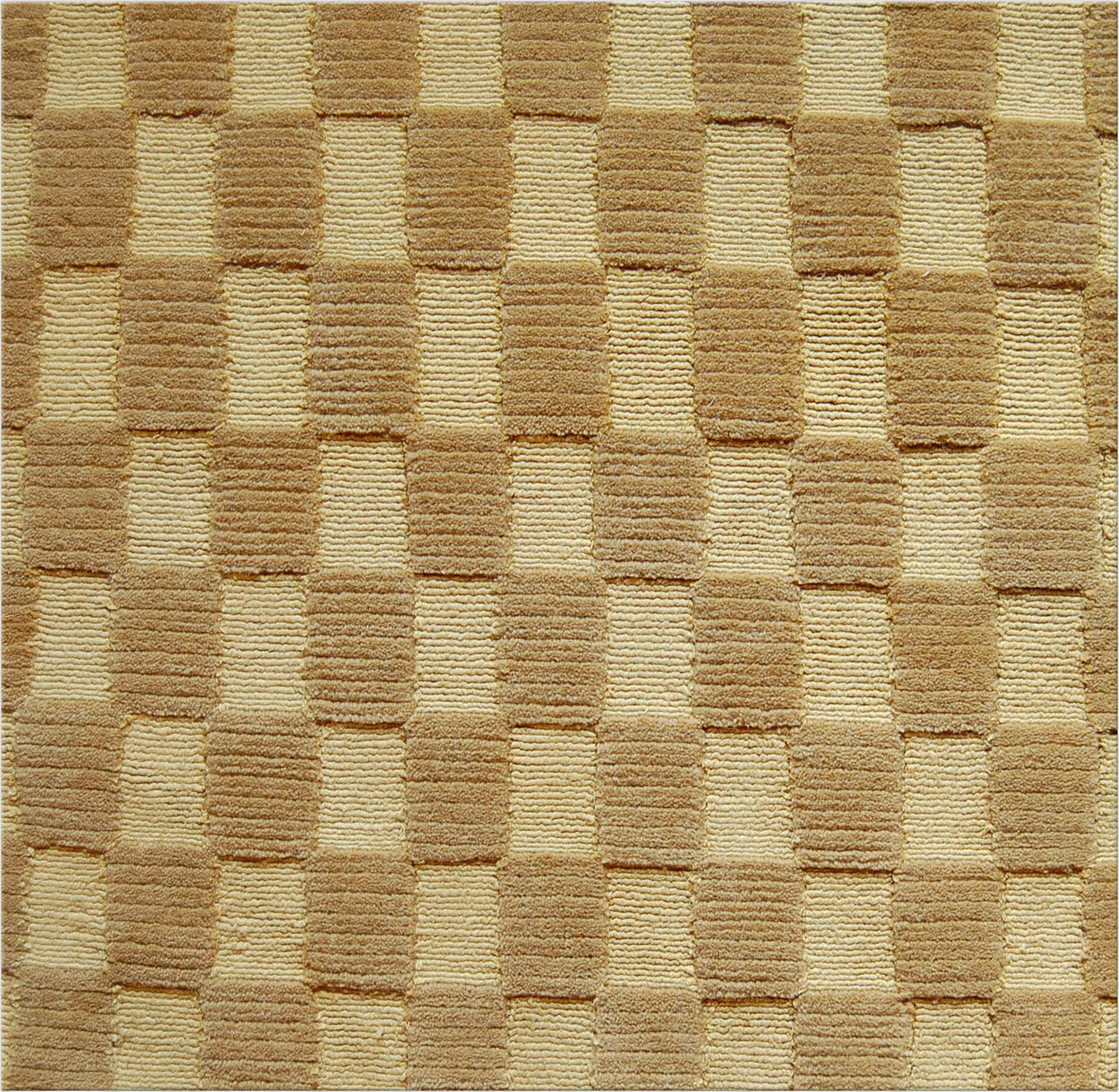
Wabi-sabi interiors depend on restraint, but restraint does not mean emptiness. The right rug gives a room softness, visual depth, and a sense of lived-in calm without introducing noise. For designers and homeowners looking at custom rugs through this lens, the goal is not perfection in the polished sense; it is a surface that feels grounded, handmade, and quietly resolved.
What makes this style especially interesting is that it asks the rug to do several things at once. It needs to feel tactile underfoot, support a subdued palette, and harmonize with architecture that may already be minimal, honest, and spare. A well-chosen rug can keep a room from reading cold, especially when the furniture is low, the walls are pale, and the detailing is intentionally reduced. In that setting, texture becomes the principal form of ornament, and the rug is often the most effective place to introduce it.
Explain Which Imperfections Feel Authentic Rather Than Accidental
Not every irregularity is appealing, and the wabi-sabi eye is more exacting than it may first appear. Authentic imperfection usually comes from the hand: slight shifts in weave tension, tonal variation within a field of color, or minor asymmetry in a border that signals a made object rather than a machine-perfect surface. By contrast, flaws that look accidental tend to feel distracting, such as inconsistent dye penetration, uneven edges that collapse the silhouette, or visible construction issues that break the rug’s composure. The difference is subtle, but it matters because wabi-sabi interiors rely on calm, not disorder.
For custom rugs, this distinction becomes especially useful because the designer can choose exactly how much variation is appropriate. A hand-knotted rug may include abrash, the gentle shading that appears when dye lots or fiber absorption shift slightly across the field. That variation can be deeply desirable when the room needs softness and movement without pattern. Likewise, a subtle, irregular abrased finish can echo plaster walls, limewash, or unfinished wood, provided it feels intentional and disciplined rather than decorative for its own sake.
It helps to think in terms of visual rhythm. A rug with too many events in the surface can compete with the room’s serenity, while a rug that is perfectly uniform may feel too clinical for the material language of wabi-sabi. The best balance often comes from one or two restrained forms of character: a gently mottled ground, a softly uneven pile, or a hand-spun yarn with visible variation. Those details are enough to suggest age, craft, and human touch without making the rug appear distressed.
Choose Materials That Show Tactility and Depth
Material selection is where wabi-sabi interiors gain their credibility. Natural fibers in interiors tend to work best when they have visible body and a surface that invites close reading, rather than a flat finish that disappears entirely. Wool remains a strong choice because it offers resilience, warmth, and enough fiber memory to hold a soft shape over time. Hand-knotted wool, in particular, can create a nuanced surface that feels dense but not heavy, which is ideal for rooms that need composure without stiffness.
Other fibers can be compelling when used with discipline. Silk adds reflective depth, but in a wabi-sabi setting it usually works better as an accent rather than a dominant material, because too much sheen can push the room away from quietness. Jute, sisal, and other plant-based fibers offer a more rustic tactility, though they are best evaluated carefully for comfort, maintenance, and the way they age under daily use. The goal is not simply to use natural materials in interiors for the sake of authenticity; it is to select a fiber whose aging process supports the room’s mood.
Construction matters as much as fiber. A flatweave will read differently from a cut-pile or low loop pile, and each produces a distinct relationship between light and shadow. In wabi-sabi rooms, low pile often works well because it preserves the architecture’s clarity while giving the eye enough texture to settle on. Hand-knotted rugs can be especially effective when the room needs longevity and refined surface variation, while a flatter weave may suit a more informal or minimalist interior that emphasizes planes and lines.
If the room is exposed to direct light, the way the fiber responds becomes even more important. Wool may soften in tone over time, and certain natural yarns will take on a more muted patina as they are used and cleaned. That evolution can be part of the appeal, but it should be anticipated rather than left to chance. A rug that begins with depth and a slightly quiet palette will usually age more gracefully than one that relies on a strong initial effect.
Keep Palette Quiet While Preserving Visual Interest
Color in a wabi-sabi interior should feel edited, not empty. A good rug palette usually draws from mineral, soil, smoke, sand, or faded botanical tones rather than high-chroma color, because those hues allow the room to remain calm under changing light. Warm gray, undyed ivory, mushroom, taupe, clay, and softened olive can all work beautifully when the surface needs to contribute warmth without becoming dominant. The objective is not monotony; it is a palette with enough complexity to reward a second glance.
Visual interest in a quiet rug often comes from tonal layering rather than pattern. A field color that shifts slightly across the surface can create an atmospheric effect that suits restrained interiors far better than a loud motif. This is where imperfect handmade surfaces become especially valuable, since subtle inconsistencies in weave, pile direction, or yarn thickness can act like movement in a monochrome painting. The room then gains depth from the way the rug holds light, not from any overt decorative gesture.
When coordinating with furniture, it is useful to consider both undertone and temperature. A cool stone floor paired with a cool-gray rug may become sterile unless there is some warm fiber or creamy variation to soften the result. Likewise, a room with oak, walnut, or ash can benefit from a rug whose color echoes the wood’s undertone without matching it exactly. That slight difference is what keeps the composition from feeling forced, especially in interiors that depend on simplicity and natural materials in interiors as their primary language.
Pattern can still be present, but it should work like a whisper. Ancient motifs, washed medallions, or barely legible geometric grids can be appropriate if they read as texture first and pattern second. In a wabi-sabi context, pattern density should usually be low enough that the rug does not demand attention from across the room. Up close, however, there should still be enough detail to justify the object’s presence and reward slow looking.
Show How to Pair the Rug With Simple Architecture
Wabi-sabi interiors are often built on architectural clarity: unadorned walls, simple millwork, restrained openings, and furniture with modest profiles. In that setting, rug scale and proportion become critical because the rug has to support the room without interrupting its quiet geometry. A rug that is too small can make a spare room feel hesitant, while one that is too expansive can erase the negative space that gives the architecture its breathing room. The ideal size usually extends confidently under the principal furniture group, allowing the composition to feel anchored even when the surfaces remain minimal.
In an open-plan room, the rug often serves as the boundary between living, dining, and circulation zones. A muted, textural rug can define the seating area without adding a hard visual edge, which is useful when the architecture is already clean and continuous. If the ceiling is low or the room has strong horizontal lines, a rug with subtle vertical movement in the weave can gently counterbalance the layout. If the room is tall and spare, a denser pile or slightly deeper tonal field can help settle the space and keep it from feeling underfurnished.
Consider a simple living room with a low sofa, a wood coffee table, and plaster walls. A rug in a warm mushroom tone with a hand-knotted, lightly irregular surface would support the room far better than a high-contrast or heavily patterned piece. The coffee table would read more distinctly, the sofa would appear more grounded, and the wall finish would gain a counterpart on the floor. That is the practical side of wabi-sabi design: every element is quiet, but each one has a clear role in the composition.
Architecture with strong material honesty also benefits from rug construction that respects that honesty. A refined hand-knotted rug can mirror the discipline of well-detailed millwork or a carefully finished plaster wall. If the room leans rustic, a slightly looser texture may feel appropriate; if it leans modern, a more controlled weave will preserve the architectural crispness. In either case, the rug should look like it belongs to the room’s structure, not like a separate decorative idea placed on top of it.
Practical Specification Notes for a Wabi-Sabi Rug
- Choose a low to medium pile if the room already has strong visual texture in wood, stone, or plaster.
- Favor yarns and finishes that create depth through fiber variation rather than bold contrast.
- Use a palette with softened undertones so the rug can work across morning, afternoon, and evening light.
- Match rug size to furniture grouping first, then refine for the room’s proportions and circulation.
- Consider how the surface will age, especially in homes where natural wear is part of the aesthetic.
These details may sound technical, but they are what separate a thoughtful rug from one that merely looks “natural.” A room built on calm materials deserves a floor covering that understands scale, light, and use. When that balance is correct, the rug becomes part of the architecture’s rhythm rather than a layer applied afterward. That is especially important in interiors that use restraint as a design principle, because every object must earn its place.
For homeowners and designers shaping such spaces, the value of made-to-order work is flexibility. A piece can be adjusted in proportion, fiber, tone, and construction so that it does not fight the room’s intent. If you are considering custom rugs for a project centered on softness, material honesty, and quiet character, the specification process is where the design becomes precise. It is the point at which a beautiful idea turns into a floor covering that actually supports the architecture, the furniture, and the way the room is lived in.
That same approach can be useful when comparing options such as hand-knotted rugs, custom carpet solutions for larger rooms, or a tailored size that resolves an awkward seating plan. Doris Leslie Blau often works at this intersection of texture, proportion, and craftsmanship, where the best result is rarely the loudest one. The most successful wabi-sabi rug is usually the one that feels as if it was always meant to be there.
FAQ
What makes a rug feel wabi-sabi rather than unfinished?
A rug feels wabi-sabi when its irregularities are controlled and deliberate. Slight tonal shifts, handwoven variation, and a calm surface can suggest craft and age, while ragged edges, poor tension, or unresolved construction usually read as unfinished. The distinction is especially important in custom rugs, where the details can be refined rather than left to chance.
Are natural fibers always the best choice?
Not always, although they are often the most suitable starting point for this aesthetic. Wool, silk blends, and plant-based fibers can all work, but the right choice depends on traffic, light exposure, maintenance expectations, and the desired level of softness. A well-selected synthetic or blended construction may be appropriate in some rooms if it better supports performance without sacrificing the visual character the project needs.
Can wabi-sabi still feel refined?
Yes, and refinement is often what keeps the style from becoming casual or rustic in a generic way. A rug with thoughtful scale, nuanced color, and disciplined texture can feel deeply refined precisely because it avoids excess. In fact, many of the most successful wabi-sabi interiors are defined by careful editing rather than overt minimalism.
How do I choose the right rug size for a quiet interior?
Start with furniture layout and circulation, then assess the room’s proportions. In a seating area, the rug should usually extend under the front legs of the main pieces so the arrangement feels grounded. For larger or open-plan rooms, a tailored size can help preserve the calm of the architecture while still defining the function of the zone.
When a rug is specified with this kind of care, it does more than complete the room. It holds the composition together, softens the acoustics, and gives the eye a place to rest without flattening the interior’s character. For guidance on materials, proportions, and the right level of surface variation, a specialist consultation can help translate the mood of wabi-sabi into a rug that feels measured, tactile, and lasting.