

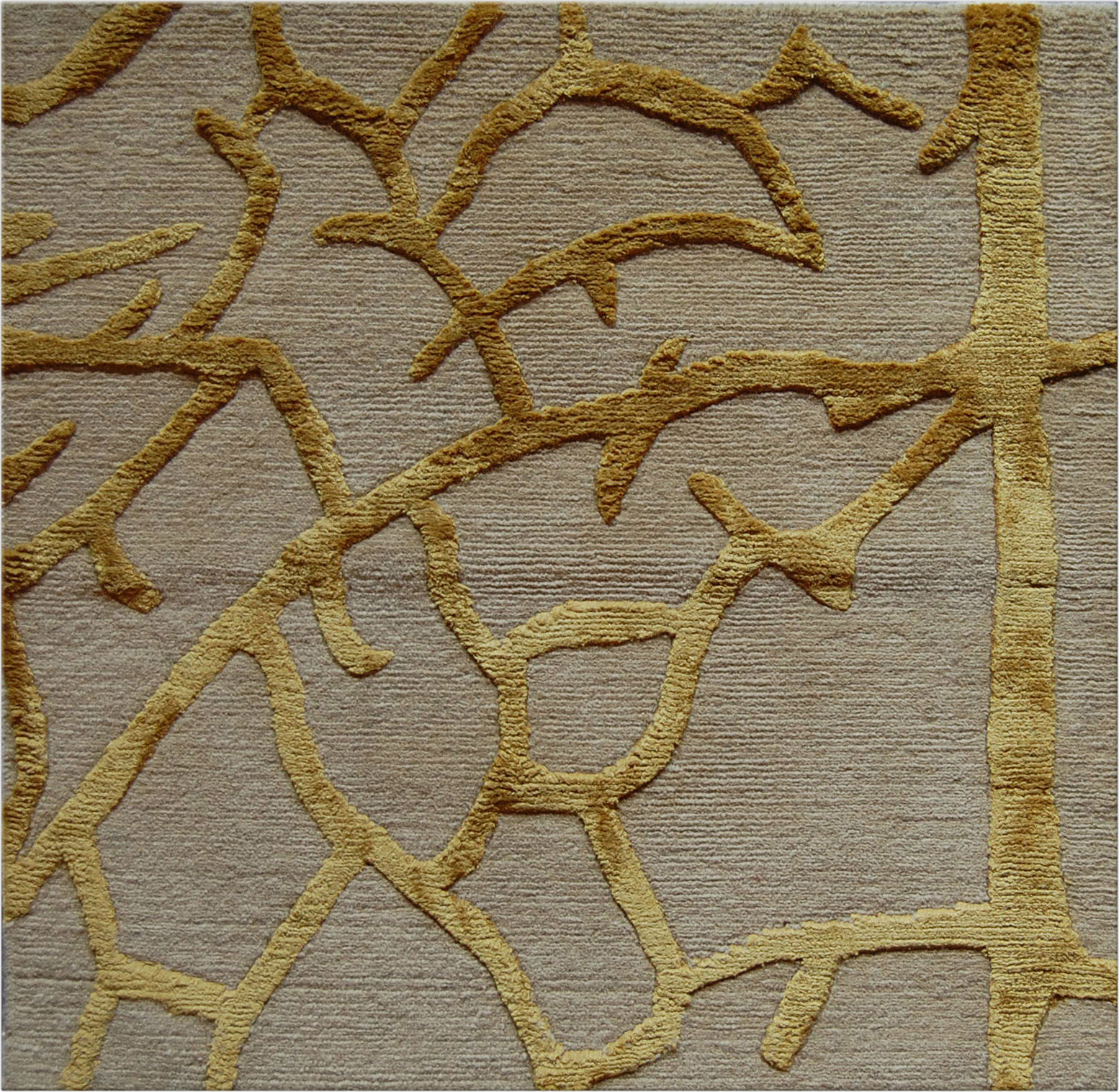
Open-plan rooms ask rugs to do architectural work. The right custom rugs can define a seating area, anchor a dining table, guide circulation, and keep the whole interior visually continuous, all without adding partitions or interrupting sightlines. In large, shared spaces, rug choice is less about decoration than about proportion, material, and the way furniture actually lives on the floor. When the room is spacious or oddly shaped, this becomes a question of how to zone open-plan interiors with enough clarity to feel intentional, but not so much separation that the space starts to fragment.
Designing for an open plan begins with reading the room the way an architect would: where people enter, where they pause, where conversation happens, and where movement must stay unobstructed. Rugs should support those paths rather than compete with them, which means the boundaries of each zone need to be established before you choose color or pattern. A living area, a dining area, and a transition route each place different demands on pile height, edge placement, and scale. Once those requirements are clear, selecting custom area rugs becomes a precise design decision instead of a decorative afterthought.
Identify the functional zones before choosing rugs
The most successful open-plan rooms are often the ones that look the calmest, but that calm is usually the result of careful spatial planning. Begin by mapping the room in practical terms: where the primary seating group will sit, where dining traffic will pass, whether there is a reading corner, and which areas need visual quiet. In many homes, one large room carries several uses at once, and each use needs a rug that matches its scale rather than forcing the furniture into a single blanket treatment. This is where custom rugs are particularly effective, because the size can be tailored to the room’s actual dimensions rather than to standard retail assumptions.
If you are working with a long, uninterrupted space, consider whether each zone should be visually distinct or whether one area should gently lead into the next. A sitting area may deserve a dense, grounding composition, while a dining zone may call for a flatter weave that allows chairs to move easily. A circulation path, by contrast, should usually remain uncovered or only lightly defined so it reads as passage rather than another destination. Thinking this way helps you avoid the common open-plan mistake of treating every square foot as equally important; in practice, the room functions best when the floor plan has hierarchy.
Furniture layout should always lead the rug decision, not the other way around. A sofa floating in the center of the room needs a rug that reaches under at least the front legs of the seating group, and ideally enough beyond the coffee table to prevent the composition from feeling compressed. A dining table needs breathing room for chairs to slide back without catching the border. In a generous room, custom oversized rugs can establish that balance elegantly, especially when a standard size would leave too much hard floor exposed and make the furniture look adrift.
Use scale and shape to separate seating, dining, and circulation
Scale does most of the visual organizing in an open plan. A rug that is too small turns a seating group into a loose cluster of objects, while one that is too large can swallow the architecture and flatten the room’s natural divisions. The goal is not simply coverage, but proportion: the rug should either contain the entire furniture arrangement or define it with enough margin to feel deliberate. In larger interiors, this often means choosing a broad rectangle, but unusual rooms may benefit from a square, a runner, or even a custom shape that follows the geometry of the space.
Shape can also establish hierarchy between zones. A long rectangular rug under a sofa arrangement emphasizes lateral movement and works well in rooms where one wall-to-wall axis is stronger than the other. A square rug can slow the eye and suit a more centered conversation area, especially when the furniture is arranged around a focal point such as a fireplace or sculptural table. If the dining area sits adjacent to a lounge, matching shapes may create too much sameness; slight variation in silhouette can help each zone read as separate while still belonging to the same design language.
Clear edges matter just as much as overall dimensions. In an open plan, the perimeter of a rug functions almost like a drawn line on a floor plan, so its placement should respond to sightlines from the room’s entrances. If a rug begins and ends too close to a wall opening, the zone can feel clipped; if it extends awkwardly into a walkway, circulation becomes visually messy. The best compositions respect the negative space around them. That spacing is what allows the room to breathe, and it is why a well-proportioned custom rug often feels calmer than a smaller, mass-market option.
Keep continuity through color or fiber
Open-plan interiors need cohesion, but cohesion does not require identical rugs. In fact, the most refined rooms often use a controlled palette across multiple zones while varying texture, pile, or pattern density. If the seating area has a wool rug with a subtle high-low surface, the dining zone might use a flatter wool or wool-silk construction in a related tone. The key is to repeat one or two visual cues—perhaps a shared undertone, a similar border language, or a family of neutrals—so the room feels curated rather than assembled piece by piece.
Fiber choice shapes how the room reads under changing light. Wool tends to offer depth, resilience, and a grounded matte quality that works beautifully in family living spaces. Silk or silk blends can introduce sheen and a more formal tone, but they should be used with care in high-traffic zones because the surface changes more visibly with wear and light. In a room with large windows, even a subtle variation in fiber can affect how the zones relate to one another throughout the day. That is one reason designers often specify materials not only for durability, but also for the way they hold or diffuse daylight.
Color temperature deserves equal attention. Cool grays and blue-based neutrals can sharpen a modern interior, while warmer ivories, tobacco tones, and muted terracottas can soften a room with stone, plaster, or dark wood. If the furnishings already contain multiple finishes, rugs can act as the stabilizing field that prevents the room from becoming visually noisy. For clients who prefer restraint, quiet luxury is often achieved through texture rather than contrast: a tonal rug with a discreet pattern can define the zone while keeping the atmosphere relaxed and composed.
Avoid common mistakes that make open plans feel fragmented
One of the most common errors is using several unrelated rugs without a unifying logic. Separate zones do not need identical coverings, but they do need a shared design vocabulary. If one area is highly patterned, another highly textured, and a third visually blank, the room can lose coherence. The better approach is to decide which zone should carry the strongest visual emphasis and let the others support it through calmer construction, quieter color, or more restrained scale.
Another mistake is placing rugs so they stop at random distances from furniture legs. This creates the sense that the room was furnished in pieces rather than considered as a whole. Seating groups usually work best when the front legs of sofas and chairs sit on the rug, which establishes containment without forcing every object onto the textile. Dining rugs should extend well beyond the table edge so chairs remain on the rug when pulled out. In both cases, the furniture should feel intentionally anchored, not precariously balanced at the border.
Pattern density is easy to overestimate in open plans. A strong motif can be a powerful tool, especially in large rooms that need structure, but too many competing patterns will break the room into unrelated fragments. If there is already a bold upholstery fabric, sculptural lighting, or expressive art, the rug may need to play a quieter role. On the other hand, a room with minimal furnishings can often support a more articulated rug design, because the floor becomes a substantial visual plane. The right solution depends less on trend than on the amount of visual information already present in the room.
Construction affects usability as much as appearance. A low-pile or flatwoven rug is usually more practical in dining areas and major circulation routes because it handles chair movement and foot traffic gracefully. A thicker hand-knotted rug may be ideal in a seating zone where comfort and acoustic softness matter more. If the room includes pets or children, durability becomes part of the zoning strategy: choose fibers and pile heights that can support the life of each area instead of trying to make one textile do everything. For many homeowners, that is the point at which custom rugs become the most sensible option, because the specification can respond to function as carefully as to style.
A realistic example: one room, three functions, no visual clutter
Consider a long apartment living space with windows along one side and an entry opening near the center. A designer might place a large sofa-and-chair group near the windows, define it with a generously scaled wool rug, and use a flatter, more restrained rug under the dining table farther back in the room. Between them, the circulation path remains mostly uncovered so the eye can travel cleanly from one end of the room to the other. The two rugs share a similar undertone and complementary pattern rhythm, which allows them to read as part of one composition rather than as competing islands.
In that scenario, the rugs are not merely decorative finishes; they are visual infrastructure. The seating area feels grounded, the dining area feels orderly, and the passage between them stays legible. The result is a room that works from every angle, whether viewed from the entry, the sofa, or the table. That kind of balance is especially valuable in open-plan interiors where there is no wall to do the separating for you.
When to consider hand-knotted construction or bespoke sizing
Some open plans are easy to solve with off-the-shelf dimensions, but many are not. Irregular room proportions, wide spans, angled walls, or large furniture groupings can make standard sizes feel either cramped or excessive. In those cases, bespoke rugs give you control over exact borders, pattern placement, and proportions. If your room requires a very specific footprint, a tailored approach also allows the rug to support the architecture rather than fighting it. Designers often use this route when the goal is to create a room that looks collected, not assembled.
Construction should be considered alongside size. Hand-knotted rugs bring durability, refinement, and the subtle surface variation that gives a room depth over time. They are especially useful when the rug will serve as a long-term anchor in a principal living area. If you are comparing options, it can help to think of the rug as part of the room’s permanent structure. A good custom rug design process will account for both the tactile and spatial demands of the project, which is where guidance from specialists becomes especially valuable.
FAQ
Can one rug define more than one zone?
Yes, but only if the space is visually unified enough to support it. In very large open plans, one substantial rug can sometimes bridge a seating area and a nearby reading corner, especially when the furniture remains within one conversational cluster. The risk is that oversized coverage can blur boundaries that should remain distinct, so this works best when the functions are closely related and the furniture arrangement is disciplined. For most homes, separate zones are clearer when each has its own rug with a shared design language.
How many rugs does an open plan need?
There is no fixed number, because the answer depends on how many functions the room contains and how far apart those functions sit. A compact open-plan apartment may need only one rug to anchor a living area, while a larger great room may call for two or three rugs to organize seating, dining, and a secondary nook. The deciding factor is whether each rug helps the room read more clearly. If an additional rug adds clutter instead of structure, the space probably does not need it.
Should the rugs match or coordinate?
They should coordinate more often than they should match. Exact repetition can feel rigid, while unrelated rugs can make an open plan feel disjointed. A shared palette, related weave structure, or consistent undertone is usually enough to connect the zones. Many designers prefer to vary texture and scale while keeping one element consistent, because that creates continuity without monotony.
What if the room is too large for standard rug sizes?
That is one of the clearest signs that custom sizing may be the better solution. Standard rugs often leave too much exposed floor in very large rooms, which can make furniture look detached and the architecture feel underused. With custom oversized rugs, the footprint can be adjusted to the actual room layout, allowing the rug to ground the furniture properly and preserve balanced circulation around it. This is especially useful in rooms with long sightlines or unusually broad seating arrangements.
Open-plan living works best when the floor plan feels intentional from the first step inside the room. If you are weighing scale, materials, and layout for a project that needs more precision than a ready-made size can offer, Doris Leslie Blau can help you think through the possibilities with the kind of design guidance that starts with the room itself.