

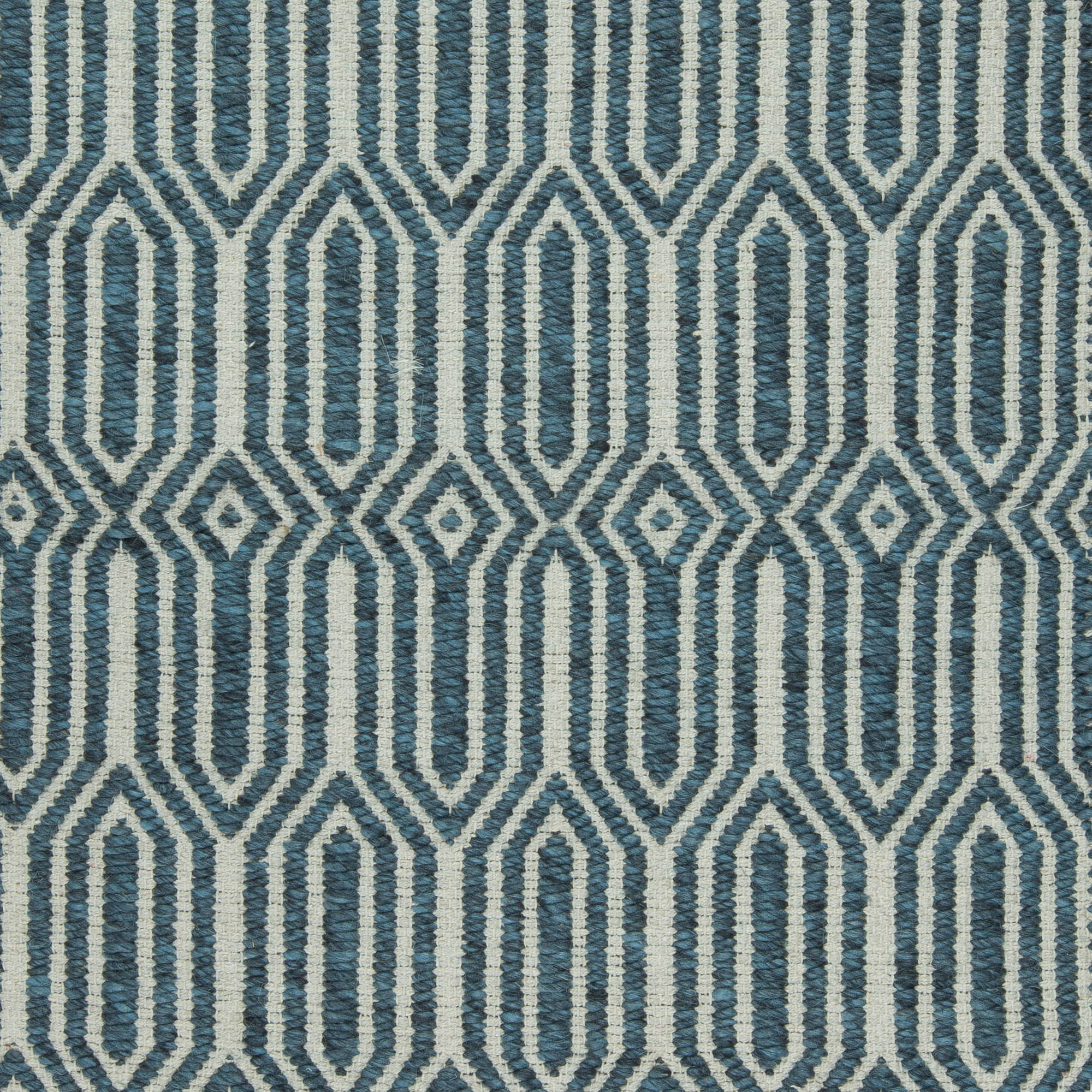
When people compare custom rugs, pile height is one of the most overlooked decisions and one of the most consequential. It affects how a rug feels underfoot, how clearly its pattern reads, how much maintenance it will ask for, and whether it suits a formal sitting room or a busy family space. If you are weighing rug pile height for a new room, the right choice is rarely about “best” in the abstract; it is about how the rug needs to perform in a particular setting.
Pile height refers to the visible length of the fibers above the rug’s foundation. In practical terms, it is the difference between a flat, tailored surface and a deeper, more cushioned one. Low, medium, and high pile each create a different relationship between texture, light, and daily use, which is why designers treat the specification as part of the room plan rather than a finishing detail. The same pattern can appear crisp and architectural at one pile height, then soft and atmospheric at another.
That matters especially in custom work, where scale, fiber, and weave are chosen intentionally. A room with strong daylight and clean-lined furniture may benefit from a lower profile that keeps the composition sharp. A more relaxed interior, or one that needs acoustic absorption and comfort, may call for a loftier surface that adds visual depth and physical softness. Understanding pile height helps you choose a rug that supports the room instead of competing with it.
Define pile height in clear terms
Rug pile height is the thickness of the upright fiber section, measured from the backing to the tips of the yarn. It is not the same as rug density, although the two are often confused. Density describes how closely the fibers are packed together, while pile height describes how tall they stand. A low-pile rug can be dense and durable, and a high-pile rug can feel plush without being especially resilient if the construction is loose.
In broad terms, low pile usually means a flatter surface with minimal vertical tuft. Medium pile offers more cushion and visible texture without becoming shag-like. High pile creates the deepest hand feel and the most pronounced softness, but it also introduces more movement in the fibers and more tendency to trap debris. For interiors, the question is not simply comfort versus durability; it is how the pile height changes the rug’s behavior in daily use, especially around furniture and foot traffic.
Construction matters here as much as height. A hand-knotted rug, for example, can carry a low or medium pile with exceptional clarity because the structure is precise and the surface is controlled. A hand-tufted or machine-made piece may present a different tactile character even when the measured pile height is similar. That is why material and craftsmanship should be considered alongside rug softness, especially when you are ordering custom-made rugs for a specific room function.
How pile affects pattern clarity and foot feel
Low pile tends to preserve pattern edges, borders, and fine linework with greater accuracy. If the design includes geometric motifs, restrained florals, or tonal stripes, a flatter surface usually helps the eye read the composition cleanly from across the room. This is particularly useful in spaces where the rug is meant to anchor furniture visually rather than act as the loudest decorative element. Low pile also reflects light more evenly, which can make color shifts appear crisper and more architectural.
Medium pile softens those same motifs just enough to create depth. The pattern still reads, but the surface has more dimensional variation, which can be attractive in transitional interiors or rooms that need warmth without excess volume. This is often a good middle ground for homeowners who want rug texture they can see as well as feel. It is also forgiving in mixed-light conditions, where a slightly taller pile can prevent the rug from looking too flat under overhead lighting.
High pile changes the visual and tactile experience most dramatically. It usually delivers the strongest sense of rug softness, but that softness can come with reduced pattern precision, especially in detailed designs. A border may appear less defined, and small motifs can blur into a more atmospheric field. In exchange, high pile introduces a luxurious, almost upholstered feel that works well in quieter spaces where the rug is intended to be experienced at close range.
If you are selecting a rug primarily for the way it feels, remember that softness is not determined by pile height alone. Fiber choice, yarn twist, and weave all influence the hand. Wool can feel resilient yet gentle, while silk content can sharpen luster and create a more delicate surface. A dense low-pile wool rug may feel surprisingly comfortable, whereas a tall but loosely built rug can feel less refined than expected. For a serious specification, pile height should be read alongside material and construction, not in isolation.
Match pile choice to room traffic and furniture
Room use is usually the deciding factor. In high-traffic areas such as hallways, family rooms, and entry-adjacent seating zones, lower pile tends to hold up better because it resists crushing and is easier to keep visually tidy. It also makes furniture legs sit more securely, which matters under sofas, dining tables, and case pieces. In rooms where chairs move in and out repeatedly, a flatter rug surface tends to reduce interference and wear marks.
Dining rooms almost always benefit from low pile or a very restrained medium pile. Chair movement is the key issue: a taller surface can catch chair legs, create uneven movement, and show indentation quickly beneath a table. A low-pile custom rug allows the furniture to function properly while still bringing warmth and definition to the dining zone. If the room is formal, this also helps the table remain visually dominant rather than sinking into a deep textile field.
Bedrooms and sitting rooms allow more freedom. If the rug is meant to be experienced barefoot, a medium or higher pile can improve comfort at the bedside or in a quiet reading area. However, scale still matters. A thick rug under low-profile furniture can make the composition feel heavy if the pile is too tall for the room’s proportions. In smaller rooms, a high pile can also reduce perceived floor area, which is useful only when the goal is intimacy rather than openness.
For open-plan interiors, pile height can help define zones. A lower-pile rug under the main seating arrangement can provide clean edges and prevent visual clutter, while a softer, medium-pile piece in a lounge corner can signal a more relaxed function. In homes with pets or children, practical durability often outweighs plushness. That does not mean the rug must feel hard; it means the construction should support frequent use without becoming difficult to maintain or visually worn too quickly.
A practical example
Consider a contemporary living room with a linen sofa, walnut tables, and large windows facing afternoon sun. A high-pile rug might feel inviting, but it could also obscure the geometry of the seating plan and show vacuum marks or compression around the coffee table. A low- to medium-pile rug, especially in wool, would likely preserve the room’s clean lines while still offering enough texture to keep the floor from feeling severe. In a quieter bedroom with heavier drapery and softer lighting, the same pile height choice would shift, because the room can support more tactile depth without losing clarity.
Outline care and maintenance differences
Care expectations change as pile rises. Low-pile rugs are typically easier to vacuum because debris stays nearer the surface and the fibers are less likely to bend deeply around particles. They also tend to reveal spills more quickly, which is not always a disadvantage; faster visibility often means faster treatment. For households that want a rug to look composed with minimal effort, low pile is the most straightforward option.
Medium pile requires a bit more attention but still remains manageable for most homes. The surface texture can hide some everyday dust and minor irregularities, yet the fibers are not so deep that routine care becomes cumbersome. This is often the sweet spot for owners who want comfort without feeling as though the rug demands specialized maintenance every week. In designer specifications, medium pile is frequently chosen when the room needs a balance of softness, appearance, and ease of upkeep.
High pile needs the most deliberate care. It can hold dust, pet hair, and crumbs more readily, and it often requires slower vacuuming with appropriate settings to avoid pulling or flattening the fibers. Furniture indentations may also remain visible longer, particularly under heavier pieces. None of this makes high pile a poor choice, but it does mean the owner should be comfortable with a more attentive care routine and a surface that ages more visibly as it is used.
Fiber type should influence maintenance expectations as much as height. Wool is often favored because it offers resilience, dimensional texture, and good recovery after compression. Silk or silk-rich constructions can be beautiful, but they are more sensitive to abrasion and may show traffic patterns sooner, especially in taller piles. If you want a rug that combines luxury with day-to-day practicality, ask how pile height, fiber, and weave will work together in the room’s actual conditions rather than relying on appearance alone.
How to think about pile height when specifying custom rugs
With made-to-order work, pile height should be decided early in the process because it affects not just the feel of the rug but its proportion in the room. A taller pile can subtly change how a rug meets a doorway, how it sits under a dining chair, and how it reads against baseboards or adjacent flooring. Those details matter more in custom rugs because the piece is being tailored to architecture, furniture dimensions, and how people move through the space. If the project requires a highly precise fit, pile height becomes part of the room’s structural logic.
It is also worth considering how the rug will interact with light and color. Deeper pile tends to create more surface shadow, which can intensify tone and make colors feel richer but slightly less exact. Lower pile often sharpens color boundaries and can make a pattern seem more graphic. That distinction is especially important in interiors where the palette is restrained and the rug is expected to carry nuance rather than obvious contrast.
For anyone comparing options, the most useful questions are simple: Will chairs move across it often? Do you want the pattern to read crisply or softly? Is the room meant to feel tailored, relaxed, or deeply cushioned? The answers usually point toward one pile height more clearly than any general rule can. A good specification honors use first, then beauty, then maintenance—because in a well-designed room, those priorities should support one another.
- Choose low pile for dining rooms, corridors, busy living areas, and rooms that need crisp pattern definition.
- Choose medium pile when you want a balance of comfort, texture, and practical upkeep.
- Choose high pile for quieter rooms where softness, warmth, and a more atmospheric surface matter most.
FAQ
Is higher pile always softer?
Not always. Higher pile usually feels plusher because the fibers stand taller, but true softness also depends on fiber content, yarn twist, and how tightly the rug is constructed. A dense wool rug with a lower pile can feel more comfortable and refined than a taller rug that is loosely built. When evaluating rug softness, it helps to touch the sample, not just read the specification.
What pile height is best for a dining room?
Low pile is generally best for a dining room because it allows chairs to move more easily and keeps the table area visually clean. A very restrained medium pile can work if the construction is firm and the dining set is lightweight, but a tall surface usually creates more friction and uneven wear. The goal is to support movement without letting the rug compete with the function of the room.
Does low pile always wear better?
Low pile often performs better in high-traffic areas, but wear depends on more than height alone. Fiber quality, density, construction method, and care routine all influence durability. A well-made low-pile rug may hold up beautifully, but a poorly made one can still show stress quickly. Likewise, a carefully specified medium-pile rug can perform well in the right room.
How does pile height affect rug texture in a decorated room?
Pile height changes how strongly the texture registers visually and physically. Lower pile tends to look smoother and more tailored, while higher pile creates more shadow and movement across the surface. In rooms with strong pattern, the pile can either sharpen or soften the design, which is why it should be chosen with the furniture, lighting, and overall palette in mind.
For projects that need a rug to fit a room precisely in both scale and feel, pile height is worth discussing as part of the broader specification. Doris Leslie Blau approaches these decisions through material knowledge, craftsmanship, and spatial judgment, so the final piece supports the room instead of simply filling it. If you are exploring a custom rug for a specific interior, thoughtful design guidance can help you choose a surface that looks right, feels right, and works well over time.