

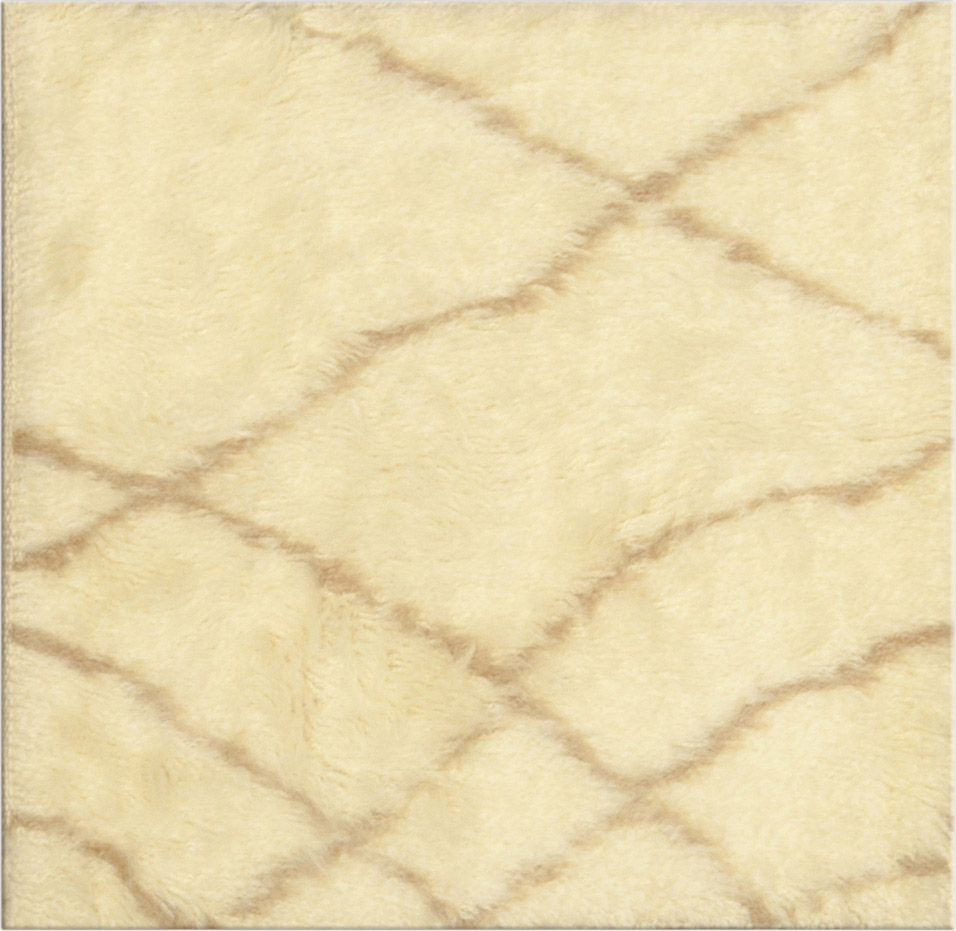
Patina is one of the most misunderstood qualities in handmade rugs. In the right setting, it can soften a room, deepen color, and reveal the character of a piece without making it feel tired or overworked. For homeowners and designers considering custom rugs, understanding how age, foot traffic, and daylight interact with fiber, dye, and construction helps separate meaningful character from actual deterioration.
A handmade rug changes slowly, and those changes are not always visible at first. The surface may become more supple under furniture, high points may lighten where feet cross most often, and certain dyes may mellow as light moves across the room through the day. These shifts are part of how a rug becomes integrated into an interior, especially when the room is shaped around proportion, not just decoration. The challenge is knowing when that softening adds depth and when it begins to compromise the structure or clarity of the design.
Define patina versus damage
Patina is the visual and tactile record of use; damage is the loss of integrity. A rug with patina may show subtle abrading at the surface, slightly faded high points, or a gentler contrast in the pattern, yet its field, edges, and foundation remain sound. Damage is different: it includes breaks in the warp or weft, brittle fibers, open seams, unstable edges, moth activity, or distortion caused by moisture and improper cleaning. In practice, the distinction is not always obvious from a distance, which is why a close inspection matters before assuming that any aged look is desirable.
Designers often value patina because it can reduce the visual hardness of a large room. A formal dining space or a high-ceilinged living room can feel less rigid when the rug has a softened surface and a slightly muted palette. That said, a well-made rug should age in a way that respects its construction, especially when it is intended for long-term use. The best handmade pieces develop character gradually, without losing edge definition, pile stability, or the legibility of the drawing.
How fibers and dyes age differently
Different fibers do not age in the same way, and that difference is central to evaluating custom rugs. Wool tends to compress and polish over time, especially in areas of regular traffic, which can create a smoother sheen rather than a distressed look. Silk is more delicate and can reflect light dramatically, so even minor abrasion may show as a change in luster or directionality. Cotton, often used in foundations or as part of flatweaves, is structurally useful but less forgiving if it is exposed to chronic wear or moisture.
Dyes also behave differently depending on their source, depth, and how the pile is cut or left looped. Natural dyes often shift in a nuanced way, with some tones warming, cooling, or receding as the rug ages and receives light. More saturated synthetic palettes can hold their intensity longer, but they may also reveal wear more plainly because the color remains so crisp against the thinning pile. When evaluating a handmade rug, look at how the pattern reads in both direct light and shade; a thoughtful composition will still feel balanced even as the surface changes.
Construction matters as much as fiber. Hand-knotted rugs typically age with more integrity than machine-made pieces because the structure is individually built and can tolerate gradual surface change if the foundation remains secure. Pile height is another factor: a dense, low pile may reveal wear sooner at the surface, while a thicker pile can hide early softening but may also show traffic lanes once the pile begins to compress. If the piece has rug fringe, examine whether the fringe is purely decorative or structurally integral, because deterioration there can indicate stress at the rug’s ends rather than simple cosmetic aging.
Why light and traffic change appearance
Light alters a rug because color is never static once it enters a room. Daylight can bleach some tones over time, especially if the rug sits near glazing without rotation, while lower, warmer artificial light can make the same palette appear richer and deeper. This is why two rugs woven from similar materials can age differently depending on whether they sit under north light, in a sun-filled loft, or in a room where lamps stay on for long evening hours. The effect is most visible in high-contrast patterns, where one portion may fade slightly faster than the surrounding ground.
Traffic creates a different set of visual changes. In entryways, along sofa fronts, and at the turning points of circulation, fibers flatten first, which can change both color and texture. The rug may look lighter in those lanes because compressed pile reflects light differently than upright pile, even if the dye itself has not changed much. In open-plan interiors, this matters especially where rugs define zones; a seating area placed too close to an active passage will age unevenly, while a better layout distributes movement more thoughtfully across the field.
Pattern and scale also influence how aging is perceived. Small-scale motifs can disguise modest wear because the eye reads the surface as continuous texture, while large medallions or broad borders may expose uneven fading more clearly. This is one reason custom-made rugs are often specified with the room in mind: the right balance of motif density, ground color, and border width can help the rug remain visually composed as it develops character. In a quiet interior, that gradual change can become part of the room’s architecture rather than a distraction from it.
What to watch for in different materials
Wool is often the most forgiving material for graceful aging. It has natural resilience, a slightly elastic hand, and a capacity to absorb surface compression without looking worn too quickly. Over time, a wool rug may develop a soft sheen in places of frequent use, which many designers appreciate because it reads as settled rather than damaged. Still, wool can felt or abrade if vacuumed too aggressively or cleaned with harsh chemistry, so a durable fiber is not an excuse for careless maintenance.
Silk brings visual clarity and a luminous surface, but it demands a more controlled environment. Because silk catches light so readily, traffic marks and color shifts can become visible sooner, especially in pale or jewel-toned grounds. It is best used where the rug is admired from multiple angles and not asked to absorb the heaviest daily circulation. Blends can offer a useful compromise, with silk used to emphasize motif detail and wool providing the underlying resilience that supports long-term use.
Vegetable-dyed and hand-dyed rugs can age beautifully, but they should be assessed with an eye for tonal movement rather than absolute consistency. Minor variation is part of the appeal, though uneven exposure to light can exaggerate that variation if the rug is not rotated. Antique and semi-antique rugs often show the most layered patina because their materials have had time to settle, yet those same pieces require careful evaluation to ensure the aged look is not masking weakness at the edges, ends, or foundation.
How rug finishing affects the way patina appears
Rug finishing influences whether aging reads as elegant or uneven. Shearing, washing, and trimming adjust the surface before a rug enters the room, affecting how light lands on the pile and how visible minor wear becomes later. A carefully finished rug will usually present cleaner transitions between high and low points, which helps patina develop in a controlled way. If finishing is overly aggressive, however, the pile may start too short or too polished, making the first signs of wear appear abrupt rather than nuanced.
Edges and ends deserve equal attention. Binding, overcasting, and fringe treatment are not just finishing details; they are part of how the rug withstands movement, vacuuming, and repositioning. The right rug fringe should be secure and proportionate to the piece, not decorative in a way that invites snagging or fraying. On some rugs, fringe is integral to the structure and should be treated as a functional extension of the warp; on others, it is a visible finish that can be protected through placement and care. When these details are well executed, they help the rug age evenly from edge to center.
Practical scenarios: where patina helps and where it hurts
Consider a formal living room with limited direct sun, generous seating, and a rug chosen to anchor the furniture grouping. In that setting, a wool or wool-silk piece may gain a soft, refined sheen at the center while still holding its borders clearly, which can make the room feel more settled. By contrast, the same rug in a family room with children, pets, and constant circulation may show compressed lanes and dulled spots more quickly, especially if the pattern is large and the ground color is pale. The material is only part of the equation; layout, traffic, and light exposure determine whether the aging will feel graceful or premature.
Now imagine a library or study where the rug sits under a desk and around a reading chair. Here, a deeper color and denser weave can conceal modest wear while still developing an appealing surface polish under the chair’s path. In an airy gallery-like room, though, the same rug may need stronger pattern definition and more stable coloration so that subtle wear does not make the composition look washed out. This is where the choice between antique character and newly woven precision becomes a design decision rather than a matter of preference alone.
Care habits that support graceful aging
Good maintenance does not prevent patina; it shapes it. Regular vacuuming with appropriate suction, prompt attention to spills, and rotation every few months can keep the rug aging evenly across its surface. Rotation matters because light and traffic rarely distribute themselves symmetrically, and even a well-placed rug can develop one-sided fading if it remains in the same orientation for years. For larger interiors, this is especially important where furniture anchors the composition but circulation flows around the perimeter.
Padding, placement, and cleaning methods also influence long-term appearance. A proper underlay reduces slippage and absorbs some of the pressure from footfall, which can limit harsh compression at the pile. Heavy steam cleaning or dry cleaning done without regard for fiber type can distort color and texture, so handmade rugs deserve a method matched to their materials and construction. If a rug includes delicate rug fringe or a finely detailed edge, even routine vacuuming should be done carefully so the finishing does not become the first point of failure.
For rooms that receive strong daylight, window treatments can be as important as the rug itself. Sheers, shades, and furniture placement can all reduce concentrated fading without making the space feel closed in. Designers often think about this at the specification stage, especially when selecting custom rugs for rooms with a precise palette or a strong architectural axis. If you want a piece to age with elegance rather than unpredictably, the room should support that outcome from the start. A thoughtful custom-made rugs consultation can help align fiber choice, scale, and finishing with the actual conditions of the interior.
When to embrace character and when to intervene
Not every sign of age calls for restoration, and not every surface irregularity is part of the charm. Light patina, gentle sheen, and subtle color softening can be desirable if the rug remains structurally sound and visually balanced within the room. Once wear becomes uneven enough to affect the drawing, once edges start to open, or once the foundation begins to show through, intervention becomes a preservation issue rather than a stylistic choice. The most successful interiors usually distinguish between the character a rug has earned and the deterioration it can no longer afford.
That distinction is where expert guidance matters. Doris Leslie Blau often approaches rugs as both design objects and working textiles, which means evaluating not only how a piece looks today but how it will age in relation to the room around it. Whether you are considering an antique rug with visible history or a newly made piece intended to develop a softer finish over time, the goal is the same: the rug should remain proportionate to the architecture, resilient in use, and coherent as it changes.
FAQ
Is patina the same as wear?
No. Patina is the refined, accumulated change that can give a handmade rug depth and softness, while wear is the point at which use begins to compromise the structure, clarity, or stability of the piece. A rug may have visible patina and still be in excellent condition if the foundation, edges, and pile remain secure.
Do some rugs age better than others?
Yes. Wool rugs generally age more gracefully than delicate silk pieces in active rooms, and a well-made hand-knotted construction tends to hold up better over time than a less durable build. Materials, dye quality, pile height, traffic level, and light exposure all influence whether aging reads as elegant or uneven.
Can a new rug be designed to develop character?
Absolutely. Designers can specify materials, pile height, color depth, pattern scale, and rug finishing to encourage a controlled, appealing evolution over time. A rug intended to mellow gracefully should be chosen with its room conditions in mind so that its future character aligns with the interior rather than fighting it.
What is the role of rug fringe in aging?
Rug fringe can affect both appearance and durability, depending on whether it is a structural part of the rug or a finishing detail. If fringe becomes frayed, stained, or uneven, it may signal stress at the ends of the rug and should be assessed before the problem spreads into the body of the piece.
How can I tell whether fading is acceptable?
Check whether the fading is even, whether the pattern still reads clearly, and whether the rug’s colors remain harmonious with the room. If the change is subtle and balanced, it may be part of the rug’s patina; if it creates visual patchiness or weakens the composition, it is more likely to be a maintenance issue.
For homeowners and designers who want a rug that will age with intelligence rather than accident, the best decisions happen early, when materials, scale, and finishing can still be tailored to the room. Doris Leslie Blau’s gallery expertise can help you evaluate character, structure, and longevity with the kind of precision handmade rugs deserve.