

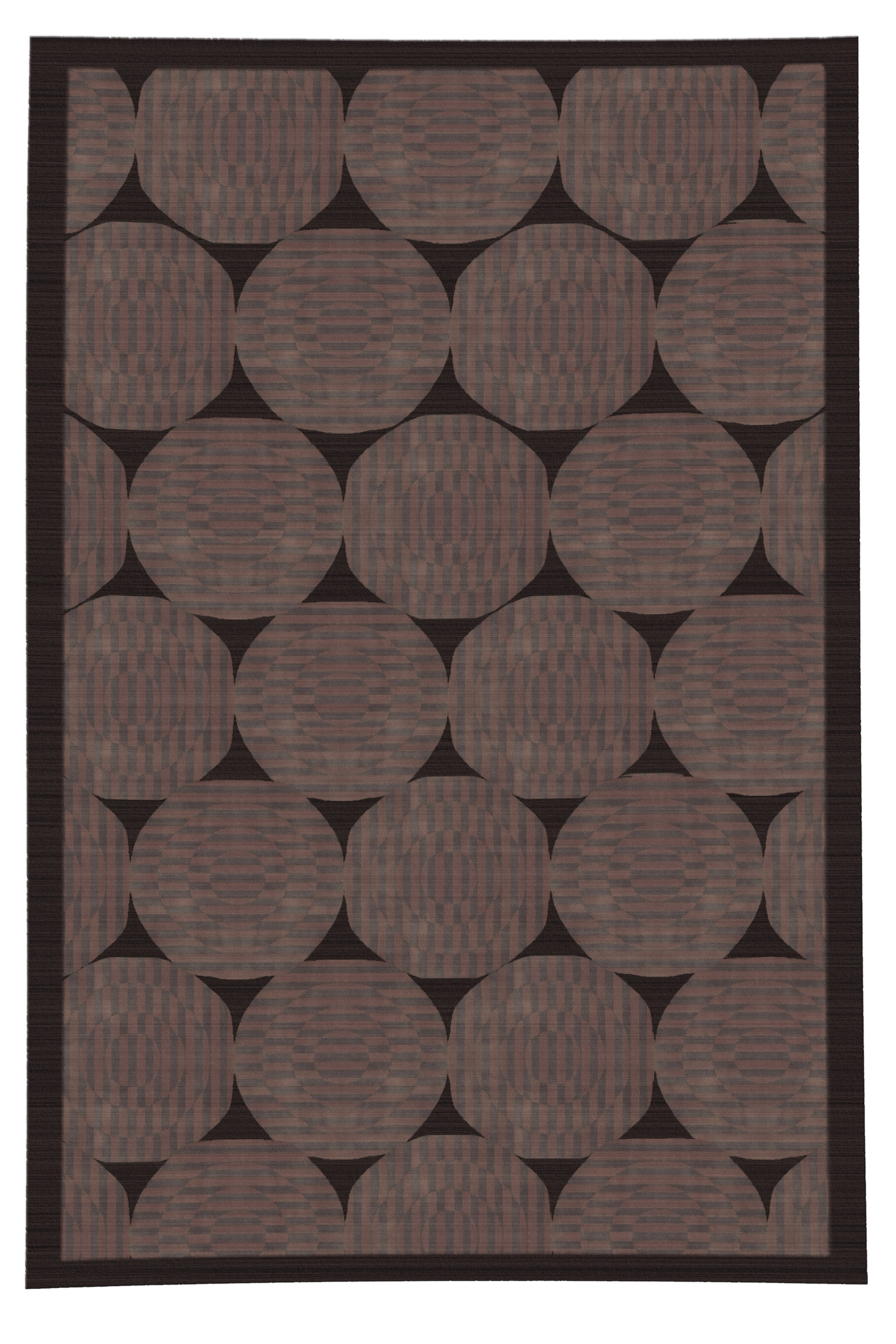
Seasonal rug rotation is less about moving décor for its own sake and more about managing light, traffic, and visual balance with intention. When handled carefully, it can support rug preservation, slow uneven fading, and help a room feel composed throughout the year without looking rearranged for the sake of novelty.
For homeowners working with custom rugs, the question of how to rotate rugs seasonally is really a question of planning. A large wool carpet in a south-facing living room, for example, will age differently from a silk-accented rug in a shaded bedroom or a hallway runner that receives direct traffic at one edge. The goal is not to create a dramatic reset each season, but to redistribute wear patterns, preserve color, and keep the relationship between furniture, light, and circulation consistent.
Rotation also has a design dimension. Rugs are not isolated objects; they anchor seating groups, define circulation paths, and influence how a room reads from the doorway. When a rug is turned without considering where the sofa legs, dining chairs, or bed frame will land, proportion can feel subtly off even if the rug itself is in perfect condition. Good rotation protects both the textile and the room’s structure.
Decide whether rotation should be visual or preventative
The first decision is whether you are rotating to change the look of the room or to prevent uneven aging. Those two goals overlap, but they are not identical. A visual rotation might mean shifting a patterned rug so the medallion reads differently from the main entry point, or turning a stripe so it aligns with a longer wall and better supports the architecture. A preventative rotation is more mechanical: it aims to expose different areas of the rug to sunlight and foot traffic so one zone does not fade or compact faster than the rest.
In rooms with strong daylight, preventative rotation matters most. Even high-quality wool and wool-silk rugs will react to ultraviolet exposure over time, and a rug with a naturally rich dye palette can show a noticeable difference between the side near the window and the side tucked under a sofa. If the room receives seasonal light shifts, such as stronger winter sun or summer glare, a planned rotation can slow the development of a visible light line. That matters especially for pieces with subtle abrash or a nuanced rug patina, where controlled aging is part of the appeal but uneven fading is not.
For rooms with only moderate exposure, the decision may come down to traffic. A living room that hosts daily family use will compress differently at the main approach than at the edge near a side chair. In that case, rotation is a practical tool for preserving pile height and keeping the field of the rug from developing a worn path that reads before the rest of the room does.
Mark furniture and directional placement before moving the rug
Before lifting a rug, note exactly how the furniture sits on it. Photographs are useful, but measurements are better. Record where the front legs of the sofa meet the border, how far the coffee table sits from the central motif, and which chair legs rest fully on the rug versus barely touching it. In dining spaces, note the clearance needed for pulled-out chairs so a rotated rug still performs around the table without catching at the edges.
Directional pattern matters as much as dimensions. Some rugs feel symmetrical at first glance but have a clear top and bottom once you live with them: a prayer-rug-inspired arch, a cartouche, a border that tightens at one end, or a field pattern that visually rises in one direction. Turning that kind of piece without checking the room’s sightlines can make the composition feel unsettled. For hand-knotted rugs, especially those chosen for their subtle drawing and material depth, the “best” orientation is often the one that supports the architecture rather than the one that appears mathematically centered.
If you are considering rotation in the context of custom rugs, the most useful approach is to treat the rug as part of the floor plan rather than a movable accessory. Mark the underside if needed, use low-tack tape to track furniture positions, and measure from fixed architectural points such as baseboards, window mullions, or fireplace openings. That level of precision makes seasonal rotation much easier because you can return the rug to a deliberate layout instead of guessing.
Balance wear, light, and seasonal styling goals
Seasonal rotation works best when it serves a single hierarchy of priorities. In some rooms, preservation comes first, and the visual effect is secondary. In others, especially interiors that change with the seasons through linen upholstery, heavier drapery, or shifts in cushion color, the rug may be part of a broader adjustment to the room’s palette. A cooler-toned rug can feel especially welcome in summer, while a denser, darker field may support a room that needs more visual weight in winter.
Material and construction should guide how often you rotate. Dense wool rugs can generally handle periodic turning because the fiber has resilience and the pile tends to recover well. Silk-rich pieces, finely carved surfaces, and antique carpets require a gentler hand because repeated movement can be harder on delicate areas and fringe. For handmade rugs with directional weave characteristics, rotating too frequently can also change the way the nap catches the light, which may be visually distracting if the goal is calm continuity rather than obvious change.
Think about the room’s use before setting a schedule. A formal sitting room used occasionally may only need rotation once a year, while a family room with a bright exposure pattern may benefit from a midyear adjustment. Hallways and entries are different again; those spaces often need preservation strategies beyond rotation, such as more frequent vacuuming, protective underlays, and careful monitoring of edge wear. The point is not to apply the same rhythm everywhere, but to tailor the rhythm to the room’s actual demands.
Practical seasonal cues to watch
- Sun reaches a new portion of the rug for longer hours in spring and summer.
- One side of the field looks slightly lighter, flatter, or more polished than the other.
- Furniture has created noticeable compression at one edge or corner.
- The room’s upholstery, window treatments, or lighting have shifted enough that the rug now reads off-balance.
- Traffic paths have changed because the household uses the room differently in colder months.
These cues are useful because they connect the maintenance plan to what is actually happening in the room, not to a rigid calendar. A well-chosen rug should support the interior across changing seasons, but good rug preservation depends on noticing when the environment changes faster than the textile does.
Keep the room coherent after each change
The biggest mistake people make when rotating a rug is treating it as a standalone action. Once the rug moves, the furniture relationship must be checked again, even if the shift seems minor. A coffee table that looked centered before rotation may now sit slightly off the main axis of the room, or a sofa may need to move half an inch so the border still reads evenly on all sides. These details matter because rug scale and proportion are part of the room’s visual order, especially in spaces where the floor plan is open and every object is visible at once.
Use the rotation as an opportunity to refresh the room’s balance without adding anything new. If the rug now reads cooler after a turn, you may want to adjust a throw or table lamp to restore tonal harmony. If the pattern has shifted closer to the doorway, the wall art may need to carry less visual weight. This kind of adjustment is especially effective in interiors built around restraint, where one textile does most of the compositional work and every surrounding element has to respect that role.
In a dining room, coherence means checking practical clearance as well as appearance. Chairs should still glide without snagging, and the rug should remain generous enough that pulled-out chairs stay anchored on the textile. In a bedroom, rotation should preserve the relationship between the rug and the bed frame so the visible border remains even at the foot and sides. In a living room, the rug should continue to define the seating group rather than drifting visually under one piece of furniture more than another.
For homeowners choosing between ready-made and made-to-order pieces, the advantage of tailored sizing becomes clear during rotation. The better the fit at the outset, the easier it is to turn or reposition a rug without creating awkward border gaps or crowding the furniture. That is one reason design professionals often recommend tailored solutions when the room has unusual dimensions, strong light exposure, or a layout that depends on precise alignment. For those cases, custom carpets can be specified with the room’s maintenance needs in mind, not just its color palette.
Rotation should also respect the rug’s surface character. A rug with a pronounced pile or carved detailing will reflect light differently after being turned, which can make the change more noticeable than expected. That is not a problem; in fact, it can be part of the appeal when the room has enough visual calm to absorb the shift. In more active interiors, though, a quieter turnover is usually best so the room continues to feel settled rather than reset.
How often should you rotate, and when should you pause?
There is no universal schedule that suits every interior, but a sensible rhythm is usually easier to maintain than an elaborate one. Many homeowners rotate a rug once or twice a year, often with the change in daylight or during a major seasonal clean. That is frequent enough to support rug preservation without making the process burdensome. If a room has no strong sun exposure and sees light use, even annual rotation may be more than enough.
There are also times when rotation should be paused. If a rug has recently been cleaned, stabilized, or repaired, give it time to settle before moving it again. Antique pieces, fragile fringe, and areas with weakened edges should be handled with extra caution and ideally with guidance from a specialist. If the rug is already showing a meaningful rug patina that adds to its character, the aim should be to preserve that surface quality evenly rather than chase a perfectly uniform look.
Sometimes the better solution is not rotation alone but pairing rotation with other maintenance habits. Underlays can reduce slip and friction. Regular vacuuming can keep soil from grinding into the pile. Window treatments can limit harsh exposure during the most intense hours of the day. Together, these choices do more for longevity than rotation can do by itself, but rotation remains one of the simplest ways to make a room age more gracefully.
FAQ
How often should rugs be rotated?
Most rugs benefit from rotation once or twice a year, depending on how much sun and traffic they receive. Bright rooms, family rooms, and entries may need more frequent attention, while lower-traffic formal spaces can often follow a slower schedule. The best timing is based on visible wear, not on a fixed rule.
Do all rugs need seasonal rotation?
No. Some rugs are positioned in low-light rooms or used lightly enough that rotation is unnecessary. Others, especially pieces placed near windows or under active seating arrangements, benefit from being turned because it helps distribute wear and preserve the field more evenly. The more concentrated the use, the more useful rotation becomes.
Can rotation help preserve color?
Yes. Turning a rug can slow uneven fading by exposing different areas to light over time, which is especially helpful in rooms with strong sun. It will not stop natural aging, but it can make the change more balanced so the color remains coherent rather than developing a hard line of exposure. That is one of the clearest ways rotation supports long-term rug preservation.
What if the rug has a clear directional pattern?
If the pattern reads in one direction, a full 180-degree turn may not be appropriate. In that case, you may still be able to shift the rug slightly or reposition it seasonally without reversing the intended orientation. For delicate hand-knotted rugs or pieces with strong motif direction, it is worth assessing the room from the main entry before making any change.
Seasonal rug rotation works best when it is treated as part of the room’s design maintenance, not as an isolated chore. If you are weighing a new layout, a more durable material choice, or a tailored size that will age gracefully in your specific light conditions, a specialist consultation can help align aesthetics, function, and preservation from the start.