

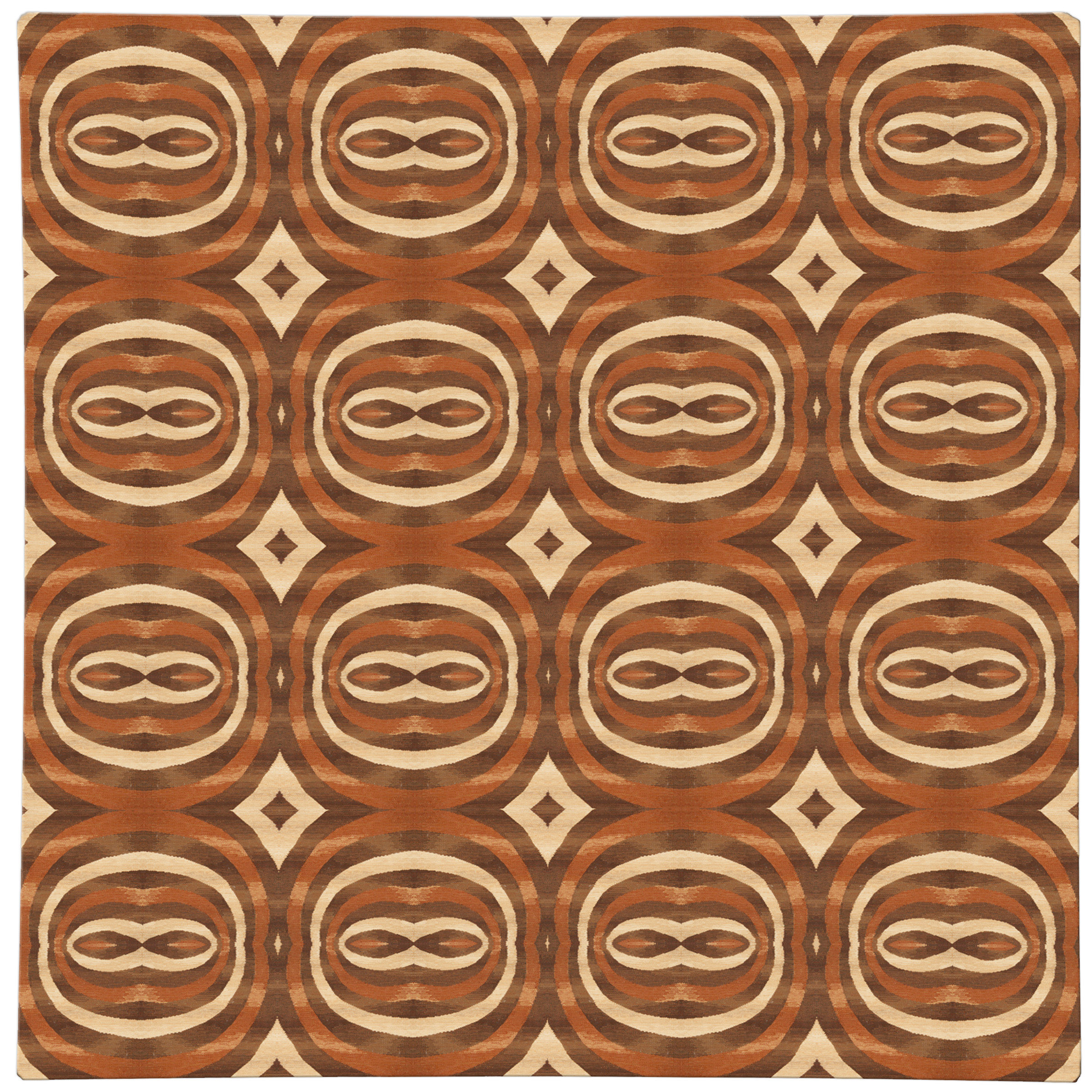
Boutique hotel lobby rugs do two jobs at once: they establish the first visual impression and they survive a steady cycle of luggage wheels, shoe traffic, housekeeping routines, and daily repositioning of furniture. For designers specifying custom rugs for hospitality settings, the challenge is not finding something beautiful; it is choosing a floor covering that can shape the lobby’s identity without becoming fragile under pressure. The right piece supports circulation, softens acoustics, and gives reception, seating, and waiting areas a legible structure. It also has to hold up to wear patterns that appear quickly in commercial interiors.
A lobby rug should be treated as architectural equipment as much as decoration. In a boutique hotel, guests read the space within seconds, and the floor plane often carries more visual weight than the walls once luggage, seating groups, and check-in desks are in view. A well-chosen rug can make a double-height entry feel grounded, narrow a long corridor-like lobby, or introduce warmth into a stone-heavy interior. When the scale is wrong, the room feels either sparse or overfilled, and the furniture begins to look temporarily placed rather than intentionally specified. That is why successful hospitality projects rely on custom carpets or made-to-order rugs sized to the actual layout, not to a default retail dimension.
Set the lobby’s visual role and traffic expectations
Before choosing pattern or fiber, define what the rug is expected to do in the room. Some boutique hotel lobbies function as social salons, with low seating clusters, library-like pauses, and frequent guest dwell time; others are transit spaces where guests cross from entrance to elevator in a few continuous steps. The first type can tolerate more visual softness and a broader field of pattern, while the second requires a calmer surface that reads cleanly from multiple angles. Traffic expectations also matter by season, because a lobby exposed to rain, snow, or street grit needs a more forgiving material strategy than one that stays relatively dry and protected.
Scale is the most common specification error in lobby rugs. If the rug ends too close to the front edge of a sofa or chair group, the seating arrangement can feel detached, as though it is floating above a separate island. If it extends too far past the furniture, it may interfere with circulation paths and create a visual spill that diminishes the architecture. A practical approach is to map the furniture first, then allow the rug to gather the primary seating elements while leaving enough clear floor at entries, desk fronts, and circulation corridors to keep movement intuitive. In larger lobbies, an oversized composition can be more effective than several small rugs because it creates a unified ground plane and reduces visual interruption.
One useful way to think about the lobby is in zones: arrival, reception, waiting, and passage. The rug does not need to cover every zone, but it should clarify how they relate to one another. In an open-plan lobby, a large format rug can anchor the seating area while the reception desk sits on a harder, more resilient surface for practical cleaning. In a more compact space, a single field may be preferable because it makes the room feel complete rather than fragmented. For design teams refining proportions, a custom carpets approach allows the rug to be tailored to the actual run of furniture, door swings, and path widths instead of forcing the room to adapt to an off-the-shelf size.
Choose construction and pile for heavy use
Rug durability begins with construction. In a boutique hotel lobby, hand-knotted rugs offer a compelling balance of longevity, repairability, and refined surface detail, especially when crafted in robust wool or wool-rich blends. Wool remains a favorite for hospitality because it has natural resilience, a relatively forgiving hand under foot, and a fiber structure that handles compression better than many delicate alternatives. It also tends to disguise minor soiling better than very pale or highly lustrous materials, which is useful where foot traffic is constant. The key is not merely choosing a strong fiber, but selecting a construction that supports the intended level of use.
Pile height deserves the same attention as fiber. A cut pile that is too deep can feel plush initially, but it will show traffic lanes sooner and may impede the rolling movement of suitcases or cleaning equipment. A lower, denser pile or a tightly looped structure often performs better in a lobby because it maintains a crisp profile and resists matting. Textural interest can still be introduced through abrash, loop variation, carved detail, or a disciplined pattern rather than through excessive height. In commercial interiors, visual luxury often comes from density and craftsmanship, not from softness alone.
Fiber choice should be judged by how the lobby is actually used. Wool is typically the most practical starting point for high-traffic hospitality interiors because it supports both comfort and wear resistance. Silk-heavy constructions, while beautiful, are generally better reserved for lower-traffic settings or areas where visual impact outweighs daily abrasion. Transitional blends can work well when the goal is to balance sheen and resilience, but they need to be specified carefully to avoid appearing overly precious for the setting. In many cases, the smartest path is a rug built for function first, then elevated through proportion, weave detail, and a restrained palette.
Pattern density also contributes to rug durability from a visual standpoint. A highly open, delicate motif can reveal footprints, grime, and pile distortion quickly, especially near entrances and paths leading to elevators. A medium-density pattern with some tonal variation tends to be more forgiving while still reading as intentional and tailored. This is one reason boutique hotel lobby rugs often succeed when they avoid extremes: too plain can feel exposed, while too intricate can become noisy under changing light and heavy use. The best designs manage both clarity and camouflage.
Coordinate the rug with reception, seating, and circulation
A lobby rug should support the furniture arrangement rather than compete with it. Reception desks usually need visual authority, but they should not sit on a rug that is so decorative it distracts from wayfinding. Seating areas benefit from a more generous field, where the rug reaches beneath the front legs of sofas and chairs so the arrangement feels visually complete. If coffee tables, side tables, and ottomans are involved, the rug should provide enough margin to keep the composition balanced without creating awkward slivers of exposed floor between the furniture and the rug edge.
Color coordination is especially important in hospitality spaces because lighting conditions change throughout the day. Warm lamp light can soften taupes, rusts, and browns, while daylight may pull blue, green, or gray notes forward. For that reason, lobby rugs often perform best when the palette has layered neutrals or a measured amount of contrast rather than a single flat tone. A tone-on-tone pattern can give depth without visual noise, while a deeper ground color can hide the effects of constant footfall near the entrance. If the architecture is highly detailed, a quieter rug may provide necessary relief; if the shell is minimal, the rug can carry more of the expressive burden.
Sound is another practical factor often overlooked during specification. Hard-surfaced lobbies can become acoustically sharp, especially when tall ceilings, stone floors, and glass fronts are involved. A substantial rug helps absorb some of that sound and makes the space feel more settled for guests waiting to check in or meeting colleagues. This is one of the reasons designers so often pair hospitality rugs with upholstered seating and drapery: together, those elements create a measured acoustic environment that feels attentive rather than sterile. In that context, the rug is not an isolated accessory but part of the room’s performance.
For a more refined design workflow, many professionals review the floor plan at the same time as the rug concept. That makes it easier to determine whether the lobby wants a single anchor piece, two related fields, or a bespoke shape that responds to columns, door locations, or a central chandelier. If the circulation pattern is irregular, a custom layout can solve problems that standard dimensions cannot. The same principle applies when comparing the lobby to nearby spaces such as bar lounges, concierge zones, or reading corners: the rug should create continuity where needed and separation where helpful, without making the floor plan feel overdesigned.
Discuss maintenance and replacement considerations
Maintenance should be built into the specification from the beginning, not treated as an afterthought. A boutique hotel lobby rug will need regular vacuuming, prompt spot treatment, and periodic professional care, but its longevity also depends on where it is placed and how its edges are finished. Boundaries near entry points may need reinforcement, and the rug should be positioned so that the highest-risk soil tracks are manageable rather than unavoidable. Even the best rug can look tired if it is placed directly in the path of the most abrasive traffic without a thoughtful cleaning plan.
Replacement strategy matters because hospitality spaces evolve. A rug that looks appropriate during an opening season may need reassessment after a furniture change, a brand refresh, or a shift in guest behavior. For that reason, some designers choose a structure and palette that can age gracefully even as other elements change. The goal is not to make the lobby immutable; it is to make the flooring decision resilient enough to support future updates. When a rug is selected with long-term value in mind, it becomes part of the hotel’s operational rhythm rather than a temporary decorative gesture.
There is also a preservation side to rug durability that extends beyond wear alone. Rotating the rug where the plan allows, protecting it from direct and unnecessary UV exposure, and maintaining consistent humidity levels can all help preserve the integrity of the fibers and coloration. In a busy hotel, these details often determine whether a rug holds its character or loses it prematurely. Designers working with hand-knotted rugs know that craftsmanship rewards care: the better the structure, the more worth protecting.
For hospitality teams balancing brand image and day-to-day function, the most successful lobby rug is one that performs quietly. It should not demand constant attention, but it should make the room feel resolved every time a guest walks in. That outcome usually comes from disciplined specification rather than from a dramatic gesture alone: the right size, the right construction, the right color temperature, and the right relationship to furniture and movement. When those elements are aligned, the rug helps a boutique hotel feel considered from the threshold onward.
Practical scenario: a lobby that needs warmth without clutter
Imagine a boutique hotel with a narrow entrance, a central seating island, and a reception desk off to one side. The architecture is handsome but severe, with stone flooring, black metal detailing, and high ceilings that create a cool echo. In that setting, a large-format wool rug with a restrained geometric field could soften the room without overwhelming it, provided the edges are calibrated to keep circulation clear. The seating group would read as intentional, the entry path would remain legible, and the rug would provide enough texture to warm the space without becoming visually busy. This is exactly where custom rugs can solve a problem that standard sizes and generic patterns often miss.
If the hotel brand leans toward quiet luxury, the rug might rely on subtle tonal shifts, a low profile, and a carefully chosen border that frames the room without shouting. If the brand is more expressive, the same spatial logic could support a stronger pattern, as long as the design respects traffic and furniture placement. The point is not to decorate the lobby in isolation; it is to build an environment that guests can read immediately and trust instinctively. That kind of clarity is what turns a floor covering into part of the guest experience.
FAQ
What makes a lobby rug successful?
A successful lobby rug balances proportion, durability, and visual authority. It should fit the furniture layout, support traffic patterns, and hold up to daily wear without losing its shape or becoming visually chaotic. In a boutique hotel, it also needs to reinforce the brand atmosphere the moment guests enter.
How do I balance durability with aesthetics?
Start with a resilient construction, such as a dense wool or wool-rich hand-knotted rug, then use pattern, color, and pile height to create refinement. A lower pile and a medium-density design often age better in heavy use than very plush or highly delicate surfaces. Good durability does not mean sacrificing beauty; it means making beauty practical enough to last.
Can a lobby rug help define a brand experience?
Yes. The rug helps establish tone through texture, color temperature, and scale, which guests register before they notice many other details. It can make a lobby feel calm, energetic, formal, or residential, depending on the design language and how it relates to the architecture and furniture. In hospitality, that first impression is part of the brand story.
Are custom rugs better than standard sizes for hotel lobbies?
Often, yes, because lobby dimensions rarely align neatly with standard retail sizes. Custom rugs can be tailored to seating zones, entry clearances, and circulation paths, which helps the room feel more resolved and avoids awkward gaps. For a hotel setting, that precision can make a significant difference in both appearance and usability.
For projects where the lobby must feel inviting on day one and composed years later, Doris Leslie Blau can provide design guidance grounded in material knowledge, scale, and craftsmanship. If you are developing a hospitality space, a specialist consultation can help align the rug choice with the architecture, the brand, and the demands of daily traffic.