

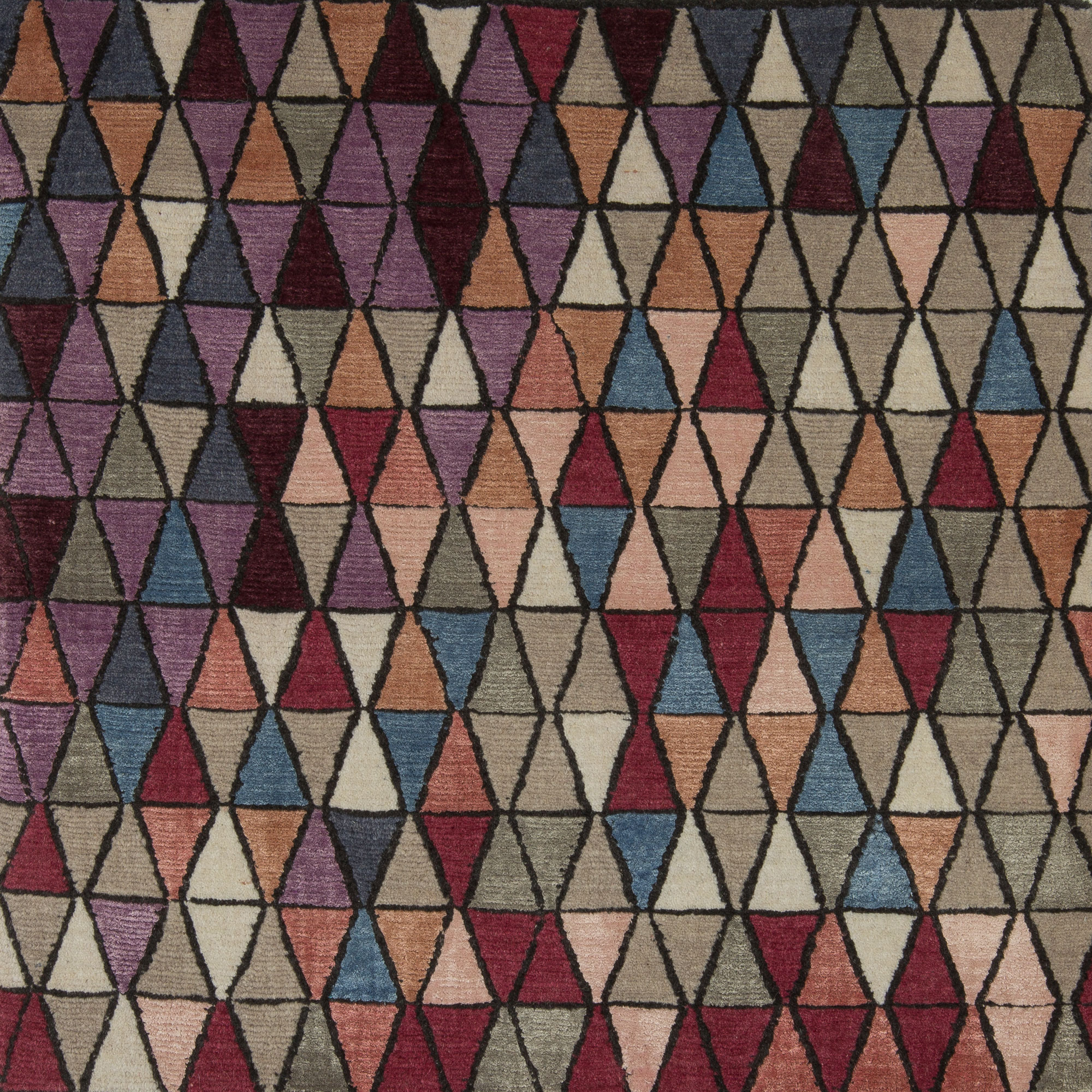
If you already have a sofa, dining table, heirloom chair, or inherited cabinet in place, you do not need to rebuild the room from scratch to make the flooring work. Thoughtfully planned custom rugs can bridge old and new pieces, define the seating area, and solve awkward proportions without forcing you to buy a whole new set of furniture. The key is to treat the rug as part of the layout, not as an afterthought. With the right measurements, shape, and material choices, how rugs support furniture plans becomes a practical design tool rather than a theory.
Designing around existing furniture is a spatial exercise first and a decorative one second. Before you think about color or pattern, look at the pieces that cannot move: the sofa depth, the coffee table footprint, the legs of the chairs, the clearance needed for drawers and circulation, and the visual weight of any anchor item such as a sideboard or piano. A rug that is too small can make a well-furnished room feel fragmented, while one that is properly scaled can make mismatched pieces appear intentional. This is where custom rug design becomes valuable, because it allows the rug to follow the room you actually live in rather than an idealized floor plan.
Map the fixed furniture first
Start by identifying what is fixed, what is flexible, and what simply needs a better relationship to the rest of the room. In a living room, the sofa often sets the primary axis, while lounge chairs, tables, and lamps can be adjusted to support it. In a dining room, the table may be non-negotiable, but chair pull-back distance and sideboard placement still affect the rug dimensions. In bedrooms, the bed and any built-ins are usually the main anchors, and the rug must respect door swing, bench placement, and whether the room requires soft landing zones on one or two sides.
Once the furniture is mapped, measure the usable rectangle or oval on the floor, not just the room size. This distinction matters because architectural constraints—radiators, hearths, thresholds, built-ins, or bay windows—often compress the actual field available to a rug. A common mistake is measuring wall to wall and assuming the rug should follow that same outline; in practice, a rug needs breathing room. Leaving a consistent border of exposed flooring around the perimeter usually keeps the room from feeling overfilled, especially when the furniture is visually substantial.
If you are working with pieces that already live together but were not purchased as a set, use the rug to establish a new order. A long sofa paired with smaller vintage chairs can feel scattered until the rug defines a shared boundary. Likewise, an oversized coffee table may read as heavy unless the rug gives it a proportionate field of support. A well-made custom piece can quietly resolve those mismatches by creating a visual rectangle or oval that contains the arrangement without crowding it.
Find the ideal visual boundary around the grouping
The most useful question is not “How big should the rug be?” but “What should the rug contain?” In a sitting room, the answer is usually the front legs of the sofa and chairs, plus enough surface area for the coffee table to sit comfortably inside the composition. In a more formal space, you may want all major furniture legs on the rug so that the grouping reads as one complete island. In a compact room, a rug can be deliberately smaller, but it still needs to feel purposeful rather than accidental.
To judge the boundary, step back and consider sightlines from the doorway and the primary seat. The rug should introduce order as soon as the room is seen, not only when someone is standing in the center of it. If the edges of the furniture extend unevenly, the rug can compensate by aligning to the strongest visual lines instead of every outermost corner. That may mean centering to the sofa and fireplace rather than to the room itself, especially when the architecture is off-axis or the room opens into another zone.
For open-plan interiors, this boundary becomes even more important because the rug acts as a zoning device. A rug under a seating group signals where conversation happens; a different rug under a dining area signals where movement and pull-back space are expected. In that setting, scale and proportion matter as much as color. The rug should be generous enough to distinguish one function from another, but not so expansive that it competes with neighboring zones or makes the plan feel overdesigned.
Think about visual rhythm as well as outline. If the room contains a strong linear sofa, a rectangular rug will usually reinforce that calm geometry. If the furniture arrangement is looser, with angled chairs or an asymmetrical fireplace, a softened edge or a rug with a less rigid pattern may be more effective. Pattern density should support the furniture plan, not fight it: a quiet field can calm a crowded room, while a more animated design can help unify disparate pieces when the furniture itself is restrained.
Adjust shape and border to work with the existing pieces
Shape is one of the easiest ways to solve an awkward layout without changing furniture. Rectangular rugs remain the most versatile choice for sofas, dining tables, and most bedrooms, but a square rug can strengthen a centered seating plan or a room with a prominent square table. Round rugs can soften hard architecture and work well beneath circular tables, although they require enough clearance to avoid looking like a decorative island floating in a larger arrangement. In some cases, an oval or custom-cut form is the cleanest answer when furniture placement is unusually staggered.
This is where border decisions become especially useful. A border can frame the furniture arrangement and give the eye a place to rest, but it must be proportionate to the room and the scale of the objects sitting on it. A narrow border may be elegant in a more restrained interior, while a wider border can help if the rug needs to visually contain multiple pieces from different eras. If the existing furniture has strong edges, carved legs, or contrasting finishes, a subtle border can prevent the composition from feeling visually busy.
Material and construction should follow the room’s use, not only its style. In a living room with daily traffic and a substantial sofa, a hand-knotted wool rug offers resilience, structure, and a surface that wears gracefully. In a quieter sitting room or bedroom, silk accents can be introduced for sheen and refined detail, but they work best when the furniture arrangement is not exposed to constant wear. For homes with pets, children, or frequent circulation, pile height and fiber choice become practical, not secondary, considerations; a lower pile may help the rug sit neatly beneath chair legs and simplify movement across the room.
If you need help translating measurements into a tailored design, a specialist working in custom rug design can interpret the furniture layout, recommend proportions, and adjust the edge treatment so the rug appears built for the room rather than borrowed from it. That kind of specification work is especially useful when the room includes heirloom pieces, a nonstandard sofa depth, or a table that was chosen before the rest of the furnishings were decided.
A realistic example
Imagine a living room with a deep linen sofa, two mismatched accent chairs inherited from different generations, and a walnut coffee table that is slightly too large for a standard rug. A conventional off-the-shelf size might leave the front chair legs floating too far away from the rug edge or force the coffee table into a cramped central zone. With a tailored approach, the rug can be widened just enough to include the chair fronts, while the border is kept restrained so the room does not feel boxed in. The result is not a new room, but a clearer reading of the room you already have.
Check circulation and balance after the rug is placed
Once the rug is positioned, test how the room functions in motion, not only in still photographs. Walk the primary paths: from door to sofa, from sofa to side table, from dining chair to buffet, from bed to closet. The rug should support these movements without catching on doors or forcing awkward steps around corners. A successful layout allows the furniture group to feel anchored while the room still breathes, which is the real measure of good proportion.
Balance also needs to be checked from multiple viewpoints. Sit on the sofa and look at the edges of the rug; stand near the entry and notice whether the grouping feels centered or lopsided. If one side of the room contains heavier furniture, the rug may need to extend further on that side to restore visual stability. In a room with a fireplace, asymmetry can be resolved through the rug’s placement and dimensions rather than by forcing the furniture into a false symmetry that does not suit the architecture.
Color and palette coordination should reinforce the room’s existing materials. If the sofa upholstery is warm and textured, a rug with a similarly warm undertone can create continuity without becoming monotonous. If the room includes a cold stone floor, dark wood, or lacquered surfaces, the rug can soften the palette and introduce tactile contrast. Pattern is equally important: larger-scale motifs tend to read better beneath substantial furniture, while finer patterns can disappear once the pieces are in place unless they are deliberately used as a quiet field.
Do not overlook acoustics and comfort. Rugs are often discussed as visual devices, but in furnished rooms they also affect sound, footfall, and how substantial the space feels at sitting height. A well-chosen rug can reduce echo in a room with hard flooring and make existing furniture feel more settled, especially when the seating plan is centered around conversation. In that sense, rugs support furniture plans not just by marking boundaries but by changing how the room behaves once people begin using it.
Practical rules for working around what you already own
- Let the largest or most permanent piece set the rug’s primary orientation.
- Use the rug to contain the social grouping, not every object in the room.
- Keep furniture legs consistently related to the rug edge; random partial placement looks accidental.
- Choose a shape that resolves the room’s geometry, rather than forcing a standard rectangle into an awkward plan.
- Balance pattern and border density with the visual weight of existing furniture.
- Confirm walking clearance before finalizing dimensions, especially near doors and table pull-back zones.
These rules are simple, but they prevent the most common errors. People often select a rug that looks beautiful on its own and then discover that it undermines the furniture arrangement once installed. Others assume the rug should match the longest piece in the room, when in fact the better strategy is usually to match the composition, not the furniture dimension. A sofa may be the longest object, but the rug should answer the total seating field, the path of movement, and the visual center of the room at once.
Frequently asked questions
Can a rug be designed around a sofa I already own?
Yes. A sofa is often the best starting point for custom rugs because its length, depth, and placement usually define the room’s primary seating axis. The rug can be dimensioned to include the front legs of the sofa, the coffee table, and adjacent chairs so the grouping feels intentional. If the sofa is unusually deep or low, the rug proportion should account for that mass so the arrangement does not appear top-heavy.
What if my furniture placement is not symmetrical?
Asymmetry is common and does not need to be corrected by furniture alone. A rug can stabilize the room by aligning to the strongest visual line, such as a fireplace or a main sofa, while still accommodating off-center chairs, side tables, or architectural constraints. In many rooms, an asymmetrical layout looks more natural once the rug establishes a clear boundary and a consistent margin around the grouping.
Should the rug match the longest piece?
Not necessarily. Matching the longest piece can produce a rug that is technically correct but visually weak if the rest of the furniture arrangement extends beyond that line or creates a more complex footprint. The better approach is to size the rug according to the full conversational or functional zone, including circulation and the furniture that truly belongs to the composition. That is why custom area rugs are often more effective than standard sizes in rooms with inherited or nonmatching pieces.
How do I know whether the rug should show more or less floor?
It depends on the scale of the furniture and the character of the room. A room with heavy upholstery, dark wood, or substantial architectural trim often benefits from a rug that occupies a generous portion of the floor so the arrangement feels grounded. A lighter room with sleeker furniture may need more visible flooring around the perimeter to maintain openness and clarity.
Designing around existing furniture is really about discipline: measuring carefully, respecting proportion, and letting the rug do the quiet structural work that makes a room feel coherent. Whether you are planning around a sofa you already own, preserving inherited pieces, or refining a room that never quite came together, the right rug can solve more than one problem at once. If you would like expert guidance on scale, materials, and layout, Doris Leslie Blau can help you shape a rug that fits the room you have and the way you live in it.