

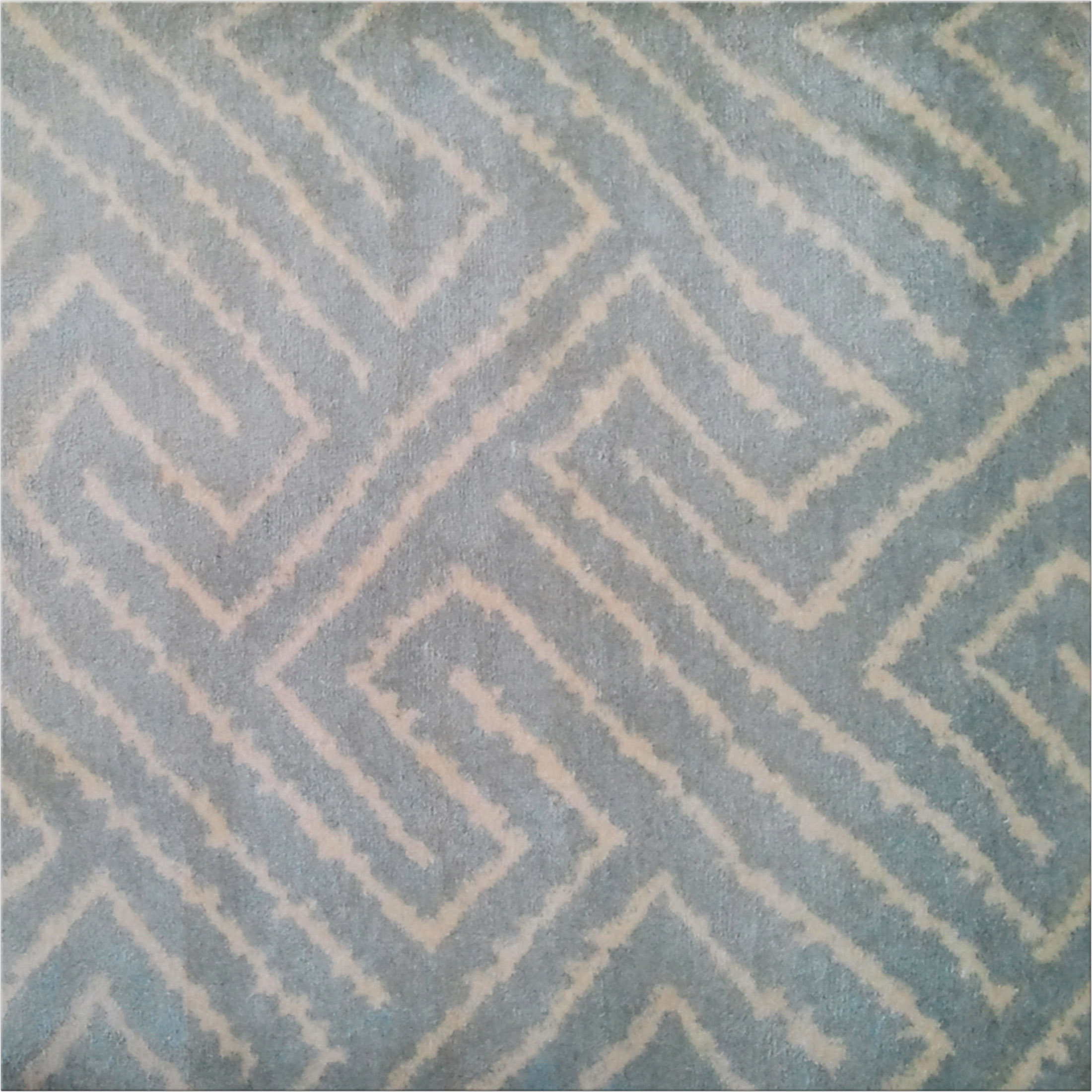
When a room feels unsettled, the problem is often not the furniture itself but the way each piece sits in relation to the floor. A well-planned rug can organize a sofa, chairs, tables, and circulation into one readable composition, which is why custom rugs are so often the right answer for difficult layouts. If you are trying to understand how to design a rug around a furniture plan, start by thinking like a space planner: the rug should reinforce the room’s logic, not compete with it. In practice, that means reading scale, movement paths, and visual weight before choosing size, shape, material, or pattern.
Rooms rarely fail because the furniture is unattractive; they fail when the boundaries are vague. A rug can solve that by creating a clear anchor for the primary seating group, then allowing secondary pieces to sit confidently at the edges of the composition. This is especially important in open-plan interiors, where a carpet has to do the work of zoning without introducing unnecessary visual noise. The best custom rug design does not simply “fit” a room; it edits the room, clarifies its proportions, and gives the eye an orderly path across the floor.
Read the plan for anchor points and circulation
Before you think about colors or motifs, study the furniture plan as a diagram. Identify the anchor points: the sofa, the main pair of lounge chairs, the coffee table, and any architectural conditions such as a fireplace, bay window, doorway, or passage into another zone. Then trace how people move through the room, because how rugs support furniture plans depends as much on traffic flow as it does on furniture placement. A rug that extends into a walkway where it will be visually cut apart or repeatedly stepped over may weaken the plan rather than strengthen it.
In a rectangular living room, circulation usually runs along one or two edges, leaving the center available for the seating cluster. In that case, the rug should typically define the entire conversation area, with enough margin under the front legs of the sofa and chairs to make the arrangement feel deliberate. In a tighter room, the rug may need to stop short of a doorway or hall opening so that the boundary remains clean and practical. The key is to let the rug describe the usable interior field while leaving circulation routes clearly legible.
This is where scale becomes more important than surface decoration. A pattern can only succeed if the rug is large enough to hold the furniture at a convincing distance, because a too-small rug makes each object feel like it is floating independently. When the room is irregular, a hand-knotted rug with a carefully calculated border or custom outline can solve problems that standard dimensions cannot. For projects with unusual architecture, the difference between a room that feels composed and one that feels pieced together is often measured in inches, not inches of pattern.
Set the rug to support the dominant seating group
Every room has a primary social cluster, even if the furniture is spread across multiple functions. The rug should support that dominant group first, then accommodate the rest of the room around it. In most living rooms, that means the rug is sized to include the sofa and at least the front legs of the surrounding chairs, while the coffee table sits fully within the field. This creates a visual contract: the pieces belong together, and the rug is the floor-level frame that proves it.
If the seating is symmetrical, the rug can reinforce that symmetry with a centered layout and balanced borders. If the room is more relaxed or asymmetrical, the rug should still feel intentional, but it may need to accommodate offsets in chair placement, side table depth, or a sectional arm. Designers often use custom rug sizing guide principles here, because the right dimensions depend on how much of the upholstery should sit on the rug and how much should remain on the surrounding floor. In a formal sitting room, the rug can be generous and exact; in a family room, it may need to prioritize circulation and durability alongside proportion.
Material and construction also influence how the seating group reads. A low-pile wool rug tends to keep edges crisp and furniture placement visually sharp, which is helpful when the layout is precise or modern. A slightly more tactile weave can soften a rigid plan, especially in a room with strong architectural lines or a lot of hard surfaces. If the room receives heavy use, hand-knotted rugs in durable fibers can support the arrangement for years while maintaining the clarity that furniture planning requires.
When one rug must carry more than one purpose
Some rooms do not have a single conversation area; they have a seating zone, a reading corner, and perhaps a desk or game table nearby. In those cases, the goal is not to force all functions onto one visual island, but to choose a rug that gives the primary area authority while allowing the adjacent pieces to feel connected. A larger custom area rug can bridge these uses if the furniture spacing is disciplined enough, but the composition still needs hierarchy. The rug should support the dominant furniture plan first, then quietly absorb the secondary zones without making them look accidental.
Resolve overlaps with consoles, tables, and passageways
The most common rug mistake in furniture-led rooms is letting every piece claim equal territory. Consoles, ottomans, side tables, and occasional chairs can all influence the footprint, but they should not all dictate the rug’s edge. Instead, decide which pieces belong fully on the rug, which should touch it lightly, and which should remain outside its boundary. That hierarchy makes the room easier to read and prevents the floor plan from becoming overcrowded.
For example, a console behind a sofa usually does not need to sit on the rug at all, especially if the rug is already large enough to anchor the seating area. A coffee table, by contrast, should generally be fully contained, because it is part of the conversation core and visually links the upholstered pieces. Side tables may float just beyond the edge if the composition is otherwise balanced, while a passageway should remain as clean as possible so the room does not feel compressed. These decisions are subtle, but they are what keep the room unified rather than merely furnished.
Pattern and color affect how these overlaps are perceived. A quieter field with a restrained border can make furniture placement feel cleaner, especially when the room contains several different shapes and finishes. A more expressive motif can work well too, but only if the pattern density does not break apart under the furniture footprint. In rooms with strong light, the hue may shift across the day, so it helps to think about whether the rug will read as a calm backdrop or as an active part of the composition from morning through evening.
One practical way to test the layout is to mark the intended rug outline on the floor with tape or paper before ordering. This helps you see whether chair legs feel crowded, whether a doorway clips the corner, and whether the room still has enough breathing room at the edges. It also clarifies whether the furniture plan is actually balanced or merely centered by habit. For made-to-order rugs, that kind of visual check is invaluable because the rug can be tailored to the architecture instead of forcing the architecture to adapt to a fixed rectangle.
Check how the rug reads from multiple viewpoints
A room is experienced from the entry, from the seating area, and often from adjacent spaces, not just from a single front-facing view. The rug needs to make sense from all of those angles. From the doorway, the edge should help define the room without appearing abrupt or too small. From the sofa, it should support the furniture in a way that feels anchored and comfortable. From an adjoining hall or dining area, it should read as part of a larger visual system rather than as an isolated object.
This is where proportion and visual rhythm become especially important. If the room contains several low, horizontal pieces, a rug with a subtle border or a disciplined allover pattern can provide structure without flattening the space. If the furniture is more sculptural, the rug may need a quieter field so that the silhouettes remain the focus. Interior design works best when the floor plane participates in the same logic as the furniture plan, because the room then feels composed in layers rather than decorated in separate acts.
Color temperature also matters. A warm wool rug can soften stone, lacquer, and metal, while a cooler palette may steady a room with strong wood tones or saturated upholstery. In homes with significant natural light, the same rug can change character from hour to hour, so it helps to sample the material in the room before committing. Doris Leslie Blau often approaches custom rugs as part of the furniture plan itself, not as a finishing accessory, which is why material, scale, and construction all deserve equal attention.
For a concrete example, imagine a long living room with a sofa on one side, two lounge chairs opposite, and a clear path to a terrace door at the far end. A standard rug might either leave the seating too fragmented or intrude into the path of travel. A properly scaled custom rug can hold the central conversation group, stop before the door swing, and leave enough visible floor to preserve the room’s length. The result is not just a prettier room; it is a room whose proportions are easier to understand at a glance.
If you are choosing among materials, construction methods, and dimensions at the same time, it helps to treat the rug as a design problem with several moving parts. Density, pile height, and fiber content all influence how cleanly the furniture settles into place and how well the composition holds up under use. That is where custom rug design becomes especially valuable, because the rug can be specified around the actual arrangement instead of adjusted after the fact.
Practical checks before you order
- Measure the seating group first, then allow the rug to extend beyond it enough to unify the arrangement.
- Confirm where doors swing, where people walk, and where the rug edge will be seen most often.
- Decide which pieces must sit fully on the rug and which can remain outside the boundary.
- Choose pile height and material based on traffic, furniture weight, and how crisp you want the layout to appear.
- Review the plan from the entry, the sofa, and any adjacent room so the rug reads well from multiple vantage points.
FAQ
Can one rug unify several pieces of furniture?
Yes, if the rug is sized to give the dominant seating group a clear perimeter and the other pieces are arranged with hierarchy. The rug should connect the objects without making every item compete for the same visual territory. In practice, that usually means the main sofa, chairs, and coffee table feel fully related, while side pieces remain secondary.
How do I decide where the rug should stop?
Start with circulation, then stop the rug where the room still feels balanced and the edges remain clean. A rug should not force people to step awkwardly across corners or block door swings, and it should not end so early that the furniture looks detached. When in doubt, compare the planned edge against the room’s architecture and the most frequent walking paths.
What if the plan changes after the rug is ordered?
If the plan may change, the safest approach is to specify a rug with enough flexibility to accommodate minor furniture shifts. Neutral pattern scale, balanced borders, and a proportionally generous size can help the piece adapt if a chair moves or a table changes. If the change is major, consult a specialist before ordering so the final dimensions still support the room rather than merely occupying it.
Designing a rug around a furniture plan is less about decoration than about structural clarity. When the floor, furniture, and movement paths are aligned, the whole room feels calmer and more deliberate, even if the palette is bold or the furnishings are varied. If you are working through a difficult layout, or want guidance on proportion, construction, or material selection, Doris Leslie Blau can help you think through the room as a complete composition and shape the right solution with specialist design guidance.