

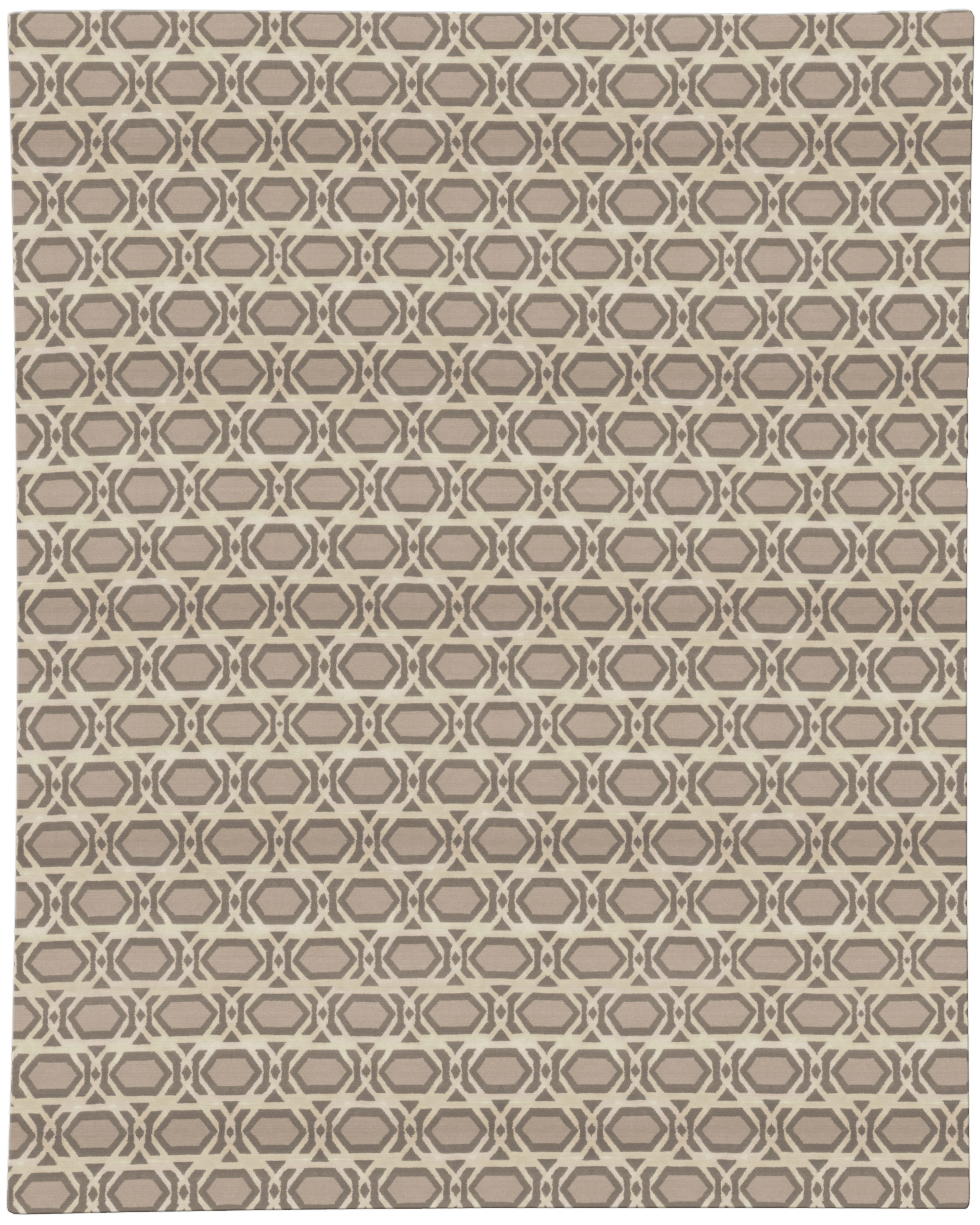
When a room already has strong art, sculptural furniture, multiple materials, or a lively palette, the rug cannot compete on the same terms. The right custom rugs strategy is not about finding the most interesting pattern; it is about deciding where the room needs rest, where it needs structure, and where it can tolerate another layer of visual information. In a busy interior, pattern selection becomes an exercise in hierarchy, scale, and restraint.
That is why the question of how to choose rug pattern is less about taste in isolation and more about reading the room as a composition. A rug sits under the largest objects in the space, so it affects how the eye moves from wall to furniture to floor and back again. If the artwork is energetic, the upholstery already mixes textures, and the architecture has strong lines, the rug should usually resolve a problem rather than add a new one. Doris Leslie Blau often approaches these rooms through proportion first and motif second, because the wrong pattern scale can make even expensive furnishings feel restless.
Assess which elements should lead visually
Start by identifying the visual leader in the room. In some spaces, the art is meant to command attention, which means the rug should support the composition quietly and create a stable base. In others, a sofa in jewel-toned velvet, a lacquered table, or a dramatic light fixture may already be doing the heavy lifting, and the rug should soften the transition between those stronger elements. The key is to avoid giving every surface the same level of emphasis, because when everything speaks loudly, nothing is legible.
Look at the room from the main seated position and from the entry. Ask what you notice first, second, and third. If your eyes bounce from one framed piece to another and then stop at a patterned chair, the rug should probably be low-contrast or structurally calm, with only enough detail to reward a closer look. If the room already has a clear focal point, a rug with subdued movement can act like visual punctuation instead of another headline.
Decide whether the rug should anchor or recede
A rug in a busy room generally has one of two jobs: anchoring the composition or receding into the background. Anchoring means the rug contributes a defined perimeter, organizes furniture placement, and gives the eye a clear field of reference. Receding means the rug supports the room through tone and texture while allowing the furniture and art to stay dominant. Both can work beautifully, but they require different pattern decisions and different construction choices.
If the room needs anchoring, a more legible pattern can be useful, especially when the furniture grouping is loose or the architecture is open plan. Bordered rugs are often effective here because the frame creates order without filling the entire field with activity. A border can echo millwork, trim, or the geometry of a room and help define a seating zone with precision. If the room needs to recede, the safest route is often a pattern with soft movement, subtle striation, or low-contrast abrash rather than a motif with sharp edges.
When a border is the smartest quiet detail
Bordered rugs are especially useful when the room already contains multiple competing edges: tall bookcases, large-format art, angular sofas, and a table with visible legs. The border gives the eye a place to land before it enters the field of the rug. It can also create a sense of scale in large rooms, where a fully patterned center might feel too busy but a plain rug might disappear. In these cases, the border is not decoration; it is a structural tool.
Compare small-scale, large-scale, and border-led motifs
Pattern scale matters as much as pattern style. Small-scale motifs can be useful in rooms with many strong objects because they read as texture from a distance and detail up close. They are often good when the art collection is dense or when upholstery includes multiple fabrics, because they create rhythm without drawing too much attention. The danger is that a very tight repeat can feel visually noisy if the room is already full of fine detail, especially under bright daylight.
Large-scale patterns have the opposite effect. They can simplify a busy room by reducing the number of visual events across the floor, which makes them useful when the furniture and art are varied but the overall palette needs coherence. A broad abstract form or a generously scaled motif can calm a room if the shapes are clear and the contrast is controlled. This is one reason contemporary abstract rugs can work so well in modern interiors: they often introduce movement without the hardness of a traditional repeat. The best versions feel composed rather than chaotic, with enough open ground to let the room breathe.
Border-led motifs sit between these two strategies. They offer definition at the edge while leaving the center less demanding, which makes them highly adaptable in layered interiors. In a room with a saturated gallery wall, a border can provide order without competing with the art. In a formal living room, it can reinforce symmetry and make the furniture arrangement feel intentional. The decision is not simply decorative; it is about whether the floor should act like a frame, a field, or a quiet backdrop.
Matching pattern scale to sightlines
Think about how the rug will be seen. If the room is large and viewed from across a hall, a tiny motif may disappear into visual texture and fail to do any spatial work. If the room is compact, a large, highly contrasted motif can overwhelm everything else and make the floor feel smaller. Designers often choose pattern scale based on the farthest viewing distance in the room, not just the nearest one, because a rug must succeed both when you are standing at the door and when you are seated beside it.
Use color temperature to control visual competition
In a room with busy art and furniture, color temperature is as important as pattern. A rug can cool down a palette by introducing mineral tones, blue-based grays, or softened neutrals, or it can warm things up with tobacco, ochre, faded terracotta, or weathered camel. What matters is whether the rug helps the room settle into one tonal story. A patterned rug with too many high-contrast colors can fracture the composition, while a more disciplined palette can make even a lively room feel edited.
There is also a difference between chromatic pattern and tonal pattern. Chromatic pattern relies on color differences to create interest, which can be effective when the art is mostly monochrome or the furniture is restrained. Tonal pattern uses shifts in value, sheen, and texture instead of strong color breaks, which is often the better choice in rooms already rich with pigment. Wool rugs with subtle wool-silk contrast, for example, can create movement without shouting, and hand-knotted construction gives those shifts a depth that printed or flat-woven surfaces cannot match.
Let material and construction do some of the work
Pattern is only one part of the equation. In a room with a lot happening visually, material can provide the sophistication that the motif does not need to carry alone. A silk highlight, a finely clipped wool pile, or a low-sheen hand-knotted surface can add refinement without increasing pattern density. If the room needs a gentler presence, texture can replace contrast as the primary source of interest. That is often a better answer than adding another visual motif.
Pile height also affects how pattern reads. A higher pile can soften edges and blur small details, which is useful when the room already contains a lot of sharp linework. A lower pile makes pattern more explicit and can work well if the rug needs crisp definition under a table or in a formal setting. For busy rooms, many designers prefer rugs that are tactile but not overly plush, because they preserve clarity under furniture and let the eye process the composition without visual friction. If the room includes pets, children, or heavy traffic, construction should be considered alongside pattern so the design remains beautiful in daily use.
Practical room types: what tends to work
In a library or study filled with books, framed prints, and dark wood, a rug often benefits from low-contrast movement rather than a strong repeat. The room already carries a lot of information, and the rug should quiet the lower plane while still adding depth. In a living room with a vivid contemporary painting and sculptural seating, a larger-scale abstract field can work if the colors are controlled and the negative space is generous. In a formal dining room, a border-led composition can be especially effective because it aligns well with the table’s geometry and keeps chairs from getting visually lost at the edge.
For open-plan interiors, the rug often becomes a zoning device. Here, pattern should help distinguish one function from another without turning the floor into a patchwork. A custom rug with a disciplined motif can define the seating area while allowing adjacent zones to feel related rather than repeated. If the surrounding furniture is already layered with texture, you may want the rug to be the quietest large surface in the room, especially if the walls hold a strong art program or the lighting is expressive.
Use sampling to avoid overcomplicating the room
Sampling is the most reliable way to test whether a rug pattern will hold up against the room’s existing visual load. Small swatches are useful, but they are not enough on their own. You need to see the material at scale, under the room’s actual light, next to the upholstery, and near the art or drapery that sets the color temperature. A pattern that looks subtle in the hand can become unexpectedly active across a larger field, while a bold design may read calmer once it is spread beneath furniture.
It also helps to photograph the samples in place, because the camera often reveals imbalance faster than the eye does in the moment. If the image feels crowded, the rug is probably doing too much. If it disappears entirely, the room may need stronger edges, deeper value contrast, or a different pattern scale. This is where the made-to-order process becomes valuable: custom-made rugs allow the pattern, field size, border width, and palette to be adjusted for the specific room rather than forced into a preset design.
When a room is visually busy, restraint is not the absence of design. It is a disciplined choice about what the floor should contribute and what it should leave alone. The best custom rugs in these interiors are usually the ones that understand hierarchy: they support the art, organize the furniture, and introduce enough craftsmanship to enrich the room without competing with it.
FAQ
Should the rug be the quietest element?
Not always, but in a room with strong art or highly expressive furniture, the rug often works best when it is quieter than the dominant pieces. That does not mean plain or lifeless. It can still have depth through weave, texture, border treatment, or tonal variation, but it should usually avoid adding another high-contrast focal point unless the entire room is intentionally maximalist.
What pattern scale works best with art collections?
Art collections usually pair well with rugs that have either a larger, simplified scale or a restrained tonal pattern. Small, high-frequency motifs can create too much visual chatter when many frames are already competing for attention. If the collection is sparse and the room otherwise calm, a more detailed rug can work, but in most gallery-like settings, clarity and breathing room are more effective than intricate repeat.
Can stripes or borders help in busy rooms?
Yes. Borders are often one of the best tools for busy interiors because they frame the floor without overfilling it. Stripes can also work if they are broad, subtle, and aligned with the room’s architecture or seating geometry. The main caution is contrast: very sharp stripes can introduce more tension than the room needs, so scale and tonal softness matter.
Are contemporary abstract rugs a good choice when everything else is already decorative?
They can be, provided the abstraction is controlled. The most successful contemporary abstract rugs in busy rooms usually have generous negative space, limited color shifts, and a pattern rhythm that does not fight the furniture layout. If the room already has bold art, the abstraction should feel like a visual buffer, not an additional event.
Choosing pattern for a crowded interior is ultimately about editing, not decorating for its own sake. If you are weighing scale, border treatment, and material behavior for a room with strong visual competition, the right design guidance can make the difference between clutter and composure. Doris Leslie Blau approaches these decisions through proportion, craftsmanship, and room-specific nuance, which is exactly where a specialist consultation becomes useful.