

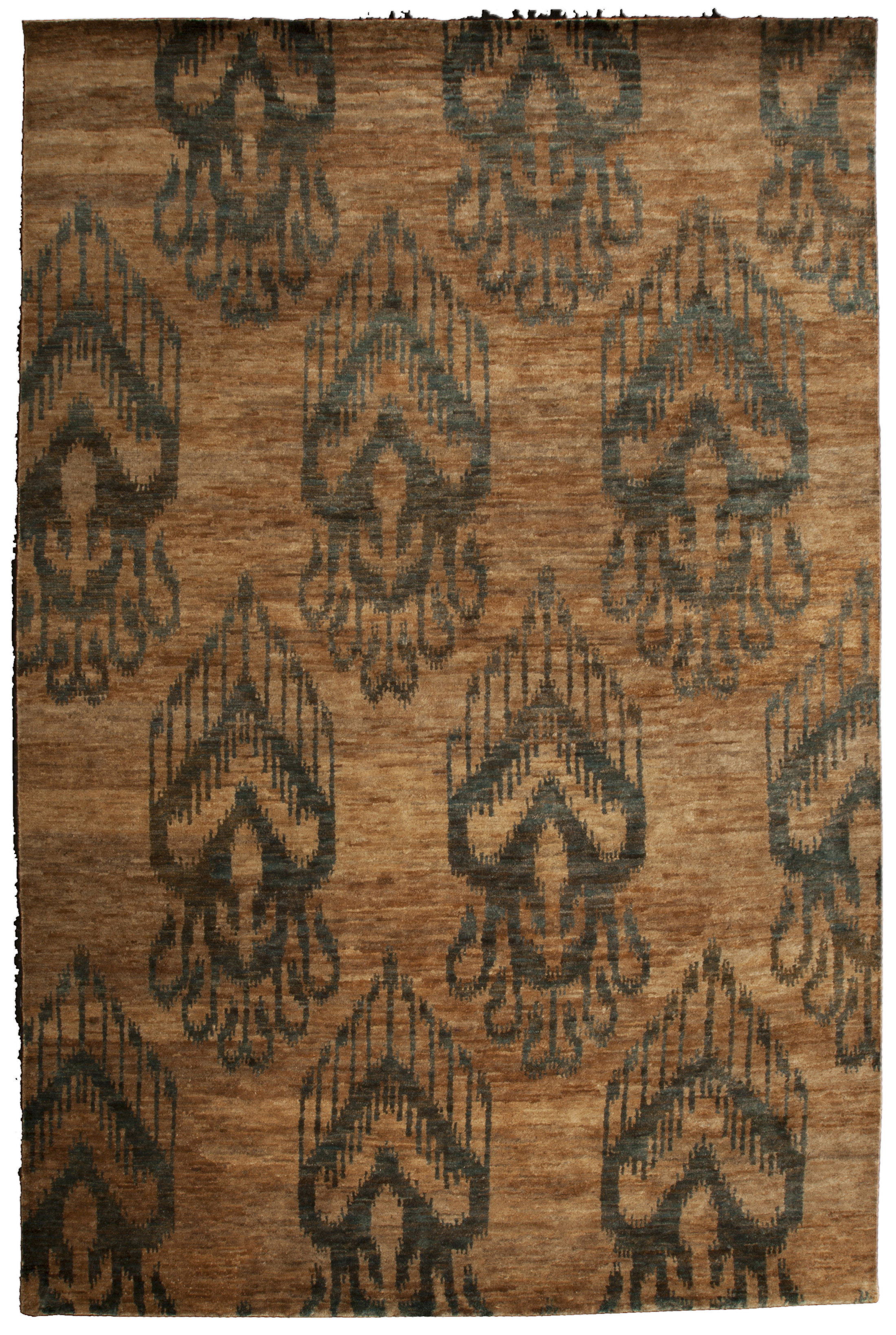
Hallway runners can do more than protect a floor; in a long corridor, they set pace, direct movement, and keep the architecture from feeling repetitive. When a standard size falls short, custom rugs offer the length, proportion, and pattern control needed to make a hallway feel deliberate rather than improvised.
Long corridors are deceptively difficult to furnish because they have their own visual logic. A runner that is too short creates awkward stops in the sightline, while one that is too wide can make the passage feel compressed and heavy. The goal is not simply to cover the floor, but to establish a measured sequence of pauses and continuities as someone moves from one room to the next. That is why hallway runners should be treated as architectural elements, not afterthoughts.
In residential interiors, hallways often connect rooms with different ceiling heights, light conditions, and decorative languages. In a townhouse, for example, the corridor may need to mediate between a formal front room and a quieter private wing; in a contemporary apartment, it may need to soften a long, narrow run of drywall and doors. The right runner can bridge those transitions with proportion and restraint. When the dimensions become unusual, gallery-style hallway rugs or custom oversized rugs can solve the problem with far more precision than a standard retail size.
Determine the visual break points in a long corridor
The first step is to identify where the eye naturally pauses. In many hallways, those points are not arbitrary: they occur at doorways, wall sconces, turns in the plan, or changes in flooring. A runner should acknowledge those breaks without competing with them. If the corridor includes several doors, the rug should leave enough clear space at each threshold so the doors swing freely and the composition still feels open.
Visual rhythm matters here. A hallway without a clear pattern of breaks can feel like a tunnel, especially when walls are painted in one continuous color and lighting is evenly spaced. A runner with a measured repeat can provide cadence, but only if the repeat is scaled to the architecture. Large, widely spaced motifs can calm a long corridor, while tightly packed details may make the space feel busy and compressed. The best choice depends on how much visual activity already exists in the hall.
One useful test is to stand at one end of the corridor and look down its full length. If the floor reads as a single uninterrupted line, the runner can introduce structure. If the hallway already has strong visual events, such as art, paneling, or dramatic light fixtures, the rug should support those elements with a quieter field and a more restrained border. In either case, the hallway runner should help the eye travel, not scatter it.
Choose a runner length that supports doors and transitions
Length is the most important variable in hallway runners, and it should be decided from the architecture outward rather than from a catalog inward. A runner that begins too close to the wall can look crowded, while one that stops too early can leave the space feeling fragmented. Ideally, the rug should maintain even margins along the sides and allow the ends to relate cleanly to the door positions or room transitions. In narrow corridors, a slightly shorter runner with precise placement can sometimes look more intentional than a longer piece forced into the wrong proportions.
Door clearance is essential. If a door opens over the rug, the pile height and thickness must be considered, especially if the hallway includes several swinging doors or closely fitted millwork. Low to medium pile often works best in circulation spaces because it reduces drag and keeps the profile neat under movement. Hand-knotted rugs are frequently preferred for this kind of specification because they can be made with the exact dimensions, density, and finish the space requires. For a long corridor with multiple thresholds, the end finish and binding deserve the same attention as the field pattern.
There is also a psychological effect to getting the length right. A hallway runner that runs too short can make the corridor feel even longer because it emphasizes what is not covered. A properly scaled rug creates continuity and gives the passage a sense of completion. This is particularly useful in gallery-style hallway rugs, where the rug must function almost like a framed line beneath art, sconces, and architectural detailing. The runner should support the room’s sequence, not interrupt it.
Use pattern to create pace rather than clutter
Pattern in a hallway must work differently than pattern in a sitting room. Because the space is narrow and seen in motion, details are read in fragments, not as a full composition. That means the design should have enough clarity to register from a distance, but enough discipline to remain calm up close. Small-scale allover pattern can be useful when the hallway needs texture without a strong focal point, while broader stripes, medallion fragments, or linear motifs can reinforce direction.
Color also shapes rhythm. Deep contrast creates stronger visual beats, which can be helpful in an otherwise plain hallway but overwhelming in a corridor already full of doorways and trim. Softer tonal shifts are often better in long residential passages because they give the floor depth without visual noise. When coordinating with adjacent rooms, consider how the runner will look from both ends of the hall. A muted border or a controlled palette may be the most effective way to keep the sequence coherent from one doorway to the next.
The material construction matters just as much as the motif. Wool tends to be a practical choice for hallway runners because it offers resilience, tactile warmth, and a forgiving surface under everyday traffic. If the hallway has strong daylight or a more formal decorative scheme, silk accents or a finer weave can introduce a sharper visual line, though they require more careful handling. A designer specifying custom rugs for a corridor should think not only about the pattern repeat, but about how the weave will hold up to foot traffic, cleaning, and the acoustics of a long hard-surfaced space.
Explain why custom sizing often solves awkward hallways
Not every hallway is a neat rectangle, and that is where made-to-order solutions become especially valuable. Older homes often include slight shifts in width, uneven wall lines, radiators, stair landings, or unexpected alcoves that make standard sizing feel improvised. In those cases, custom rugs provide more than convenience; they allow the runner to follow the architecture with accuracy. A small adjustment in width or length can change how the hall feels by making the floor plan read as purposeful rather than patched together.
For very long or unusually proportioned passages, custom oversized rugs can be a better answer than trying to join multiple standard runners. Joints, gaps, and mismatched borders tend to break the visual flow that a hallway depends on. A single custom piece can maintain consistent margins and a unified pattern repeat from end to end. This is especially useful in homes where the hallway is part of the primary design experience rather than a service corridor hidden away from view.
If you are working with a designer or specifying for a renovation, the process should begin with measurements, door swings, traffic patterns, and light exposure. From there, the choice of fiber, weave, border treatment, and pattern scale can be aligned with the architecture. Doris Leslie Blau often approaches hallway rugs with that same logic: the piece must suit the room first, and the decoration second. For clients comparing options, a custom rugs consultation can clarify how much precision the corridor actually needs.
Practical considerations that matter in long circulation spaces
Because hallways take constant traffic, durability should be considered alongside appearance. A dense hand-knotted construction usually wears more gracefully than a lightweight piece in a busy passage, especially when the corridor is part of the daily circulation path. Fiber choice should reflect the household: wool offers durability and softness, while blends or finer materials may be appropriate in lower-traffic or more formal spaces. If pets, children, or frequent cleaning are part of the equation, the rug should be specified with those realities in mind rather than idealized conditions.
Light is another practical factor. Long hallways often rely on artificial illumination, which can flatten color or exaggerate sheen. A rug with too much reflective surface may feel restless under spotlights, while a matte texture can absorb light more evenly and make the corridor feel grounded. Border contrast, pile direction, and weave density all influence how the rug reads in motion. In a narrow hall, those details are more visible than they would be in a larger room because the viewer is always close to the surface.
Acoustics should not be overlooked either. Corridors often carry sound from one room to another, and a well-chosen runner can soften footfall and reduce the hard bounce common to wood, stone, or tile floors. This is one reason hallway runners are as functional as they are decorative. When the rug is proportioned correctly, it improves the experience of moving through the house in a way that is subtle but immediately noticeable.
A realistic example of corridor planning
Consider a narrow upper-floor hallway connecting bedrooms and a linen closet, with six doorways and daylight entering from one end only. A bold allover pattern would likely feel too active because the eye would have too many interruptions to process. In that case, a custom rug with a calm border, a restrained field, and a repeat that reads clearly from a distance would help the hall feel longer, not busier. If the space has pale walls and dark hardware, a warmer ground tone can keep the corridor from becoming visually cold. If the architecture is more decorative, a quieter design may offer the best balance.
This kind of planning also protects the investment in the broader interior scheme. Hallways are frequently visible from adjacent rooms, so a runner that is too generic can weaken the transition between spaces. A thoughtfully scaled piece reinforces the same design language used elsewhere in the home, even if the hallway itself is more restrained. That is the real value of a well-specified runner: it participates in the house’s composition instead of merely filling a gap.
How to think about hallway runners as part of the whole plan
In strong interiors, the hallway is not separate from the rooms it connects. Its rug should reflect the scale of the plan, the tone of the materials, and the amount of movement the space receives each day. When those variables are considered together, the runner becomes a quiet but important tool of composition. The result is not dramatic in a theatrical sense; it is better than that. It feels inevitable, as if the corridor had been designed correctly from the start.
For homeowners, architects, and designers dealing with long corridors, the best outcome usually comes from measuring carefully, editing the pattern with discipline, and allowing the architecture to lead. Standard sizes can work in straightforward spaces, but unusual hallways often benefit from custom rugs that align precisely with the plan. That is where proportion becomes a form of luxury: not excess, but exactness. When the fit is right, the hallway gains calm, pace, and clarity.
FAQ
How long should a hallway runner be?
A hallway runner should be long enough to support the corridor’s visual flow without crowding the ends or interfering with doors. In practice, that usually means leaving consistent margins at both sides and enough clearance at thresholds so the rug feels integrated rather than forced. In long hallways with multiple doors, a custom length is often the cleanest solution because it can be tailored to the actual architecture.
Should a runner run wall to wall?
Usually, no. A runner that touches both walls can make a hallway feel compressed and can create practical issues with cleaning, wear, and visual heaviness. A small margin on each side typically allows the floor to breathe and makes the runner read as a deliberate layer rather than a fitted strip. The exact spacing depends on the width of the corridor and the style of the interior.
What pattern works best in a narrow space?
Patterns with clear structure and moderate contrast tend to work best because they create rhythm without overwhelming the eye. Linear motifs, softened borders, and scaled-down repeats often perform well in narrow hallways, especially when there are many doors or architectural interruptions. Very dense or highly fragmented patterns can feel busy unless the hallway is exceptionally simple and the palette is restrained.
Are custom rugs better for awkward hallways?
Yes, especially when the hallway has unusual proportions, multiple thresholds, or a width that does not suit standard sizes. Custom rugs allow the runner to be sized around the plan rather than forcing the plan to accommodate the rug. That precision is often the difference between a corridor that feels improvised and one that feels composed.
For a hallway runner that needs to do more than fill a space, specialist guidance can make the difference between a passable fit and a truly resolved interior. Doris Leslie Blau can help you consider scale, weave, and pattern with the kind of care long corridors deserve.