

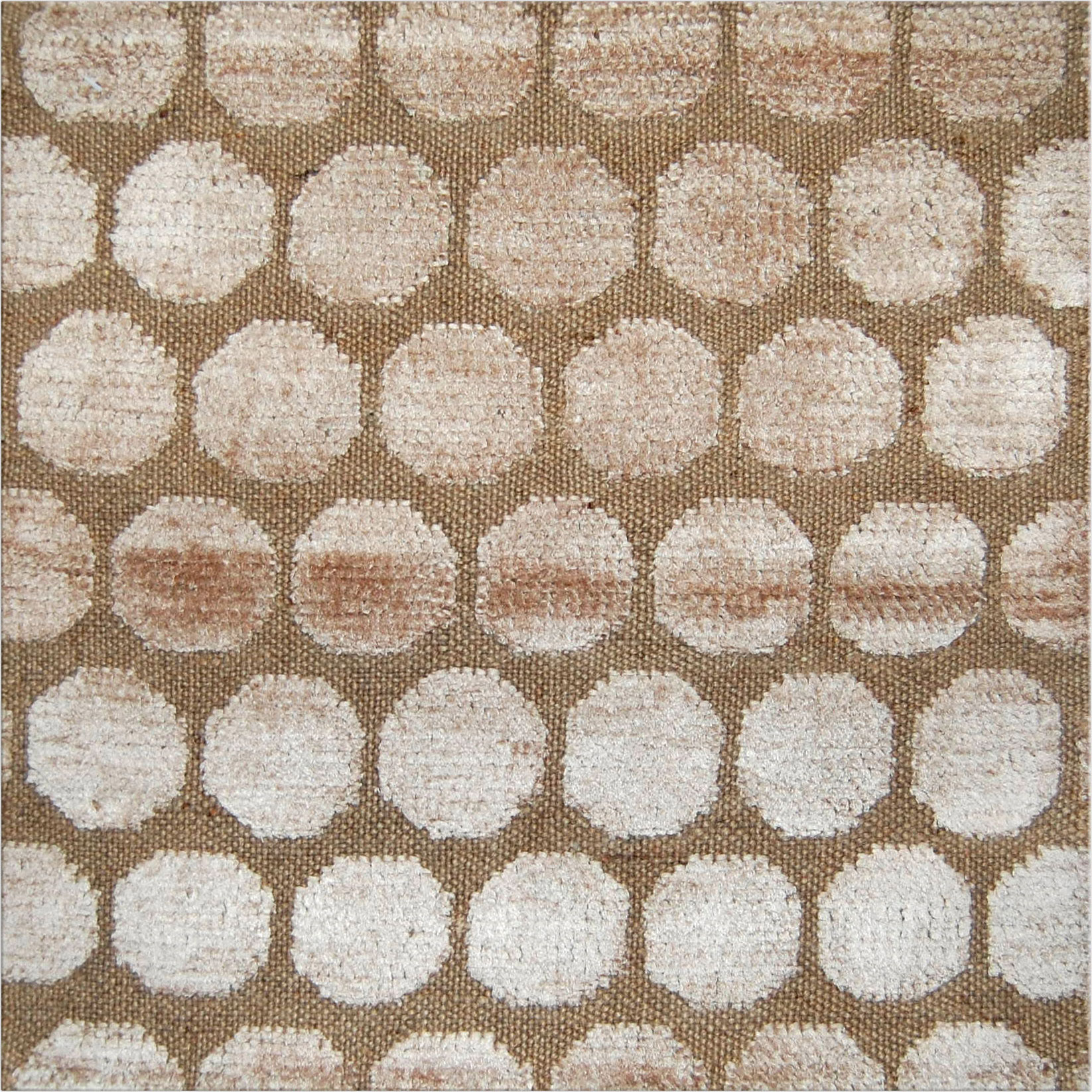
Approving custom rugs is rarely difficult because of the rug itself; it becomes difficult when samples arrive without a method. Designers who manage the rug sampling process well can compare color, texture, scale, and finish quickly enough to keep procurement moving while still protecting the room’s larger composition. The goal is not to rush judgment, but to create a sequence that lets clients respond clearly and lets the design team document the right details before production begins.
For most projects, the sample stage is where a rug either earns its place or quietly derails the scheme. A swatch or strike-off can look convincing in a studio, then read completely differently once it meets the room’s flooring, upholstery, trim color, and daylight. That is why the best approvals are treated like a design exercise, not a casual yes-or-no moment. They account for the way a rug will sit under furniture, how its pile will catch light, and whether its palette supports the architecture rather than competing with it.
At Doris Leslie Blau, we often see that the most efficient approvals come from disciplined comparison, not from showing clients everything at once. Designers who work with custom-made rugs usually get faster decisions when they narrow the field first, explain what each sample is solving, and evaluate the strongest candidate in context. That approach reduces indecision because the client is reacting to a curated choice, not an open-ended pile of options. It also keeps the conversation centered on design goals instead of isolated details that do not matter in the finished room.
Set up a sample review order before images are exchanged
Before you send anything to a client, decide what the sample review is meant to resolve. Is the question primarily color temperature, pattern density, border proportion, or material sheen? When a designer defines the purpose of the review in advance, the rug sampling process becomes shorter and more accurate because everyone knows what is being tested. This also prevents the common mistake of asking clients to evaluate a rug before the project team has established how the sample relates to the room.
A practical sequence usually begins with broad options and ends with a single preferred direction. If the room is built around a quiet architecture, review samples from the most restrained to the most textural, so the client sees how each one changes the atmosphere. If the scheme is more expressive, compare the most pattern-forward choice against a calmer fallback so the decision remains about intensity, not confusion. Designers custom rugs efficiently by controlling contrast in the sample set, which makes the conversation about intent rather than volume.
It helps to pair each sample with the same supporting information every time: dimensions, construction, fiber content, intended placement, and a note about pile height. That consistency allows the client to compare apples to apples, especially when the room has multiple zone requirements such as seating, circulation, or a dining table. A wool-and-silk hand-knotted rug, for example, will read differently from a denser wool piece even if the colors match closely. The right review order shows that difference early, when revisions are still inexpensive in terms of time and coordination.
Check texture, scale, and color in the room’s actual light
Digital images can support a decision, but they cannot replace the room. Natural light changes throughout the day, and that shift often exposes whether a rug’s undertone is warm, cool, muted, or unexpectedly saturated. A beige that looked soft in a showroom may lean green beside a stone floor; a gray may become noticeably violet under afternoon sun. The best designers compare samples in the exact light conditions the rug will live in, because that is where the palette has to work every day.
Texture deserves equal attention. A low, tight weave can feel crisp and architectural, while a higher pile softens the room and absorbs more light, which matters in spaces with reflective finishes or a large amount of glazing. Pattern scale should be checked alongside the furniture layout, not separately from it, because a border that looks balanced in isolation may be too narrow once the sofa and coffee table are in place. In open-plan interiors, scale also determines whether the rug defines a zone clearly enough to anchor the seating group without visually shrinking it.
One useful field test is to place the sample where the main rug edge or a major furniture leg would land, then step back to the usual viewing distance. This makes it easier to judge whether the rug’s rhythm supports the room’s proportions. For larger custom rugs, the issue is often not whether the pattern is attractive, but whether it repeats gracefully across a broad surface without becoming noisy. Designers who evaluate scale this way are better equipped to specify rugs that feel intentional from both close range and across the room.
Material choice should be assessed in the same review, since sheen and tactile presence can alter perceived color. Silk accents can brighten a motif and sharpen its contrast, while wool tends to diffuse the palette and make it read more grounded. In a room with cool daylight and pale walls, that distinction can determine whether the rug feels luminous or washed out. For projects that rely on restraint, the right fiber is often what keeps the design from becoming flat.
Capture client feedback without losing design direction
Clients often respond instinctively to samples, and that instinct is useful as long as the designer translates it into design language. When a client says a rug feels “too busy,” the useful question is whether the issue is pattern density, contrast, edge definition, or the way the sample relates to the upholstery. When they say a color feels “off,” the underlying concern may be undertone rather than hue. Skilled designers do not override these reactions; they refine them so the project can move forward with precision.
It is also helpful to separate subjective preference from architectural fit. A client may love a sample that looks beautiful on its own but introduces too much movement in a room already carrying strong millwork, artwork, or furniture silhouettes. In that case, the designer’s role is to explain why a quieter option may serve the whole interior better. This is where designer custom rugs become a specification tool, not just a decorative choice, because they can be calibrated to support the room’s composition instead of fighting it.
A realistic example: imagine a living room with a stone fireplace, low linen seating, and bronze accents. One sample may carry a pronounced border that feels elegant in the hand but competes with the mantel line and nearby artwork. Another may use a softer field with subtle tonal variation, allowing the architecture to remain the focus while still adding texture underfoot. In that scenario, the second sample may be the better approval not because it is more obvious, but because it holds the room together more quietly and more effectively.
To keep the process efficient, summarize feedback immediately after each review. A short note such as “client prefers warmer undertone, less contrast at border, still wants tactile depth” is far more useful than a paragraph of impressions. This record allows the design team to revise one variable at a time rather than reworking the whole direction. It also reduces the chance that the client’s memory of the sample changes after the meeting, which is one of the most common causes of unnecessary delays.
Document the approved details for production
Once a sample is approved, the work is not finished until the production notes are unambiguous. Designers should record dimensions, orientation, color references, border placement, pile specification, finishing details, and any site-specific adjustments that affect layout. A rug that will sit beneath a dining table, for instance, may need a different proportion than one designed for a lounge arrangement, even if the visual concept stays the same. Clear documentation protects both the aesthetic outcome and the schedule by reducing clarification requests later.
This is also the moment to confirm any changes introduced during review. Clients sometimes approve a sample but request a slightly lighter field, a narrower border, or a softer hand after seeing the composition in the room. Those revisions need to be captured in a way that is easy to read by the production team, not buried in an email thread. The more specific the note, the less likely the final rug will drift away from the approved design intent.
For projects that involve made-to-order pieces, a strong documentation habit also supports future matching. If a room will eventually require a companion rug, a runner, or a second area rug in a related palette, the original approval record becomes a useful reference point. That is especially valuable when the design relies on subtle tonal shifts rather than high contrast. A precise record helps preserve continuity across spaces while still allowing each rug to respond to its own scale and light exposure.
Designers who want additional structure often keep a simple approval sheet that tracks the sample image, notes from the client, final adjustments, and installation intent. It is not glamorous, but it keeps the project clean. The same is true when working with custom-made rugs: the more deliberate the handoff from sample to specification, the less likely the final piece is to need correction. Good documentation is a quiet form of craftsmanship, and it supports both the creative and logistical sides of the project.
FAQ
How many samples should a designer request?
Usually fewer than people expect. Two to four well-chosen samples are often enough if they represent distinct design directions and the review criteria are clear. Requesting too many can slow decisions because the client starts comparing minor differences instead of the problem the rug is meant to solve. A focused set is especially effective when the project already has strong furniture, architecture, or artwork in place.
What should be checked in natural light?
Natural light reveals undertone, contrast, and how the rug’s texture reflects or absorbs brightness. It can also expose whether a neutral is truly neutral or whether it leans green, pink, gold, or blue next to the flooring and wall color. Designers should look at the sample at different times of day if possible, especially in rooms with large windows or shifting exposure. This is the best way to understand how the rug will actually behave in the finished interior.
How do I keep clients from overreacting to small color shifts?
Frame the review around the room’s overall composition, not the swatch alone. Small shifts often matter less than whether the rug supports the furniture layout, the wall color, and the intended mood of the room. It helps to compare samples in context and to explain that handmade rugs naturally carry subtle variation, which is part of their depth and character. When clients understand the design purpose, they tend to focus on the qualities that shape the space rather than on tiny differences that disappear once the room is furnished.
Should texture be approved from photos or in person?
Photos can be useful for narrowing choices, but texture should be approved in person whenever possible. Pile height, hand feel, and surface movement affect how a rug reads under daylight and artificial light, and those qualities rarely translate accurately on screen. This is especially important for luxury interiors where material nuance is part of the design language. If in-person review is impossible, request detailed close-ups and notes on weave, pile, and finish, then confirm the final choice with the room’s actual furnishings nearby.
When sample approval is handled with a clear order, the process becomes faster, calmer, and more exact. The room, not the swatch, stays at the center of the conversation, and that is usually where the best decisions are made. For projects that need tailored guidance on scale, material, or finish, Doris Leslie Blau offers the kind of specialist support that helps designers move from sample review to confident specification with fewer detours.