

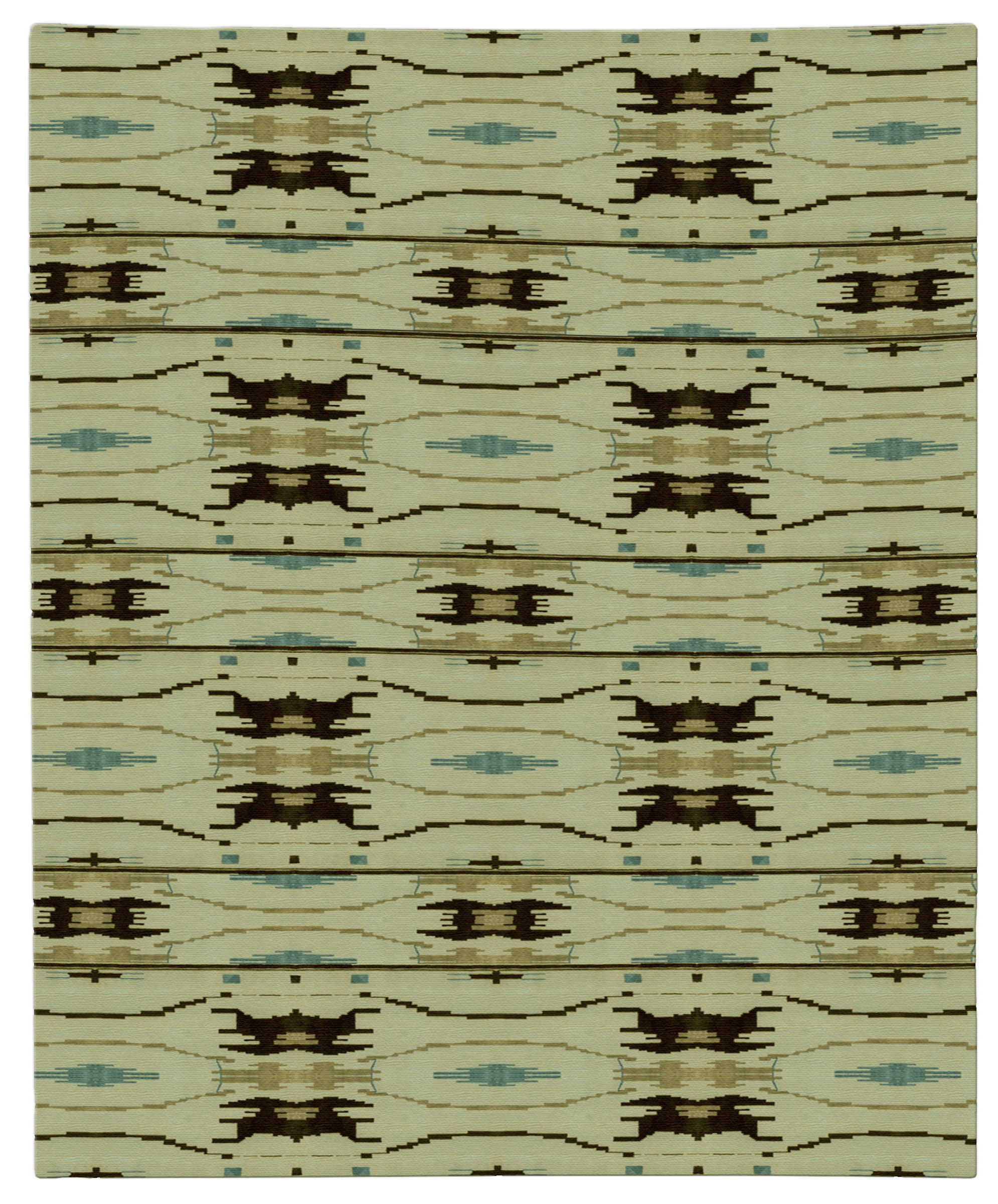
Approving custom rugs is rarely difficult because of the rug itself; it slows down when the review process is vague. A disciplined sample workflow helps designers compare color, texture, and scale in a way clients can understand, while protecting the project schedule. The goal is not to create more meetings or more images, but to make each review round decisive. When the rug sampling process is organized around real room conditions, approvals become faster and the finished piece is more likely to suit the architecture, furniture plan, and light in the space.
For designers, sample approval is a specification exercise, not a mood-board exercise. A rug must be evaluated for how it sits under furniture, how its fibers respond to light, how its pattern reads from the doorway, and whether its proportion supports the room’s circulation. In practice, that means the sample review should begin before the first images are exchanged, with clear criteria for color tolerance, texture preference, and construction. This is especially important when the project calls for designer custom rugs, because made-to-order work leaves less room for improvisation once production begins.
Set up a sample review order before images are exchanged
The fastest approvals start with a defined sequence. Before the client sees a sample, the designer should decide what is being checked first: color family, material hand, weave density, or pattern scale. If those priorities are not established, clients tend to react to whatever catches the eye first, which can derail a project even when the rug is broadly correct. A useful practice is to send only a small, curated set of samples at one time, each labeled with the decision it is meant to resolve. That keeps the conversation focused and prevents the room from filling with near-duplicates that feel different in ways the project does not actually need.
It also helps to frame the review around the room’s function. A bedroom rug may need a quieter surface and a softer palette, while a dining room rug must tolerate chairs, crumbs, and stronger pattern discipline. In an open-plan living area, the sample should be judged not only as a floor covering but as a zoning tool that supports seating, traffic paths, and sightlines. When the designer defines the role of the rug early, the client is less likely to request changes based on isolated details that do not affect the broader design.
For many projects, the most efficient order is simple: confirm construction and pile height, narrow the palette, then examine pattern and finish. That sequence mirrors how the rug will actually be experienced in the room, from underfoot to across the space. If a client is choosing among multiple options, compare only the variables that matter most and keep the rest stable. Otherwise, one sample may seem “better” merely because it is lighter, smoother, or more saturated in a way that has nothing to do with the design brief.
Check texture, scale, and color in the room’s actual light
Sample review in a studio or showroom is useful, but it is never the final answer. Natural light, overhead lighting, wall color, floor finish, and adjacent upholstery all change how a rug reads, especially with wool, silk, or blended fibers. A pale ivory can skew cooler near northern light, while a warm beige may flatten beside creamy plaster walls. For designer custom rugs, this matters because a “close enough” color on a screen can become the wrong temperature once the rug is installed.
Texture also deserves more attention than many clients expect. A low-cut rug with subtle sheen can appear crisp and architectural in bright daylight, but in a dim room it may feel flatter than intended. A high-low woven surface or hand-knotted texture can add depth, yet it may also introduce more visual activity than the furniture plan can support. The right test is not whether the sample looks attractive in isolation, but whether it supports the room’s mood when viewed from the sofa, the doorway, and the primary circulation path.
Scale should be checked with the same seriousness as color. A pattern that feels restrained on a small sample can become assertive once it fills a large seating area, especially in long rooms or spaces with low ceilings. Designers often place a sample next to upholstery swatches and then forget to step back; that quick close-up matters, but so does the view from across the room. If the rug is part of a broader composition, such as a living room anchored by a sofa, two chairs, and a coffee table, the sample should be evaluated against that furniture geometry rather than as an isolated textile.
When the project involves warm and cool finishes mixed together, it is worth testing the sample at several times of day. Morning light can make grays appear softer; evening light can bring out red or gold notes in natural fibers. For that reason, designers working with custom rugs should avoid approving color from a single snapshot or a studio lightbox image. The sample should earn approval in the space where it will live, under the same conditions the finished rug will face every day.
Capture client feedback without losing design direction
Client feedback is most useful when it is translated into design language, not left as a stream of impressions. If a client says a sample feels “busy,” the designer should determine whether the concern is pattern density, contrast level, or visual movement across the room. If a client says a sample looks “too gray,” the issue may be undertone rather than brightness. This translation step protects the project from endless round-tripping, because the revision brief becomes specific enough to act on.
One effective approach is to ask the client to rank samples rather than describe them broadly. Ranking forces comparison and usually reveals what matters most: softer texture versus cleaner outline, warmer tone versus cooler tone, or quiet field versus more expressive pattern. It is also wise to present one lead option and one backup option instead of four near-equals. Too many similar choices can make clients feel empowered in theory while making decisions harder in practice, especially when the differences are subtle and the room itself is already under construction.
For a realistic example, imagine a neutral living room with limestone, walnut, and linen upholstery. A client may initially prefer the brightest rug sample because it appears fresh in a photograph. Once the sample is placed in the room, however, that same brightness may compete with the stone and make the seating group feel disconnected from the architecture. In that case, the designer can keep the client aligned by pointing to the room’s existing value range and explaining why a more restrained tone will let the furniture and art hold their place. The point is not to override taste, but to keep the rug serving the composition rather than dominating it.
Design direction is preserved when feedback is bounded by the brief. If the project calls for quiet luxury and restraint, the rug should not be allowed to drift into highly contrasting pattern simply because a sample photographed well. If the room needs energy, the conversation should be about calibrated movement, not random boldness. This is where strong specification separates the best custom rug design from a decorative guess: the designer maintains the concept while still giving the client a real say in how the final piece feels.
Document the approved details for production
Once a sample is approved, the details should be documented immediately and in one place. That record should include the approved material, pile height, pattern scale, color notes, finish, edge treatment, and any site-specific dimensions that affect installation. If the rug is being made for a room with unusual architecture or built-ins, note the clearances and the intended furniture placement as well. Production issues are often created not by incorrect intent, but by incomplete transfer of information between the review stage and the workshop stage.
It is also smart to record what was rejected and why. Those notes can prevent a later reversal when a client revisits an earlier sample after seeing it in different light or on a different screen. A concise approval summary helps the team stay aligned if there are handoffs between designer, client, and source. For custom-made rugs, this documentation becomes especially valuable because every variable affects the final result, from weave direction to border width to the relationship between motif and room proportion.
If the project includes multiple rugs, treat each approval separately even when the pieces are related. A hallway runner, a seating-area rug, and a bedroom rug may share a palette but require different construction priorities and visual weights. That distinction matters in homes where one zone needs durability and another needs softness or a quieter surface. It also matters in hospitality and commercial interiors, where traffic load and maintenance expectations can change the acceptable finish. Strong records reduce confusion and make it easier to match the right custom carpets to the right part of the project.
At this stage, a good designer also confirms whether the approved sample still aligns with the broader room sequence. If wall finishes or upholstery have changed since the initial review, the rug may need one final check before production is released. That last verification is not a delay; it is insurance against expensive mismatch later. When the process is structured, the approval becomes a clear milestone rather than an open-ended conversation.
What makes the rug sampling process efficient in real projects
Efficiency comes from reducing uncertainty, not from rushing the client. The best rug sampling process uses fewer, better-targeted samples, each one tested against a known design problem. It also assumes that visual judgment will shift depending on light, distance, and surrounding materials, so the review is built to catch those variables early. Designers who work this way spend less time revisiting choices and more time refining the room as a whole.
The process becomes even smoother when the rug is treated as part of a layered interior rather than as a decorative afterthought. That means considering furniture layout, acoustics, foot traffic, pet use, and how the room will feel at different times of day. A hand-knotted rug with subtle depth may be ideal for a formal sitting room; a den with heavier use may call for a more durable construction and a less fragile palette. In both cases, the approval is easier when the sample is judged against use, not just appearance.
For projects that involve made-to-order pieces, many designers rely on specialist guidance to balance scale, construction, and finish before production begins. That is where a source with deep knowledge of custom-made rugs can help refine the specification without adding unnecessary friction to the timeline. The right partner should be able to discuss how a pattern will read across a large span, how a pile will behave under furniture, and how color will translate from sample to room. That kind of practical support keeps the project moving while protecting the integrity of the design.
When to lean on hand-knotted construction, and when not to
Construction decisions often influence approval more than clients realize. Hand-knotted rugs usually offer greater nuance in pattern and surface variation, which can be an advantage when the room needs depth and longevity. They can also require more careful review because subtle shifts in yarn, weave, or finish are part of their character. If the project calls for a highly controlled look, the designer should explain that some of the beauty of a hand-made piece lies in its tactile irregularity rather than in mechanical precision.
That said, not every interior benefits from visible complexity. In a room already carrying strong art, substantial furniture, or dramatic architecture, a quieter construction may serve the composition better. The best choice depends on how much visual work the rug must do. If it is anchoring a minimalist living room, the texture may need to provide interest without introducing a pattern that competes with the rest of the space. If it is supporting an expressive room, the rug can take on a richer role and still feel disciplined.
At a minimum, designers should compare samples by touch as well as by eye. The hand of the rug influences how clients perceive quality, comfort, and formality. A surface that feels too slick may not suit a relaxed family room, while a dense, plush pile may be impractical in a formal dining setting. In other words, the approval is not only about whether the sample is beautiful; it is about whether the rug’s physical character matches the room’s use.
FAQ
How many samples should a designer request?
Usually fewer than clients expect. Two to four well-chosen samples are often enough to resolve the real design question, especially if they differ in a meaningful way such as color temperature, pile height, or pattern density. Too many near-identical options make it harder to compare and can extend the rug sampling process without improving the result. The best number is the smallest set that still allows a clear decision.
What should be checked in natural light?
Color temperature, contrast, texture depth, and how the rug relates to walls and upholstery. Natural light reveals undertones that can be hidden under showroom lighting, and it also shows whether a pattern feels crisp or washed out at the room’s scale. It is especially important to check the sample at different times of day if the space receives direct sun or strong shade shifts. That helps avoid surprises after installation.
How do I keep clients from overreacting to small color shifts?
Frame the comparison in relation to the room, not the swatch. Small shifts matter only when they change how the rug sits against the architecture, furniture, and other finishes. Showing the sample beside the actual upholstery, wood tone, and wall color usually makes the difference clearer and less emotional. It also helps to explain whether the shift is a temporary effect of light or a lasting issue with the palette.
Should approvals be made from photos or in person?
Photos are useful for narrowing choices, but they should not be the final basis for approval when the project is custom or the palette is subtle. Screen color varies too much, and photos flatten texture and scale. For designer custom rugs, in-person review in the actual room is the more reliable standard. If remote approval is unavoidable, the designer should document the light source, camera conditions, and surrounding finishes very carefully.
Well-run approvals do not just save time; they produce better rooms. When sample review is structured around scale, light, texture, and a clear production record, the process becomes calmer for clients and more efficient for designers. If you are specifying custom rugs for a project that needs careful proportion and material judgment, Doris Leslie Blau can offer the kind of gallery-level guidance that helps translate a design concept into a finished piece with confidence.