

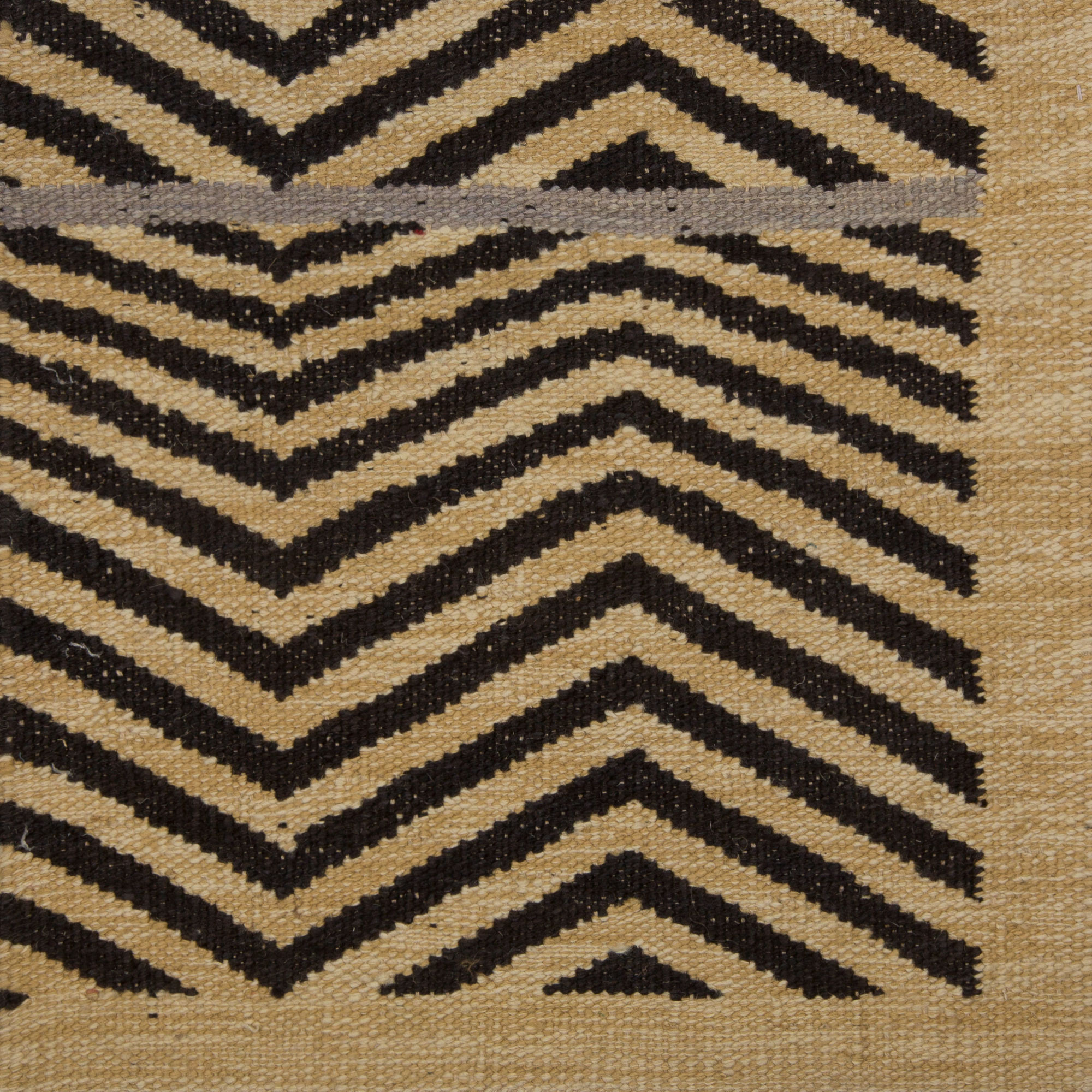
Some rooms are not difficult because they are unattractive; they are difficult because their proportions resist standard sizing. A narrow passage that opens into a broad seating zone, a dining room with an off-center chandelier, a long living room with multiple functions, or an awkward alcove can all make a conventional rug feel either timid or clumsy. This is where custom rugs become a design tool rather than a finishing touch, allowing shape, scale, border placement, and material to respond to the architecture instead of fighting it.
Ready-made rugs are produced to serve many rooms, which means they are most useful only when a room happens to fit common dimensions. In practice, many interiors do not: walls may be irregular, fireplaces may interrupt the floor plan, or furniture may need to float in a way that standard rectangles cannot support. A well-considered custom piece can restore order by establishing clear boundaries, improving circulation, and giving the eye a stable reference point. When the rug is designed for the room rather than inserted into it, the result feels intentional rather than improvised.
Identify the layout problems custom can correct
The first step is not choosing a pattern; it is identifying what the room is failing to do. Does the seating area feel scattered because the front legs of the sofa cannot land comfortably on a standard size? Does the room read as too long and thin because the floor lacks a visual anchor? Is there a circulation path that cuts awkwardly across a dining setup? These are the kinds of issues that custom rug design can solve with precision, because a rug can be made to match the exact footprint that the furniture and architecture require.
One of the most common problems is scale mismatch. A rug that is too small makes a room feel smaller, while one that is too large can erase the architectural edges that give the room character. In open-plan interiors, the issue is often not the room itself but the need to define separate zones without adding walls or heavy furniture. In those settings, custom oversized rugs can create a zone that is large enough to contain conversation seating, dining furniture, or a bed-and-bench arrangement without creating the awkward margins that standard rugs often leave behind.
Another recurring issue is asymmetry. Some rooms are anchored by a fireplace on one wall and a large opening on another; others have bays, columns, or built-ins that pull attention away from the center. A custom rug can acknowledge these shifts instead of pretending they do not exist. By adjusting dimensions, trimming corners, or extending a field to the exact edge of a furniture grouping, the floor covering helps the room read as balanced even when the architecture is not.
Show how shape and size can redirect movement
Shape is often the most effective, and most overlooked, way to solve a difficult layout. A rectangle is not always the answer simply because rooms are usually drawn that way on paper. A runner can guide movement through a gallery-like passage, an oval or round rug can soften a strict arrangement of angular furniture, and a bespoke shape can carve out a useful island in a room that otherwise feels too open. The right shape does not just sit beneath the furniture; it organizes how people enter, pause, and move through the space.
Consider a long living room that must handle both conversation and circulation. If a standard rug stops short of the main seating group, the sofa may appear detached from the chairs, and the walkway may feel like it is cutting through the heart of the room. A made-to-order rug can be extended just enough to include the front legs of all major pieces while leaving a clean edge for the path of travel. The room then reads as one composed arrangement with a deliberate route around it, which is especially valuable in homes where the layout cannot be changed but the floor plan needs clarity.
Dining rooms present a similar challenge, though the issue is usually chair movement rather than foot traffic. A rug must extend far enough beyond the table to allow chairs to slide back without leaving the textile’s perimeter. In a compact room, that extra margin may seem small on paper but becomes critical in daily use. With custom rugs, the dimensions can be calculated to the table size, chair clearance, and surrounding circulation so the room feels gracious rather than constrained.
Bedrooms are another place where size and shape matter more than many people expect. A rug that is too narrow may leave the bed floating in a bare field, while one that is too short can make the room feel abruptly cut off. Custom sizing allows the rug to extend in a way that supports bedside movement, bench placement, and the visual weight of the bed itself. For primary suites with unusual footprints, the rug can even be shaped to work around architectural interruptions such as angled walls or a fireplace hearth, allowing the furniture to stay visually centered even when the room is not.
Explain how borders or edges can visually fix the room
Edges do more than stop a rug from ending; they can redraw the room’s proportions. A border can make a space appear more expansive when the field is kept open and the frame is controlled. It can also help a room with uneven walls feel disciplined by giving the eye a clean perimeter to follow. In rooms with strong architecture, border placement can reinforce symmetry; in rooms with irregular architecture, it can gently mask imbalance by shifting attention toward the center.
This is where custom rug design becomes especially nuanced. A border does not need to be decorative in a loud sense to be useful. It may be a narrow line that clarifies the boundary between rug and floor, or a more defined frame that echoes trim, millwork, or ceiling detailing. In quieter interiors, a restrained border can create a sense of order without competing with upholstery or art. In more expressive rooms, a border can help organize pattern density so the rug contributes structure instead of visual noise.
Border placement also matters when furniture sits off-axis. Suppose a sofa is centered on a fireplace, but the room opens more broadly on one side than the other. A standard rug would likely reveal the imbalance, while a custom border can be shifted slightly so the visual frame aligns with the seating arrangement rather than the raw room dimensions. That subtle adjustment is often enough to make the whole interior feel more resolved. Designers know that small changes in edge placement can have a larger effect than introducing a more decorative pattern.
Material can reinforce the effect of the border as well. A dense wool field with a fine guard border will read differently from a silk-accented rug with a soft halo around the perimeter. In rooms that need calm, a low-contrast border keeps the composition restrained. In spaces that need definition, a sharper contrast can clarify where the rug begins and ends, especially in open-plan layouts where floor surfaces change from one zone to another. The best choice depends on whether the room needs continuity, emphasis, or separation.
Offer examples from several room types
In a living room, the primary challenge is usually related to furniture groupings and sightlines. If the room contains a sectional, two lounge chairs, and a coffee table, a standard rug may force some pieces to float awkwardly outside the composition. A custom rug can be sized to bring all major elements into one visual field while still leaving enough floor around the perimeter for the architecture to breathe. In a more formal setting, that same rug may be made with a stronger border to match paneled walls or a restrained palette that supports the upholstery rather than competing with it.
In a dining room, custom oversized rugs are often the most practical answer when the table is unusually long, round, or oval. The goal is not simply to fit under the table; it is to accommodate the chairs in motion and to keep the arrangement visually centered. A round table in a square room may benefit from a rug that echoes its geometry, while a rectangular table in a narrow room may need a proportion that stretches the room without making it feel tunnel-like. The rug can also help align a chandelier, credenza, or artwork when the room’s bones are slightly off-center.
In a bedroom, the priorities shift toward comfort, proportion, and morning movement. A rug may need to extend far enough beyond the bed to create a soft landing at the sides and foot, but not so far that it crowds baseboards or built-ins. In a room with a canopy bed or a strong headboard wall, a custom piece can be scaled to preserve the drama of the furniture while grounding the composition. If the room includes a reading corner or dressing area, the same rug can be shaped to link those functions without requiring separate floor coverings.
In a home office or library, the issue is often less about softness and more about control. A desk, task chair, lounge chair, and bookcase may each demand a different relationship to the floor. Custom rug sizing can establish a work zone that is large enough for the chair to move freely, while a quieter border or reduced pattern density keeps the space focused. If the room includes heavy casework or dark millwork, the rug may need to introduce just enough lightness to prevent the floor from disappearing, especially under warm lighting.
Hallways, vestibules, and transitional spaces also benefit from tailored dimensions. These areas can be visually underestimated, yet they set the tone for the rest of the interior. A runner that is too short or too narrow can make a passage feel like an afterthought. A made-to-order piece can be proportioned to the architecture so that the rhythm of movement feels deliberate, and the transition between rooms feels continuous. In houses with unusual transitions, this may be the difference between a corridor that simply passes through and one that quietly contributes to the design language of the home.
Why custom sizing often improves the entire composition
When a rug fits properly, the rest of the room usually improves with less effort. Furniture looks more settled, circulation becomes more intuitive, and the relationship between soft furnishings and architecture becomes easier to read. That is why interior designers often treat rug proportion as a foundational decision rather than a decorative afterthought. A thoughtful custom piece can solve more than one problem at once: it can correct scale, support zoning, and provide the visual pause that lets a room feel complete.
There is also a long-term advantage in choosing a floor covering that is designed around how the room is actually used. Rooms evolve. A nursery becomes a guest room, a formal sitting room becomes a family lounge, and an open-plan space may gain a writing desk or a bar cabinet. Custom rugs can be specified with that flexibility in mind, especially when the client wants a layout solution that will still work after the furniture changes. That planning-minded approach is one reason made-to-order rugs remain central to high-level interior specification.
Construction choices matter here as much as dimensions do. A hand-knotted rug in wool may offer resilience and a crisp edge for heavily used rooms, while a silk blend or finer pile may be more suitable where the goal is refined detail and light play. Pile height can influence how strongly the rug defines the furniture footprint: a lower pile tends to read more architectural, while a deeper surface can soften a room that feels too severe. These decisions are not separate from layout; they are part of how the rug functions as a spatial tool.
For homeowners comparing standard options to made-to-order pieces, the distinction is simple: one is chosen from what exists, and the other is created to answer the room’s specific demands. If you are working with a difficult plan, it is often worth starting with proportion and circulation before you think about pattern. In many cases, that process reveals that the room does not need a more dramatic design, only a better fit. For readers exploring the next step, Doris Leslie Blau offers guidance through the possibilities of custom rugs, where design, scale, and craftsmanship are considered together.
FAQ
What kinds of layout problems are best solved with custom rugs?
Rooms with awkward proportions, off-center focal points, unusual furniture groupings, or multiple traffic paths are often the best candidates. Custom rugs are especially useful when standard dimensions leave too much bare floor, cut off key furniture pieces, or fail to define separate zones in an open-plan interior. They are also effective when the architecture itself is irregular, such as in bay rooms, long narrow spaces, or rooms with built-ins and fireplaces that interrupt the footprint.
Can shape alone fix a difficult room?
Shape can solve a great deal, but it works best when it is paired with correct sizing and thoughtful placement. A round rug may soften a rigid layout, a runner may guide movement, and a bespoke shape may fit a niche or alcove better than a rectangle. Still, if the dimensions are off, even the right shape will not fully resolve the problem, so proportion should be considered alongside form.
Should the rug follow the room or the furniture?
In most interiors, the rug should support the furniture arrangement first and the room second, because the way people use the space matters most. That said, the room’s architecture should not be ignored; an effective rug often mediates between the two. The best solution is usually the one that lets the major furniture pieces sit comfortably while also respecting sightlines, circulation, and the room’s overall geometry.
Are custom oversized rugs always the right answer for large rooms?
Not always. A large room may need an oversized rug, but the final decision depends on how the space is zoned, how much floor should remain visible, and whether the room needs one large field or several smaller anchors. In some cases, two coordinated rugs or a more precisely scaled custom piece will work better than one expansive format.
When a room feels impossible to furnish, the solution is often not a different sofa or a larger table, but a floor covering designed with the same care as the architecture itself. For tailored advice on proportion, shape, and material, a specialist consultation can make the difference between a rug that fills space and one that genuinely resolves it.