

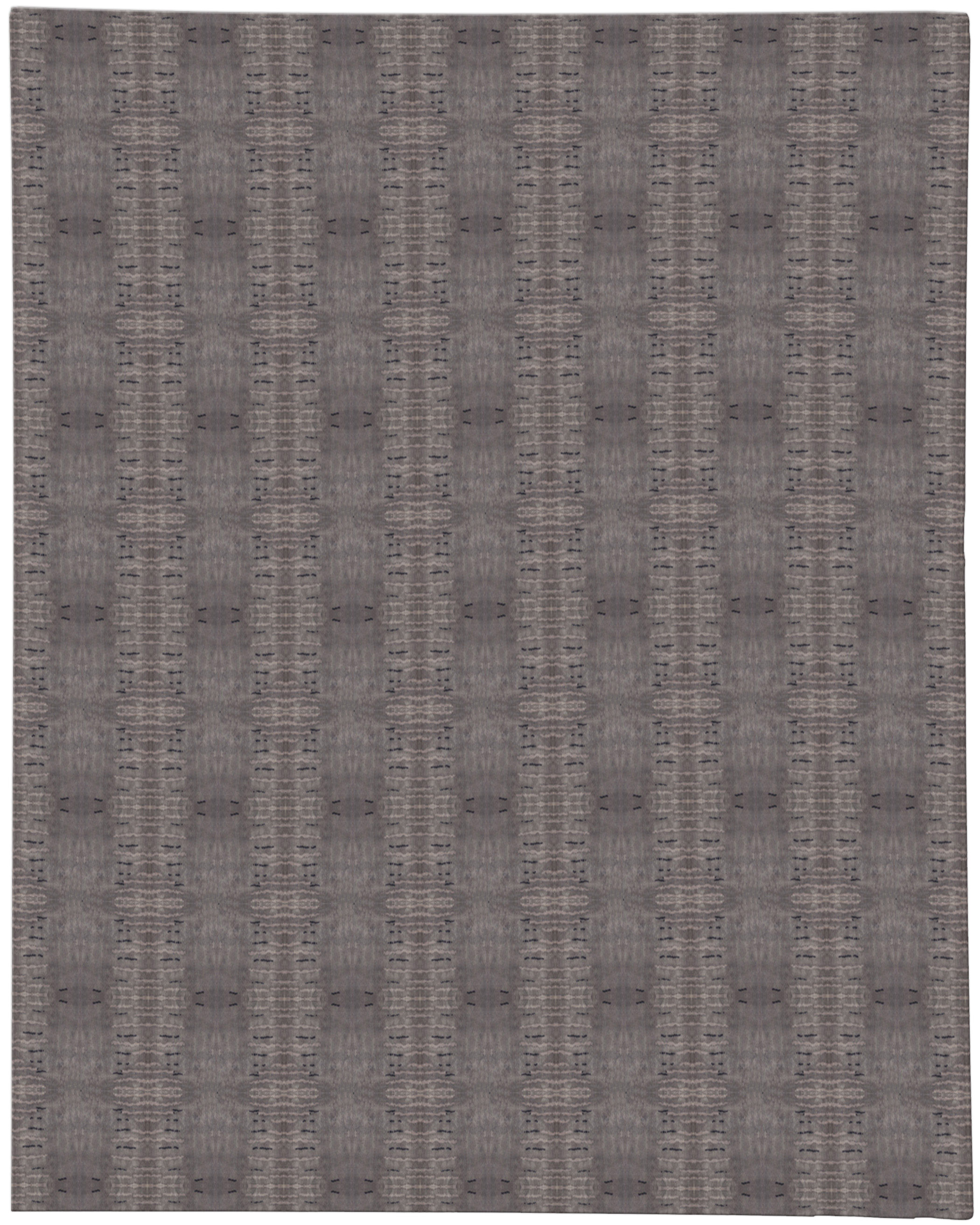
When a hotel lobby, suite, lounge, or guest corridor needs to look composed from opening day through years of traffic, the rug specification has to do more than match the palette. The best custom rugs for hospitality settings support circulation, soften acoustics, withstand cleaning routines, and still feel aligned with the architecture. In practice, that means thinking like a designer and a facilities team at the same time: the rug must hold its line under furniture, age predictably, and contribute to the story the space is telling.
Hospitality interiors are rarely asked to perform one job. A guest-facing room has to greet, guide, absorb sound, frame furniture, and survive repeated use without losing visual discipline. That is why designing rugs for hospitality projects begins with a simple question: where does the room ask the rug to work hardest? In a lobby, the answer may be entrances and queue paths. In suites, it may be the zone around the bed or the seating area where luggage is set down. In a restaurant or lounge, wear often concentrates along routes rather than across the full floor, which changes both the rug size and the pattern strategy.
Durability should be considered as a design parameter, not an afterthought. Pile height, fiber choice, construction density, and pattern scale all affect how a rug behaves once guests, carts, and cleaning equipment enter the picture. A dense wool surface can offer excellent resilience and a forgiving hand, while certain blended constructions may be better suited to very specific maintenance expectations. For projects that call for custom carpets or made-to-order rugs, the value lies in specifying the right construction for the right zone instead of forcing one solution to serve every space equally.
Identify traffic, cleaning, and maintenance requirements first
Before discussing palette or pattern, define the real operating conditions of the room. A lobby rug near an exterior entrance will face moisture, grit, and directional traffic; a penthouse suite rug may face less abrasion but more scrutiny under natural light. Housekeeping protocols matter as much as aesthetics, because vacuuming frequency, spot-cleaning methods, and any planned deep-cleaning process can influence whether a surface keeps its integrity over time. If a rug is expected to sit beneath moveable casegoods, consider how easily those pieces can be repositioned without damaging the foundation or edge finish.
Material selection should follow those requirements. Wool remains a frequent choice in hospitality because it offers a strong balance of appearance, resilience, and tactility, especially in hand-knotted rugs or other tightly built constructions. In spaces where a softer, more luminous surface is desired, silk accents can be used carefully, but usually in lower-wear areas or in controlled decorative elements rather than high-impact zones. If the specification calls for a custom carpet approach across an entire floor plate, the construction can be adjusted for circulation patterns, sound control, and maintenance access in a way that a stock piece rarely can.
A practical way to evaluate rug durability is to map what happens to the floor across a typical day. Where do guests stop to check in, set down bags, or gather in groups? Which areas receive rolling luggage, and which are primarily visual zones anchored by seating? These observations help determine whether the rug needs a tighter weave, a lower pile, a darker ground, or a more stable border treatment. They also help prevent a common specification mistake: choosing a beautiful surface that looks correct in renderings but shows every path line after a month of real use.
Balance branding with durability and acoustic goals
Hospitality design succeeds when identity and performance are working together rather than competing. A rug can echo the building’s palette, reference a local material story, or introduce a quieter layer of contrast without becoming overly literal. The most effective custom rugs in hotels often do not shout the brand; instead, they translate it into proportion, surface character, and color temperature. A restrained mineral palette may suit a contemporary urban property, while warmer earth tones can support a more residential or heritage-driven atmosphere.
Acoustics are especially important in guest-facing interiors because sound quality affects how luxurious a room feels. Larger open areas, hard ceilings, and stone or timber finishes can create a lively but exhausting environment if soft flooring is not used strategically. Rugs help absorb impact sound and can improve conversation comfort in lounges, suites, and conference-adjacent areas. For this reason, rug specification should be discussed alongside lighting, upholstery, drapery, and wall treatments rather than as a decorative separate.
Branding also benefits from disciplined restraint. A pattern that is too busy can visually fragment a lobby, while a surface that is too plain may fail to define zones in an open plan. The answer is often a measured design language: perhaps a subtle allover motif, a graded border, or a surface texture that changes under light without becoming noisy. That kind of control is especially valuable when the rug must sit in conversation with artwork, stone finishes, and bespoke millwork, where every material already has a strong voice.
Use scale and repeat patterns to support wayfinding
Scale is one of the most underestimated tools in hospitality rug design. A large-format rug can anchor a lobby seating arrangement and keep the space from feeling chopped into unrelated islands, while smaller rugs can help define intimate conversation pockets in a suite or club lounge. The wrong scale often makes a room feel improvised: a rug that is too small leaves furniture floating awkwardly, and one that is too dominant can swallow the architecture. The goal is to let the rug support circulation and sightlines, not interrupt them.
Pattern repeat matters just as much as size. In long corridors or adjacent public rooms, a repeat that is too obvious can produce visual vibration, especially under strong lighting or when viewed from an angle. In those conditions, a quieter repeat or a softened directional pattern can guide movement without looking overly graphic. In more expressive spaces, pattern can do double duty by directing attention toward a reception desk, a bar, or a focal seating group, helping guests intuit the intended path through the room.
Consider a scenario in which a boutique hotel wants a lounge that feels relaxed during the day and polished in the evening. A low-contrast field with a subtle border could separate the seating area from the circulation path, while a denser central motif would keep the composition grounded beneath tables and chairs. The rug would not need to be the loudest element in the room; it would need to keep the room legible from multiple angles and under changing light. That is where custom rug design becomes especially useful, because the repeat, ground color, and edge treatment can be calibrated for the exact dimensions and use case.
If the project includes multiple room types, continuity should be planned rather than assumed. Guest suites, corridors, and public lounges do not need identical rugs, but they do benefit from a shared vocabulary. A material family, a recurring border proportion, or a controlled palette can create a sense of belonging across the property without making every surface look uniform. This is where a custom carpets program can be more effective than sourcing separate products room by room, because the specifications can be developed as part of one visual system.
Discuss approvals for public-facing interiors
Public-facing hospitality projects usually involve more than a designer and a client. Operations teams, ownership groups, procurement specialists, architects, and sometimes brand representatives all need to see how the rug will perform and how it will read in the space. That makes the approval process a design stage in itself. The more clearly the specification package explains scale, construction, palette, and maintenance implications, the easier it is to avoid late-stage compromises that dilute the original concept.
Samples should be reviewed in context whenever possible, especially if the room has strong daylight, artificial accent lighting, or highly reflective finishes nearby. A color that feels calm in a showroom can shift dramatically beside polished stone or warm brass. Likewise, a pattern that appears subtle on a small strike-off may behave very differently once repeated across a large field. Designers working on custom rugs for hospitality projects should confirm not only the visual sample, but also the edge finish, binding logic, and how the rug will sit relative to furniture and door swings.
It also helps to build the approval discussion around risk reduction rather than taste alone. Ask how the rug will be cleaned, whether it needs to be moved for access to mechanical systems, and what level of staining or wear is acceptable in a guest-facing environment. If the property expects seasonal layout changes or event use, the rug should be specified with that flexibility in mind. Good approvals are not just about sign-off; they are about making sure the chosen surface can survive the operational reality behind the design intent.
Material and construction decisions that support longevity
For hospitality work, construction is inseparable from aesthetics. Hand-knotted rugs offer a level of precision and longevity that suits many high-end environments, especially when the design requires detailed pattern control or a refined edge. Other constructions may be more suitable for areas where the primary need is broad coverage and simplified maintenance. The right answer depends on the room, the traffic pattern, and the visual effect the designer wants to achieve, not on a generalized idea of what is “best.”
Fiber behavior matters under light and wear. Wool has a natural ability to recover and a surface quality that feels warm rather than brittle, which is helpful in guest-facing rooms that should never feel overdesigned. For spaces with more intense sun exposure, color selection should account for fading risk and how the rug will age against surrounding materials. Deeper tones may disguise use more effectively in some areas, while nuanced mid-tones can read more elegant in others by softening the appearance of tracked paths and minor soil.
Edge treatment is another detail that becomes important in hotels and suites. A border can stabilize the composition and protect the visual frame of the rug, but it must be proportioned carefully so it does not crowd the furniture layout. In some settings, a clean field with a restrained finish is the better choice because it preserves clarity under layered casegoods. In others, the border provides the visual discipline that keeps the room from feeling too loose, especially in expansive suites with separate seating and sleeping zones.
How to specify with confidence
If you are developing a hospitality project, the best specification process begins with drawings and ends with a real-world check of how the rug will live in the room. Confirm dimensions against furniture placement, circulation, and doorway clearances. Verify whether the rug should fully define a zone or simply sit beneath selected pieces. Then assess the relationship between pile, pattern, and maintenance so the design remains intact after repeated cleaning and everyday use.
- Map traffic paths before selecting scale or pattern density.
- Choose materials based on wear, lighting, and maintenance expectations.
- Match pile height to the room’s use, not just to the visual concept.
- Use repeat patterns to guide movement without creating visual clutter.
- Review samples in the actual lighting conditions of the project.
For designers, that process often reveals whether the room needs a single anchoring rug, a coordinated set of made-to-order pieces, or a more comprehensive flooring strategy. For owners and operators, it clarifies why the investment in tailored surface design can pay off over time: fewer visual compromises, better acoustic comfort, and a floor plan that feels deliberately composed rather than merely furnished. Doris Leslie Blau often approaches this kind of work as a dialogue between material knowledge and spatial intent, which is exactly what hospitality interiors require when style and wear resistance must coexist.
FAQ
What matters most in hotel rug specification?
The most important factors are traffic level, maintenance requirements, and how the rug supports the room’s layout. A hotel rug has to look composed from a distance, hold up under repeated use, and fit the operational reality of cleaning and furniture movement. Construction, pile height, and color choice should all follow from those needs.
How do I choose a pattern that handles wear?
Look for patterns that distribute visual activity across the surface rather than concentrating it in one obvious area. Medium-scale motifs, tonal variation, and subtle texture can hide tracked paths better than flat, uninterrupted fields. In high-traffic zones, avoid patterns that are too stark or too delicate, since both can reveal wear more quickly.
Can custom rugs support acoustic goals?
Yes. Rugs help absorb impact sound and reduce the hard, echoing quality common in hospitality interiors with stone, glass, or polished floors. The right size and construction can noticeably improve comfort in lounges, suites, and corridors, especially when the rug is coordinated with other soft furnishings.
Are custom carpets better than off-the-shelf rugs for hospitality?
They are often a better fit when the space has unusual dimensions, specific circulation patterns, or a need for coordinated branding across multiple rooms. Custom carpets and custom rugs can be scaled to the architecture instead of forcing the architecture to adapt to a standard size. That flexibility is especially useful in public-facing interiors where proportion matters as much as appearance.
For projects where every floor decision affects guest experience, the right rug should be discussed as part of the architecture, not added at the end. If you are planning a hospitality interior and need guidance on materials, proportions, or a tailored specification, a specialist consultation can help translate the concept into a surface that is both elegant and resilient.