

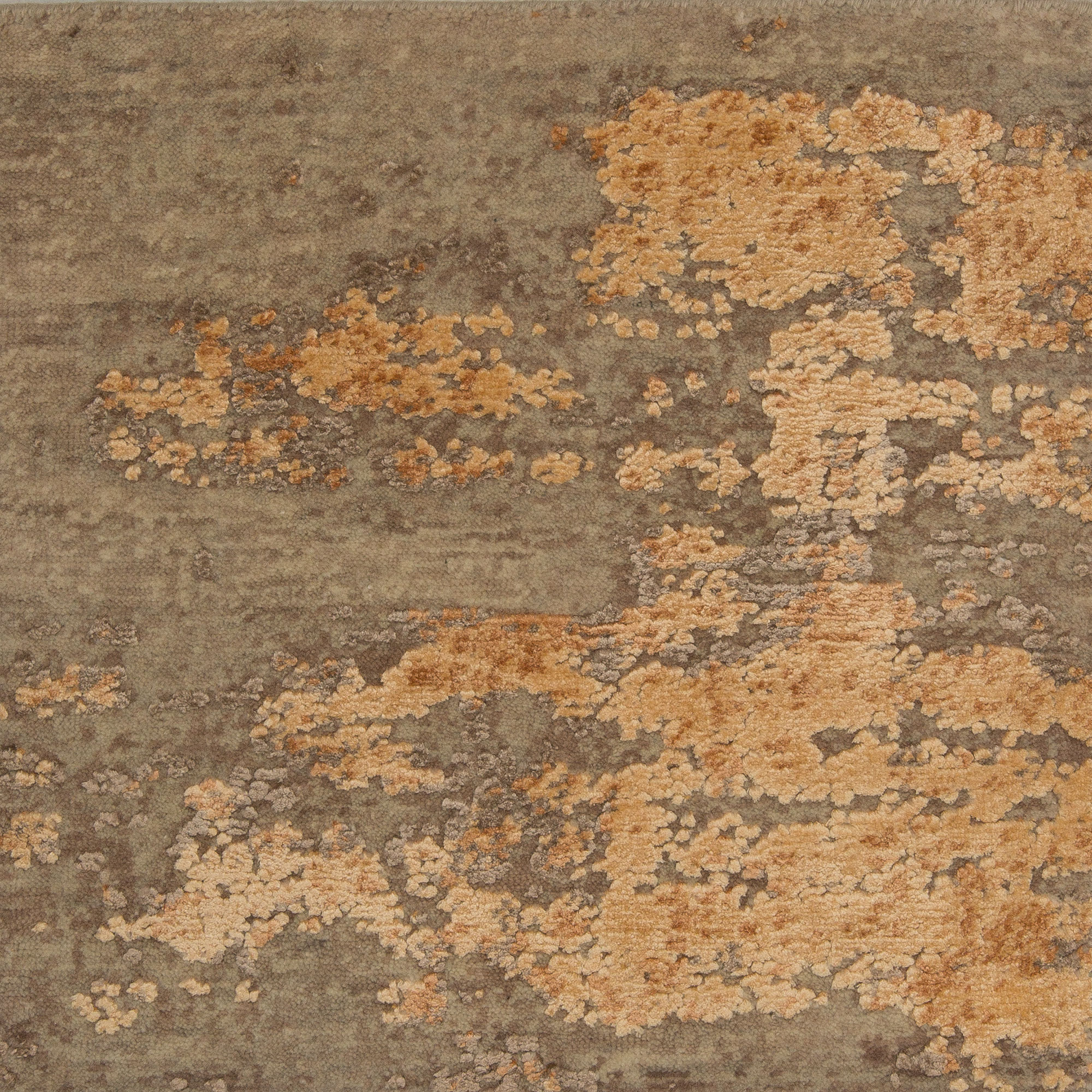
Among custom rugs, flatweave construction occupies a very specific and valuable niche: it is crisp, low-profile, and highly responsive to architecture. For rooms that need clarity rather than plushness, flatweaves can solve problems of circulation, furniture placement, and visual weight with uncommon precision. They are not the answer everywhere, and that is exactly why they matter. When specified well, they can make a room feel composed without looking overworked.
Flatweave rugs have a reputation for restraint, but that description only gets part of the story right. What distinguishes them is the way they sit in a room: they do not add height, they do not soften lines dramatically, and they do not compete with strong furnishings or architectural details. Instead, they act almost like a woven plane, offering color, pattern, and structure with very little bulk. That makes them especially useful in interiors where the floor should support the composition rather than dominate it.
For designers, the appeal is often practical first and aesthetic second. A flatweave can help define a seating area in an open-plan loft, keep a dining room visually light, or bring pattern into a narrow hall without making the circulation feel crowded. It is also a useful option when a room already has layered materials—stone, lacquer, leather, velvet, or metal—and the floor covering needs to balance those surfaces rather than add another heavy note. In the right setting, the result feels exacting rather than minimal for minimalism’s sake.
Describe the look and feel of flatweave construction
Flatweave construction is defined by its absence of pile, which gives the rug a taut, fabric-like surface. Depending on fiber choice and weave density, the finish can read as sharp and graphic or soft and textural, but it will always feel closer to a woven textile than a cushioned carpet. That distinction matters in room planning because the eye reads the rug as a field, not as an object with volume. The effect is particularly strong in interiors that value line, proportion, and clean transitions between materials.
Because the surface is low and even, the pattern is often more legible than it would be in a deep-pile construction. Borders, stripes, lattice motifs, and understated geometrics can appear especially crisp, while more expressive designs gain a sense of order. This is one reason flatweaves are often chosen for custom rugs where the brief calls for visual restraint but not blandness. They can carry detail without feeling ornate, which is useful in rooms already doing a lot architecturally.
Tactilely, flatweaves vary more than many people expect. Wool versions can feel firm yet supple, while jute and natural fiber rugs introduce a drier, more rustic hand that suits relaxed or coastal interiors. Blends and specialist finishes can change the character again, sharpening the surface or softening the drape. The right specification depends on whether the rug is meant to disappear into the room or anchor it with a visible textile presence.
Compare visual lightness with durability
The greatest advantage of flatweave rugs is their visual lightness. They sit close to the floor, which allows plinths, chair legs, case goods, and sightlines to remain readable. In rooms where the architecture already feels dense—coffered ceilings, dark wood paneling, detailed moldings, or layered art—this low profile can prevent the floor from becoming another heavy surface. A flatweave can also be a smart choice for smaller rooms because it preserves a sense of openness even when the rug is sizable.
Durability, however, is not a simple yes-or-no question. Flatweaves can be extremely hard-working, but they are not all equally suited to all conditions. Tight weaves, robust wool, and thoughtful rug finishing can give a flatweave excellent day-to-day resilience, especially in rooms with moderate to high traffic. At the same time, the absence of pile means less inherent cushioning and, in some constructions, less forgiveness under heavy wear than a plush hand-knotted rug might offer.
That difference becomes important in deciding where the rug should live. A flatweave in a family room that sees constant movement may perform beautifully if the fiber is resilient and the weave is dense, but it may not feel as indulgent underfoot as a thicker handmade carpet. In a formal sitting room, that can be exactly the point. In a bedroom, it may depend on whether the client prioritizes softness, warmth, or a crisp, tailored finish.
Identify the room types that benefit most
Flatweave rugs tend to shine in rooms where function and visual clarity must work together. Dining rooms are an obvious example: chairs slide more easily, the floor reads neatly around the table, and the rug can extend the footprint without creating a thick edge that catches on casters or chair legs. Entry halls and transitional spaces also benefit because the construction holds its own without making the corridor feel congested. In both cases, the low profile helps the room move well while still looking considered.
Open-plan living areas are another strong use case, especially when the floor plan needs zoning. A flatweave can define the seating area without interrupting flow between the kitchen, lounge, and adjacent circulation paths. This is particularly effective when the room is furnished with modern silhouettes or low-profile seating, because the rug supports the composition without visually stacking too many layers. For projects that require a controlled palette, the woven surface also provides a disciplined place to introduce color or pattern.
Children’s rooms, libraries, and secondary sitting rooms can also benefit, though for different reasons. In a child’s room, a flatweave may be easier to manage than a thick rug and can handle frequent rearrangement of furniture or play surfaces. In a library, the clean floor line reinforces architectural order. For a relaxed den or media room, the specification may come down to whether acoustics and softness are already being addressed elsewhere; if so, a flatweave can keep the room looking sharp without feeling overdecorated.
There are spaces where flatweaves are less convincing. Bedrooms often call for more softness at the point of contact, especially if the rug is meant to be experienced barefoot. Likewise, a very formal salon with highly sculptural furniture may need the visual anchoring of pile. That does not make flatweaves inferior; it simply means their strengths align better with certain room typologies than others.
Understand material choice, including wool and natural fibers
Material choice determines whether a flatweave feels refined, rustic, or rigorously tailored. Wool remains the most versatile option because it offers structure, wear resistance, and a more forgiving hand than many plant-based fibers. In custom rugs, wool also supports finer color work, which matters when the palette needs to relate closely to upholstery, drapery, or wall finish. For rooms with strong sunlight or frequent use, that balance of durability and adaptability is often the safest starting point.
Jute and natural fiber rugs bring a different set of advantages. Their texture can be compelling in coastal houses, informal living spaces, or interiors that rely on natural materials to create warmth without visual weight. They tend to read more casual and organic, which can be exactly right when the room is designed around linen, oak, plaster, or rattan. However, they can be less forgiving in terms of moisture, staining, and long-term refinement, so they deserve careful placement and realistic expectations.
Hybrid constructions can bridge the gap. A designer may choose a wool ground with a natural-fiber character, or specify a weave that gives the appearance of linen-like linearity while retaining better wear characteristics. That decision is often less about trend and more about what the room needs to do. If the floor cover must resist daily movement, work under furniture, and maintain a tailored appearance, the material conversation becomes as important as the design itself.
Explain edge, border, and size considerations
With flatweaves, the edge finishes matter more than many clients expect. Because the rug is thin, the perimeter becomes part of the visual language of the piece rather than a hidden technical detail. A bound edge can feel neat and precise, while a turned or reinforced finish can create a quieter outline. For very tailored interiors, the wrong edge treatment can make the rug look unfinished; the right one can make the entire room feel more resolved.
Borders deserve similar attention. A border can frame the room and help a flatweave hold its own against strong furniture lines, but it can also make a small rug feel overly diagrammed if the proportions are not right. In large rooms, a border can improve readability and help the rug register as an intentional architectural element. The key is to treat border width, motif scale, and color contrast as part of the room’s overall proportion strategy, not as decorative afterthoughts.
Size is where flatweaves can either solve or create problems. Because they do not add much visual mass, they often tolerate generous sizing well, especially in open-plan interiors where a broader field helps organize furniture. But undersizing a flatweave can be particularly noticeable because the low profile gives the eye fewer distractions. For that reason, designers often refer to a custom rugs resource or sizing framework before finalizing dimensions, especially when working with unusual room shapes, off-center fireplaces, or furniture groups that need precise grounding.
In practice, the best results come from thinking about the rug as part of the room’s geometry. Measure the furniture footprint, the walking routes, and the space the rug must leave visible at the edges. Then decide whether the piece should frame the arrangement, extend under key furniture legs, or act as a floating zone within a larger plan. With flatweaves, proportion is not just aesthetic; it determines whether the rug looks intentional or simply placed.
When flatweave is the smartest specification
Flatweave is the smartest specification when the room already has enough softness, volume, or ornamentation and the floor needs to provide clarity. It is also an excellent choice when furniture needs to move easily, when the room is part of an open circulation path, or when the goal is to introduce pattern without visual heaviness. In that sense, it often serves as an architectural tool as much as a decorative one. The best projects use that quality deliberately rather than treating the flatweave as a compromise.
Consider a long living-dining room with pale oak floors, a modular sofa, and a dining table placed near full-height glazing. A thick pile rug under the table could make the room feel segmented and cumbersome, while a flatweave could maintain continuity while still defining both zones. If the seating area needs more softness, a different construction may belong there. If the entire room requires a unified floor language, however, a carefully sized flatweave can be the cleanest answer.
Flatweaves are also compelling in interiors that are edited rather than layered. If the palette is limited, the furnishings are sculptural, and the owner wants texture without fuss, the right weave can deliver exactly that. For clients comparing hand-knotted rugs with flatter constructions, the choice is less about prestige than about fit: which surface supports the room’s architecture, traffic, and mood most effectively? That question is where expert specification becomes useful, because the difference between a good rug and a perfect one is often measured in proportion and finish.
How flatweaves compare with pile rugs in custom work
Pile rugs usually offer greater softness, more tactile depth, and a stronger sense of surface luxury. Flatweaves, by contrast, offer speed of reading: the eye understands them immediately. Neither is inherently better. In custom rugs, the decision usually comes down to what the room lacks and what it already contains. If the space needs softness, pile may be the answer; if it needs discipline, a flatweave often wins.
There is also a question of maintenance and longevity. A rug with pile can conceal some irregularity and may feel more forgiving underfoot, but it can also hold more lint and show compression in certain traffic patterns. A flatweave may be easier to reposition and visually easier to keep crisp, though it requires disciplined specification to avoid looking too thin or too casual. For many designers, the ideal solution is not to choose based on general preference, but to match construction to the way the room is lived in.
That is especially true in projects where several rug types may appear in the same home. A principal living room might call for a hand-knotted rug with more depth, while a secondary hall or dining room benefits from the sharper profile of a flatweave. Thinking this way allows the home to feel coherent without becoming monotonous. It also gives each room the construction most suited to its use rather than forcing a single aesthetic across all spaces.
Practical specification questions before you order
- Will the rug sit under dining chairs, a sectional, or a freestanding furniture group?
- Does the room need visual lightness, or does it need more softness and acoustic absorption?
- Is the preferred fiber wool, or would jute and natural fiber rugs better suit the room’s material palette?
- Should the border, edge finish, or weave density be visible as part of the design?
- Is the size large enough to anchor the arrangement without leaving the rug looking underscaled?
Frequently asked questions
Are flatweaves durable enough for busy areas?
Yes, provided the construction and fiber choice are appropriate for the room. Dense wool flatweaves can handle substantial daily use, especially in dining rooms, halls, and family spaces where the floorcovering needs to be practical as well as refined. The main limitation is not necessarily wear resistance, but the fact that a flatweave offers less cushioning and visual forgiveness than a pile rug. In highly active zones, the best choice is a well-made construction with finishing details suited to traffic.
Do they feel less luxurious than pile rugs?
Not necessarily; they feel different. Luxury in a flatweave comes from precision, fiber quality, weave consistency, and the quality of the edges and borders, not from thickness alone. A restrained flatweave can look more sophisticated than a heavy rug if the room calls for clarity and tailored proportions. What it may lack in plushness, it can make up for in elegance of line and architectural fit.
When is flatweave the smartest specification?
It is often the smartest choice when the room needs visual lightness, easy movement, or a rug that supports rather than dominates the design. Open-plan layouts, dining rooms, corridors, and layered interiors with strong materials are especially good candidates. Flatweave is also wise when the room needs a crisp edge, a controlled palette, or a low-profile surface that will not interfere with sightlines. In short, it is the right answer when the floor should read as part of the architecture.
For projects that require more than a standard size or a one-size-fits-all material decision, Doris Leslie Blau can help guide the specification with the kind of design judgment that turns a rug into a room-making element. If you are weighing construction, scale, and finish, a conversation with a specialist can clarify which path is most appropriate before the order is made.