

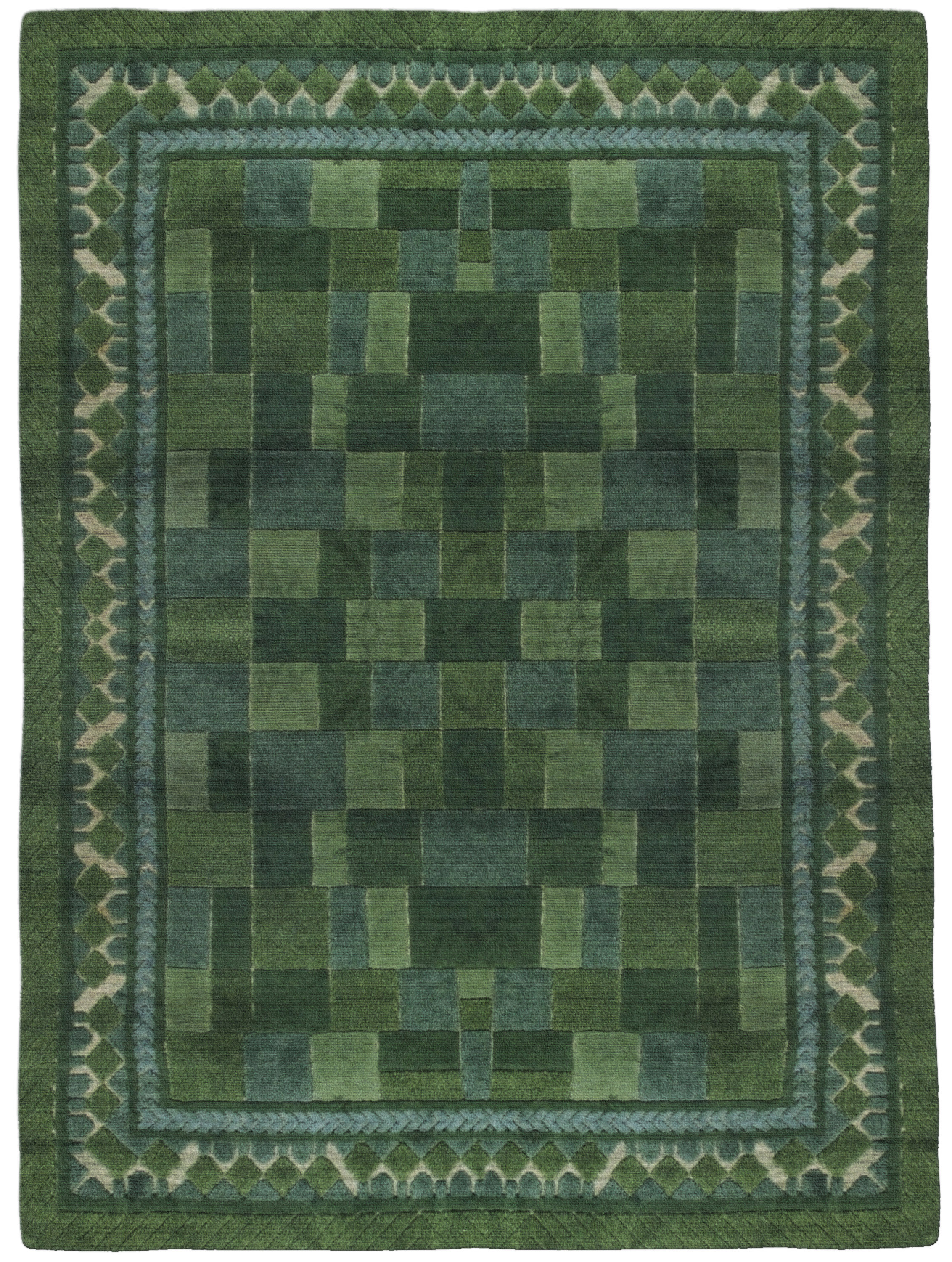
A dining room rug has one job that matters more than any decorative effect: it must let chairs move in and out without catching, tipping, or dragging the eye into a cluttered frame. Well-chosen custom rugs solve that problem by matching the table, chairs, and room proportions with precision rather than guesswork. The result is a dining area that feels composed from every angle, whether the room is formal, open plan, or tucked into a smaller apartment layout.
Dining rooms ask more of a rug than most other spaces in the home. The table defines the center, but the chairs create the true working footprint because they expand every time someone sits down or stands up. If the rug is too small, chair legs land half on and half off the edge, which looks unfinished and creates constant friction in daily use. If it is oversized without restraint, it can swallow trim, baseboards, or adjacent flooring and make the room feel heavier than intended. The best approach is to treat the rug as a measured field that supports movement first and style second, even though the best custom rugs manage to do both at once.
Calculate chair pull-out clearance before choosing dimensions
Before thinking about pattern or fiber, map the room as a working zone. Pull each dining chair out as if someone is standing from the table, then measure the furthest point the back legs reach. That dimension is the real test of whether a rug is large enough, because dining comfort depends on how the chair behaves when it is in use, not only when it is tucked in. For most interiors, the rug should extend well beyond the table on all sides so the chairs remain fully on the textile even when pulled back. This is the practical answer to the question of how much larger should a rug be than furniture: large enough to cover the full chair path, not just the table perimeter.
A useful way to think about sizing is to start from the tabletop rather than the room. Add the chair pull-out distance on every side, then consider how much visual breathing room remains between the rug edge and the walls. In many dining rooms, a generous border of exposed floor around the rug improves proportion, especially when the flooring is beautiful stone, hardwood, or inlaid parquet that deserves to remain visible. If the room is unusually narrow, a made-to-order solution can correct awkward dimensions without forcing an off-the-shelf compromise. This is where custom area rugs become especially valuable, because the exact size can be calibrated to the furniture rather than the nearest standard format.
There is also a difference between a rug that technically works and one that feels intentional. A rug that clears the chair pull-out by only an inch may still irritate daily use because the edges will be visually and physically precarious. A more comfortable margin gives the room a sense of certainty, and that confidence is visible even when the chairs are fully pushed in. Designers often prefer a slightly larger footprint than homeowners initially expect, because the room reads calmer when the dining group sits fully inside the rug boundary. In practice, that calm is part of the luxury.
Select shapes that suit round, rectangular, and oval tables
Shape is not a decorative afterthought in a dining room; it determines how the room flows. Rectangular tables are usually best served by rectangular rugs because the geometry reinforces the line of the room and keeps the composition stable. That said, a square room with a square or pedestal table may benefit from a square rug if the proportions are balanced and the chair layout is symmetrical. Oval tables call for careful judgment, since the rug can either echo the softness of the table or introduce a crisp edge that grounds the setting. The right choice depends on whether the room needs structure, softness, or a bit of both.
Round tables are the most straightforward case: a round rug often feels natural because the edges visually repeat the table’s shape and keep the setting centered. This is particularly effective in breakfast rooms, smaller dining nooks, or rooms with curved architecture, where the rug should reinforce a softer circulation pattern. A round rug can also work beneath a rectangular table if the room needs an intentional contrast, but it must be handled carefully. The table should sit comfortably inside the circle with enough clearance for the chairs, and the rug should be large enough that the mismatch feels deliberate rather than improvised. In other words, the shape should solve the room, not merely decorate it.
In a long dining room, a rectangular rug usually has the strongest architectural presence because it runs with the room rather than against it. If the table is elongated and seating extends on both sides, the rectangle gives each chair equal territory and prevents the layout from feeling pinched. Oval rugs can be an elegant compromise when a rectangular table needs a softer perimeter, especially in rooms with curved staircases, arched openings, or rounded furniture elsewhere in the space. For designers specifying custom rugs, shape is often decided after viewing the room in elevation, because sightlines from adjacent spaces can change what feels proportionate on paper.
Discuss pattern placement under the table and around the border
Pattern placement matters in dining rooms because the table hides the center of the rug and leaves the outer field to do most of the visual work. If the rug has a medallion, the motif may disappear under the table unless the scale is adjusted carefully. In some rooms, that is perfectly acceptable; in others, it wastes the most expressive part of the design. Border placement can be equally important, since a strong perimeter frame helps define the furniture group and gives the room a finished edge. The trick is to decide whether the rug should read as a central image or as a surrounding field that frames the table and chairs.
For dining areas, patterns with a controlled rhythm often perform better than highly concentrated motifs. A repeating geometric, softened botanical, or subtly abridged traditional design can remain visible around chair legs without turning visually chaotic. High-contrast patterns are not off limits, but they require disciplined placement so the chair footprint does not break the composition into fragments. If the room already has active millwork, patterned drapery, or a statement chandelier, the rug may need a quieter ground to keep the overall interior legible. That is why many decorators rely on scale drawings before commissioning a rug, especially for rooms where the dining set sits within a larger entertaining space.
Color is part of this decision as well. Darker grounds can make spills less visually obvious, while lighter rugs can expand the room but may demand a calmer pattern and a more forgiving material. A border in a slightly deeper tone often disguises the wear path near chairs and helps the rug remain visually crisp over time. When the dining room opens into a living area, border treatment can also define zoning without needing a physical divider. Well-designed custom area rugs can quietly anchor one function while allowing the adjoining room to breathe.
Choose materials and construction with meals in mind
Dining rooms are not low-traffic showpieces; they are active rooms where posture, spills, temperature, and chair movement all affect the floor covering. Wool is a dependable choice because it has resilience, a pleasing hand, and natural soil resistance that suits repeated use. Hand-knotted rugs offer exceptional durability and refined detail, which can be particularly valuable in a dining room where the rug is large enough to shape the whole interior. A lower pile is often preferable because it allows chairs to glide more easily and reduces the risk of crumbs settling deep into the surface. In this context, construction is not a technical footnote but the basis of day-to-day comfort.
Silk or silk-blend rugs can be beautiful in dining rooms, but they are best used where the room is more formal than family-intensive and where the client accepts a more delicate maintenance profile. For many homes, a wool-rich construction with controlled texture delivers the strongest balance of appearance and practicality. Flatweave options can work well in casual dining areas because they are easy to move over and visually light, though they may not offer the same plush presence as a knotted pile. The choice should follow the way the room is actually used: frequent dinners, children, pets, or entertaining all change the tolerance for texture and maintenance. A rug that looks right but fails under use is not a good specification.
Light exposure matters too. If the dining room receives strong afternoon sun, the rug should be considered alongside the window treatment and finish palette so fading risk and contrast changes are managed from the start. If chairs have metal feet or heavy carved legs, the rug’s weave density becomes more important because concentrated pressure can reveal weak construction quickly. Under dining tables, the ideal surface is one that feels substantial without becoming cumbersome. That balance is one reason designers often turn to handmade and hand-knotted rugs when the room calls for both visual refinement and practical endurance.
Address maintenance in eating spaces
Maintenance should be designed into the room, not treated as an afterthought. Dining rooms inevitably face crumbs, drips, and the occasional dropped utensil, so pile height, fiber choice, and color all affect how forgiving the rug will be. A rug with a dense, even surface is generally easier to care for than one with highly varied texture that can trap debris around chair legs. If the household entertains often, selecting a pattern with movement can help disguise minor marks between cleanings without making the room look busy. This is especially useful in interiors where the dining room doubles as a formal entertaining space and a daily family hub.
Chair glides or felt protectors may seem minor, but they influence both longevity and sound. A properly proportioned rug should reduce the scrape of chairs over hard flooring, but it still benefits from thoughtful furniture detailing so the edges remain intact. Rotating the rug periodically can also help balance wear if the room receives uneven use or light from one direction. For antique or heirloom pieces, it is worth considering whether the rug’s field and border are positioned to protect especially vulnerable chair paths. Small decisions made at the specification stage often determine how well the room ages.
If the dining room is part of a larger renovation, the rug should be planned alongside table shape, chandelier drop, and circulation width. The best results usually come from a measured drawing that shows the table, chairs in use, and the rug outline all at once. That process prevents the all-too-common mistake of selecting a rug based on the table alone and discovering later that the chairs have no usable landing zone. For homeowners and designers looking to coordinate flooring, proportion, and material selection at a high level, specialist guidance can save both time and aesthetic compromise. It is also where a conversation about custom rug design can clarify size, shape, and finish before any production decision is made.
A realistic example of proportion in practice
Consider a rectangular dining room with a long table for eight, two armchairs at the ends, and sideboards placed along the longer walls. A standard rug might appear adequate when the chairs are pushed in, yet once guests sit down the outer legs move close to the edge and the whole arrangement feels strained. A custom rug sized to extend beyond the table and chair pull-out creates a clear visual margin, allowing the sideboard, wall moldings, and lighting to remain part of the room’s composition. If the floor is a warm wood, a border that reveals enough of that material on all sides can make the room feel deliberate rather than overfurnished. This is the difference between a rug that merely occupies space and one that organizes it.
That same logic applies in a smaller dining nook, where standard dimensions can create awkward leftover strips of floor or force the rug too close to the walls. In compact rooms, a tailored piece may actually make the area feel larger because the furniture group reads as one coherent zone. Even a simple table can look more resolved when the rug’s edge aligns with the room’s architecture and the chair movement feels unforced. Designers often describe this as “cleaning up the perimeter,” but what they really mean is reducing visual noise so the table, chairs, and floor all work together.
Frequently asked questions
How much extra rug should extend beyond the table?
The rug should extend far enough that every chair remains fully on the surface when pulled out for use. In practical terms, this means measuring the chair pull-out distance rather than relying on table size alone. Many dining rooms benefit from a generous margin beyond that movement zone so the room feels balanced and the chairs do not catch the edge.
Is a round rug ever best under a rectangular table?
Yes, but only when the room benefits from a softer visual counterpoint and the rug is sized with care. A round rug can work under a rectangular table in a square room, a breakfast area, or a space with curved architecture. The key is to make sure the chairs remain comfortably within the circle and that the mismatch reads as intentional.
What materials work well in dining rooms?
Wool is one of the strongest choices because it balances resilience, texture, and everyday practicality. Hand-knotted rugs can be excellent when the room calls for refined construction and long-term durability. Low-pile or flatweave options also work well in dining settings because they allow chairs to move more easily and are generally simpler to maintain.
Should the rug pattern sit centered under the table?
Not always. In many dining rooms, the center of the rug is partly hidden by the table, so the border and outer field deserve more attention than the exact center point. The pattern should be placed based on what will remain visible during daily use, not just on symmetry in a floor plan.
Dining room rugs succeed when they make movement effortless and proportions feel resolved at a glance. If you are weighing size, shape, or material for a room that has to look polished and function beautifully, Doris Leslie Blau can help translate the furniture layout into a rug specification with clarity and restraint. For tailored guidance, a specialist consultation is the smartest place to begin.