

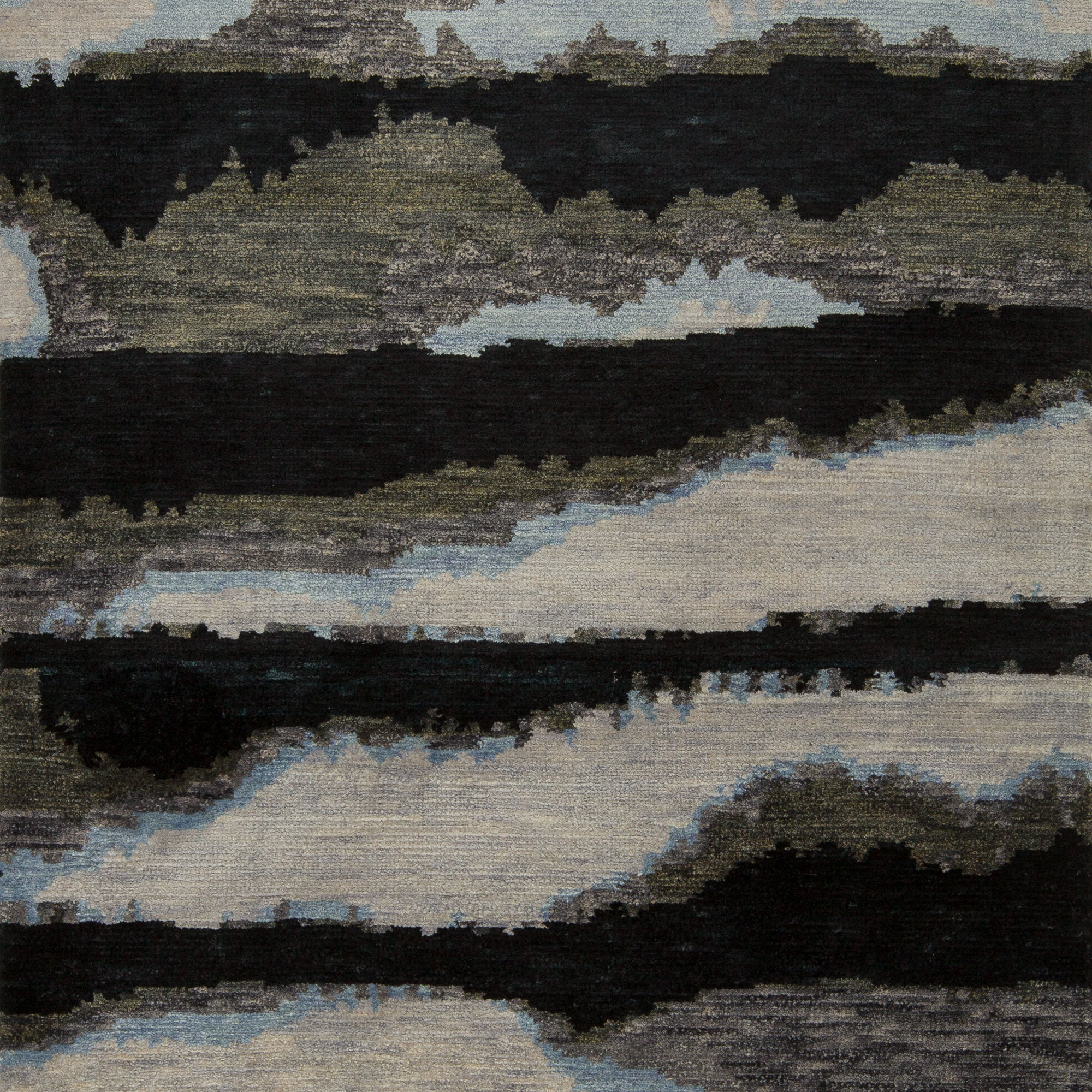
Abrash color variation is one of the most misunderstood qualities in handmade rugs. In a well-made piece, it often reflects the character of the fiber, the dye process, and the weaving method rather than a flaw. For designers specifying custom rugs, learning to read abrash can help you choose pieces with more depth, better movement, and a more natural fit for the room.
Define abrash in plain terms
Abrash is the subtle, usually horizontal shift in color that appears within a rug field when the same hue was dyed in multiple batches or the yarn absorbed dye unevenly. In handmade rugs, that variation is not unusual; in fact, it is often a visible record of how the rug was made. Because wool, silk, and other natural fibers take dye differently from one skein to the next, the result can be a livelier surface than a flat, machine-perfect color. When people search for abrash color variation, they are often trying to decide whether the effect is a defect or a desirable sign of authenticity. The answer depends on the rug, the materials, and the design goal.
In practical terms, abrash is easiest to spot when a rug looks as though the color changes in soft bands as your eye travels across it. Those shifts may be gentle and barely noticeable, or they may read more distinctly depending on the dye type, the yarn preparation, and the lighting in the room. In antique and traditional rugs, abrash can be part of the rug’s history and charm. In custom-made rugs, the same quality can be introduced deliberately, or minimized when a client wants a steadier visual field. That makes abrash less a yes-or-no issue than a design choice.
Correct common misunderstandings about inconsistency
The biggest misconception is that any inconsistency means poor quality. That is not true. A handmade rug can have exceptional construction and still show abrash because the weaver used natural dyes, multiple dye lots, or hand-spun yarn that accepted color in slightly different ways. In some cases, the variation is especially prized because it adds nuance to the surface and gives the rug a sense of depth that synthetic, perfectly uniform color cannot imitate. For many interior designers, that dimensionality reads as rug patina, especially in rooms where the furniture, art, and architecture already have strong edges and clean lines.
Another misunderstanding is that abrash is always accidental. Sometimes it is, but a skilled workshop may leave or even seek out variation because it keeps a large field from looking static. This matters most in broad expanses of wool, where a single flat tone can become visually heavy, especially under direct daylight or strong interior lighting. A gentle shift can break up the surface, soften the field, and make the rug feel more tailored to the room. In that sense, abrash can function almost like texture: it is not a pattern in the usual sense, but it changes how the eye moves across the rug.
It is also worth separating abrash from damage, fading, and wear. Abrash is embedded in the weave or dye structure, while fading is usually the result of light exposure over time and wear is a matter of surface loss. A rug with authentic abrash often retains clarity in the color transitions rather than looking patchy, exhausted, or washed out. If the variation appears uneven in a way that suggests staining or abrasion, then the issue is not abrash at all. This distinction matters when evaluating older handmade rugs or planning custom carpets for demanding spaces.
How abrash reads in different interior styles
In quiet luxury interiors, abrash can be especially effective because it keeps a restrained palette from feeling sterile. A tonal wool rug in ivory, stone, taupe, or muted blue may look flat at first glance, but slight variation gives it movement without demanding attention. That can be useful in living rooms where the sofa, upholstery, and window treatments all share a narrow range of color. The rug becomes a grounding surface rather than a competing element. For clients who want warmth without overt pattern, abrash is often a better solution than adding more contrast.
In more traditional rooms, abrash can support the layered character of antique-meets-modern styling. A hand-knotted rug with a softly shifting red, indigo, or camel field can sit comfortably beneath period furniture because the variation feels consistent with the irregularity of handmade objects. The rug does not have to match every finish exactly; instead, it can bridge polished wood, carved details, and contemporary upholstery by introducing a living surface. This is one reason designers often favor hand-knotted rugs with natural dyes when they want a room to feel collected rather than overdesigned. The slight unpredictability gives the composition a more human scale.
In modern interiors, abrash can either soften minimalism or undermine it, depending on the palette and the architecture. If a room relies on sharp geometry, high contrast, and crisp edges, a rug with pronounced variation may introduce welcome depth or, if too active, visual noise. In open-plan interiors, the issue becomes even more important because a large rug is often responsible for zoning the room. A subtle abrash can define the seating area without making the floor feel busy, while stronger variation may pull too much focus away from the furniture layout. That is why custom rug specification is not just about size; it is also about how the color behaves at scale.
Why material and construction change the effect
Not all abrash reads the same because not all rugs are built the same. Wool tends to show color variation in a soft, matte way, especially when the pile is medium to high and the surface absorbs light. Silk can make changes feel more luminous and dramatic because it reflects light differently from one angle to another, which means the same rug may appear more even in one room and more varied in another. Hand-spun fibers often deepen this effect because the yarn itself has tiny irregularities that affect dye uptake. For clients comparing rug materials, this is one of the most useful reasons to look beyond color alone and consider the actual construction.
Natural dyes also play a major role. They can produce nuanced shades that shift gently from skein to skein, which gives the finished rug a layered, organic quality. Rather than reading as a fault, those shifts can echo the irregularity of handwoven textiles, plaster walls, stone, and aged wood. In a room that already has tactile surfaces, natural dye variation feels coherent. In a highly controlled contemporary interior, however, the same variation may feel more visible because there are fewer competing textures. The best result comes when the rug’s surface language matches the rest of the interior design.
Pile height and weave density affect perception as well. A dense, low-pile rug may display abrash as a clean banding effect, while a thicker pile can blur the shifts and make them read more softly. Flatweaves often show color variation very clearly because there is less surface depth to interrupt the change. This is why a designer specification workflow should include both material samples and room context, not just a color reference. Light, texture, and construction work together; any one of them can exaggerate or mute abrash color variation.
When variation is desirable and when it may not be
Abrash is usually desirable when the room needs softness, depth, or a sense of movement in a large field. It is especially effective in rooms with broad planes of flooring, expansive upholstery, or limited wall color, where a completely even rug could feel inert. For many custom rugs, the goal is not perfect uniformity but visual intelligence: enough variation to create interest, not so much that the rug becomes the loudest thing in the room. Abrash can also be useful when the design needs to mask everyday use, because subtle movement in the color naturally disguises minor changes in light and wear over time.
Variation may not be desirable when a project calls for strict tonal precision. In a gallery-like interior, a hospitality setting with strong brand colors, or a room where the rug must align tightly with upholstery or millwork, even slight shifts may feel distracting. The same is true when the client wants a large monochromatic plane to act as a calm foundation for highly sculptural furniture. In those cases, the best choice may be a rug with tighter dye control, a less variegated fiber, or a colorway sampled under the actual lighting conditions of the room. This is where custom carpets can solve a problem that ready-made pieces cannot.
There is also a practical question of exposure. Sunlit rooms tend to reveal abrash more clearly because daylight changes throughout the day, altering how the eye reads subtle bands of color. A room with strong directional light, glossy surfaces, or high-contrast finishes may make the effect appear more dramatic than it would in a softer environment. If a designer wants the rug to feel stable from morning to evening, it is worth reviewing samples in situ and considering whether the variation supports the intended mood. A good rug should suit the architecture as well as the palette.
Using abrash to improve scale, proportion, and furniture layout
One overlooked advantage of abrash is that it can help a large rug feel more proportional to the room. In expansive spaces, a completely flat field can dominate without offering much visual relief, particularly when it extends under multiple seating groups. Gentle color modulation breaks the area into smaller visual moments, which helps the rug relate better to furniture placement and circulation paths. This can be especially useful in open-plan interiors where the rug needs to zone a conversation area without drawing hard borders. The variation acts almost like a soft architectural line.
Consider a long living room with a sectional, two lounge chairs, and a coffee table centered on an oversized wool rug. If the rug is a perfectly uniform beige, its size may read as massive and somewhat blank. If the same rug has restrained abrash, the surface gains enough movement to keep the eye engaged while still letting the seating arrangement remain the focus. The result is more balanced and less heavy. In this way, abrash is not just a matter of beauty; it can be a tool for scale and proportion.
That same logic applies in dining rooms, bedrooms, and libraries. Under a dining table, a rug with subtle variation can soften the geometry of chairs and table legs without introducing a strong pattern that competes with the tabletop. In a bedroom, it can make a large floor area feel more enveloping and less like an uninterrupted swath of color. In a library or office, it can quiet acoustics visually by giving the floor a subdued, textured presence. When a rug is made thoughtfully, even color variation becomes part of the room’s structural language.
How to specify a custom rug when abrash matters
If abrash is important to your project, begin with how much consistency the room can tolerate and how much movement it can benefit from. Bring together physical samples, photographs of the room, and a clear sense of the surrounding materials: wood tone, upholstery color, stone, metal finish, and wall treatment. A small color shift can look delicate against limewashed walls and much more pronounced next to lacquer or polished stone. The same rug may read calmly in one setting and assertively in another. That is why visual testing matters more than a generic description of the hue.
When reviewing handmade options, ask whether the color is likely to show variation because of natural dyes, yarn preparation, or the dyeing method. If the answer is yes, decide whether that variation supports the desired mood or conflicts with it. For some interiors, especially those built around restraint and tactile richness, abrash adds exactly the kind of lived-in complexity that makes a room feel complete. For others, it may be better to reduce variation and prioritize a steadier field. The most effective custom rugs are not simply beautiful in isolation; they are calibrated to the room, the light, and the daily use pattern.
Designers often find that the best conversations about abrash happen early in the made-to-order process, before any final dye direction is approved. This allows the rug to be planned alongside scale, edge finish, pile height, and intended traffic level. It is also the moment to consider whether the client wants a rug that feels crisp and controlled or one that carries more rug patina from the start. With the right guidance, abrash can be specified with intention rather than discovered by accident. That distinction is what separates a technically fine rug from one that supports the whole interior.
A practical rule of thumb for buyers and designers
- Choose visible abrash when you want softness, depth, and a more natural handmade character.
- Minimize abrash when the room depends on exact tonal control or a highly graphic composition.
- Review samples in the actual light of the room, not only under showroom conditions.
- Consider fiber, weave, pile height, and natural dyes together rather than judging color in isolation.
- Match the level of variation to the scale of the room and the visual weight of the furnishings.
FAQ
Is abrash a flaw?
Not usually. In handmade rugs, abrash is often a natural byproduct of dyeing and weaving rather than a defect. Whether it is desirable depends on the design intent, but in many cases it adds character, depth, and a more authentic handmade presence.
Does it mean the rug is poor quality?
No. A rug can be exceptionally well made and still show abrash, especially if it uses natural dyes or hand-spun yarn. Poor quality is more likely to show up as weak construction, uneven wear, or inconsistent craftsmanship, not simply color variation.
How does light affect abrash?
Light can make abrash more or less noticeable. Strong daylight, directional lamps, and reflective surfaces tend to reveal shifts in tone more clearly, while softer ambient light can smooth them out. This is why sample review in the actual room is so important.
Can abrash be planned in custom rugs?
Yes. In custom rugs, abrash can be embraced as part of the design or minimized for a more controlled look. The key is to specify the desired level of variation early, so the materials, dye process, and weave support the intended result.
If you are weighing abrash for a project, the most useful next step is a conversation about room context, lighting, and material behavior. Doris Leslie Blau can help translate those details into a rug specification that feels deliberate, balanced, and well suited to the space.