

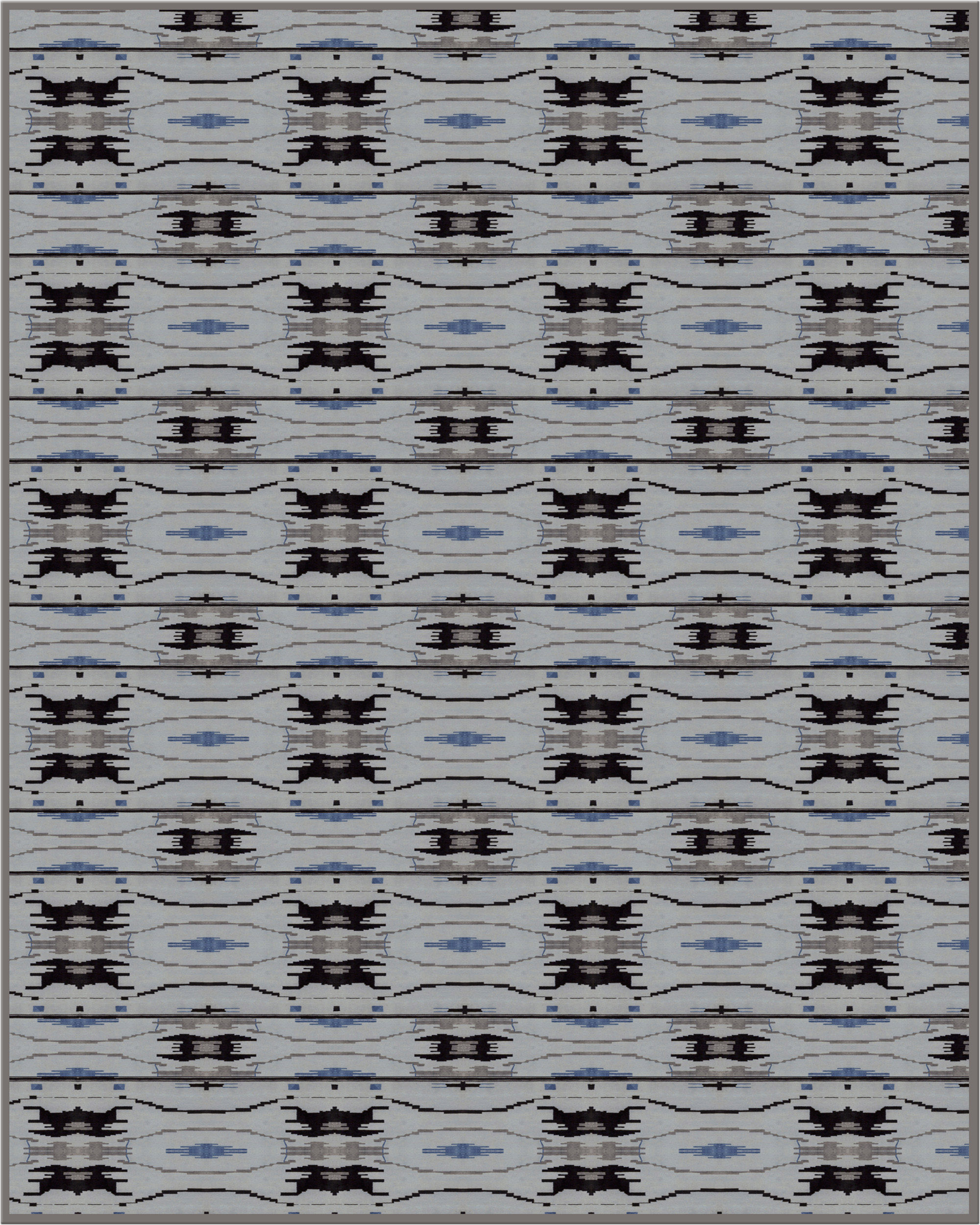
When a room calls for more scale than a ready-made rug can comfortably provide, custom rugs become less of a luxury add-on and more of a design solution. Oversized rugs can anchor a large seating plan, correct awkward architecture, soften echo in an expansive room, or unify multiple zones without visually breaking the floor plane. The challenge is not simply choosing a bigger size; it is specifying the right proportion, construction, and finish so the rug supports the room rather than overpowering it. That is why commissioning made-to-measure rugs requires a more deliberate process than buying a standard rectangle and hoping the room accommodates it.
Year-end is often the moment when this planning becomes most valuable. Projects are reviewed, rooms are lived in more fully, and the practical shortcomings of undersized rugs become impossible to ignore once furniture is settled and daily circulation is clearer. For homeowners, designers, and architects alike, the question is not whether an oversized rug is attractive, but whether it is the most effective answer to the room’s scale, use, and light. A thoughtful custom rug design can solve problems that no off-the-shelf piece can address cleanly, from irregular dimensions to furniture groupings that need a single visual field.
Determine why oversized sizing is necessary
The first step is to identify the actual design problem the rug needs to solve. In some rooms, the issue is simple scale: a long living room, a grand bedroom, or an open-plan space can make standard sizes feel adrift and undersized. In others, the need is architectural, such as a floating furniture arrangement that requires one large field to establish order, or a room with multiple focal points that needs a visual pause underfoot. Before selecting dimensions, ask whether the rug is meant to define one zone, bridge several zones, or temper the proportions of a room that feels too wide, too deep, or too empty.
Oversized rugs are also the right answer when seams would be distracting or when two smaller rugs would make the room feel fragmented. In a formal sitting room, for example, two rugs can interrupt conversation flow if the furniture spans both areas, while one large rug allows the eye to move continuously across the composition. The same is true in bedrooms where the bed, benches, and bedside tables need a single frame rather than a patchwork of surfaces. If the room relies on calm, continuity, and visual weight, custom oversized rugs usually outperform a pieced-together solution.
There is also a practical advantage to commissioning the correct scale from the start: the room reads more intentional. A rug that is too small can make expensive furniture look provisional, as though the arrangement has not been finished. By contrast, a properly scaled piece supports the architecture, especially in rooms with strong moldings, tall windows, or generous ceiling heights. This is where custom rugs become a design tool rather than a decorative purchase, especially when the final layout needs to feel composed from every angle.
Measure carefully and account for circulation
Accurate measurement is more than recording room length and width. Designers typically begin by plotting the furniture layout first, because the rug should relate to how the room is used, not merely to the walls that contain it. Mark the outer edges of sofas, chairs, tables, beds, and any consoles or benches that must visually belong to the composition. Once those boundaries are clear, add circulation paths so the rug does not interfere with door swings, walkways, or the natural movement between entries, seating, and adjoining rooms.
A useful rule is to treat the rug as a field that supports furniture with enough margin to feel generous. In living areas, the front legs of primary seating often sit on the rug, but the exact placement depends on the room’s size and the formality of the arrangement. In dining spaces, the rug must extend far enough beyond the table that chairs remain on the rug when pulled out, which avoids awkward imbalance and protects the floor from repeated scraping. In bedrooms, the rug should allow stable stepping surfaces on both sides of the bed and at the foot, rather than leaving narrow strips that feel arbitrary.
For especially large or unusual rooms, it helps to think in zones rather than a single rectangle. An open-plan loft, for instance, may need a custom rug that defines the main seating area while still leaving room for circulation to a dining zone or reading nook. In that scenario, the rug should not compete with every function in the room; it should clarify one primary use and let the rest of the plan breathe. This is where made-to-measure rugs can resolve complex layouts elegantly, because the finished size can reflect the architecture instead of forcing the architecture to adapt.
If you are unsure how much clearance to allow, use painter’s tape or paper templates on the floor before committing to dimensions. That simple exercise reveals whether the proposed rug will feel expansive, contained, or oppressive once furniture is in place. It also shows whether doors, radiators, fireplace openings, or built-ins create a visual cut that should be respected. For clients working with custom oversized rugs, this stage is often where the design becomes more precise and where costly sizing mistakes are avoided.
Select construction that suits the scale of the room
Large rugs place different demands on construction than smaller ones, and the choice of technique affects both the visual result and the long-term behavior of the piece. Hand-knotted rugs are often preferred for custom rug design because they can achieve refined detail, nuanced texture, and durability appropriate to substantial formats. At larger scale, knot density, border control, and the stability of the weave become especially important, because any distortion reads more clearly across a broad surface. The rug should feel balanced from edge to edge, not visually thin in one area and dense in another.
Material choice matters just as much as construction. Wool remains a strong option for oversized rugs because it offers resilience, a pleasant hand, and a surface that can soften a large room without looking flat. Silk can be used to introduce sheen, but in very large pieces it must be handled carefully so the finish does not become overly reflective under strong light. Wool-silk blends, depending on the design, can provide contrast between matte and luminous areas, which is especially effective when the room needs subtle pattern or texture rather than loud color.
Pile height should also be considered in relation to scale and use. A deep pile can add comfort and acoustic softness, but in a dining room or under heavy furniture it may create practical difficulties. Lower pile constructions often read more tailored and controlled, which suits formal interiors or spaces with strong architectural lines. In contemporary rooms with generous upholstery and clean profiles, a shorter pile or a tightly woven surface often keeps the rug from feeling visually heavy, while still providing enough tactile depth to anchor the space.
Pattern density deserves the same attention. A broad field with very sparse pattern can disappear under large furniture, while an overly busy motif may overwhelm the room once repeated across a large surface. The most successful oversized rugs often use controlled rhythm: a border that defines the perimeter, a central field that gives the eye rest, or a pattern scale that increases slightly as the room opens up. The goal is not to fill every inch with activity, but to calibrate visual movement so the rug supports the furniture layout and the architecture equally.
Think about light, color temperature, and the room’s daily use
Large rugs are affected by light in a way small rugs are not. South-facing rooms can intensify color and reveal sheen, while dimmer interiors may flatten complex tonal transitions if the palette is too subdued. Before approving a custom rug, study the room at different times of day and note whether natural light is cool, warm, or uneven across the floor. A rug that seems restrained in a showroom may appear quite different once it is stretched across a bright, expansive interior with reflective finishes, pale walls, or dramatic glazing.
Color should also be selected with the room’s furnishings, not in isolation. In a room with dark wood, bronze accents, and substantial upholstery, a rug with slight warmth can prevent the space from becoming severe. In a lighter interior with limestone, plaster, or pale oak, a cooler palette may sharpen the room and keep the floor from turning muddy. For homes with children, pets, or high foot traffic, subtle texture and tonal variation can be more forgiving than a flat, uniform field while still preserving a quiet luxury feel.
Prepare approvals, delivery checks, and installation notes
Commissioning made-to-measure rugs requires more than approving a design image. Before production begins, confirm the final dimensions, the intended placement of furniture, the direction of pattern or border orientation, and any site-specific constraints such as elevator size, stair turns, or narrow halls. Large rugs are easier to plan when the route into the home or project site has already been considered, because access issues can complicate delivery just as much as the design itself. If the rug is intended for an upper floor, a double-height room, or a narrow corridor, those conditions should be documented early.
It is also wise to review finish details that affect installation. Edging, binding, fringe, and corner treatment should be aligned with the room’s style and with how the rug will be handled during placement and cleaning. If the rug will sit beneath substantial furniture, confirm whether any protective pads or underlays are needed to stabilize it without compromising the proportions. For very large custom carpets, the installation itself can be as important as the weaving, since a millimeter of skew becomes more noticeable as scale increases.
Approvals should include a practical reading of the room, not just a visual one. Ask whether the proposed rug supports the furniture layout from the main entry point, from the seating area, and from adjacent rooms. A composition that looks balanced in isolation may feel lopsided once you move through the space and view it in sequence. When the design is verified in context, the result is usually calmer, more architectural, and more convincing over time.
For clients comparing options across antique, contemporary, and bespoke work, this is also the moment to consult specialists who understand how scale interacts with weave structure, pile, and use. Doris Leslie Blau often approaches rug selection through that lens: not just as decoration, but as a tailored solution for a specific room and a specific way of living. The right guidance can refine dimensions, surface character, and placement so the final piece feels resolved rather than merely large.
A realistic example: one room, several decisions
Consider a long living room that opens into a dining area, with tall windows on one side and a fireplace on the other. A standard rug under the seating area may leave the dining chairs visually detached, while two separate rugs could make the room feel like a hallway with furniture islands. In this case, a single oversized rug may be the clearest answer, but only if the scale is determined by both zones and not by the seating group alone. The pattern might need a quiet border to define the perimeter, while the field remains restrained enough to avoid competing with the architecture.
In a room like this, the best custom rug design often reduces contrast in favor of proportion. A wool foundation can handle the practical demands, while a subtle silk accent or tonal shift can provide depth without visual noise. The final effect is not dramatic in a theatrical sense; it is dramatic in the way the room finally feels complete. That distinction matters, because oversized rugs should solve a spatial problem first and deliver beauty second, even when the beauty is what people notice immediately.
FAQ
When is an oversized rug better than two smaller rugs?
An oversized rug is usually the better choice when the furniture belongs to one unified conversation, when the room needs a single visual anchor, or when two smaller rugs would interrupt circulation. It is also preferable when the architecture itself is expansive and the floor needs one continuous field to restore balance. If the room reads as one space, the rug should usually behave as one composition as well.
What should I confirm before ordering?
Confirm the final measurements, furniture placement, traffic paths, access for delivery, and any constraints created by doors, stairs, or built-ins. You should also review material, pile height, edge finish, and how the rug will interact with the room’s light. For custom rugs, the most useful approvals are the ones that combine design judgment with practical installation realities.
How do I keep a large rug from feeling heavy?
Keep the palette controlled, the pattern disciplined, and the pile appropriate to the room’s scale. A large rug does not need to be visually dense to feel substantial; texture, border treatment, and tonal variation can provide presence without weight. In bright or highly furnished rooms, a slightly lighter ground or a more open pattern often helps the rug sit comfortably within the space.
Do oversized rugs work in modern interiors?
Yes, especially when the construction is precise and the pattern language is restrained. Modern interiors often benefit from a rug that clarifies the room’s geometry and softens hard surfaces without introducing visual clutter. Clean edges, thoughtful texture, and controlled color are often more effective than a highly decorative motif in these settings.
Choosing custom oversized rugs is ultimately an exercise in disciplined design: measure with care, specify with clarity, and let the room’s architecture lead the decision-making. If you are planning a large format rug for the new year, a specialist conversation can help refine scale, materials, and finish before production begins, ensuring the result feels considered from the first step into the room.