

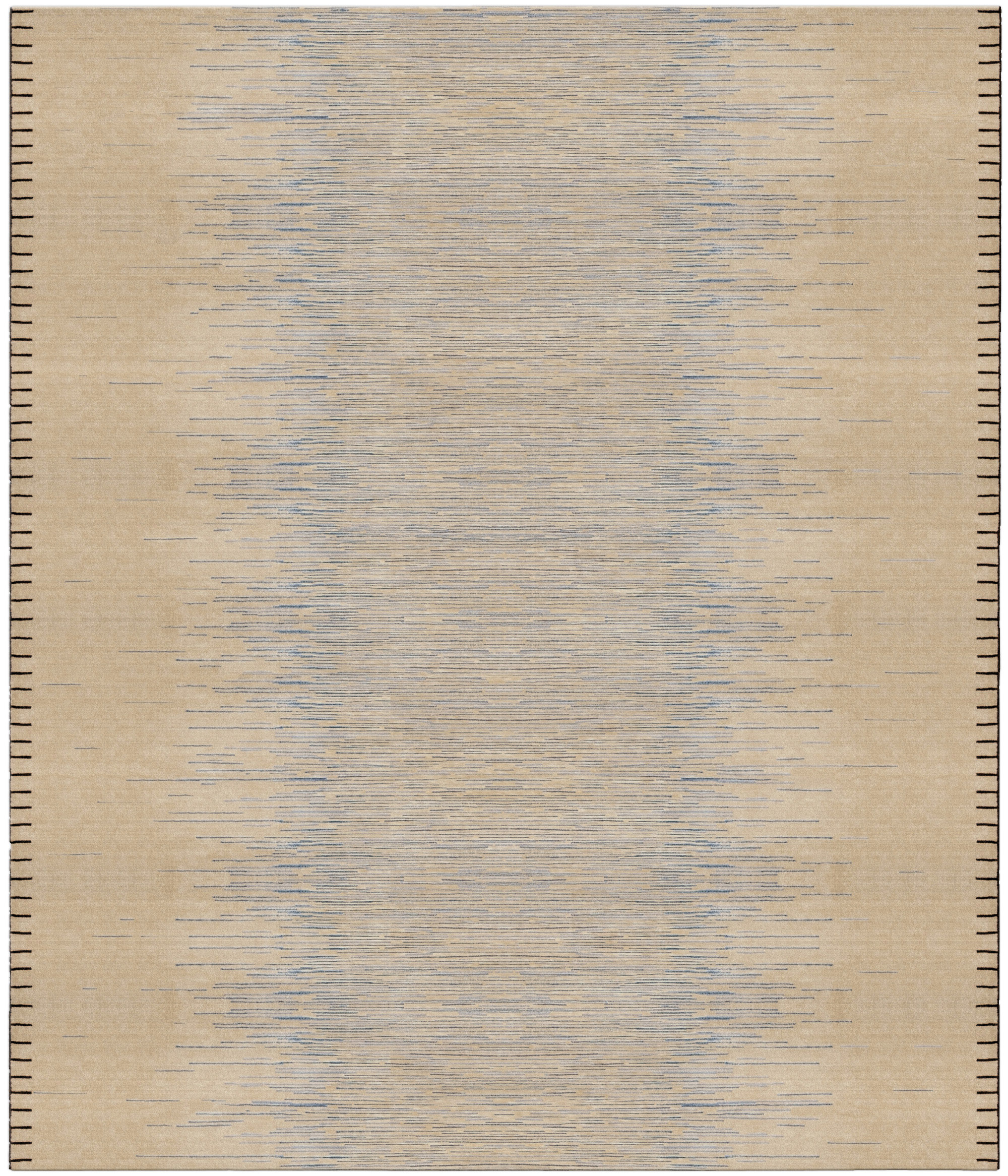
A clear brief saves time, reduces revisions, and gives a rug studio the information it needs to propose custom rugs that feel resolved in the room rather than loosely inspired by it. The best briefs do not describe taste in vague terms; they translate floor plans, furniture placement, light, circulation, and material preferences into design requirements a maker can actually use. When that information is organized well, the moodboard to rug design process becomes more precise, and the rug approval process becomes a conversation about refinement instead of correction.
For clients working with a gallery such as Doris Leslie Blau, the most useful brief is neither overly technical nor overly emotional. It gives the studio enough structure to design for scale, color temperature, and use, while still leaving room for expertise in weave, construction, and pattern balance. That balance matters because a rug is often the largest soft furnishing in the room and one of the few elements that can unify architecture, upholstery, and lighting. If the brief is too sparse, the result may be attractive but wrong in proportion; if it is too rigid, it can eliminate the studio’s ability to solve the room intelligently.
Translate room plans into design requirements
The most important place to begin is the plan, not the palette. A rug studio needs to know the room dimensions, ceiling height if it affects scale perception, the exact furniture layout, door swings, threshold locations, and whether the rug should define one zone or several. In open-plan interiors, a rug may need to anchor a seating group without competing with adjacent dining or circulation areas, which means the edges, shape, and visual weight all matter. If a room has an unusual alcove, diagonal wall, or fireplace offset, those architectural facts should be marked clearly rather than described only in words.
A dimensionally accurate sketch or plan can prevent the most common sizing mistakes. For example, a sofa may appear generous on paper, but once you add side tables, a coffee table, and walk space, the rug often needs to be larger than the client first expects. The same is true in bedrooms, where a rug may need to extend beyond the bed enough to read as part of the composition rather than a small accent beneath the frame. If you are commissioning custom rugs for a difficult room, the plan should show not only where the rug will sit, but how much floor should remain visible around it and why.
It also helps to explain the room’s practical demands. A family room with pets, frequent hosting, and heavy foot traffic has very different requirements from a formal sitting room used mostly in the evening. That distinction can guide pile height, fiber selection, edge finish, and pattern density. A dense all-over design can conceal wear more effectively than a pale open field, while a lower pile may suit a room where chairs move frequently. The brief should make those pressures explicit so the design team can weigh beauty against use with the same seriousness.
Describe the visual job of the rug in the scheme
Before discussing motifs, define what the rug must do visually. Is it supposed to ground a restrained room, bring warmth to a cool architectural envelope, soften sharp modern furniture, or introduce rhythm into a scheme that feels too static? A rug can act as the calm base, the linking element, or the strongest graphic note, but it rarely succeeds when the brief implies all three at once. Clear intent helps the studio decide whether the field should be quiet, the border pronounced, or the pattern scaled to support rather than dominate the furniture.
This is where mood matters, but mood needs to be translated into design language. If the reference is “quiet luxury,” say what that means in practice: low contrast, nuanced texture, muted color temperature, and a pattern that only reveals itself on closer view. If the room is meant to feel collected and expressive, identify whether that expression should come from color, scale, asymmetry, or a more historical vocabulary. A studio can work much more effectively when the brief distinguishes between general atmosphere and specific visual levers.
One useful exercise is to separate the rug’s role into foreground and background qualities. Foreground qualities are the elements that read immediately, such as border width, motif size, or contrast between ground and detail. Background qualities are what give the rug depth over time, such as wool and silk interplay, abrash, hand-knotted irregularity, or a subtle shift in pile direction. Many successful rugs rely on background richness more than loud patterning, especially in rooms with strong architecture or highly edited furnishings. If you want the rug to feel tailored, explain which qualities should be seen at ten feet and which should emerge on closer inspection.
Provide references for texture, color, and edge finish
Visual references are essential, but they should be chosen for precision rather than quantity. A moodboard to rug design workflow works best when each image serves a clear purpose: one image for color temperature, one for texture, one for pattern scale, one for edge treatment, and one for overall mood. Too many references can blur the direction, especially when they mix different design languages, lighting conditions, or room types. A gallery or studio can interpret a coherent set of images far more accurately than a crowded board with no hierarchy.
Color references should be described in relation to the room’s light. Morning light, north light, and evening artificial light all affect how wool, silk, and blended fibers read on the floor. A beige that feels warm in one room can turn chalky in another, and a deep blue can become almost black if the scheme is underlit. Instead of simply naming colors, identify whether the room needs warmth or coolness, saturation or restraint, and whether the rug should recede or act as a visible frame for the furniture. That level of specificity helps the studio calibrate tonal relationships rather than guess from a single swatch.
Texture and edge finish deserve equally careful attention. A rug with a crisp border, refined binding, or minimal fringe communicates differently from one with a relaxed perimeter or pronounced artisanal irregularity. If the room is highly architectural, a more disciplined edge may reinforce the structure of the space; if the room is layered and tactile, a softer finish may feel more natural. The same principle applies to pile height and surface movement, which affect not only appearance but also acoustics and the way light plays across the floor. When the brief names these preferences directly, the studio can shape the construction accordingly instead of treating them as afterthoughts.
If you already know the tactile direction, say so plainly. For example, a client might want a hand-knotted wool rug with enough surface variation to feel handcrafted, but without the pronounced shag or thick pile that would compete with slender upholstery. Another client might want a more polished blend with a silk highlight because the room needs subtle sheen rather than matte softness. For deeper guidance on construction choices, a specialist conversation about custom rugs can be the most efficient way to align material, scale, and finish before design development begins.
Set expectations for revisions and approval
The rug approval process works best when the brief includes not only the design goal but also the decision-making framework. A studio should know who is approving the concept, who is reviewing dimensions, and whether the final sign-off depends on one person or a group. In residential projects, delays often happen because different stakeholders respond to different details: one person cares about color, another about proportion, another about performance. Clarifying those priorities early prevents a proposal from being revised in circles.
It is also wise to state which elements are flexible and which are fixed. Perhaps the overall tone can shift slightly, but the border width must remain controlled to suit the architecture. Perhaps the palette may move within a family of neutrals, but the rug must preserve enough contrast to separate the seating area from the floor finish. If a custom pattern is involved, indicate whether the studio should explore multiple scales or refine a single direction. That distinction keeps revisions focused and gives the client a more efficient path to approval.
Approvals become easier when the brief anticipates how the rug will be evaluated in real life. A sample that looks perfect on a table may read differently on the floor next to upholstery, wood, stone, and window light. If possible, ask the studio to present the design alongside room context, not in isolation. This is especially helpful for rooms with strong materials, such as veined stone, lacquer, or highly figured wood, where the rug must hold its own without becoming visually noisy. The clearer the evaluation criteria, the more confidently everyone can say yes.
What to include in a rug brief
A strong brief does not need to be long, but it should be complete. It should give the studio enough information to design intelligently without forcing them to infer basic facts. The items below are usually the minimum useful set for a custom rug commission:
- Accurate room dimensions and a marked floor plan
- Furniture layout with clear seating, bed, or dining positions
- Desired rug shape and approximate size range
- Photographs of the room in current lighting conditions
- A concise description of the rug’s role in the scheme
- Reference images for color, texture, pattern, or edge finish
- Practical requirements such as traffic level, pets, or maintenance concerns
- Any fixed architectural or design constraints
- Names of the decision makers involved in approval
If you can provide only a few images, choose the ones that answer the most important questions first. A good photo of the room often matters more than a gallery of inspirational interiors, because it reveals light, scale, ceiling height, and the relationship between the rug and everything else already in place. The studio can work with taste references, but it cannot solve proportion from a collage alone. The brief should therefore prioritize facts first, preferences second, and style references third.
A realistic example: brief for an open-plan living room
Consider a long living room that opens into a dining area, with large windows on one side, a low sofa group in the center, and a stone fireplace at the far end. The owner wants the room to feel calm but not empty, and the upholstery is mostly neutral with a few walnut accents. In this case, the brief should explain that the rug needs to define the seating zone without stopping the eye at the edge of the sofas, and that its color should soften the stone and wood rather than compete with them. A studio may then recommend a controlled border, a muted ground, and a pattern density that reads from a distance but does not become too active near the fireplace.
That same brief might also note that the family uses the room daily, so the rug should be durable and not overly delicate in tone. If pets are present, the surface should be chosen with maintenance in mind; if the windows bring in strong daylight, the palette should be tested for fade sensitivity and visual balance across the day. None of these details are glamorous, but they are exactly what allow a beautiful rug to remain believable once it is installed. A room like this rarely needs a louder design than the one imagined at first glance; it usually needs a better-calibrated one.
Common mistakes to avoid when briefing a studio
One of the most frequent mistakes is describing the desired result only in broad adjectives. Words like “elegant,” “rich,” or “modern” can mean almost anything unless they are tied to proportion, material, and placement. Another mistake is sending images that are beautiful but unrelated to the actual room, which can lead the studio toward a direction that works in isolation but not in context. A useful brief should reduce ambiguity, not replace judgment with vague aspiration.
It is also a mistake to understate practical concerns in the hope that they can be addressed later. Traffic, pets, sunlight, maintenance routines, and furniture movement all affect how a rug performs over time. If those realities are not included in the brief, the first design concept may look right but function poorly. The most successful projects treat function as part of the design language, not as a separate technical appendix.
Finally, avoid changing too many variables at once during review. If you ask for a different palette, a different border, a different scale, and a different fiber structure all at once, it becomes difficult to tell which adjustment improved the design and which one diluted it. A disciplined rug approval process is not about limiting creativity; it is about preserving the ability to recognize a good solution when it appears. That discipline is especially valuable in made-to-order work, where every round of revision should have a clear purpose.
Bringing the brief into a refined design conversation
When a client briefs a rug gallery or studio well, the conversation changes quickly. Instead of debating basic sizing or color direction, the team can focus on nuance: how much visual relief the room needs, whether the border should sharpen or soften the composition, and how the weave should feel underfoot in relation to the furniture. That is where expert guidance becomes most valuable, because subtle adjustments often have the biggest effect on whether a rug feels rooted in the room. The best custom rugs do not merely fit the floor; they support the architecture of the entire interior.
For homeowners, designers, and collectors alike, the real advantage of a strong brief is confidence. It creates a shared language between client and studio, makes revision easier to manage, and gives the final rug a better chance of looking intentional from every angle. Whether the project calls for a restrained neutral field, a more graphic composition, or a highly specific material profile, the process works best when the room’s demands are stated clearly at the start. With the right information in hand, a specialist gallery can help shape a rug that feels precise, workable, and fully at home in the space.
FAQ
What should be included in a rug brief?
Include room dimensions, a floor plan, furniture placement, desired size or shape, room photos, color and texture references, practical concerns such as traffic or pets, and any fixed requirements around edge finish, pile, or construction. The brief should explain what the rug needs to do in the room, not only how it should look.
How much visual reference is enough?
Usually less than people think. A small, curated set of references is more useful than a large moodboard with mixed directions. Aim for images that clarify color temperature, texture, pattern scale, and overall mood, while keeping the room itself as the primary reference for proportion and context.
How do I communicate a custom pattern clearly?
Describe the pattern’s scale, contrast, rhythm, and where it should sit in relation to the furniture. It helps to say whether the motif should read from across the room or only at close range, and whether the design should feel structured, organic, historical, or contemporary. If possible, mark the desired pattern area on the plan so the studio can align it with the room layout.
What if I do not know the exact size yet?
Share the furniture layout and the rug’s intended role in the room, then ask the studio to propose the best proportion range. In many cases, a good gallery can determine whether the rug should extend beyond the seating group, sit under all front legs, or function as a defining field within an open-plan space.
For projects where the room has unusual proportions, demanding light, or a very specific design brief, a consultation with a specialist can save considerable time and lead to a more resolved result. Doris Leslie Blau is often most useful at the stage when preferences, measurements, and construction questions begin to overlap, because that is where thoughtful rug guidance makes the biggest difference.