

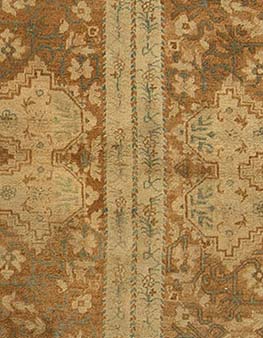
Antique Indian Allover Floral Warm Tan Hand-Knotted Wool Runner – Circa 1900 BB4109
Size: 2'6" × 16'0" (76 × 487 cm)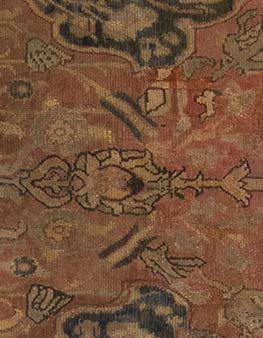
Antique Floral Allover Warm Tan Hand-Knotted Wool Runner – Circa 17Th Century Cairene BB3402
Size: 2'8" × 12'9" (81 × 388 cm)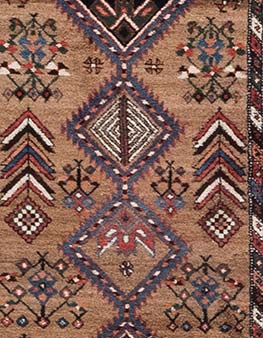
Persian Antique Allover Geometric Ivory Hand-Knotted Wool Runner – Circa 1900 BB3258
Size: 3'8" × 16'5" (111 × 500 cm)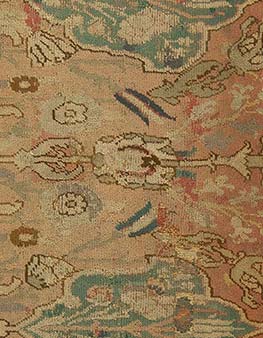
Antique Floral Allover Warm Tan Hand-Knotted Wool Runner – Circa 16Th Century (Size Adjusted) Cairene BB3081
Size: 3'0" × 13'1" (91 × 398 cm)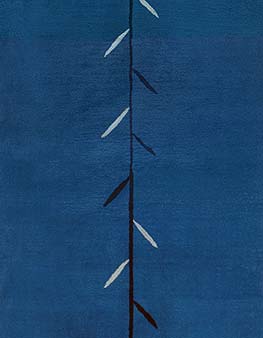
Meshad Persian Antique Allover Navy Blue Hand-Knotted Wool Runner – Circa 1960 Rare Mashad By Master Amoghli BB7646
Size: 4'10" × 29'9" (147 × 906 cm)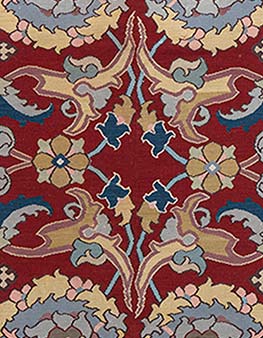
Antique Bessarabian Russian Allover Crimson Hand-Knotted Wool Runner – Circa 1930 BB8887
Size: 4'7" × 17'0" (139 × 518 cm)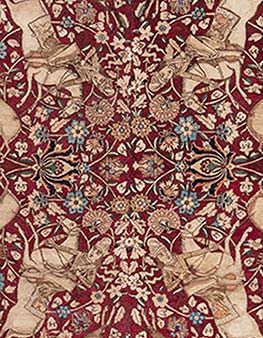
Antique Kirman Persian Allover Floral Warm Tan Hand-Knotted Wool Runner – Circa 1900 (Fragment) BB8449
Size: 4'2" × 16'0" (127 × 487 cm)
Runners FAQ
What makes an antique runner rug valuable?
Value depends on several factors working together: age, origin, rarity, weave quality, material, condition, color, scale, and decorative appeal. A Persian, Turkish, Indian, or European runner with strong drawing, attractive patina, desirable dimensions, and sound structure will generally be more compelling to designers and collectors than a piece valued by age alone.
Are antique runner rugs suitable for hallways?
Yes, antique runner rugs are often chosen specifically for hallways, galleries, entries, and narrow rooms. The right piece adds pattern, sound absorption, and visual direction while protecting high-use walkways. Buyers should consider pile condition, weave, material, and whether the dimensions leave enough exposed flooring on both sides.
How old are antique runner rugs typically?
In the rug market, antique rugs are typically considered to be 100 years old or older. Some runners may be described by approximate weaving dates, such as circa 1880, 1900, or 1920. Age should be evaluated alongside origin, construction, condition, and the rug's suitability for the intended interior.
Which origins are common for antique runners?
Many fine antique runners come from Persian weaving centers such as Malayer, Tabriz, Meshad, Kirman, and Sultanabad. Turkish Oushak, Indian Agra and Amritsar, Caucasian, Bessarabian, Aubusson, Axminster, and English needlework runners are also desirable, each offering different palettes, pattern language, texture, and design compatibility.
How should I measure for a runner rug?
Measure the full length and width of the hallway, stair landing, or passage, then decide how much floor should remain visible around the rug. Check door clearances, furniture placement, and transitions between rooms. For long corridors, length, border proportion, and pattern repeat are especially important.
Can antique runners be used in modern interiors?
Antique runners often work beautifully in modern interiors because they introduce texture, age, and handwork against clean architecture. A geometric Persian runner can add structure, while an Oushak or Aubusson can soften minimalist materials. The key is choosing palette, scale, and pattern density that support the room rather than compete with it.
What if I need a custom runner size?
If an antique runner is not available in the precise dimensions required, a custom made or made-to-order runner may be a practical alternative. Custom options are useful for unusually long hallways, stair projects, or interiors needing a specific width, palette, or design direction while maintaining a high-end handmade character.