

-
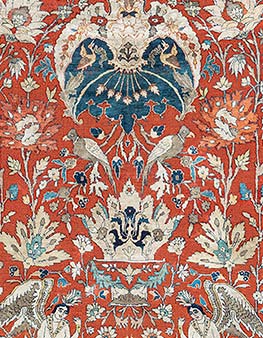
Antique Tabriz Persian Allover Ivory Hand-Knotted Silk Carpet – Circa 1880 BB6781
Size: 4'7" × 6'0" (139 × 182 cm) -
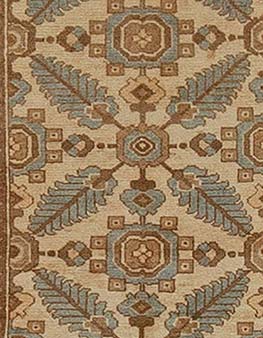
Tabriz Persian Antique Allover Geometric Light Beige Hand-Knotted Wool Runner – Circa 1900 BB5474
Size: 2'5" × 25'0" (73 × 762 cm)
Tabriz Rugs FAQ
What makes antique Tabriz rugs valuable?
Antique Tabriz rugs are valued for fine Persian weaving, precise drawing, quality wool or silk, balanced designs, and decorative versatility. Age, condition, knotting, materials, provenance indicators, rarity of scale, and the strength of the composition all influence desirability. Exceptional examples often appeal to both collectors and interior designers.
Are Tabriz rugs usually wool or silk?
Many Tabriz rugs are hand-knotted in wool on a cotton foundation, while finer examples may include silk highlights or be woven in silk. Wool offers resilience for furnished rooms, while silk can add luminosity and detail. The best choice depends on placement, traffic level, design goals, and the individual rug.
How do medallion and allover Tabriz designs differ?
Medallion Tabriz rugs have a defined central focal point, making them effective in symmetrical rooms, formal seating areas, and spaces with centered furniture plans. Allover Tabriz designs repeat pattern across the field, which can be easier under dining tables or layered furniture because the design remains balanced when partially covered.
Can Tabriz rugs work in contemporary interiors?
Yes. Tabriz carpets often pair well with contemporary interiors because their drawing is refined and their palettes can be subtle, including ivory, taupe, beige, tan, blue, and terracotta tones. A restrained antique Tabriz rug can add texture, scale, and cultural depth without competing with modern furniture or art.
What should designers check before buying Tabriz rugs?
Designers should evaluate exact dimensions, room layout, age, origin, weave, material, condition, color balance, pattern scale, and whether the rug supports the furniture plan. For antique Tabriz carpets, review visible wear and restoration carefully. For nonstandard rooms, a made-to-order Tabriz-inspired rug may be a practical alternative.