

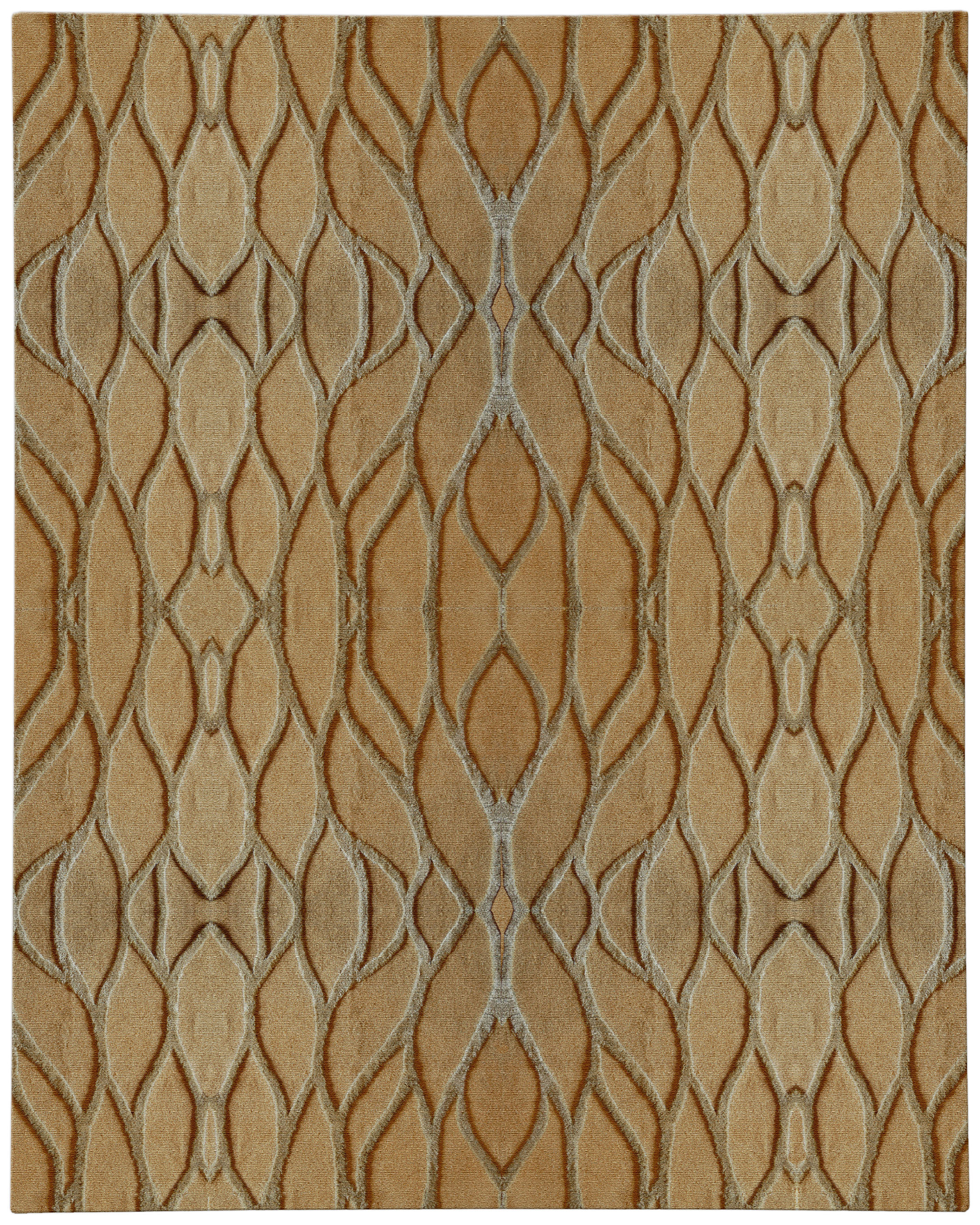
Stair runners are one of the most practical ways to bring custom rugs thinking into a hard-working vertical circulation zone. They can soften footsteps, improve traction, and give a staircase a finished look that feels considered rather than added on. When the stairs sit in a prominent position, the runner also becomes part of the home’s visual architecture, linking one floor to the next with proportion, texture, and rhythm. The best results come from treating the runner as a design component, not a leftover strip of carpet.
For homeowners, designers, and anyone planning a staircase refresh, the challenge is rarely just aesthetic. A runner has to fit the geometry of the stairs, endure repeated use, and look calm from both near and far. It should support daily movement without creating visual clutter, and it should work with the adjoining landing, hallway, and nearby rooms. That balance is what makes stair runners a useful specification problem: part safety measure, part acoustical solution, and part architectural finishing detail.
Measure tread, riser, and landing transitions carefully
Accurate measurement is the foundation of a successful stair runner, and this is where many projects go wrong. The tread depth, riser height, nosing profile, and any landing transitions determine how the runner will sit and where seams or returns may be visible. A staircase that looks simple in plan can behave very differently once the runner is installed, especially if the steps vary slightly in width or if the stairs meet a hall at an angle. Before any pattern, fiber, or binding choice is made, the full stair run should be measured with attention to the exact number of steps, the turn configuration, and the dimensions of the top and bottom landings.
Designers often treat the stair as a continuous field, but the runner is really a sequence of repeats that must read correctly at every landing point. If the staircase changes direction, the eye needs a logical visual handoff so the pattern does not appear to jump or compress. In homes with open views to the stairwell, the top landing matters as much as the steps themselves because it creates the first impression from above. This is also where a well-planned runner can make the transition into adjoining custom carpets or broader floor coverings feel intentional rather than patched together.
It is also worth thinking about the spacing between the runner and the exposed stair edges. Too narrow, and the staircase can feel unfinished; too wide, and the runner may overpower the architecture or reduce the crispness of the wood detail. The ideal proportion depends on the width of the stair and the visual weight of the surrounding balustrade, wall color, and trim. On a generous staircase, a runner with more breathing room at the edges often looks more elegant, while tighter stairs usually benefit from a cleaner, more restrained border.
Choose construction suited to daily foot traffic
For staircases, construction matters as much as appearance, and in many cases more. The most successful options are those that balance rug durability with flexibility, because a stair runner must hold its shape while conforming to each step. Hand-knotted rugs and hand-made constructions are often favored when longevity, texture, and refined detail are priorities, especially in homes where the staircase is used constantly. A dense weave, stable backing, and fibers that recover well under pressure help the runner maintain its profile over time.
Wool remains a strong choice because it combines resilience, natural soil resistance, and a surface that feels substantial underfoot. In contrast, very slippery, overly delicate, or excessively lofty materials can be less practical on stairs, even if they look beautiful in a sample room. Pile height also affects the way the runner behaves: a lower profile typically performs better on steps because it is easier to secure, cleaner in silhouette, and less likely to show compressed tread marks. For households that want a more tactile finish without sacrificing performance, a medium-density wool construction often offers the best compromise.
Where the staircase receives heavy daily use, construction should be judged alongside the home’s lifestyle. Children, pets, and frequent visitors all increase wear at the front edge of each tread, so the runner needs enough body to resist flattening and enough surface character to disguise ordinary use. This is one reason many designers prefer hand-knotted rugs or similarly robust bespoke rugs for stair applications: the structure can support repeated traffic while still delivering nuance in color and pattern. The goal is not indestructibility, but a material choice that ages with dignity.
Installation quality matters as much as fiber choice. A well-fitted runner should sit taut, move securely with the stair profile, and avoid ripples that can become both a visual distraction and a safety issue. Gripper systems, padding, and fastening methods should be selected to suit the stair substrate and the rug’s construction, rather than assumed as one-size-fits-all solutions. In professional specification work, the comfort of the step and the confidence of the footing are never separate from the design brief; they are part of it.
Use pattern to elongate or ground the staircase
Pattern is one of the most effective tools for shaping how a staircase feels in space. A runner with strong linear movement can elongate a narrow stair hall, drawing the eye upward and giving the ascent a sense of direction. By contrast, a denser allover motif can ground a broad staircase, adding visual stability and helping the stairs feel connected to the rest of the interior. The right choice depends on whether the architecture needs to be stretched, calmed, framed, or given more presence.
Color temperature matters here as much as motif. In a cool-toned interior with stone, pale oak, or blackened metal, a warmer runner can soften the transition and make the stairwell feel less severe. In a richly layered home, a quieter palette may preserve clarity, allowing the balustrade, wall finish, and art to remain the dominant features. The best stair runners are rarely the loudest element in the composition; they are the element that makes the rest of the composition easier to read.
Pattern density should also reflect the scale of the staircase itself. Small repeat designs can disappear on a long run if they are too delicate, while oversized motifs can become fragmented on compact steps. A balanced pattern reads clearly from the foyer, from the upper hall, and from the side view at the base of the stairs. This is particularly important in open-plan homes where the staircase is visible from multiple angles and needs to look coherent in motion, not just when viewed front-on.
For a more restrained interior, subtle stripe work, softened geometrics, or tonal textures can provide movement without dominating the architecture. In more expressive schemes, a patterned runner can connect stair and corridor visually, especially when adjacent rooms use complementary textures or colors. Designers often think of the staircase as a vertical corridor, and that mindset helps with selection: the runner should carry the eye naturally, not interrupt the journey. When chosen well, it becomes part of the home’s sightline strategy.
Coordinate the runner with adjacent corridor flooring
A stair runner should not be specified in isolation, because it lives in close conversation with hallways, landings, and nearby room thresholds. If the adjoining corridor uses wood flooring, stone, or another textile surface, the runner needs to bridge those materials with enough harmony to feel planned. This is where hallway runners become especially relevant, since the staircase often connects directly to circulation zones that deserve the same level of visual discipline. A mismatched transition can make an otherwise polished interior feel fragmented.
One useful approach is to identify the dominant element in the surrounding floor scheme and let the runner support it rather than compete with it. If the hallway flooring is visually active, the stair runner may need to be quieter in tone or pattern. If the corridor is minimal, the runner can carry more texture or contrast and still read as cohesive. The objective is continuity, but not sameness; different surfaces can coexist beautifully when they share a scale relationship, a color family, or a material logic.
Transitions matter most where the stair meets a landing, because that is where the eye registers changes in direction and texture most immediately. A landing can act as a pause, a frame, or a hinge between levels, and the runner should respect that role. In some cases, continuing the same palette from stair to hall creates a calm sequence, especially in homes where the staircase is visible from entry to upper floor. In others, a deliberate shift in texture at the landing can define a threshold and help each zone perform its own function.
For homes that favor layered interiors, a stair runner can echo the feel of nearby area rugs without copying them. That might mean repeating a border treatment, a muted field color, or a similar wool handle in a different pattern scale. When the materials are coordinated with care, the staircase feels integrated into the larger interior composition, which is exactly where well-planned custom rugs add value: not by shouting, but by giving the whole floor plan a clearer structure. That kind of consistency is especially useful in houses where the staircase is one of the first things guests notice.
Detailing choices that affect both safety and appearance
The most polished stair runners are defined by their edges, returns, and finish details. Binding should be chosen with the same seriousness as the field material because it frames the runner and influences how crisp it appears against wood treads. A heavy binding can feel blunt on a refined staircase, while an underdesigned edge may read as unfinished. The right finish depends on the style of the architecture, whether it leans traditional, modern, transitional, or somewhere more tailored and understated.
Grip is another technical concern that shapes the final look. A runner that shifts, buckles, or lifts at the edges undermines both safety and visual confidence, so installation should be tailored to the stair profile and use level. On older staircases, where steps may not be perfectly uniform, the fitter’s precision becomes especially important. The staircase may look simple from afar, but the installation process has to account for small deviations that can accumulate over the full run.
Light exposure should not be overlooked either. Stairwells can be brightly lit from above or dramatically shadowed depending on the architecture, and that light changes how color and texture appear throughout the day. A runner with subtle variation can look rich in natural light but still hold its shape in a darker corridor, while an overly flat surface may seem dull once installed. In practical terms, this means that sample viewing should happen in the actual stair environment whenever possible, not only under showroom conditions.
When a stair runner should feel tailored, not decorative
There is a difference between adding a runner to decorate a staircase and specifying one to solve a design problem. In a home where the stairs are narrow, acoustically hard, or visually exposed, the runner serves a functional purpose first and an aesthetic purpose second. That hierarchy helps keep decisions disciplined: fiber, pile, scale, and pattern all need to support the way the staircase is used. The most successful examples feel inevitable, as though the stairs were designed with the runner in mind from the beginning.
A realistic example is a three-story townhouse with a central stair visible from the entrance hall to the upper landing. The owner wants the staircase to feel quieter and more finished, but the woodwork is already a strong feature, so the runner cannot compete with it. In that situation, a dense wool runner with a controlled pattern and a low-to-medium pile can provide traction, absorb sound, and give the stairwell continuity without overwhelming the banister or wall paneling. The result is less about ornament and more about proportion, rhythm, and a sense of architectural order.
This is also where made-to-order thinking has practical value. Staircases rarely conform to standard dimensions in a way that makes a generic solution satisfying, and that is one reason custom rugs are so useful in these settings. A tailored runner can respond to unusual turns, landings, or widths while still maintaining the design intent across the full sequence of steps. For homeowners who want the staircase to feel resolved rather than improvised, a bespoke approach is usually the most reliable path.
How to think about long-term value and preservation
A stair runner should be chosen with the expectation that it will be used constantly, seen daily, and replaced only after meaningful service. That means durability is not simply a technical feature; it is part of value retention. Wool, stable construction, and correct installation all contribute to how well the runner maintains its appearance over years of movement and cleaning. Regular maintenance should be straightforward enough that the runner remains a practical asset, not a delicate object that causes hesitation.
Preservation also depends on whether the runner was specified with the home’s habits in mind. A family staircase, for example, needs different performance expectations than a formal stair used less often. Traffic patterns usually reveal themselves near the first few steps, on the landing turn, or at the point where hallway circulation meets the stair. When those realities are acknowledged at the beginning, the runner can be selected to age gracefully instead of showing premature wear in predictable places.
For clients who are refining a larger interior scheme, it is often useful to coordinate stair choices with the same level of attention given to hand-knotted rugs in principal rooms. The reasoning is similar: material quality, scale, and placement matter more than trend-led gestures. A staircase may not carry a dining room’s visual weight, but it carries daily movement and shapes how the house is experienced from floor to floor. That makes it a meaningful design surface, not an afterthought.
FAQ
How wide should a stair runner be?
The right width depends on the staircase itself, but the runner should generally leave a balanced amount of exposed stair on both sides. On narrower stairs, the margins may be tighter to preserve coverage and safety, while wider stairs can accommodate more visible wood for a lighter, more architectural look. The goal is proportion: the runner should feel centered and intentional, not squeezed or overly dominant.
What construction is best for stairs?
Dense, durable constructions with stable structure tend to perform best on stairs, especially those made from resilient fibers such as wool. Hand-knotted rugs and similarly well-made textiles are often favored when the staircase needs longevity, refined texture, and a secure feel underfoot. Low-to-medium pile usually works better than a lofty surface because it sits neatly on the stair profile and holds up more consistently to daily use.
Do runners reduce sound on staircases?
Yes, a properly specified runner can noticeably soften footfall and reduce the sharper acoustics of wood or stone stairs. The effect is especially helpful in tall stairwells, open-plan homes, and corridors where sound travels easily between levels. Thickness, fiber choice, and installation quality all influence the degree of sound absorption, so the best acoustic results come from a runner selected for both material performance and fit.
For stair runners that need to do real work without losing refinement, thoughtful specification makes all the difference. Doris Leslie Blau approaches these projects with the same attention to proportion, material, and craftsmanship that guides the best interior decisions, especially when stair coverage needs to relate seamlessly to the broader home. If you are planning a staircase, landing, or connected corridor, specialist guidance can help you choose a solution that feels measured, durable, and visually resolved.