

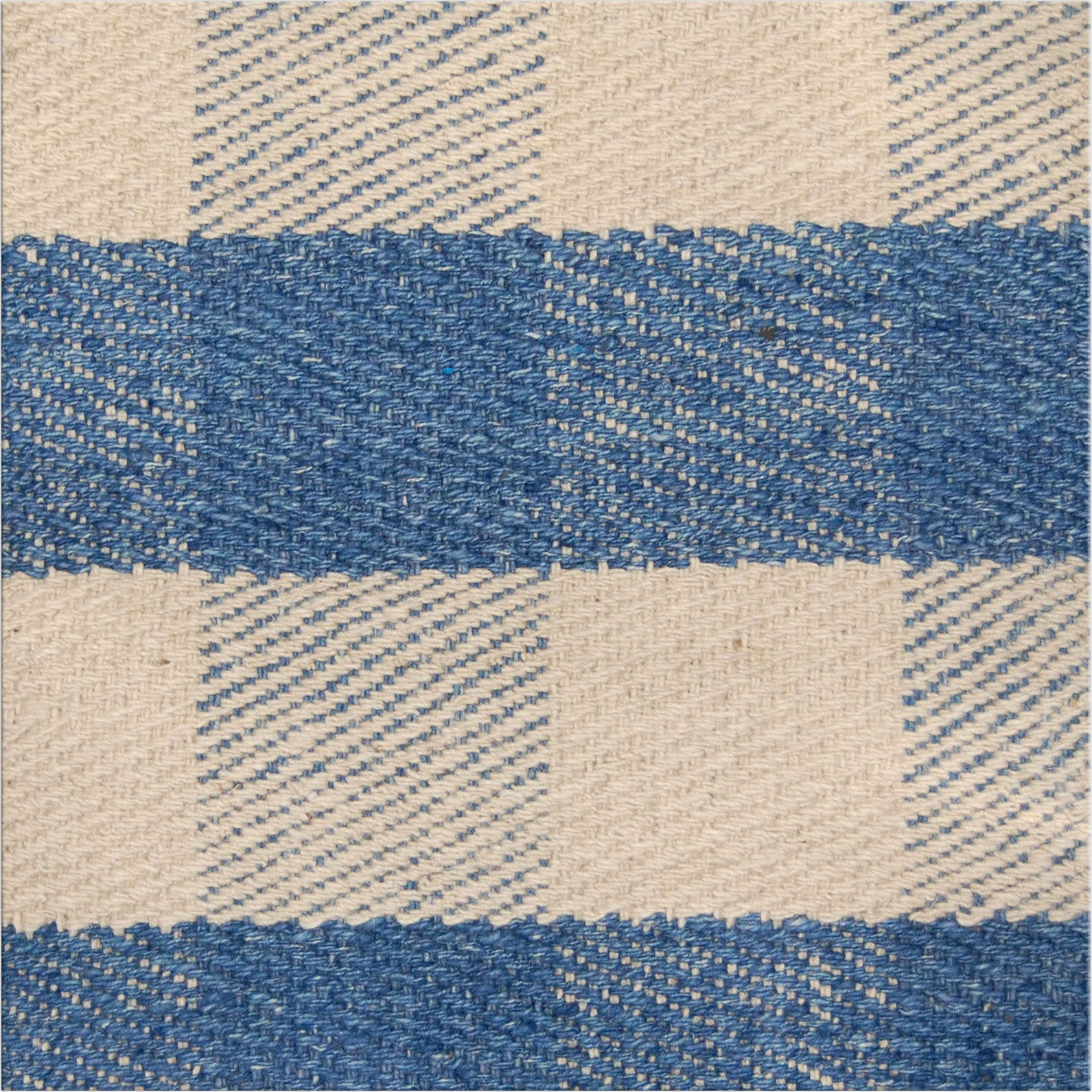
In heritage homes, the right rug does more than soften a floor; it edits the entire room. Custom rugs can bridge paneling, antique furniture, parquet flooring, plaster ornament, and collected art with a level of precision that off-the-shelf sizing rarely achieves. The best results feel inevitable, as if the textile were always meant to live beneath a Georgian table, a Regency sofa, or a pair of carved armchairs. For Doris Leslie Blau, the conversation begins with architecture, not pattern. From there, custom design becomes a disciplined way to protect historic character while giving the interior a present-tense point of view.
Heritage interiors are defined by layers, and a rug must understand those layers before it tries to add another. Ceiling height, window rhythm, skirting profile, door placement, and the scale of mantelpieces all affect how a textile should sit in the room. In a townhouse drawing room, a rug that is too small can make antique furnishings feel stranded, while one that is too ornate can compete with boiserie or coffered ceilings. Custom rugs solve this by allowing the design to respond directly to the room’s architecture, rather than forcing the architecture to yield to a standard dimension. That is why custom rugs are often the most intelligent choice for a historic home restoration: they are measured, not merely selected. The goal is not to mimic the past, but to place a contemporary textile with enough restraint and refinement to belong among it.
Reading the room: how heritage architecture shapes rug choices
Before any palette or motif is discussed, the room must be read as an architectural document. Parquet flooring, for example, already introduces a grid or herringbone logic, so the rug should either calm that pattern or engage it with quiet confidence. In rooms with heavy paneling or pilasters, a textile with an overly fragmented composition can feel visually restless, especially when viewed across a long axis. Classical proportion matters here: a rug should support the room’s symmetry, not interrupt it with awkward margins or ill-considered centering. When the architecture is especially strong, custom sizing becomes essential because inches matter, and the wrong border width can alter the perceived balance of a mantel, a console, or a central seating arrangement. For antique interiors, the most successful rug often feels architectonic, almost as though it were another plane of the room rather than an object laid on top of it. That restraint is what allows old and new to coexist without rhetorical strain.
Rooms in historic houses rarely behave like blank canvases, which is precisely why they reward precision. A library with dark timber walls and leather upholstery may need a rug that introduces light at the center without whitening the room into something unfamiliar. A dining room with a chandelier and formal drapery may benefit from a more defined edge so that the table reads as intentional, not adrift. In a bedroom with high ceilings and tall windows, the rug can quietly compress the visual field, making the room feel more intimate and less ceremonious. Every one of these decisions depends on scale, and scale is where custom rugs become indispensable for custom rugs for heritage home projects. Doris Leslie Blau often treats the floor covering as a structural element, one that should align with openings, furniture groupings, and circulation paths with the same rigor a designer would use for millwork. The result is not just beauty, but compositional coherence.
Color stories that respect wood tones, plaster, and stone
Color in heritage interiors has to negotiate a dense field of materials: oak, walnut, marble, lime plaster, aged brass, patinated bronze, and stone that may be cool in winter light and warm by afternoon. A successful rug does not simply “match” these finishes; it calibrates them. Deep reds can intensify warm wood tones, but if the room already holds a lot of mahogany or tobacco leather, the palette may need a quieter supporting hue such as moss, faded indigo, or mineral taupe. Pale plaster walls often invite a slightly dusty chromatic register so that the rug does not appear newly printed against older surfaces. In rooms with limestone fireplaces or pale parquet flooring, a rug with nuanced undertones can keep the ensemble from becoming overly crisp. Traditional luxury rug ideas are strongest when they feel time-worn in spirit, even if the piece is newly made, because that softness helps the whole room read as accumulated rather than assembled in a single afternoon. A custom color story gives the designer control over how light travels across old materials throughout the day.
There is also a practical reason to choose colors carefully in antique furnishings settings: the rug should allow objects to speak without creating visual noise. If the room includes a richly figured walnut cabinet, gilt-framed art, and patterned drapery, then the floor covering may need a more muted field or a disciplined border to prevent a collision of motifs. Conversely, if the architecture is restrained and the furniture is comparatively spare, the rug can carry more of the room’s personality and introduce an additional historical register. This is especially effective in historic home restoration where original moldings and fireplaces have been recovered but the furnishings are curated from different periods. Custom rugs can unify those elements through tonal layering rather than obvious repetition. For clients considering bespoke area rugs, the point is often not boldness but control: the right chromatic temperature can make a room feel rooted, considered, and quietly luxurious. When color is resolved this carefully, the floor becomes a foundation rather than a statement competing for attention.
Motifs inspired by European tradition without feeling museum-like
European rug traditions offer an enormous vocabulary, from medallion formats to scrolling vines, lattice grounds, vine leaves, cartouches, and restrained geometric repeats. The challenge in heritage interiors is to use that vocabulary with enough editing that the room feels lived in rather than curated as a period display. A rug inspired by an 18th-century French Savonnerie, for instance, can be beautifully translated into a softer field, a more open border, or a subtly irregular hand-knotted surface that avoids decorative stiffness. Persian, Turkish, and continental references can also be reinterpreted through scale and color so they resonate with classical proportion rather than theatrical nostalgia. In a room with antique furnishings, a custom motif should often work in the same way a well-cut jacket does: it frames the body without drawing unnecessary attention to itself. That balance between tradition and restraint is what keeps the result from feeling museum-like. It also allows the rug to sit comfortably alongside collected art, where different periods and media must converse rather than compete.
Designers often underestimate how much motif density affects the emotional temperature of a room. A highly intricate pattern can enrich a space with depth, but in a room already full of carved wood, framed paintings, and decorative objects, it may tip the balance toward visual fatigue. A more measured pattern, by contrast, can animate the floor while preserving serenity. This is where custom rug design becomes especially valuable, because the motif can be scaled to the room rather than borrowed from a catalog. Border width, field ratio, and repeat size all influence whether the rug reads as formal, relaxed, or somewhere in between. If the interior has a strong axial composition, a centered medallion can reinforce that order; if the plan is more asymmetrical, a tonal allover or gently aged pattern may feel more natural. The most compelling traditional luxury rug ideas are not literal reproductions, but interpretations that recognize how people live with heritage now. For clients who want a custom luxury rug that honors European precedent without freezing the room in time, subtlety usually outperforms spectacle.
Restoration-minded material choices for long-term use
In a historic house, material selection is not merely about hand-feel or visual richness; it is about how the rug will age against the house itself. Wool remains a highly effective choice because it offers resilience, color depth, and a tactile softness that complements older interiors without appearing precious. In spaces where use is more formal but still frequent, wool-silk blends can add refinement, though they require a clearer maintenance plan and more cautious placement. For rooms that receive strong sunlight, fiber stability and dye quality become critical, especially near tall windows and conservatories where fading can quickly alter the balance of a scheme. The best custom carpets for heritage homes are designed with this long view in mind, taking account of foot traffic, chair movement, underfloor conditions, and the realities of seasonal maintenance. A room may be beautifully restored, but if the textile cannot sustain daily life, the design fails its practical brief. Doris Leslie Blau often approaches material choice as part of the conservation conversation, ensuring the rug is not only elegant but also sensible over time.
Durability in a heritage setting also involves construction quality, since the wrong build can visually or physically undermine the room. Hand-knotting, for example, offers a level of definition and longevity that suits interiors where furniture and architecture are expected to outlast trends. The density of the knot, the clarity of the edge, and the precision of the finishing all affect how the rug performs beside antiques and formal millwork. In a dining room, a robust construction helps the rug recover under chair movement; in a sitting room, it helps preserve the shape of the field under repeated use. Even the underside matters, especially on older timber floors where protection and breathability must be considered together. For clients who need guidance on preserving these pieces, a proper rug care guide is as important as the design itself, because maintenance decisions are part of the original specification. When materials are selected with restoration in mind, the rug does not merely decorate the room; it participates in the room’s long-term stewardship.
Pairing rugs with antiques, art, and formal drapery
Antique furnishings ask for a rug that understands weight, scale, and negative space. A Louis XVI fauteuil, a Georgian cabinet, or a pair of Victorian club chairs each carries a different visual density, and the rug should create a field in which those objects feel anchored rather than isolated. In rooms with collected art, the floor covering can either recede elegantly or reinforce the curatorial logic of the walls. A quiet border may frame the seating zone like a gallery plinth, while a more expressive field can echo the movement in a painting or the rhythm of a sculptural lamp. Formal drapery adds another layer, particularly when it reaches to the floor or pools slightly, because the rug must converse with those vertical lines without doubling them into visual heaviness. Here, the smartest strategy is often to let the rug establish proportion while the textiles above and around it supply texture. If the room includes a mix of periods, custom rugs can quietly unify the collection by holding the ensemble in one measured register. This is where the phrase custom rugs takes on its most practical meaning: the textile is drawn into relation with the architecture, furniture, and art rather than purchased as an isolated accent.
Placement is equally critical when working with antiques and art because the rug’s edges determine how the room is read in motion. In a long gallery-like space, a slightly larger custom area rug can slow the eye and establish a pause between objects. In a compact salon, the rug may need a tighter border so that circulation remains fluid and the room does not become visually congested. A rug under a dining table should typically allow enough margin for chairs to move without catching, but in a more formal parlor the edge might be intentionally close to the seating group to emphasize intimacy. These decisions sound technical because they are, yet they are also aesthetic: the edge is where discipline becomes beauty. For interiors that depend on antique furnishings and layered art, the floor covering must behave like a well-edited sentence, with enough punctuation to guide the eye and enough openness to let the room breathe. If the composition is resolved this carefully, the result feels less decorated than composed, which is exactly what heritage interiors demand.
FAQ
How do I choose a rug for a historic house?
Start with the architecture, not the pattern. Measure the room carefully, account for furniture placement, and note the finishes already present, especially parquet flooring, paneling, stone, and plaster. A historic house usually benefits from custom sizing because standard dimensions often fail to respect the room’s proportions. The best choice is usually a rug that supports the architecture with disciplined scale, a considered border, and colors that harmonize with the existing materials. If the space contains antique furnishings or formal drapery, aim for a design that adds structure without introducing unnecessary visual competition. In many cases, a custom rug will solve problems that no ready-made size can.
Should a traditional rug always have a border?
No. Borders are useful, especially in rooms with strong symmetry or when you want to frame seating or anchor a dining arrangement, but they are not mandatory. Some heritage interiors benefit from a more open allover pattern that feels less rigid and more atmospheric. In a room already rich with architectural lines, a border can become too emphatic, while a borderless field may soften the visual geometry in a beneficial way. The right answer depends on the room’s proportions, the furniture scale, and how formal the interior is meant to feel. For traditional luxury rug ideas, think in terms of balance rather than rule-following.
Can a custom rug work with antique furniture?
Yes, and in many cases it is the best possible solution. Antique furniture often comes with varied silhouettes, finishes, and periods, so a custom rug can provide the unifying ground that a standard rug cannot. The key is to choose a design that respects the furniture’s visual weight and does not overwhelm carved details or delicate legs. Color, texture, and motif scale should all be adjusted to support the pieces rather than compete with them. When the rug is designed specifically for the room, antique furnishings tend to look more intentional and less like separate acquisitions placed in isolation.
When heritage architecture, antique furnishings, and carefully restored surfaces come together, the floor should feel equally resolved. A thoughtfully designed rug can sharpen the proportions of a room, temper strong materials, and give collected objects a more coherent setting. For projects that require exact sizing, refined coloring, or a historically informed motif translated for modern living, Doris Leslie Blau can develop a solution with the right balance of restraint and character. If your room calls for a specialist perspective, a consultation is the most efficient way to turn architectural context into a rug that truly belongs.