

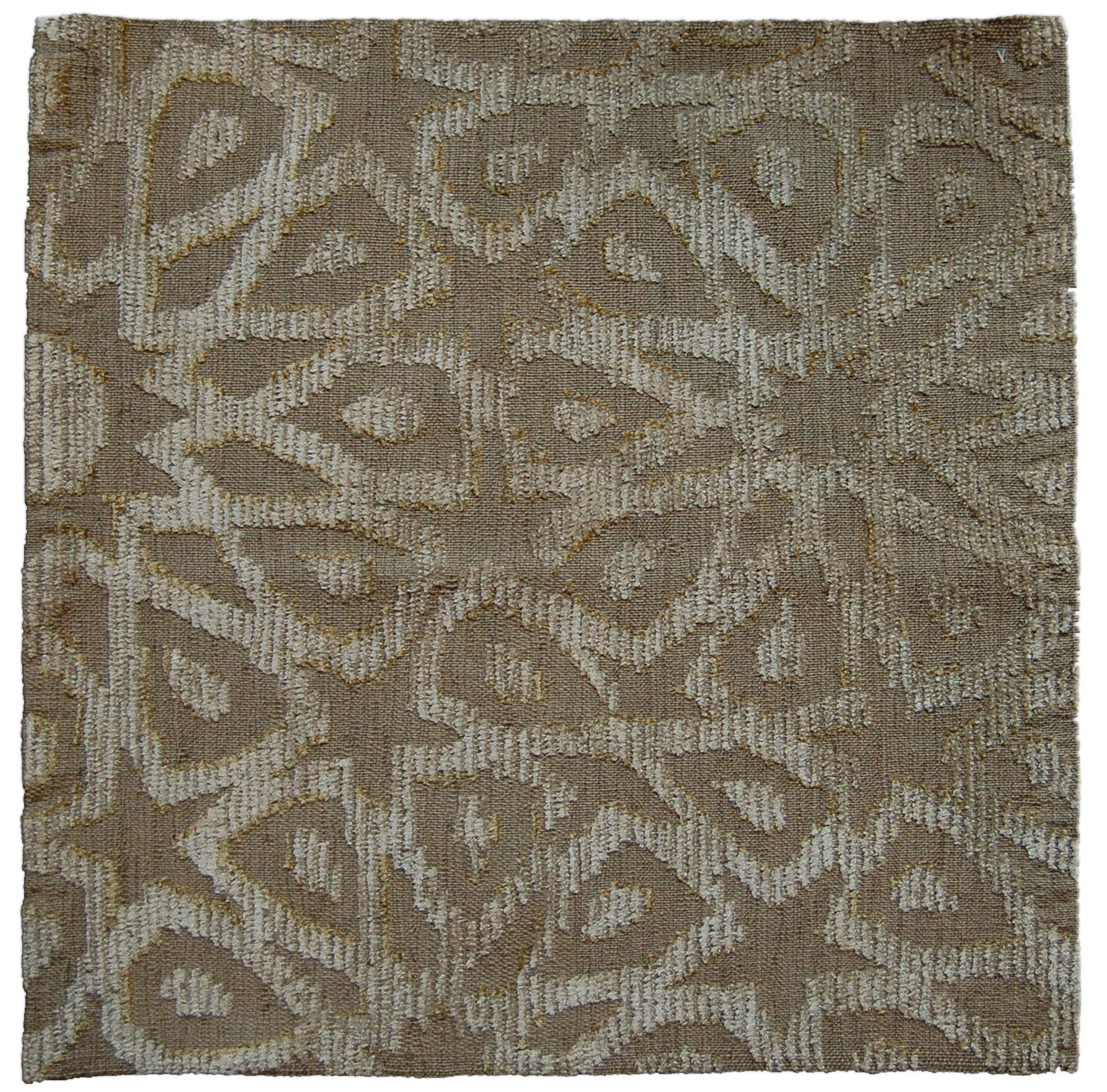
Choosing custom rugs for a room with angled walls, inset niches, or an off-center footprint is less about decoration than about making the architecture read clearly. The right shape can calm a difficult plan, reinforce circulation, and help furniture feel intentionally placed rather than improvised. In irregular architecture, a rug is often the largest visual field in the room, so its outline has to work with the envelope of the space, not compete with it. That is why shape selection matters as much as color, material, or pattern.
When a room has more than four clean corners, the standard rectangle is not always the smartest answer. A rug should guide the eye toward the room’s strongest lines, whether those lines are a fireplace axis, a bay window curve, a long circulation path, or the edge of a built-in alcove. In some spaces, a rectangle gives structure and discipline; in others, it exaggerates awkward offsets and makes the plan feel more rigid than it is. The designer’s task is to decide whether the rug should echo the room’s geometry, soften it, or quietly correct it.
Identify the strongest lines in the room
Before comparing shapes, stand at the primary entry and look at the room as a series of directional forces. Notice which edges feel architectural and which ones feel incidental: a cased opening may matter more than a slanted wall, and a fireplace mantle may outweigh a decorative niche. The best rug shape usually aligns with those dominant lines rather than with the room’s outer shell alone. This is especially useful in rooms with asymmetrical footprints, where the perimeter can be misleading but the functional axes are clear.
Start by tracing three things: the main traffic route, the furniture grouping, and the visual center. If the seating arrangement is rectangular but the room has an angled corner, a rectangle may still work if it can be centered on the conversation zone and leave the odd angle as a background condition. If the room is long and narrow, an oval may soften the edges without sacrificing directionality. If the room’s strongest line is actually curved, such as in a turret or bow window, a round or oval format can look more natural than a hard-edged field.
Scale is critical here. A rug that stops short of the major furniture grouping can make the room feel chopped into fragments, while a rug that runs too close to the walls can amplify irregularities you would rather de-emphasize. In practice, designers often use the rug to define a zone within the room, not to “fill” the entire floor. That approach is particularly effective in open-plan interiors and adjacent seating areas where one shape needs to clarify boundaries without creating visual clutter.
Compare how round, oval, and irregular shapes change perception
Round rugs compress the room’s edges and pull attention toward the center, which is useful when the architecture feels too linear or when a compact seating arrangement needs a stronger focal point. They work well under circular dining tables, in corner reading nooks, and in rooms where several hard angles would otherwise dominate the view. A round rug can also reduce the visual weight of an awkward alcove by shifting emphasis away from the perimeter. The downside is that round shapes can feel undersized in large rooms if they are not scaled carefully to the furniture.
Oval rugs offer a useful middle ground because they introduce softness while preserving directional flow. They are often stronger than circles in rooms that are long, slightly narrow, or interrupted by angled architecture. An oval can echo the movement of a hallway-adjacent living room or a breakfast area with broad sightlines, and it tends to read as quieter than a highly patterned rectangle. If the room needs a gentler outline without losing composure, oval is often the most elegant answer.
Irregular or custom outlines are the most precise solution when the architecture itself is unusual enough that a standard shape would look like an afterthought. Think of a seating area built into a bay, a fireplace zone that bends around a sloped wall, or a room with one pronounced cut-out that breaks the symmetry. In those cases, the rug can be drawn to acknowledge the actual usable floor area instead of pretending the room is rectangular. Well-resolved custom rug design is not about novelty; it is about allowing proportion to feel inevitable.
Material and pattern also affect how shape is perceived. A dense pattern with strong borders can make even a modest shape feel more grounded, while a soft tonal field can make a custom outline disappear into the architecture and let the furniture take precedence. Wool rugs usually provide clearer contour and better everyday resilience, while silk or silk-blend construction can sharpen light reflection and make curved edges appear more delicate. If the room receives strong daylight, the shape may change visually across the day, so it helps to test how sheen and pile height interact with the space at different hours.
Use furniture placement to test shape options
Furniture layout is the most practical way to judge whether a rug shape belongs in a room. Place the seating first, then mark the outer limits of the rug based on the front legs of sofas and chairs, circulation paths, and any fixed points such as a hearth or built-in storage. If the arrangement looks balanced only when the rug is rotated or cropped in a nonstandard way, that is a sign that the room may need a different outline. The right shape should make the grouping look deliberate from multiple angles, not only from the main entrance.
For a living room with one angled wall, a rectangle can still work if it contains the conversation zone cleanly and leaves the angle as a negative-space buffer. For a room with two alcoves, a custom rug may need to sit slightly inside the deepest recesses so the edges do not compete with the architecture. In a dining room, the rug should respect chair pullback, which means the outline must be large enough that chairs remain fully supported when they are moved away from the table. This is one reason designers often use a custom rug sizing guide during specification: the difference between “fit” and “looks right” is usually measured in inches, not feet.
When testing options, pay attention to sightlines from doorways and adjacent rooms. A shape that feels elegant from the center of the room may appear awkward from the hall if it cuts across circulation too abruptly. Likewise, a round rug can make sense in the room itself but disrupt the line of adjacent furniture in an open plan. Good placement resolves both problems by connecting the rug to the room’s primary use and to the surrounding architectural rhythm.
If you are comparing prototypes, use painter’s tape or full-scale paper templates to map the outer edge before committing to fabrication. This is especially helpful with custom rugs, because a made-to-order outline can be tuned to the exact spacing between walls, joinery, and furniture feet. The goal is not to create a perfectly symmetrical drawing; it is to build a shape that looks resolved once the room is furnished and lived in.
Explain how custom outlines can solve difficult architecture
There are rooms where no standard rug shape truly solves the problem because the architecture contains too many interruptions. A deep alcove, an off-center fireplace, a slanted ceiling line, or an odd jog in the wall can make a conventional rectangle feel forced. In those settings, a custom outline allows the rug to respond to the plan in a way that preserves clarity rather than fighting for perfection. This is where custom carpet solutions are less a luxury than a design tool.
Custom outlines can be subtle or highly specific. Sometimes the best answer is a slightly clipped corner that prevents a rug from colliding visually with a protruding wall. Other times the solution is a shape that widens around a seating area and narrows near a passage so the room remains open where movement matters. In hospitality and residential projects alike, these tailored responses can make irregular architecture feel resolved, especially when the rug is used to define zones within a larger composition.
The construction method matters just as much as the outline. Hand-knotted rugs offer exceptional control over edge definition, pattern clarity, and long-term repairability, which makes them well suited to complex shapes and disciplined borders. Hand-tufted or other made-to-order constructions can also work, but the choice should reflect pile height, intended traffic, and the need for clean curvature. When a room already has visual complexity, restraint in texture can be more effective than a heavily articulated surface.
Color palette coordination should support the shape rather than distract from it. In irregular rooms, a rug with too much contrast at the edge can make every architectural quirk more visible. A nuanced field, a softly articulated border, or a pattern that moves in the direction of the room can help unify the plan. This is one reason many designers prefer rugs with low-contrast tonal shifts in rooms that are already doing a lot visually; the rug should organize the space, not announce every correction.
Practical shape choices by room type
In a long living room with one angled corner, a rectangle usually remains the best starting point because it reinforces the longest axis and allows furniture to sit in a coherent field. In a square room with one dominant alcove, an oval can reduce stiffness and visually smooth the transition between the main volume and the recess. In a room anchored by a circular table, a round rug often looks more intentional than a rectangular one because it mirrors the furniture geometry and keeps the composition compact.
For bedrooms with unusual architecture, shape should support the bed placement first and the room envelope second. A rectangular rug placed under the lower two-thirds of the bed often provides the most stable visual base, but in a room with a diagonal wall or a shallow nook, a custom shape can prevent the rug from appearing pinched or misaligned. In reading corners, pouf seating, and window bays, smaller round or oval rugs can create intimacy without overfilling the footprint. The key is to make the rug feel like a deliberate zone rather than a leftover patch.
Pattern density should match the room’s level of architectural activity. If the floor plan already includes multiple angles and recessed walls, a calmer pattern can keep the eye from working too hard. If the room is architecturally simple but furnished with sculptural pieces, a more expressive rug can provide needed visual rhythm. Either way, the shape and pattern should be decided together, not as separate afterthoughts.
When a rectangle is still the right answer
It is easy to assume that unusual rooms require unusual rug shapes, but that is not always true. A well-scaled rectangle can actually clarify irregular architecture by establishing one strong visual plane against which the room’s quirks can recede. This is often the best route when the furniture is already rectangular, the circulation is straightforward, and the architecture only contains one minor offset. In those cases, a disciplined rectangle may feel calmer and more expensive than a more literal response.
The best rectangles in difficult rooms usually share a few traits: generous margins, alignment with the principal furniture grouping, and enough visual weight to hold the room without crowding it. If you can place the rug so that the main seating pieces sit comfortably within or on its edge, the shape may solve more than it complicates. For this reason, many designers test rectangular options before moving to custom outlines, especially when the room has only one awkward condition instead of several. The most successful choice is the one that makes the room read with the least effort.
FAQ
When is a round rug better than a rectangle?
A round rug is often better when the furniture arrangement is centered, when the room has strong corner pressure, or when the architecture feels too linear. It works especially well under circular dining tables, in small seating clusters, and in rooms where a softer perimeter will offset hard edges. If the rug’s job is to gather the room around one focal point, round can be the most efficient shape.
Can an oval rug make a room feel softer?
Yes. An oval rug softens corners while still supporting directional flow, which makes it useful in long rooms, narrow layouts, and spaces with mixed geometry. It often feels less assertive than a rectangle and less centered than a circle, so it can bridge awkward architecture without drawing too much attention to it.
How unusual can a custom shape be?
Quite unusual, as long as the shape serves the room and the furniture. Custom outlines can be subtly adapted to a clipped corner, a bay, a recess, or a wall jog, and they can be more precisely tailored when the architecture demands it. The best custom rug design is not eccentric for its own sake; it is specific enough to make the room feel resolved.
What should I consider before ordering custom rugs for an irregular room?
Measure the furniture first, then map the traffic flow, wall offsets, and any fixed architectural features. Think about pile height, fiber choice, light exposure, and whether the room needs visual softness or stronger definition. A specialist can help translate those details into a shape that works both practically and proportionally.
Choosing a rug for an unusual room is really an exercise in reading architecture correctly. The best shape will not only fit the floor plan; it will sharpen the room’s proportions, support the furniture, and make the irregularities feel intentional. If your space has angles, alcoves, or another difficult condition, a thoughtful consultation can help turn those constraints into a clear design decision. Doris Leslie Blau can offer that kind of guidance with the material knowledge and gallery perspective that complex rooms demand.