
Designing rugs for luxury retail is not a decorative afterthought; it is a spatial decision that affects how customers enter, pause, look, and move. In a well-composed store, a rug can soften hard surfaces, define a product zone, and make merchandise read with greater clarity without competing for attention. For brands that rely on atmosphere as much as assortment, custom rugs can be one of the most effective tools in the room.
Retail interiors ask a lot from flooring. The surface must perform under constant foot traffic, support repeated fixture changes, and still look considered when photographed, merchandise-heavy, or briefly empty between resets. A rug in this setting has to do several jobs at once: anchor a display, control acoustics, establish a visual pause, and reinforce the brand’s material language. When those demands are handled well, the floor stops behaving like a neutral plane and begins shaping the customer journey.
For interior designers, the challenge is less about finding something attractive than selecting the right proportion, construction, and pattern density for the store’s exact use. A quiet gallery-style boutique has different needs from a layered, salon-like luxury shop with seating and consultation areas. The most successful custom rugs for interior designers are developed from the plan outward, not chosen as a final flourish. That is where scale, durability, and visual restraint become design tools rather than technical constraints.
Identify circulation and display priorities
Before thinking about color or motif, map how people actually move through the space. Luxury retail usually includes at least three distinct zones: the threshold, the browsing field, and the point where a customer slows down to examine or try on a product. A rug can guide each of those moments if its size and placement correspond to the circulation pattern instead of interrupting it. In a narrow storefront, a long runner can subtly direct movement toward the focal display; in a broader showroom, a large area rug can create an island that signals, “Pause here.”
The best planning starts with the fixtures, not the soft goods. If tables, plinths, shelving, or seating are likely to change, the rug should be dimensioned to accommodate future layouts without looking undersized. That usually means leaving enough negative space around the perimeter so the rug reads as intentional architecture, not a floating object. A rug that is too small makes the room look fragmented; one that is too expansive can flatten the display strategy and reduce the distinction between zones.
For stores with active merchandising rotations, a rug should support flexibility. Think about where display pedestals may shift, where a queue might form during events, and how door swing or security fixtures affect usable floor area. A made-to-order piece allows the designer to solve those constraints precisely, whether the goal is a custom rug that frames a hero product table or a larger composition that links multiple merchandising moments into one visual field. In a luxury environment, that precision matters because every inch of the floor influences how curated the room feels.
Choose texture and pattern that support merchandise visibility
In retail, a rug should often act as a visual collaborator rather than a focal point. If the merchandise is bold, highly textured, or color-driven, the floor covering should usually be quieter so the product can remain the primary read. If the brand sells minimalist objects or highly refined materials, a slightly more present pattern or weave structure may be appropriate because it gives the room enough tactile interest to feel complete. The key is to balance visual rhythm with legibility, especially near shelves and tables where product detail needs to remain clear.
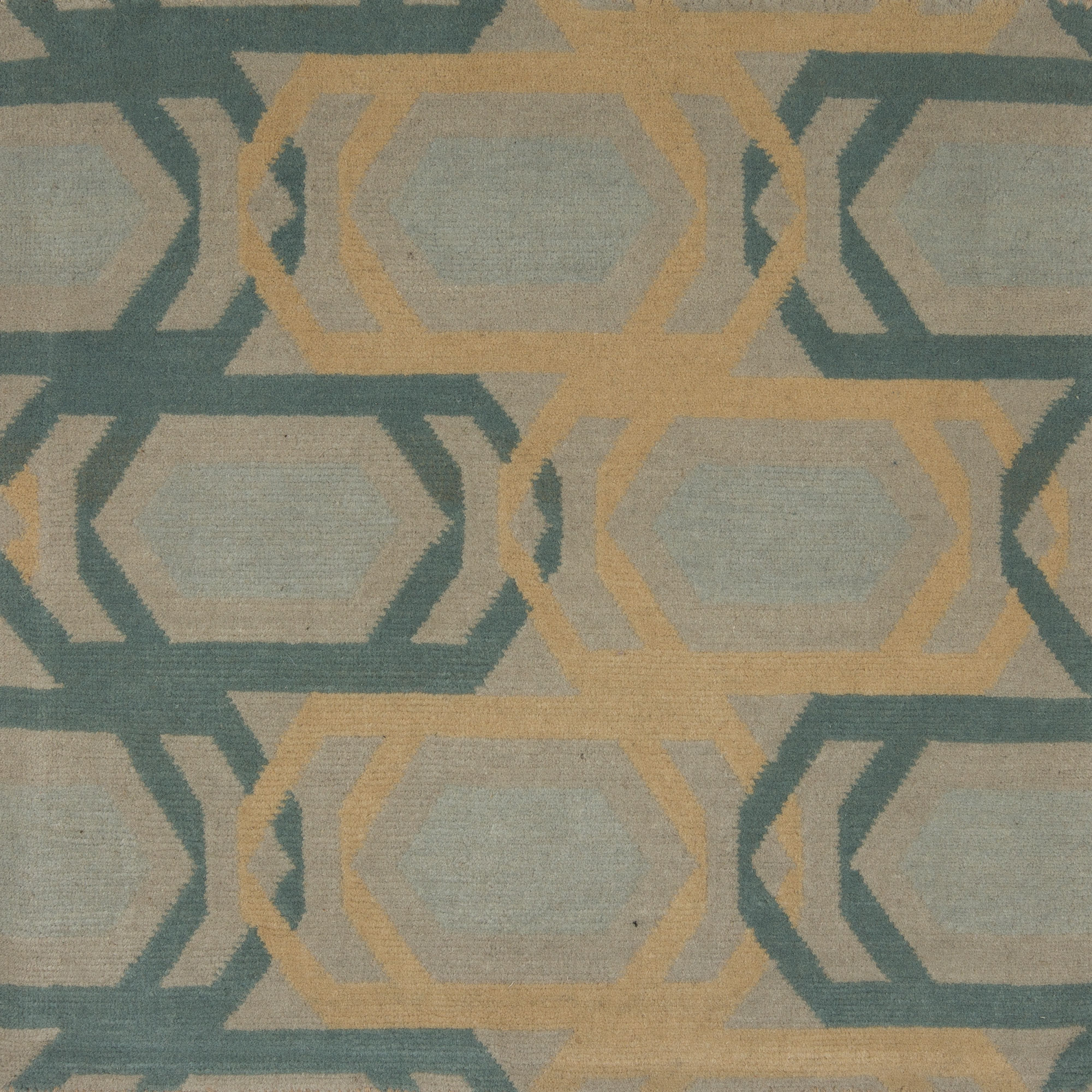
Pattern scale is one of the most overlooked variables in luxury retail interiors. Large-scale motifs can define zones effectively, but they need open field space to breathe; otherwise, they can start to compete with displays and signage. Fine repeating patterns may be better for compact boutiques because they add depth without overwhelming the merchandise. Texture works in much the same way: a subtle striation, soft abrash, or restrained border detail can enrich the floor while maintaining a calm backdrop for jewelry, fashion, objects, or home goods.
Material choice also changes how the rug supports presentation. Wool offers resilience, warmth, and a controlled sheen that tends to photograph well under mixed lighting, while silk or silk-blend accents can add a refined shimmer in low-traffic areas where visual polish matters more than abrasion resistance. Hand-knotted rugs can be especially useful when a brand wants detail and craftsmanship to be felt rather than announced. For a retailer that leans into artisanal provenance, that construction language can quietly echo the products on display.
Sometimes the most effective solution is a rug that is visually understated but materially rich. A monochromatic wool ground with slight tonal movement, for example, can prevent a showroom from feeling flat without stealing focus from the merchandise. In a more expressive brand environment, pattern can do the opposite: it can introduce a sense of pace and energy that supports a fashion-forward collection or a layered accessory display. The question is not whether the rug is beautiful, but whether its visual temperature matches the retail narrative.
Balance durability with premium appearance
Retail flooring must withstand more wear than residential flooring, but that does not mean it should look utilitarian. A luxury store needs a surface that can endure foot traffic, frequent cleaning, and rolling or repositioned fixtures while still reading as tailored. This is where construction details become part of the design brief. Pile height affects both appearance and maintenance; lower pile often performs better in public settings, while higher pile can work in seating or consultation areas if it is carefully protected from traffic.
Edges and finishing matter as much as face fiber. A well-executed border or bound edge can keep the composition crisp even after repeated repositioning, and the rug’s underlay or stabilization method should be considered early so it lies cleanly beneath furniture. If the store has a polished stone or wood floor, the rug must sit securely and flatly enough to avoid small waves that catch the eye. Luxury is rarely about excess in this context; it is more often about making durability invisible.
Material performance also depends on the environment. A storefront with strong daylight may call for fibers and dye selections that handle light exposure more gracefully, while a darker boutique with concentrated spotlighting may require a different balance of color depth and sheen. The rug should not fight the lighting plan. Under cool lighting, some warm neutrals can read beige rather than refined; under warmer light, certain gray-toned rugs may appear muted or dusty. Designers who specify custom rugs regularly know that the same sample can behave differently once it is placed beside brass shelving, lacquered finishes, or a vivid product wall.
There is also a practical relationship between maintenance and brand image. A carpet that shows every mark will not remain elegant for long in a retail setting, no matter how beautiful it looks on day one. Choosing an appropriate fiber blend, pattern scale, and pile density helps the store age gracefully between cleanings. For brands that host private appointments, events, or seasonal installations, that stability is especially important because the floor must remain composed even when the merchandising rhythm changes.
Coordinate with lighting, shelving, and signage
A retail rug should be designed in conversation with the full architectural kit of the space. Lighting can intensify contrast, change color perception, and alter how texture is read from the entrance versus from a close browsing distance. Shelving and display systems set the visual grid, while signage determines where attention lands first. The rug sits beneath all of that, but it should still reinforce the same logic, whether through line, border, color temperature, or subtle directional movement in the weave.
In a luxury boutique with layered illumination, a rug can help stabilize the visual field. If overhead lighting creates bright pools, a slightly deeper ground tone may provide balance and prevent the room from feeling overly segmented. If the store uses wall washers or dramatic accent lights, a restrained rug prevents the flooring from becoming another competing highlight. When shelving is highly linear, a rug with soft organic variation can temper the rigidity and make the overall composition feel more inviting.
Signage deserves special attention because it often introduces hard geometry into an otherwise atmospheric setting. The rug does not need to imitate the signage, but it should not undermine it either. A border that aligns with fixture axes, a field that frames the primary sightline, or a pattern that subtly echoes a brand’s graphic language can strengthen coherence. In this sense, the floor becomes part of the identity system, not merely the surface below it. That level of integration is often what distinguishes luxury retail from ordinary commercial fit-outs.
For brands seeking a more layered expression, the rug can bridge the gap between retail and hospitality. Seating areas for consultations, styling, or client appointments benefit from a softer hand and more generous scale, especially if they are meant to feel like part of a private salon rather than a sales counter. In those moments, the rug helps slow the pace of the room. The store still functions as a retail environment, but the customer experiences it as composed and intentional.
How designers specify retail rugs without losing control of the room
The specification process is where many retail projects succeed or fail. Designers need a clear understanding of traffic patterns, cleaning protocols, fixture anchoring, and how often the merchandising plan is expected to change. They also need sample information that reflects the rug’s true behavior under light and in relation to other finishes. The rug sampling process should include more than a color approval; it should test texture, binding, proportion, and how the material feels next to metal, glass, stone, or lacquer.
When working on a luxury retail brief, the most efficient sequence is usually site analysis, plan review, material direction, sampling, and final sizing. A designer may request multiple palette options, but the real decision often comes down to how each sample supports the room’s hierarchy. Does the rug ground the presentation table without flattening it? Does it make the seating area feel intentional rather than improvised? Does it keep the merchandise visually dominant while still giving the store atmosphere and depth?
This is also where a specialist resource can be valuable. A detailed custom rugs consultation can help align proportions, material options, and construction choices with the store’s actual use case rather than a generic ideal. For projects that need further planning support, guides such as a custom rug sizing guide or discussions of hand-knotted rugs can help refine the specification before production begins. The goal is not simply to order a floor covering, but to design a surface that performs as part of the brand experience.
One realistic scenario helps illustrate the point. Imagine a jewelry boutique with a stone floor, mirrored display cases, and a consultation alcove at the back. A dense, highly patterned rug in the main circulation lane might distract from the product and reflect too much visual noise into the cases, while a very pale rug could show traffic immediately and make the room feel fragile. A better solution may be a medium-toned hand-knotted rug with a quiet border and subtle tonal variation: calm enough for the merchandise, durable enough for daily use, and refined enough to elevate the consultation area without turning it into a separate room.
Why brand story begins underfoot
Luxury retail succeeds when the room tells a coherent story before a single product is handled. The rug contributes to that story through scale, texture, tone, and placement. It can make a room feel more measured, more intimate, more directional, or more expressive, depending on what the brand needs to communicate. In that sense, the floor covering is not an accessory to the interior; it is one of the quiet mechanisms that shapes how the brand is experienced in motion.
For designers and retail teams, the value of a custom-made rug lies in control. Standard sizing and generic patterning rarely solve the exact spatial and atmospheric problems of a premium store, especially when display layouts evolve and visual standards remain high. By treating the rug as part of the architectural plan, rather than a decorative finish added at the end, the interior gains clarity and durability at once. That is the practical advantage of specifying with intention, and it is why the right rug can support not only merchandise, but the brand itself.
FAQ
What makes a retail rug effective?
An effective retail rug supports circulation, frames merchandise, and matches the store’s maintenance demands without competing with the product. It should be proportioned to the fixtures, stable underfoot, and visually calibrated to the lighting and palette of the space. In luxury retail, the best rugs are usually the ones that make the room feel complete while staying quietly in service of the brand.
How do rugs support the brand experience?
Rugs shape how customers slow down, where they look, and how they perceive texture and value in the room. They can introduce warmth, control acoustics, and define a consultation or display zone in a way that reinforces the store’s identity. When selected thoughtfully, a rug helps the interior communicate the same level of care as the products on display.
Should retail rugs be quiet or expressive?
That depends on the merchandise and the brand voice. If the products are visually complex or highly decorative, a quieter rug usually gives them room to breathe. If the retail concept is more editorial, fashion-driven, or experience-led, a stronger pattern or richer texture may support the atmosphere without overwhelming it.
What should designers consider during the rug sampling process?
Designers should review color under actual lighting, feel the texture in relation to adjacent finishes, and assess whether the sample will still read well once merchandise and fixtures are installed. The rug sampling process is also the right time to confirm pile height, border treatment, and material durability. In retail, a sample has to prove that it can perform as beautifully as it looks.
For luxury retail spaces that need more than a standard floor solution, the right design guidance can make every square foot work harder and feel more considered. Doris Leslie Blau approaches these projects with material knowledge, scale awareness, and a strong respect for how a rug supports the room’s story from the ground up.