

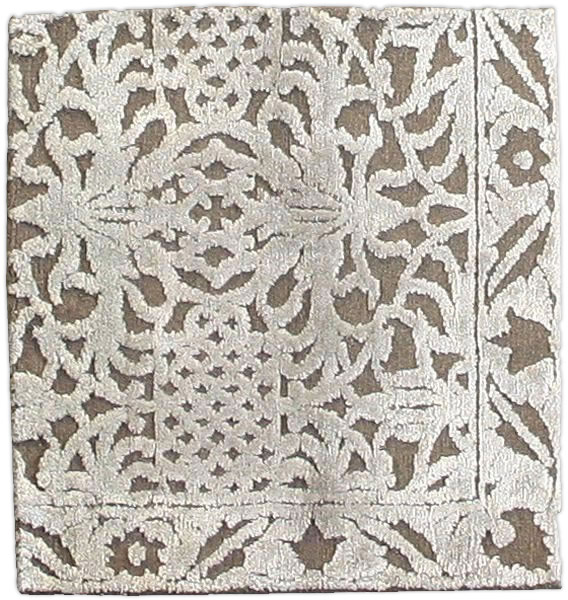
Embarking on a journey through the art and craft of Persian-style made-to-order area rugs reveals a profound blend of centuries-old tradition and modern customization. In this guide, we examine how artisans draw from hand-knotting techniques and Oriental rug patterns to recreate the intricate beauty of classic Persian textiles. We explore the regional history of weaving, from nomadic settlements to imperial workshops, to contextualize design authenticity. The overview will guide you through selecting historically accurate color palettes and motifs derived from ancient manuscripts and surviving pieces. We outline the process for choosing perfect dimensions and finishing touches like fringes or serging to suit bespoke interiors. Finally, we provide insight into identifying genuine Persian design motifs and assessing knot density to ensure long-lasting quality. With this deep dive, every rug enthusiast and interior designer can make informed decisions when ordering custom rugs.
History of Persian Rug Weaving
Persian rug weaving traces back over two millennia to the ancient civilizations of the Iranian plateau, where nomadic tribes first wove animal hair and coarse wool into functional floor coverings. Archaeological discoveries in Mesopotamian sites and Persepolis ruins reveal fragments of pile weaving with rudimentary patterns and earthy natural dyes. Initially produced for utilitarian purposes, these early pieces gradually evolved as tribal families refined their techniques, incorporating silk highlights and complex border structures. Each region—from Tabriz in the northwest to Kerman in the southeast—contributed distinctive motifs based on local flora, geography, and religious symbolism. The introduction of intensive pastoralism fostered higher-quality wool with consistent staple length, enabling denser knotted designs. As patterns became more elaborate, weaving villages developed signature styles that are still recognized today. This historical foundation underscores the enduring cultural value of Persian rug traditions.
During the Safavid era, royal patronage under Shah Abbas I elevated rug weaving to a celebrated court art form, commissioning workshops that employed thousands of master weavers and dyers to produce pieces for palaces and export. Imperial looms at Isfahan and Kashan created vast workshops where artisans honed asymmetrical Senneh knot methods, refining their precision and speed. This golden age standardized motifs such as the central medallion and boteh, or paisley, providing a visual lexicon that persists in contemporary designs. European demand surged in the eighteenth and nineteenth centuries, with merchants cataloging rugs by origin, knot density, and material quality, laying the groundwork for a global trade in luxury textiles. Even after political upheavals, small village workshops continued to adapt traditional models to changing markets, preserving core weaving methods while integrating foreign color preferences. Today, these stylistic and technical continuities inform every stage of our made-to-order process, ensuring each rug remains faithful to its Persian heritage.
Recreating Authentic Techniques
Sourcing the finest fibers is fundamental to replicating an authentic hand-knotting experience, and most Persian-style rugs begin with a careful selection of hand-spun wool or silk, often sourced from high-altitude sheep or mulberry-fed silkworms. Each fiber type delivers unique lustre and resilience—wool offering warmth and elasticity, silk providing sheen and definition for intricate Oriental rug patterns. We establish a foundation with cotton or wool warp threads stretched evenly across a traditional loom, maintaining uniform tension to guarantee precise knot placement. Artisans then employ the asymmetrical Senneh knot technique, looping individual knots around two warp threads to maximize knot density while producing a supple, durable pile. During weaving, we integrate a custom color register, dyeing small yarn batches to match design swatches and adjusting dye saturation in real time. Meticulous combing and trimming after knotting reveal the pattern’s crisp lines and subtle pile variations. This methodology mirrors centuries-old protocols and underscores why buyers seeking bespoke upholstery details expect no compromise in material integrity.
Once the rug is fully knotted, a multi-stage finishing process begins, starting with careful shearing and washing to eliminate loose fibers and balance the pile height across the surface. Traditional washing baths use neutral soap or mild natural agents to preserve dye integrity, followed by a series of rinses that flush out residual mordants without fading the custom pigment palette. Drying takes place outdoors or in climate-controlled kilns, allowing each piece to mature under consistent humidity and temperature conditions, crucial for maintaining fiber resilience and preventing undue strain. Upon drying, expert finishers perform a secondary shearing pass to enhance clarity in floral and geometric motifs. Fringe creation follows, either by unraveling the warp threads for a classic knotted edge or by securing cut ends with reinforced serging for added longevity. Finally, a gentle hand-combing refines the pile texture, ensuring a soft but defined hand feel suited to high-traffic areas. Quality inspectors then verify knot density, seam integrity, and dye consistency before the rug receives its individual certificate of authenticity and dispatch documentation.
Selecting Color Palettes and Motifs
Choosing an authentic Persian color palette involves both scientific precision and artistic intuition, with natural dyes derived from plants, insects, and minerals forming the backbone of traditional hues. Pomegranate rind, madder root, and indigo yield warm reds, earthy oranges, and deep blues, while walnut husks produce rich browns that soften vibrant contrasts. Dye preparation follows historic formulas, balancing pH levels with alum or ferrous sulfate mordants to lock pigments into wool or silk fibers for lasting vibrance. Modern labs can replicate these recipes at varying concentrations, enabling clients to preview precise shades before knotting commences. Designers often reference archival rug samples to calibrate tone variations—known as abrash—where intentional color shifts impart depth and a handcrafted character. By mapping every color change within the pattern diagrams, artisans ensure seamless transitions between hue areas. This exacting approach ensures your luxury textiles embody the same chromatic complexity found in museum-grade collections.
Layering Persian design motifs onto these curated color fields requires a detailed understanding of pattern archetypes that evolved from region to region over centuries. From the symmetrical medallion layout emblematic of Tabriz carpets to the stylized boteh motifs originating in northwest provinces, each symbol carries its own historical and cultural weight. The Herati motif, featuring a rotating rosette enclosed by a diamond and four fish, exemplifies the geometric harmony central to many Shiraz weavings. Border strips are typically organized into contrasting guard lines, themselves hosting miniature repeats of the main field design to frame the composition securely. We translate these pattern conventions into digital design software, plotting every knot as a coordinate point on a custom grid. Clients can review pixelated mock-ups and adjust motif scale, border width, or corner spandrels in advance, ensuring the final rug complements architectural proportions. This iterative design phase bridges centuries-old tradition with modern precision, allowing for true personalization.
Custom Sizing and Fringing Options
Custom-sizing a Persian-style area rug begins with evaluating the intended room layout, traffic flow, and adjacent furniture dimensions to determine ideal rug proportions and border ratios. Interior designers often recommend a six-to-twelve-inch border margin around upholstery clusters; however, bespoke spaces may call for edge-to-edge coverage or even an oversized margin to emphasize a medallion center. We provide scaled technical drawings that correlate knot count per square inch with overall rug length and width for every custom rug commission, guaranteeing no compromises between design detail and surface area. Pile height specifications, ranging from a low-profile two-millimeter loop to a deeper ten-millimeter cut pile, introduce variations in tactile sensation and shadow play across the pattern. Each choice influences how light interacts with colored fibers, so our team tests full-scale yarn samples on a frame to preview the pile effect under ambient conditions. Incorporating these functional considerations at the design stage ensures the finished piece performs as brilliantly as it appears. When needed, we also advise on integrated padding solutions to protect both the rug and underlying flooring.
Finishing options like hand-knotted fringe or machine-serged edges offer further customization to complement interior design themes. Classic Persian rugs traditionally feature four- to eight-inch fringe crafted by extending and knotting the warp threads, which is then hand-brushed to achieve a soft and natural drape. For high-traffic areas, serged edges made with a color-matched cotton or wool overcast stitch can prevent fraying and maintain a streamlined profile. Alternative finishes include self-fringing, where the primary field design flows uninterrupted into the embedded fringe, and macramé twists for more decorative installations. Beyond edge treatments, our production line can add corner protectors or non-slip backing layers to enhance durability and safety in residential or commercial settings. Clients may also select color-coordinated binding to highlight border outlines or transition rugs between adjoining rooms. Each feature is meticulously documented in the final design specification to ensure faithful execution on the loom.
FAQ
How are Persian made-to-order rugs crafted?
Each Persian made-to-order rug begins with an in-depth consultation to capture a client’s spatial requirements, stylistic preferences, and motif selections. Designers create a precise digital design board that maps every knot and color variant, incorporating approved natural dye formulas to match bespoke palettes. Artisans then prepare a sturdy warp foundation on a traditional loom, selecting hand-spun wool or silk yarn to balance resilience and sheen. Using the asymmetrical Senneh knot, weaved rows emerge that correspond exactly to the custom pattern grid. Upon completion, the piece undergoes staged washing, shearing, and drying processes to refine the pile and enhance color contrast. Skilled finishers add hand-knotted or serged edges and perform a final quality inspection to verify knot density, color fidelity, and overall structural integrity. Only after passing these rigorous checks does the rug receive its certificate of authenticity and depart for installation.
What knot density is used in Persian rugs?
Knot density in Persian rugs is often expressed as knots per square inch (KPSI), a metric that directly influences pattern clarity and tactile quality. Traditional village rugs may feature 100 to 200 KPSI, suitable for bold tribal patterns and durable everyday use. Fine workshop pieces typically range from 300 to 450 KPSI, allowing intricate floral and curvilinear designs to emerge with precision. Museum-grade examples can exceed 600 KPSI, showcasing ultra-fine silk detailing and exceptionally compact piles. During our design phase, we consult archival standards and client expectations to recommend an optimal density that balances cost, style, and longevity. To measure consistency, we conduct random spot checks along multiple grid locations before and after finishing. This attention to density ensures each custom piece maintains structural integrity and visual sharpness characteristic of authentic Persian textiles.
How to identify authentic Persian patterns?
Authentic Persian patterns exhibit a harmonious interplay of floral, geometric, and symbolic motifs, often arranged around a central medallion or within repeating medallion grids. Key design elements include the boteh or paisley, Herati rosette formations, and ornate guarded borders with interlocking corner spandrels. Examining color gradations—known as abrash—can reveal the use of hand-dyed yarns, as slight tonal variations indicate traditional dye lots rather than machine–dyed uniformity. The presence of an asymmetrical Senneh knot is another hallmark, providing a slightly angled pile that creates a distinctive sheen under varied lighting angles. Quality wool or silk with consistent staple length and a high KPSI count further confirms authenticity. Provenance documentation, weaving village attribution, and a certification of origin all contribute to verifying genuine Persian design motifs. Cross-referencing these factors with expert evaluations ensures the pattern you choose remains true to its centuries-old lineage.
For personalized guidance on commissioning an authentic Persian-style area rug crafted with traditional methods, connect with our specialists for a tailored consultation that brings your design vision to life. Reach out today to engage expert insights and secure a truly bespoke interior centerpiece.