





Vintage Samarkand and Khotan Rugs
Vintage Samarkand rugs and Khotan carpets occupy a distinctive place among Oriental rugs: they are Central Asian in spirit, East Turkestan in origin, and unusually compatible with modern luxury interiors. Rather than relying on dense, formal ornament alone, many examples use open fields, spacious medallions, pomegranate designs, cloud bands, fretwork borders, and softened color relationships that feel architectural rather than heavy. For interior designers, collectors, and homeowners, these hand-knotted rugs offer the depth of historic weaving with a palette that can sit comfortably beside contemporary upholstery, plaster walls, wood paneling, stone, bronze, and collectible design.
What Defines Samarkand and Khotan Carpets?
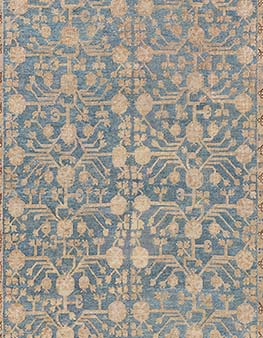
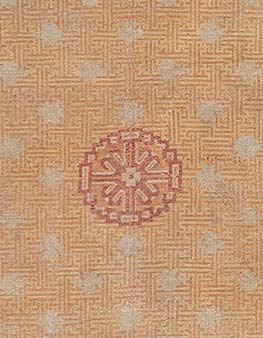
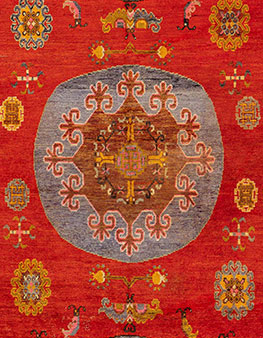
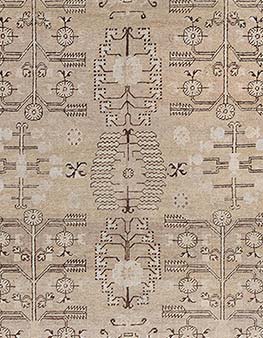
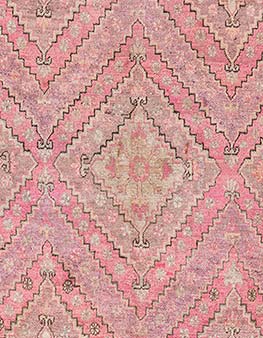
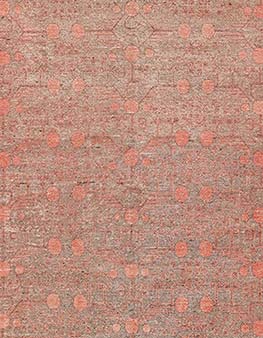
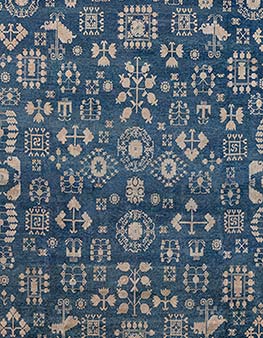
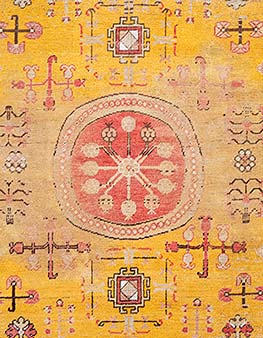
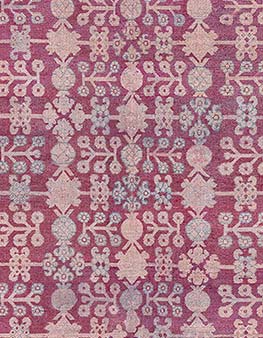
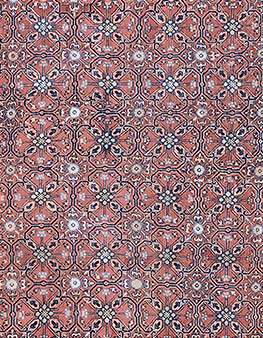
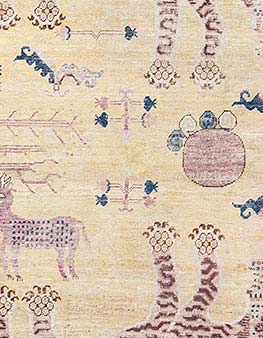
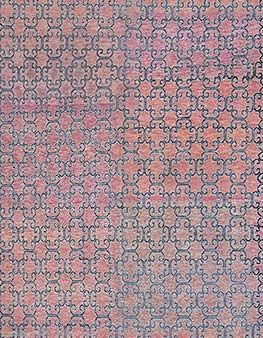
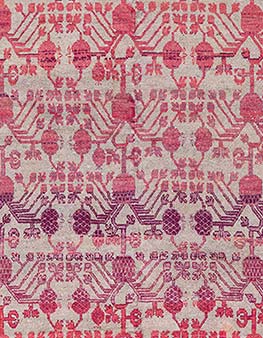
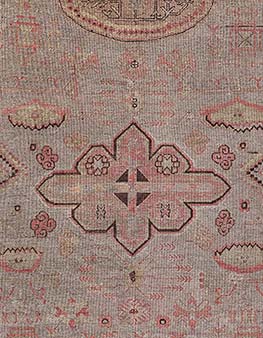
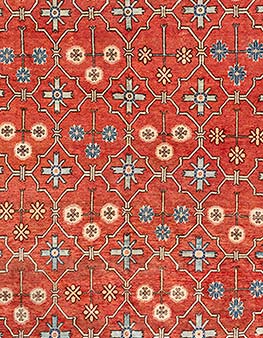
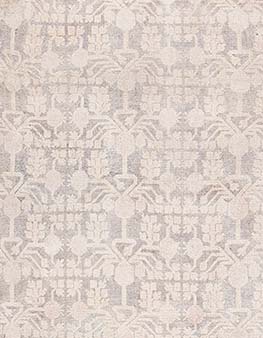
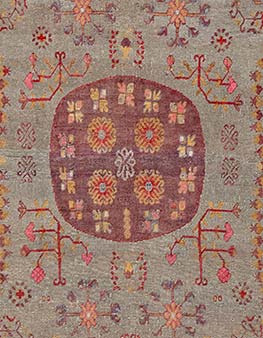
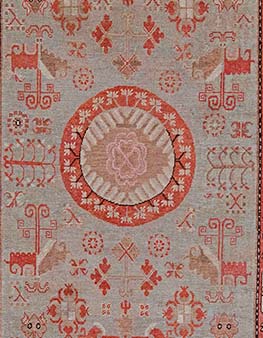
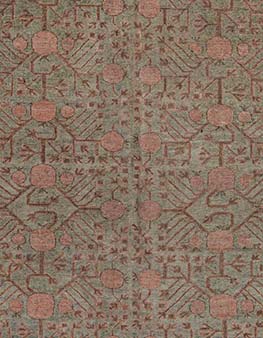
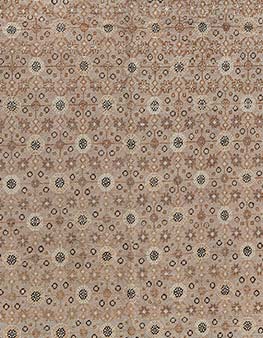
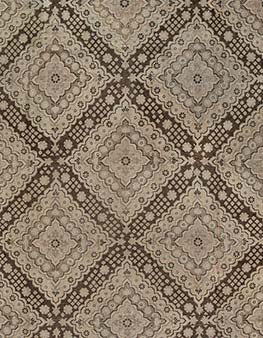
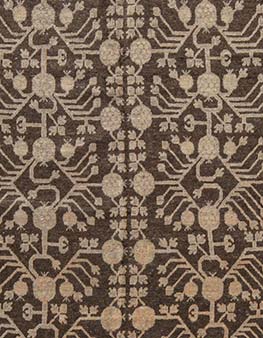
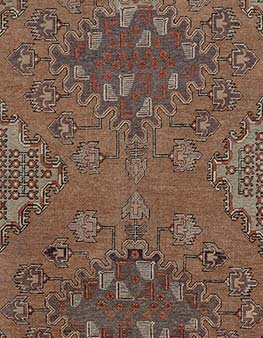
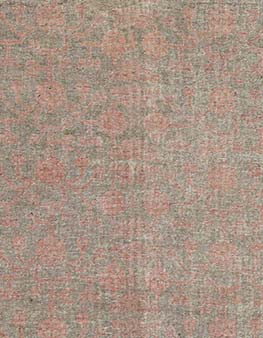
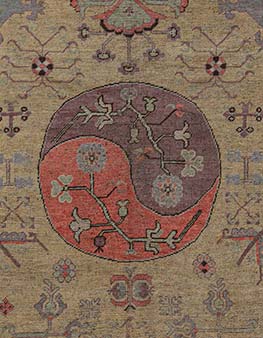
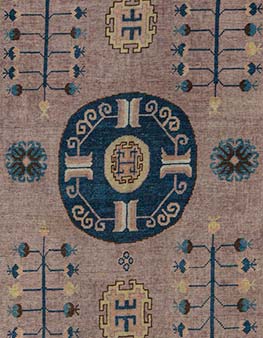
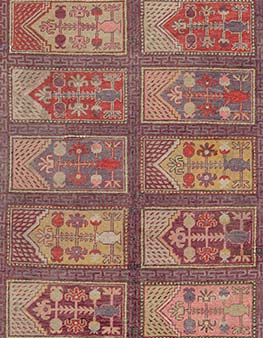
Samarkand is often used in the rug trade to describe East Turkestan carpets associated with oasis weaving centers such as Khotan, Yarkand, and Kashgar. Their designs reflect a Silk Road visual language shaped by Chinese, Persian, Turkish, Buddhist, and Islamic influences. A Khotan rug may show lotus forms, stylized pomegranates, geometric panels, triple medallions, scrolling vines, or border systems that balance restraint with symbolism. Materials vary, but many vintage pieces are woven in wool, while select examples incorporate silk for a more luminous surface and finer handle.
- Review origin notes, age, and whether the rug is vintage or antique.
- Compare wool, silk, pile height, and handle for room use.
- Look at condition, restorations, edge integrity, and overall surface wear.
- Choose scale carefully: many Khotan rugs suit long rooms, libraries, and galleries.
- Use palette as a design tool, from pale sand and taupe to blue, rose, tan, and brick red.
Design Value for Luxury Interiors
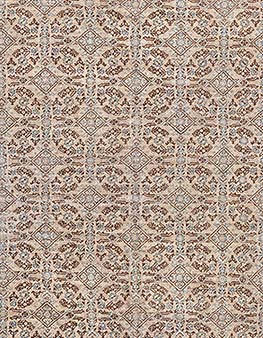
The strength of a vintage Khotan or Samarkand carpet is its ability to introduce pattern without overpowering a room. Pale beige, ivory, taupe, dusty rose, light blue, gray, warm tan, and muted red tones can soften minimalist spaces, while geometric compositions add structure to traditional rooms. Long and relatively narrow formats are especially useful in entry halls, libraries, dining rooms, bedrooms, and living areas where a standard area rug may feel too predictable. Oversized examples can anchor a large seating plan; smaller rugs can define a study, dressing room, or layered arrangement.
Buying Guidance from Doris Leslie Blau
Doris Leslie Blau has sourced rare rugs from estates, auctions, dealers, and private collections since 1965, a background that matters in a category where attribution, condition, scale, and decorative relevance vary widely. Each rug should be considered as both a textile and a design object: the weave, field layout, border rhythm, color oxidation, patina, and proportional relationship to furniture all affect how it will read in a finished interior. Product listings allow buyers to evaluate dimensions and pricing clearly before making a more detailed selection.
For projects that require exact dimensions, a specific color direction, or repeated rugs across multiple rooms, the gallery can also advise on complementary vintage options or made-to-order rugs inspired by Samarkand and Khotan aesthetics. A custom rug will not have the age or patina of a vintage carpet, but it can translate the category’s open geometry, pomegranate motifs, and quiet Central Asian character into a precise scale for contemporary architecture. The result is a practical path for designers who admire the look but need a tailored solution.