


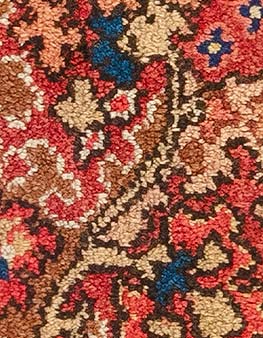
Axminster and Wilton Rugs
Axminster and Wilton rugs occupy a distinctive place in English decorative arts, bridging aristocratic interiors, architectural design, and practical floorcovering craftsmanship. Unlike many Persian rugs or Oriental rugs defined primarily by regional hand-knotting traditions, English Axminster carpets and Wilton carpets developed within a European design culture shaped by country houses, neoclassical ornament, floral patterning, and later Arts and Crafts taste. For interior designers and collectors, their appeal lies in the combination of scale, order, color, and historical character: a fine antique English carpet can anchor a library, dining room, gallery-like living room, or formal entry without overwhelming the architecture.
What Makes English Axminster and Wilton Carpets Distinctive
Axminster carpet production is historically associated with the Devon town where Thomas Whitty established his manufactory in the eighteenth century, while Wilton carpets are closely connected with another major English weaving center. Early and antique examples may include hand-knotted construction, while many Wilton rugs and later Axminster carpets are recognized for sophisticated loom-woven pile techniques. In both cases, the best pieces reward close evaluation of wool quality, density, drawing, surface condition, and the relationship between design and scale. Antique rugs are typically 100+ years old, and examples from the nineteenth and early twentieth centuries often show the softened color and patina designers seek for layered luxury interiors.
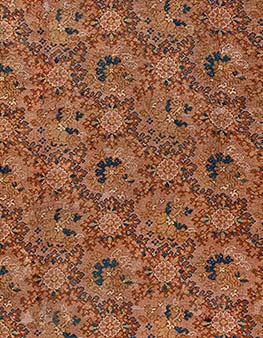
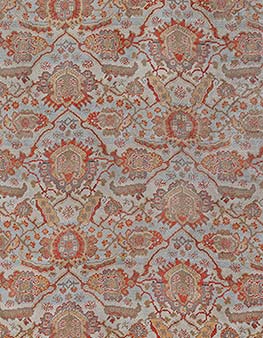
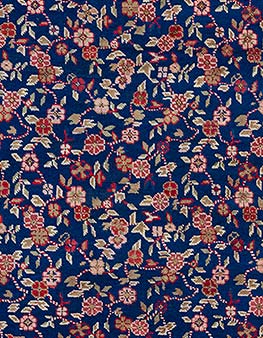
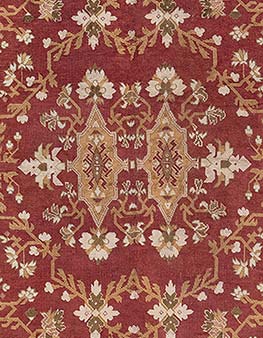
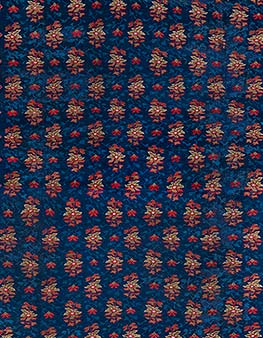
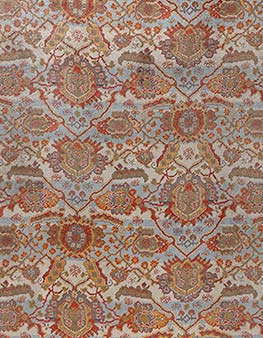
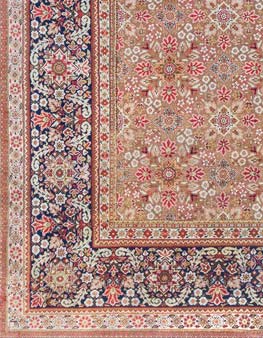
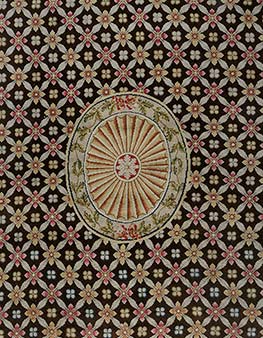
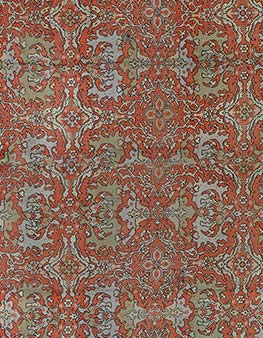
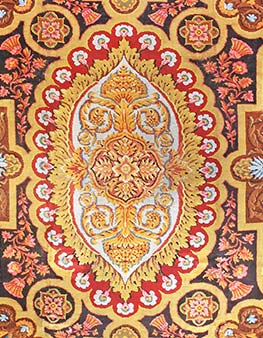
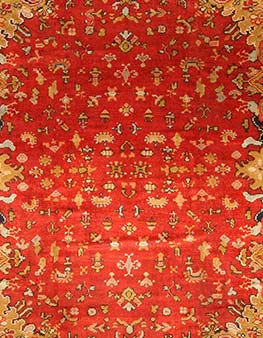
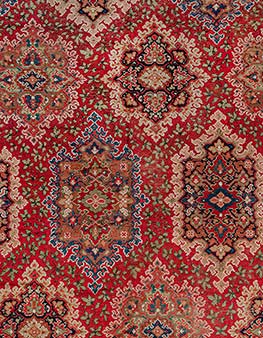
Design is central to the category. Many antique Axminster rugs use classical motifs, architectural borders, medallions, urns, garlands, rosettes, and formal allover layouts, while other examples adopt floral or geometric patterns influenced by Oriental carpets. Wilton rugs often offer a more tailored decorative presence, making them particularly useful where symmetry, restraint, and durable wool construction matter. The palette can range from warm tan, ivory, cream, and beige to faded blues, reds, rusts, and sage tones that sit comfortably with antiques, contemporary furniture, paneled rooms, and collected interiors.
How to Choose an Axminster or Wilton Rug
Because these are decorative carpets with strong architectural value, selection should begin with the room rather than the label alone. A square or oversized Axminster carpet may suit a formal seating plan, while a narrow Wilton runner can bring pattern and historical depth to a corridor or stair hall. Doris Leslie Blau has sourced rare rugs from estates, auctions, dealers, and private collections since 1965, and each candidate should be considered for origin, period, materials, construction, condition, and design compatibility.
- Check whether the rug is Axminster, Wilton, or a related English carpet type.
- Compare exact dimensions with the furniture plan, including room-size and oversized formats.
- Study construction notes, especially hand-knotted versus machine-made or loom-woven examples.
- Evaluate wool pile, border clarity, wear, restorations, and overall surface balance.
- Choose palette and pattern according to architecture, upholstery, art, and lighting.
Antique English Rugs for Luxury Interiors
For high-end interiors, Axminster and Wilton rugs offer an alternative to Persian carpets, Aubusson rugs, Savonnerie carpets, and other European rugs. Their designs can feel formal without being fragile, historic without appearing museum-like, and decorative without the visual density of some tribal or workshop weavings. A pale floral Axminster can soften a traditional bedroom; a geometric Wilton can organize a tailored study; an oversized antique English carpet can give a large salon or dining room proportion, warmth, and continuity.
This category is especially relevant for buyers who value provenance, usable scale, and design intelligence. Listings allow comparison of visible pricing, sizes, age indications, materials, and patterns before a closer review. When an antique rug is not the exact size required, Doris Leslie Blau can also discuss custom made and made-to-order rug possibilities in related styles, allowing designers to preserve the spirit of an English decorative carpet while meeting specific project dimensions.