



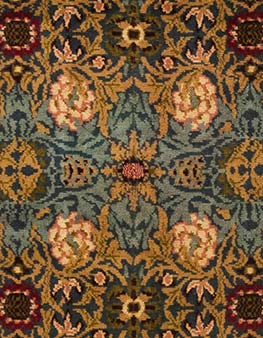
Arts and Crafts Rugs
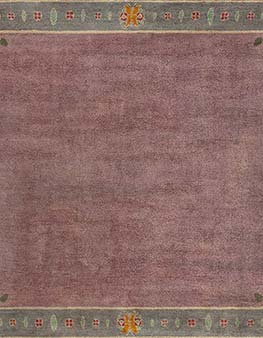
Arts and Crafts rugs occupy a distinctive place in decorative carpet history: they were designed in reaction to industrial uniformity, yet they remain highly practical for sophisticated interiors today. This Doris Leslie Blau collection focuses on antique and vintage Arts and Crafts carpets, including Irish Donegal-style rugs, pieces associated with C.F.A. Voysey and Gavin Morton, William Morris-inspired botanical patterns, rare fragments, runners, room-size carpets, and oversized rugs. Since 1965, Doris Leslie Blau has sourced exceptional rugs from estates, auctions, dealers, and private collections, giving designers and collectors access to pieces chosen for design quality as well as decorative usability.
British and Irish design with hand-crafted character
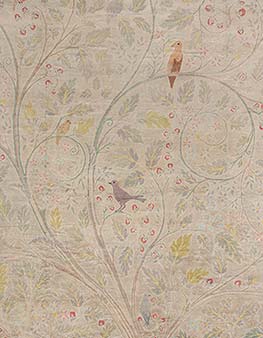
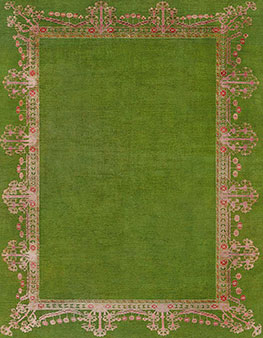
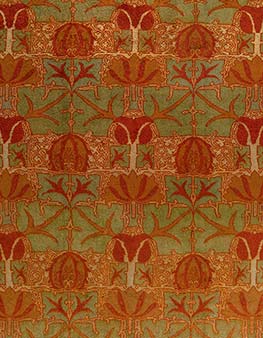
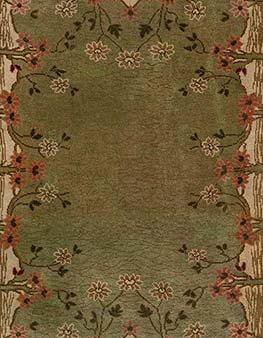
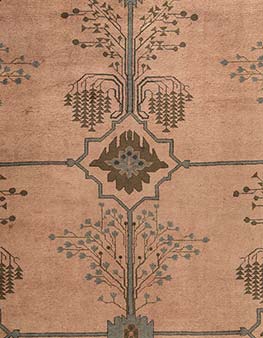
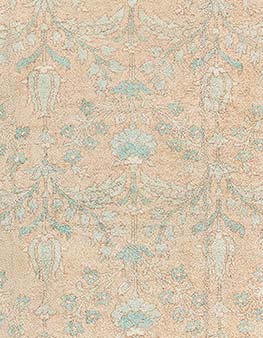
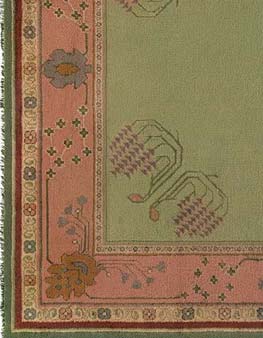
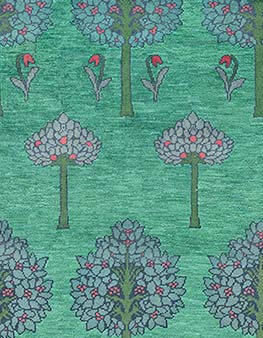
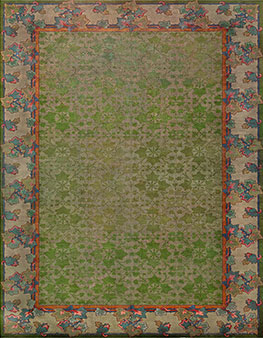
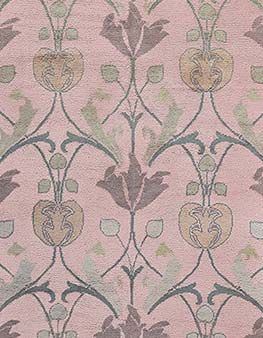
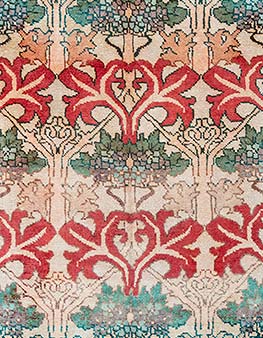
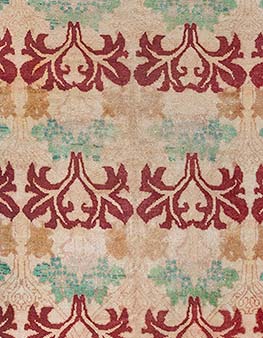
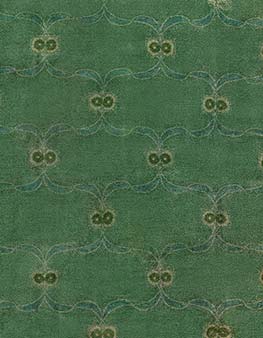
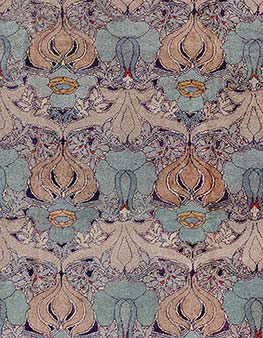
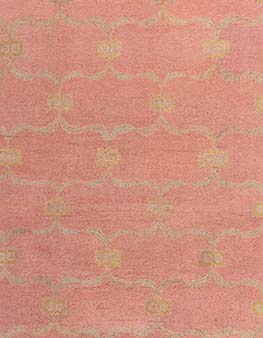
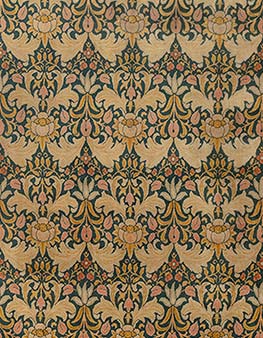
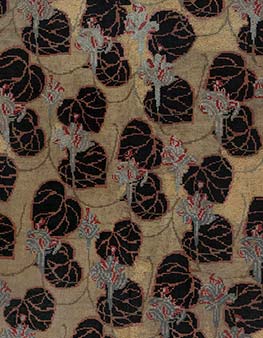
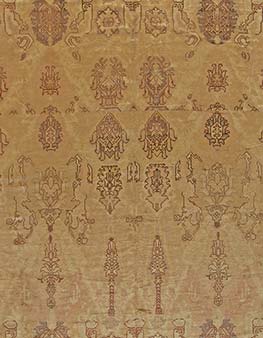
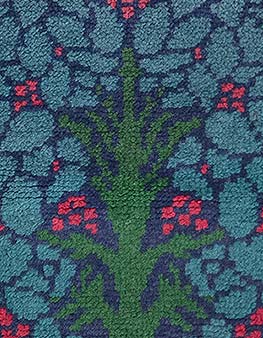
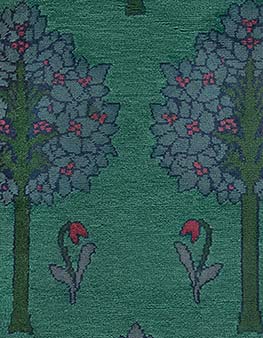
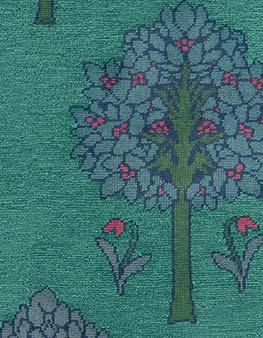
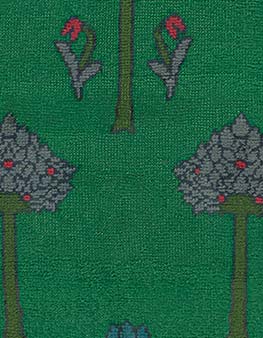
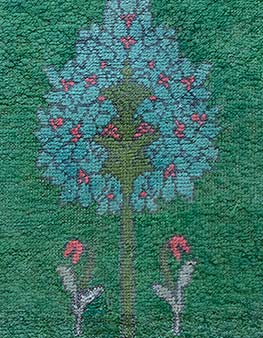
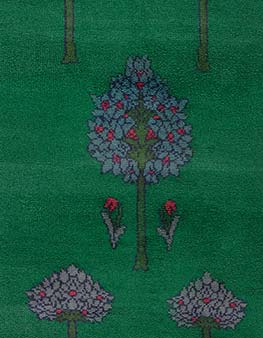
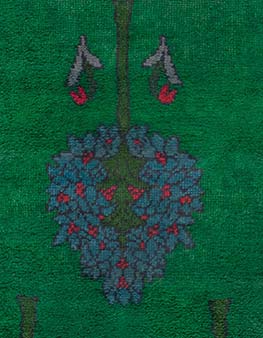
The best Arts and Crafts carpets are recognized by disciplined drawing, honest materials, and patterns that feel architectural rather than ornamental for their own sake. Look for stylized flowers, scrolling vines, tree-of-life motifs, softened geometric borders, and large-scale botanical forms that relate naturally to paneling, plasterwork, Arts and Crafts furniture, English country houses, and contemporary rooms with strong millwork. Many examples are hand-knotted wool rugs, prized for dense texture, muted vegetable-dye-like palettes, and the ability to anchor a room without overwhelming antiques, modern upholstery, or collected art.
Within this category, buyers may find antique rugs typically dating 100+ years, vintage carpets from the early and mid-20th century, and select later pieces that carry the movement’s design language with conviction. Not every rug is antique, so the most useful evaluation starts with the individual listing: date, origin, weave, condition, dimensions, attribution, and any notes on restoration or alteration. A size-adjusted carpet or fragment can still be a serious decorative object when the drawing, color, and scale suit the room.
How to choose an Arts and Crafts carpet
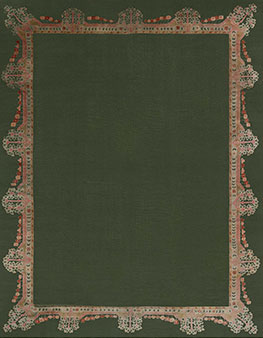
Arts and Crafts rugs are especially effective in libraries, dining rooms, living rooms, galleries, entry halls, and bedrooms where the floor covering must contribute warmth, pattern, and historical depth. Forest green, sage, dusty rose, pale sand, slate gray, taupe, ivory, tan, mauve, and emerald palettes can work with both traditional interiors and restrained modern schemes. For high-traffic rooms, wool construction and condition are central; for formal rooms, rarity, attribution, and pattern integrity may carry greater weight.
- Confirm whether the rug is antique, vintage, or a later handmade interpretation.
- Compare the listed size with furniture plans, door swings, and border placement.
- Study the pattern scale; large botanical designs need enough floor area to read well.
- Review material, weave, condition, and any fragment or size-adjusted notes.
- Use palette as a design bridge between wood, upholstery, wall color, and art.
For collectors, decorators, and custom projects
Collectors often value Arts and Crafts carpets for rarity, named designers, workshop associations, and their role in the transition from Victorian decoration to modern design. Interior designers value them for a different reason: they introduce history without the visual formality of many Persian rugs or French carpets. A Voysey-style floral rug, Donegal wool carpet, or Morris-inspired runner can make a room feel considered, layered, and lived in while still supporting clean-lined furniture and contemporary lighting.
When an original antique or vintage rug is not available in the required dimensions, Doris Leslie Blau can also support custom made and made-to-order rug conversations inspired by Arts and Crafts design principles. That does not make an antique carpet custom, but it gives architects and designers a practical route when a project requires a specific size, palette, or room plan. The strongest choice is the one that balances provenance, craftsmanship, scale, condition, and how the rug will be used every day.