Predominant Color: beige Predominant Color: beige
An Article Written by CJ Dellatore
Quotes from owner Nader Bolour taken from the blog of CJ Dellatore:
“Searching for an antique rug is where the design process begins for most. They are the soul of a room, all the other elements of a well-appointed space are there to celebrate it.”
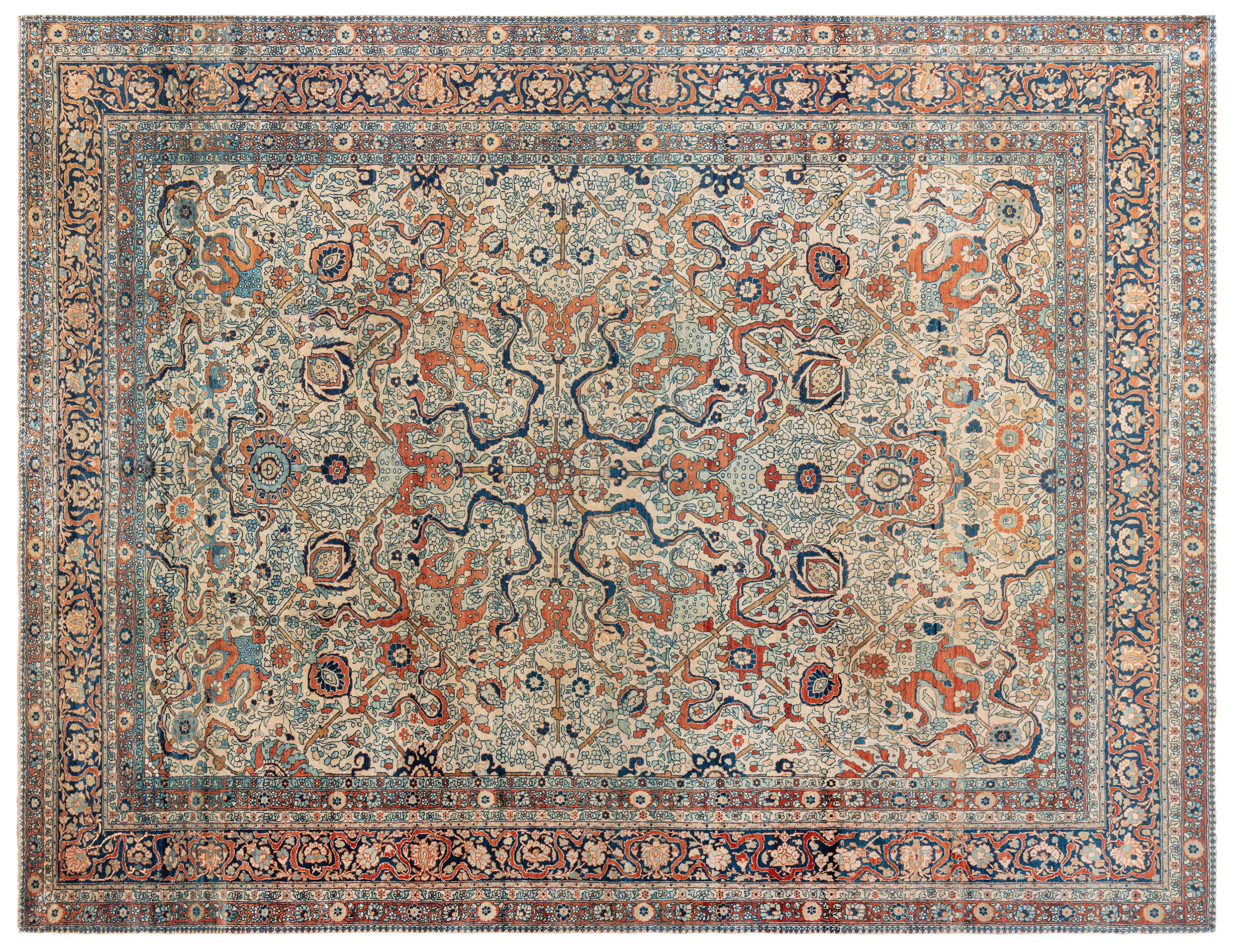
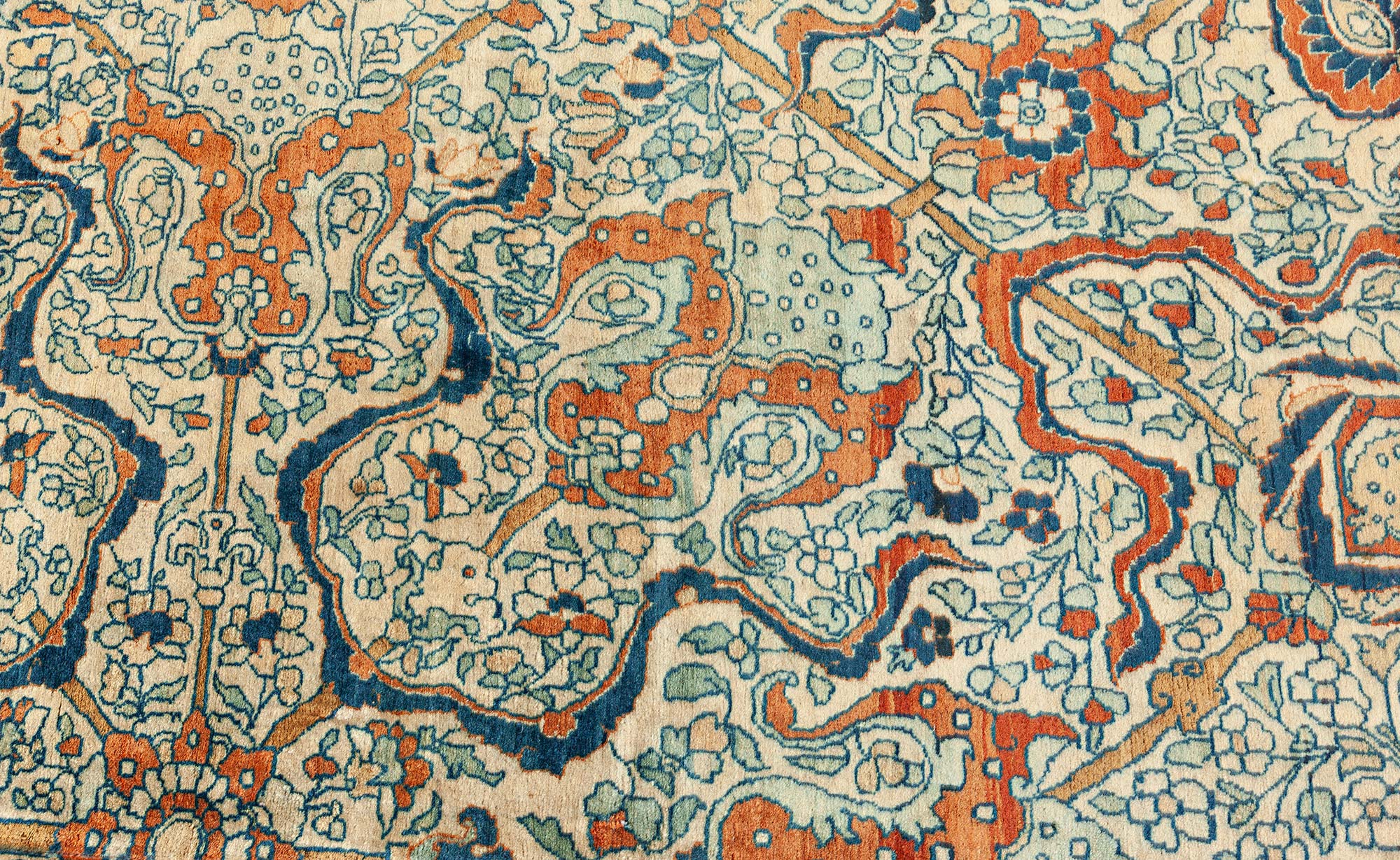
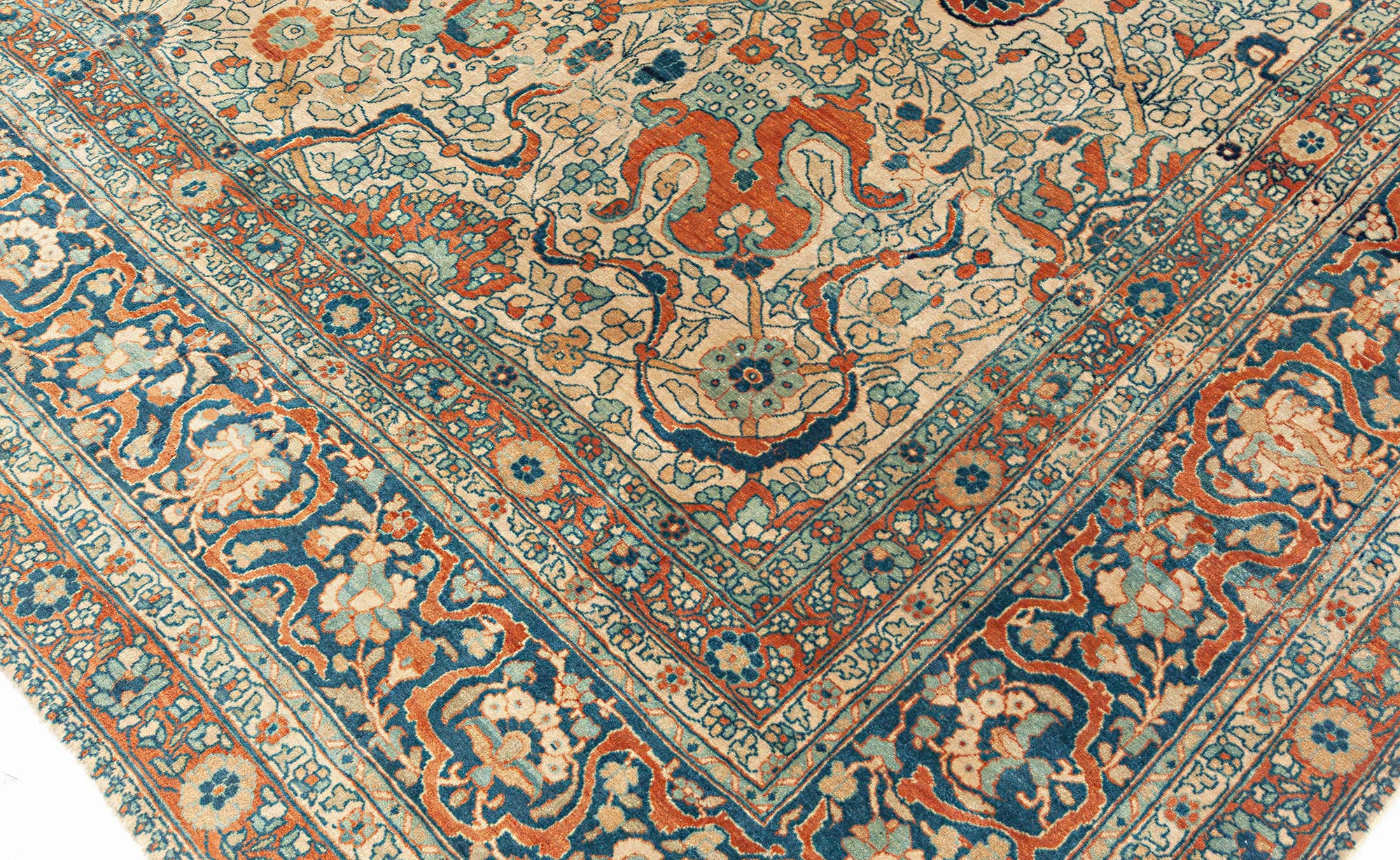
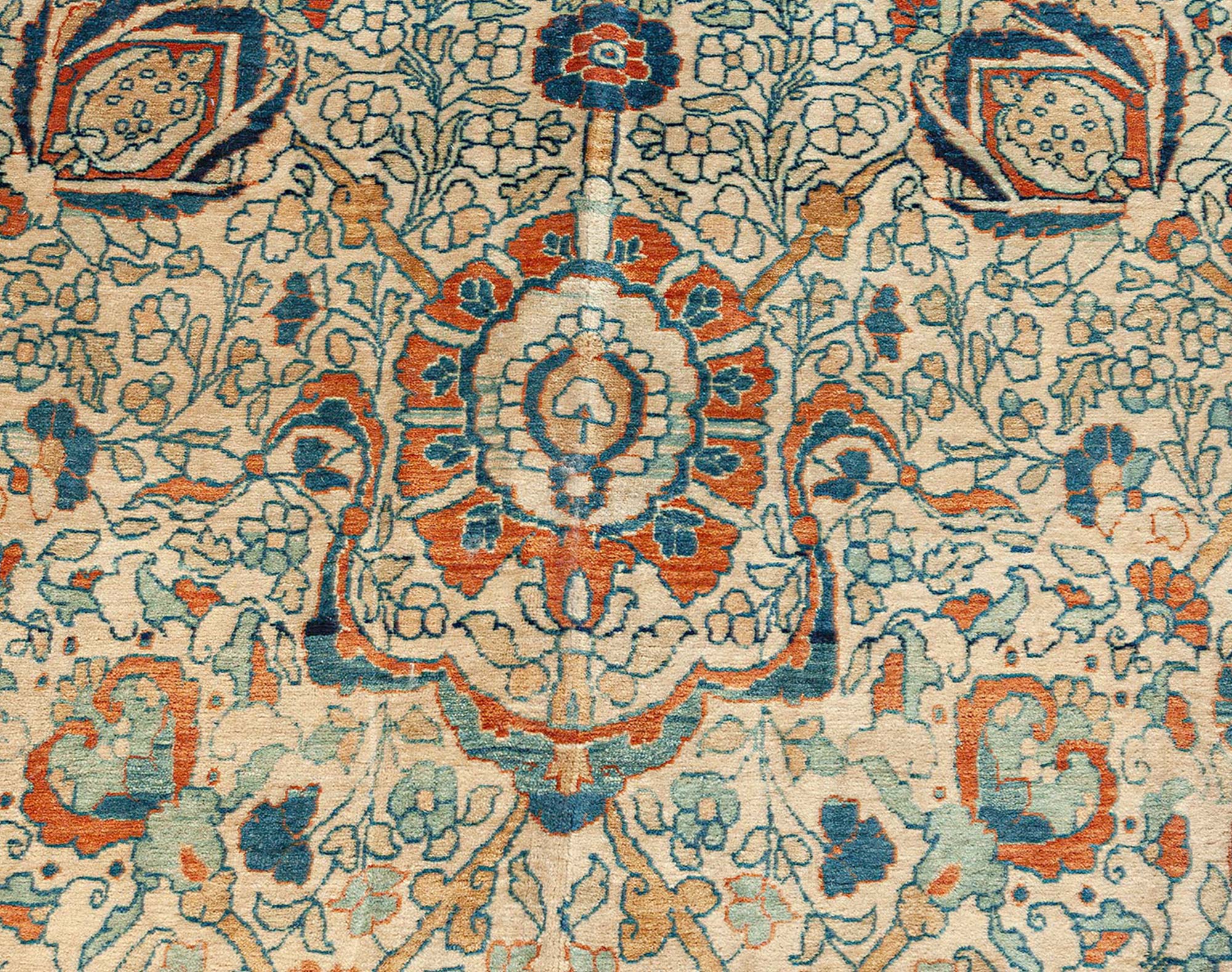
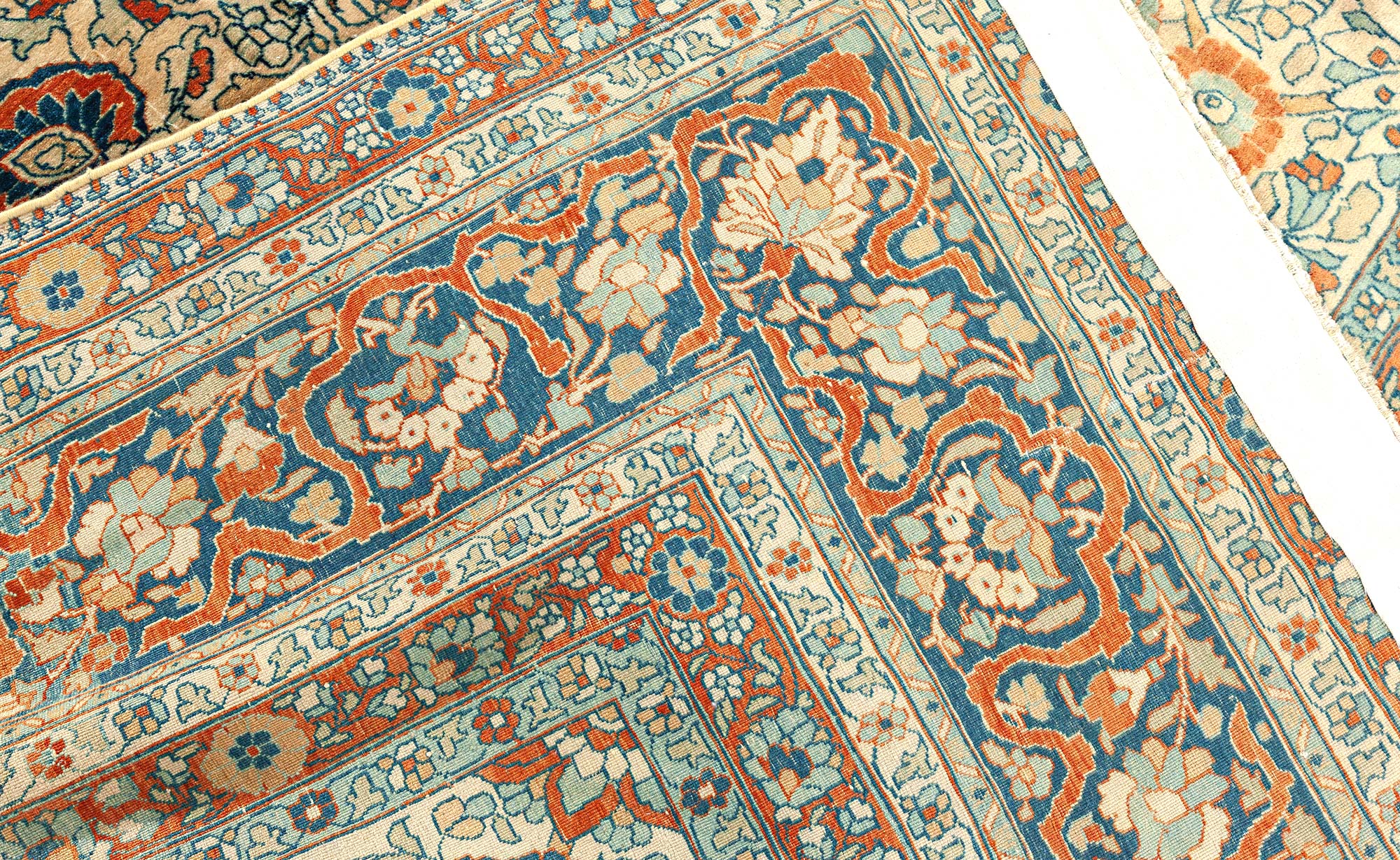
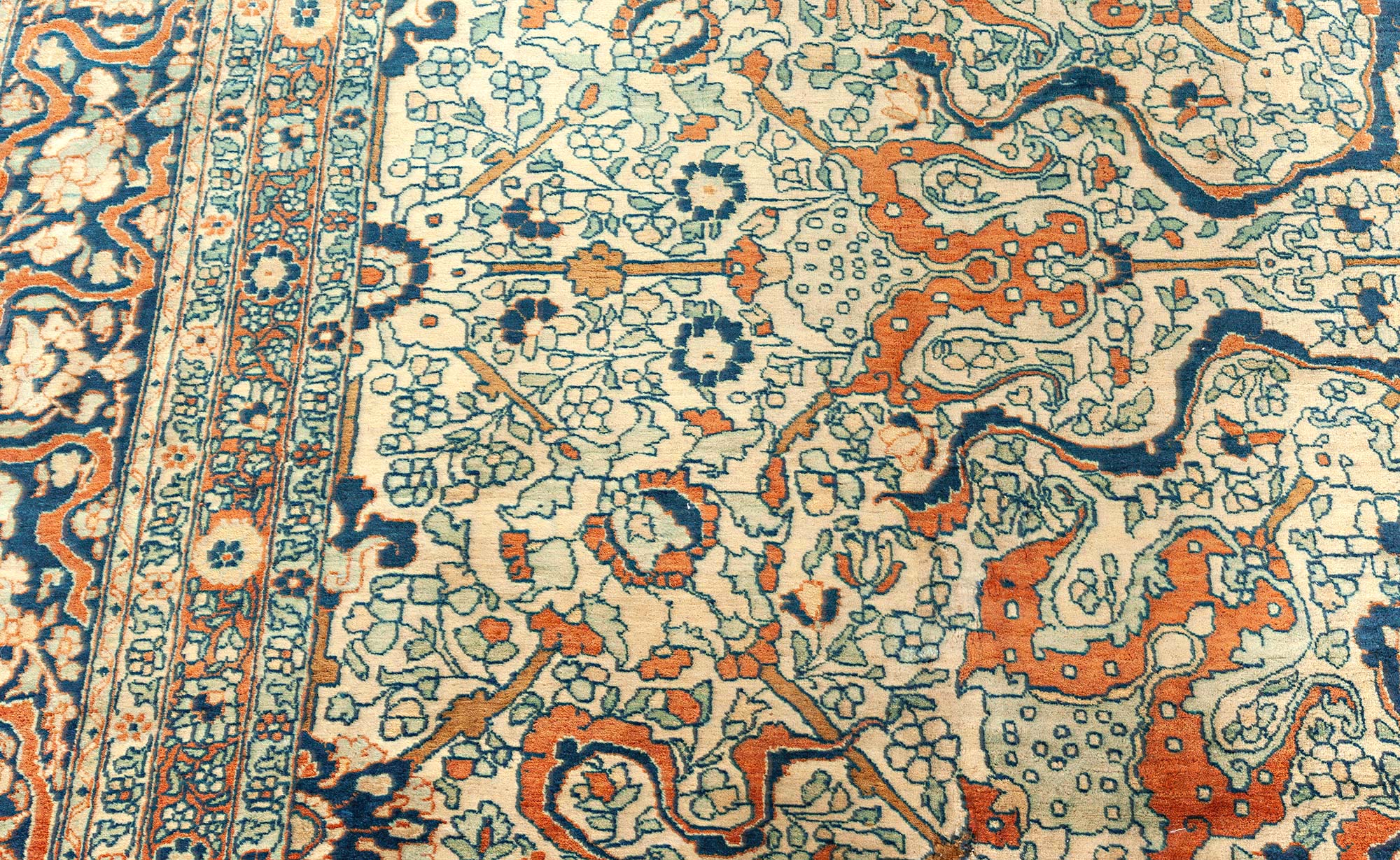
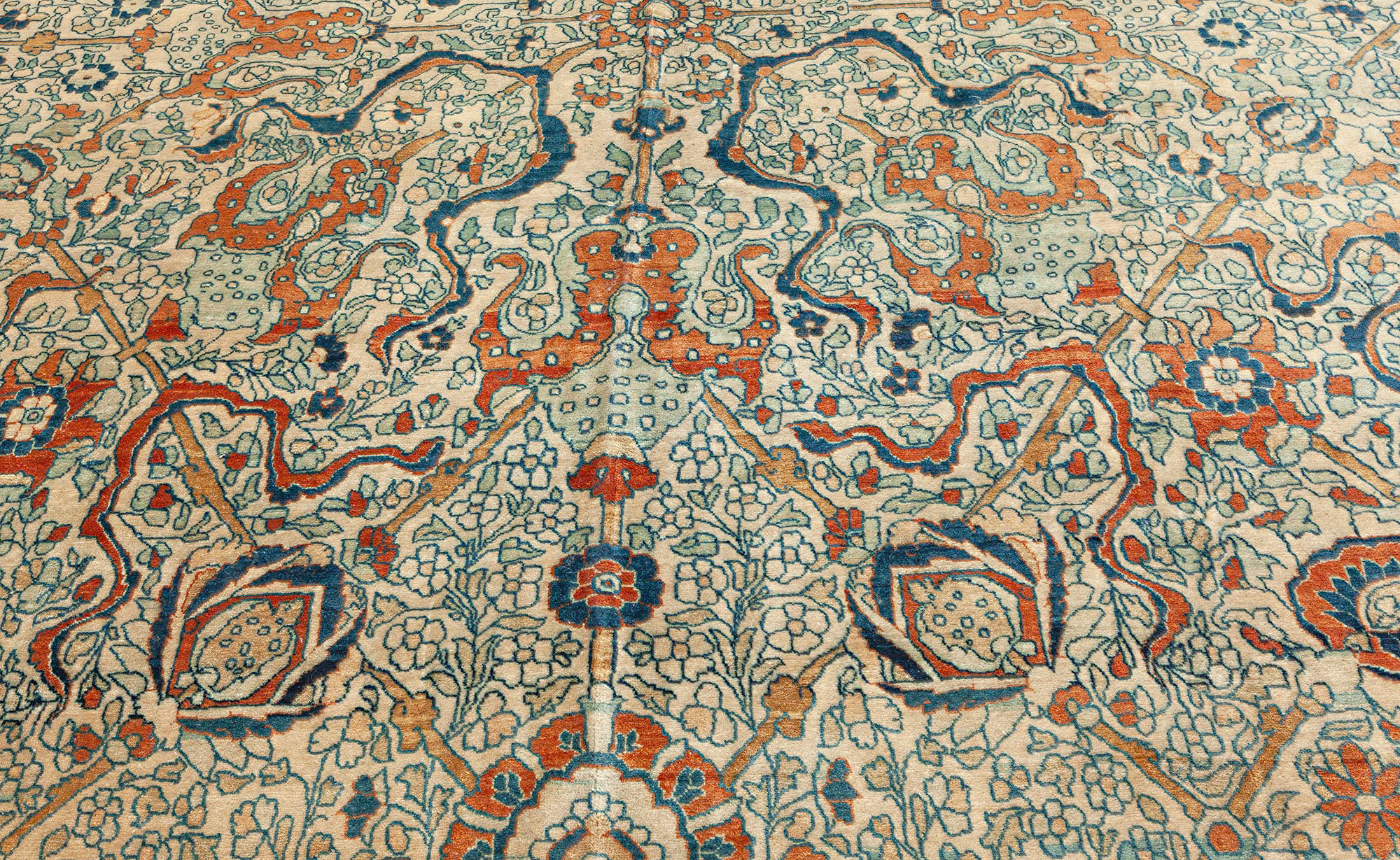
“While many Tabriz rugs have central medallions with symmetrical designs — and typical coloration based in reds and blues, this rug is woven quite differently. It’s a true work of art. The muted rose background, and range of colors, coupled with the asymmetry of the gardens, borders, poems and prayers amalgamated within make it a remarkable specimen. It’s subtle, and exceptionally sophisticated.”
“When I consider making a purchase of an antique rug such as this, I envision a designer who will respond to it. I’ve learned over the years that provenance is far less important than aesthetics — and the visceral reaction a designer has to the color, abrash, motifs, and subtle nuances in the overall design.”
To gain more insight into our Persian Tabriz collection, read the full blog: http://cjdellatore.com/antique-persian-tabriz-nader-bolour-doris-leslie-blau/
Tabriz, the capital of the northwestern province of Azerbaijan, has for centuries enjoyed a great reputation as a center of Persian culture. Under the benign patronage of Shah Abbas the Great (1587-1629), artists and artisans designed illuminated manuscripts, embroidered silks, painted miniatures and fabricated metal work in the Safavid style. In this fertile atmosphere, the weavers of Tabriz rugs for the Court were inspired to reach their artistic zenith and created exceptional oriental rugs and carpets. The early eighteenth century saw the end of the Safavid Empire and the decline of the town of Tabriz with its legendary craftsmanship falling into decay. Under the Qajar Dynasty (1786-1925) the workshops of Tabriz were gradually revived; by the 1880s another golden age was underway and Tabriz again began to re-establish its position as the center for the exporting of Persian rugs to the West. Designs of antique Persian Tabriz rugs feature medallions, hunting scenes, flowers, and gardens; along with prayer and pictorial rugs interpreted in a curvilinear manner. A refined palette reliant on copper tones, terracotta and ivory, with shades of blue and subtle touches of gold, green and salmon are prevalent in antique Persian Tabriz rugs. Some extremely luxurious antique Tabriz rugs and carpets were woven in silk. Haji Jalili, master weaver of the Qajar era is renowned for producing some of the most superlative of oriental Tabriz rugs. Within the span of nineteenth century decorative arts, it is still generally acknowledged that the finest antique Tabriz carpets and rugs are unsurpassed for both quality and beauty.
A Persian Tabriz rug BB0335
Watch full size video of A Persian Tabriz rug, Circa 1880, ID BB0335 - Video
Size: 13'5" × 10'3"
Item No: BB0335