No.:
BB6775


$75,000
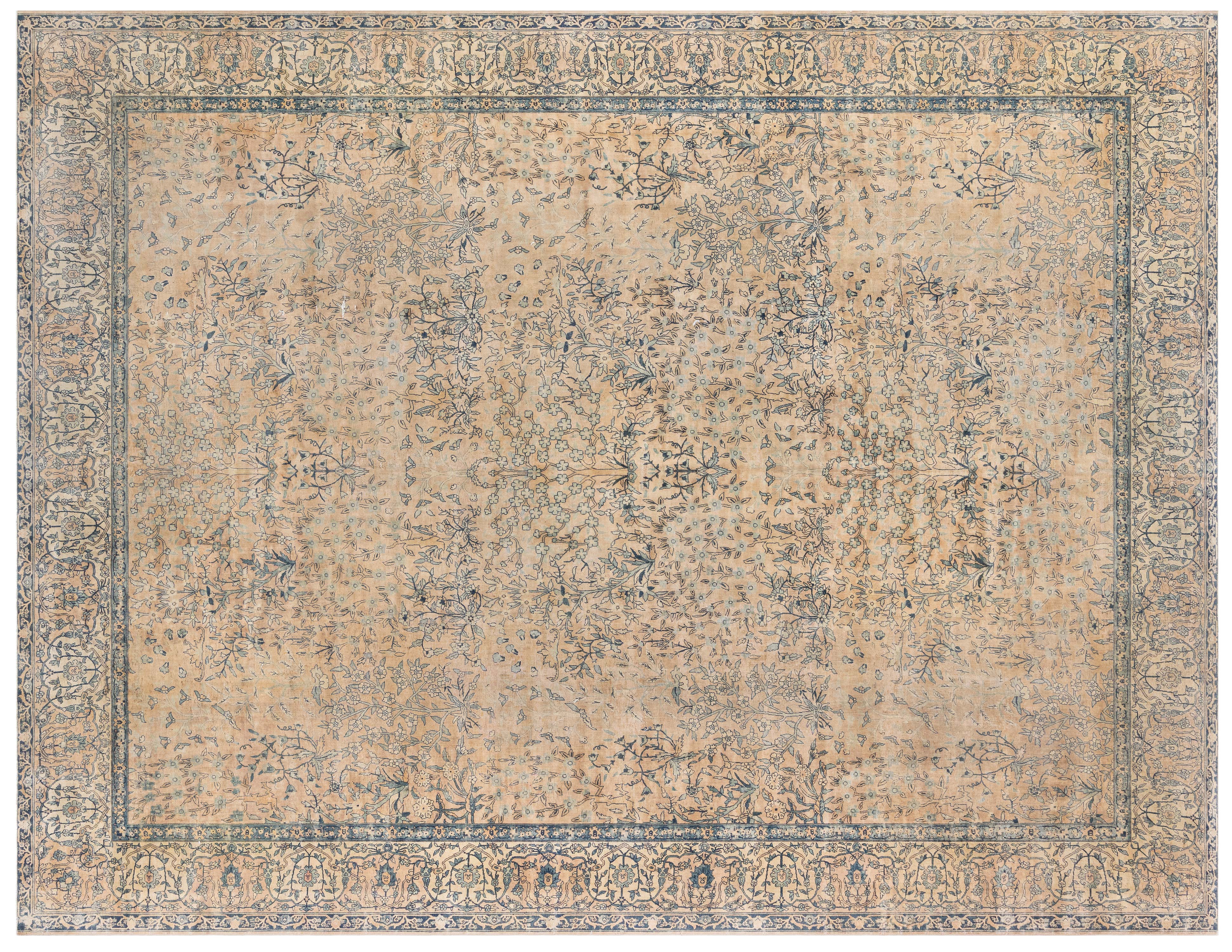
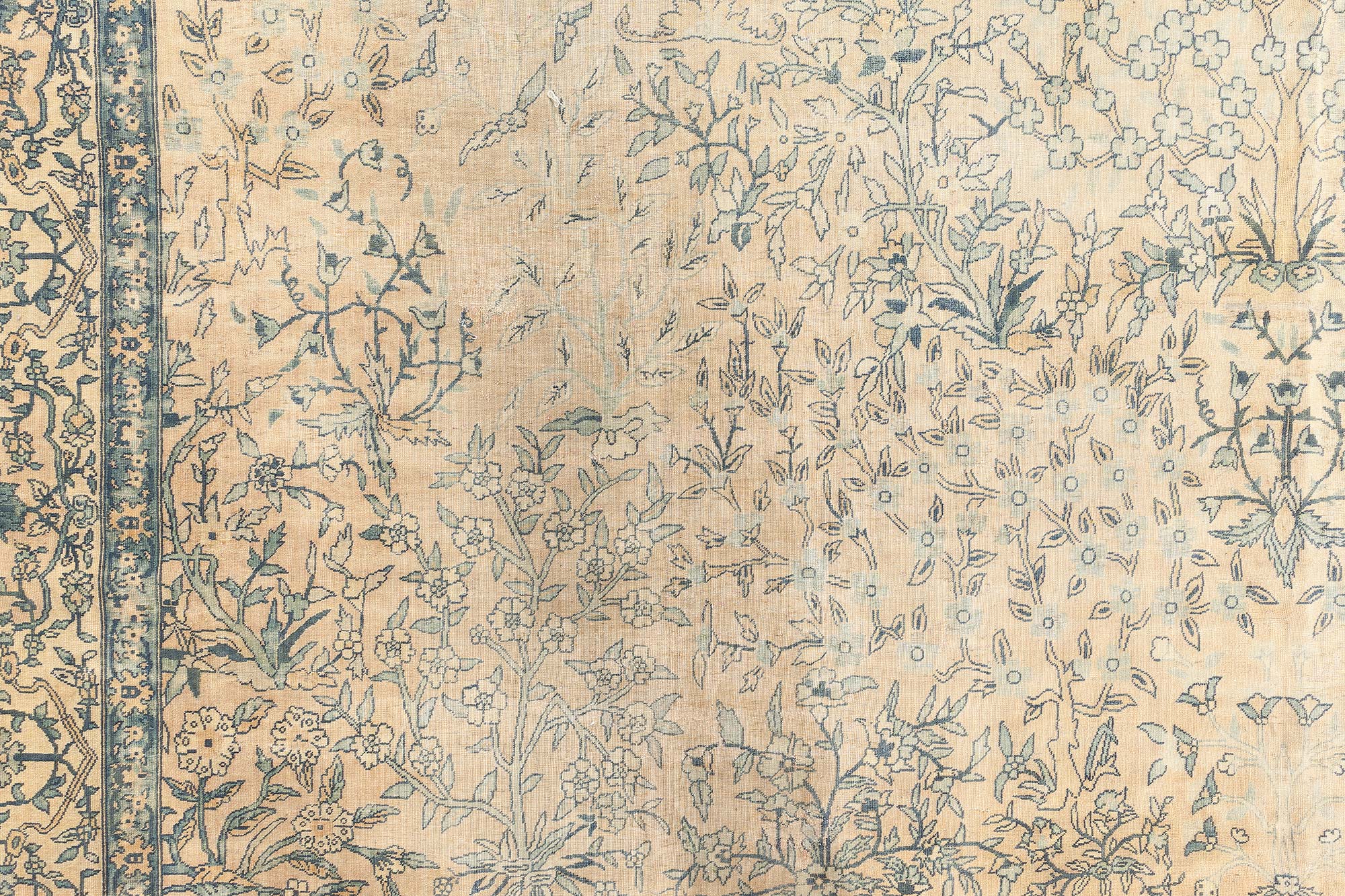
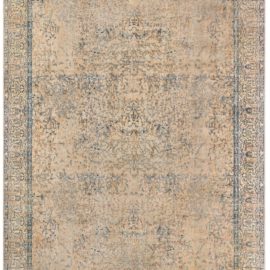
This exquisite 1920s Indian carpet is a rare botanical masterpiece that embodies the refinement and artistry of the late British colonial era in India, specifically drawing influence from the Mughal aesthetic and its tradition of stylized floral designs.
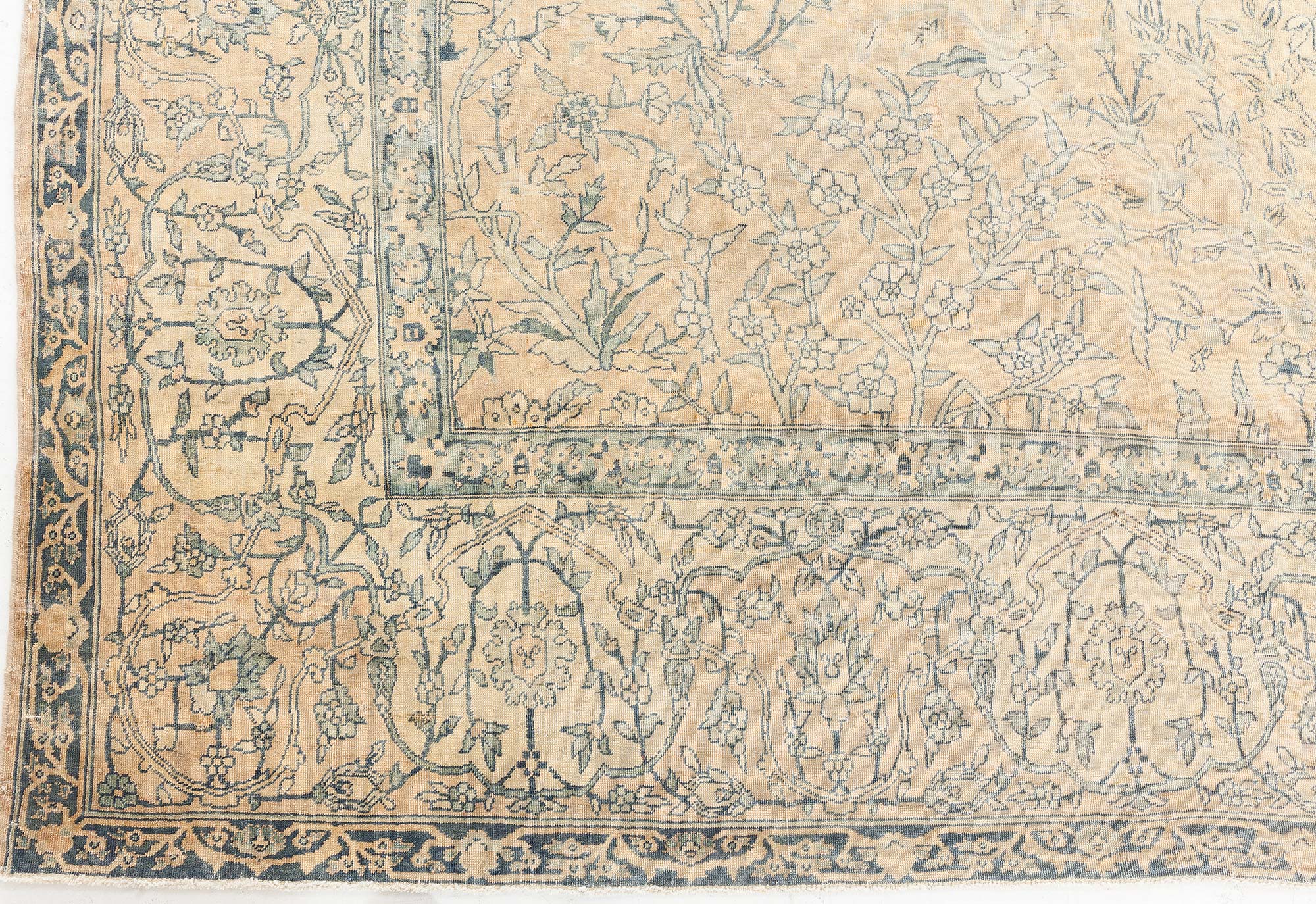
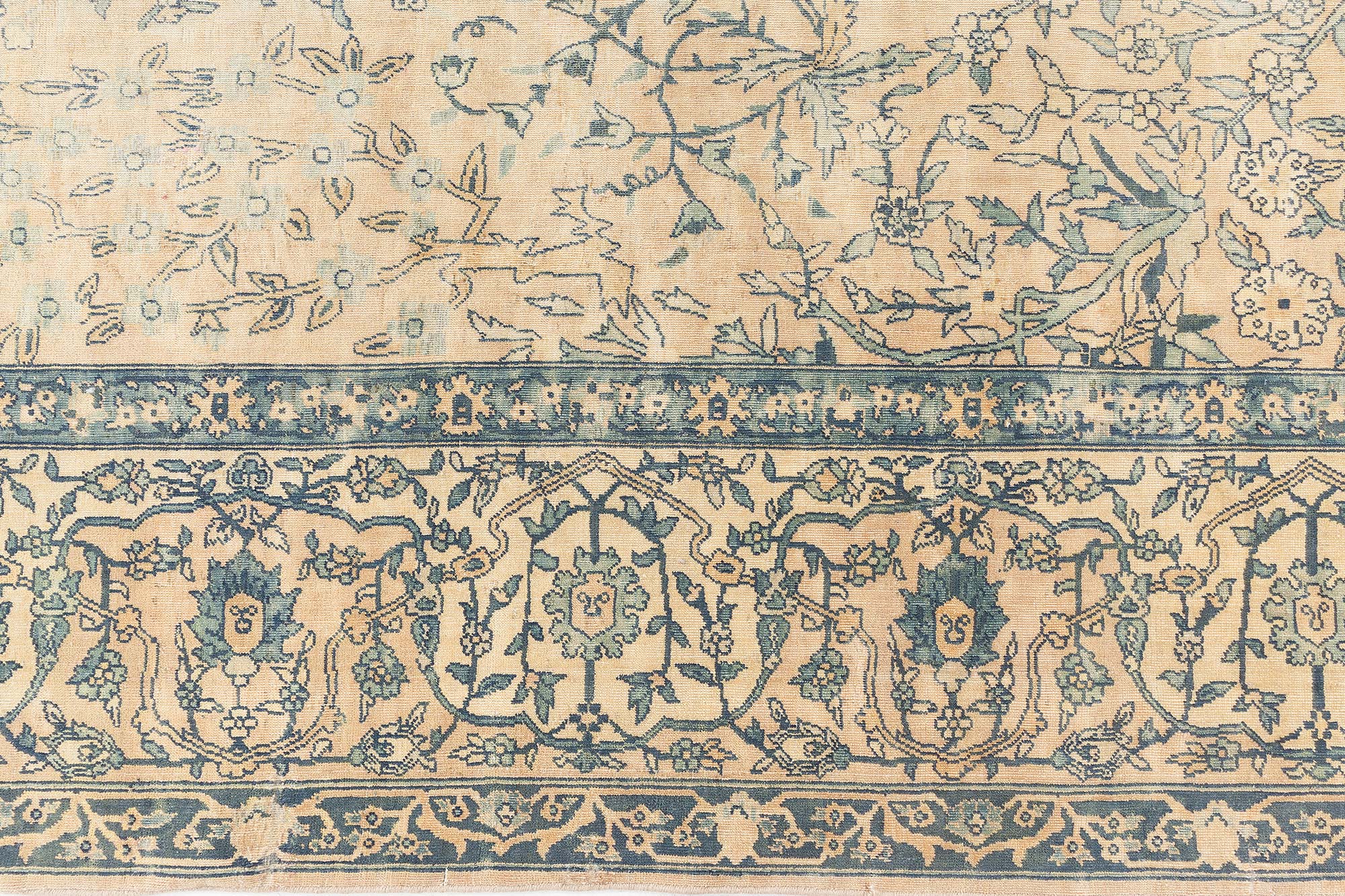
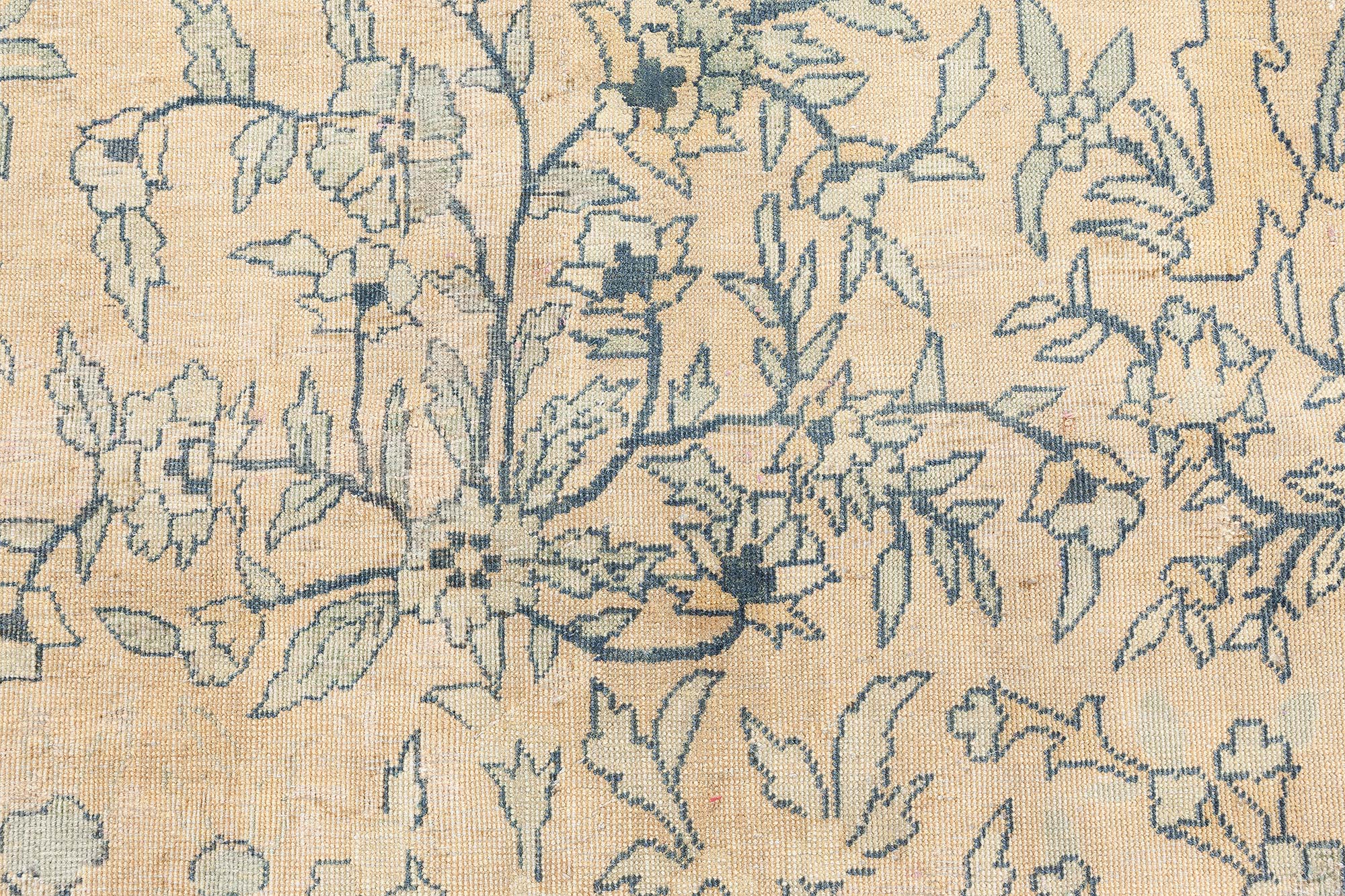
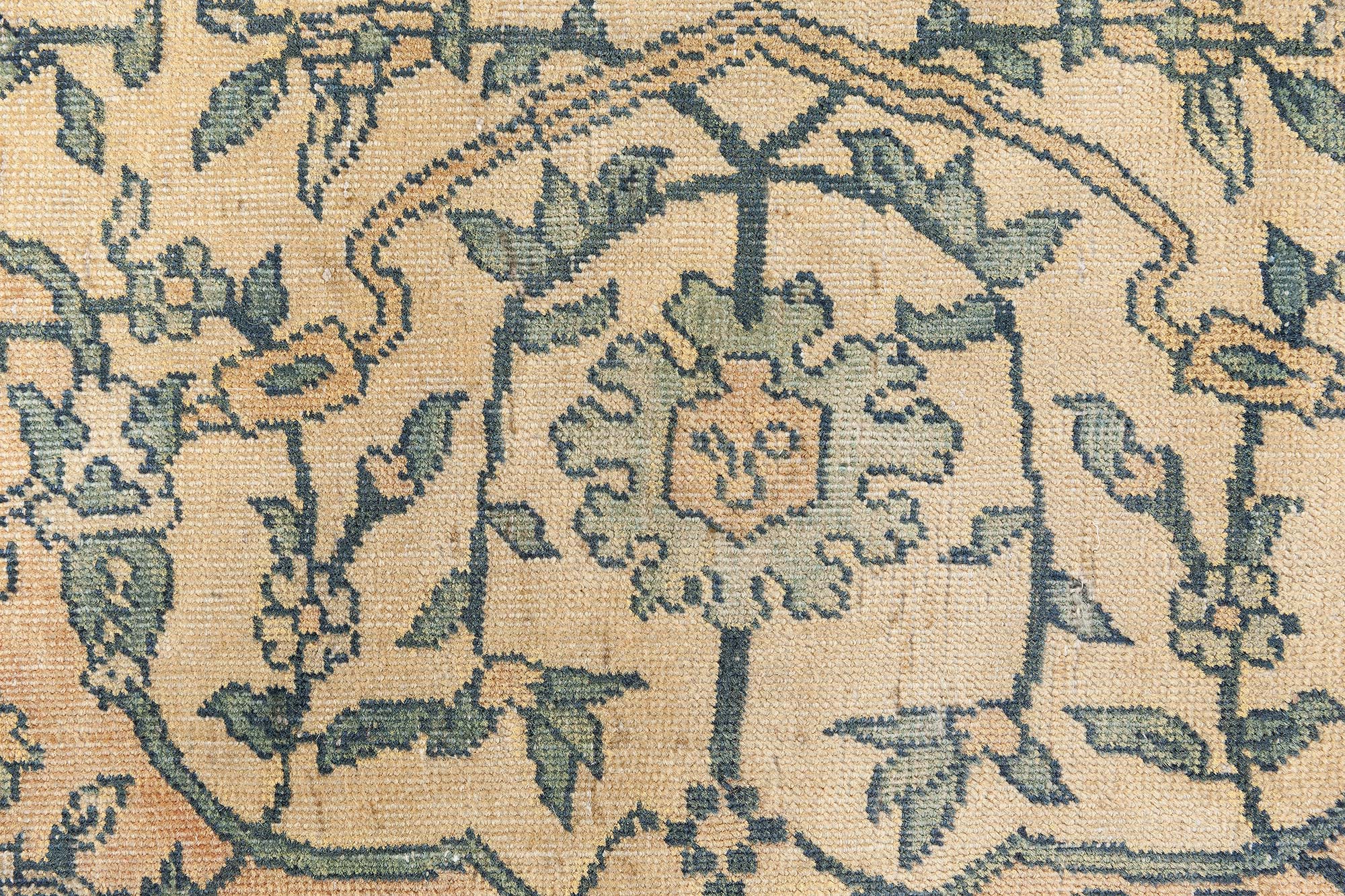
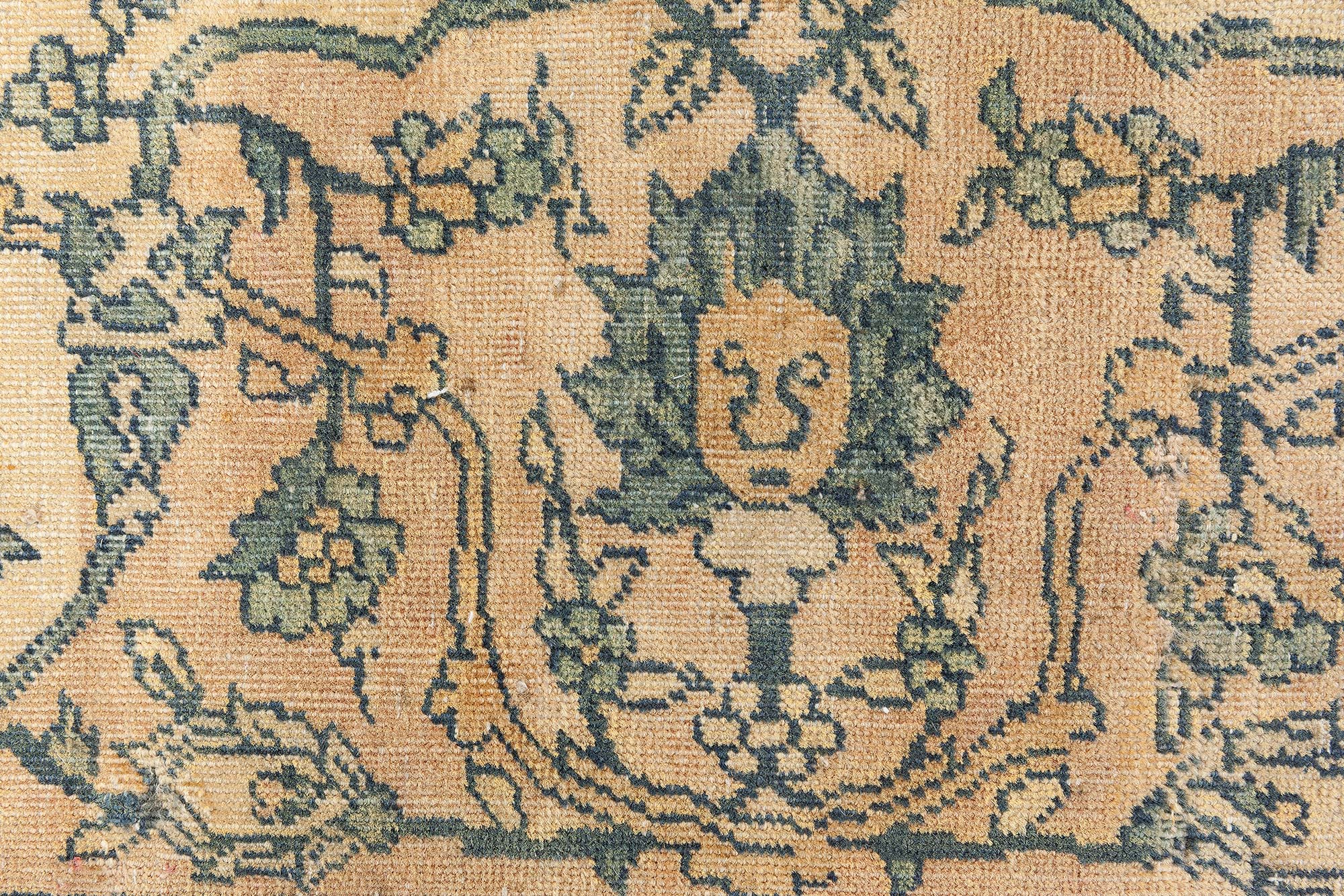
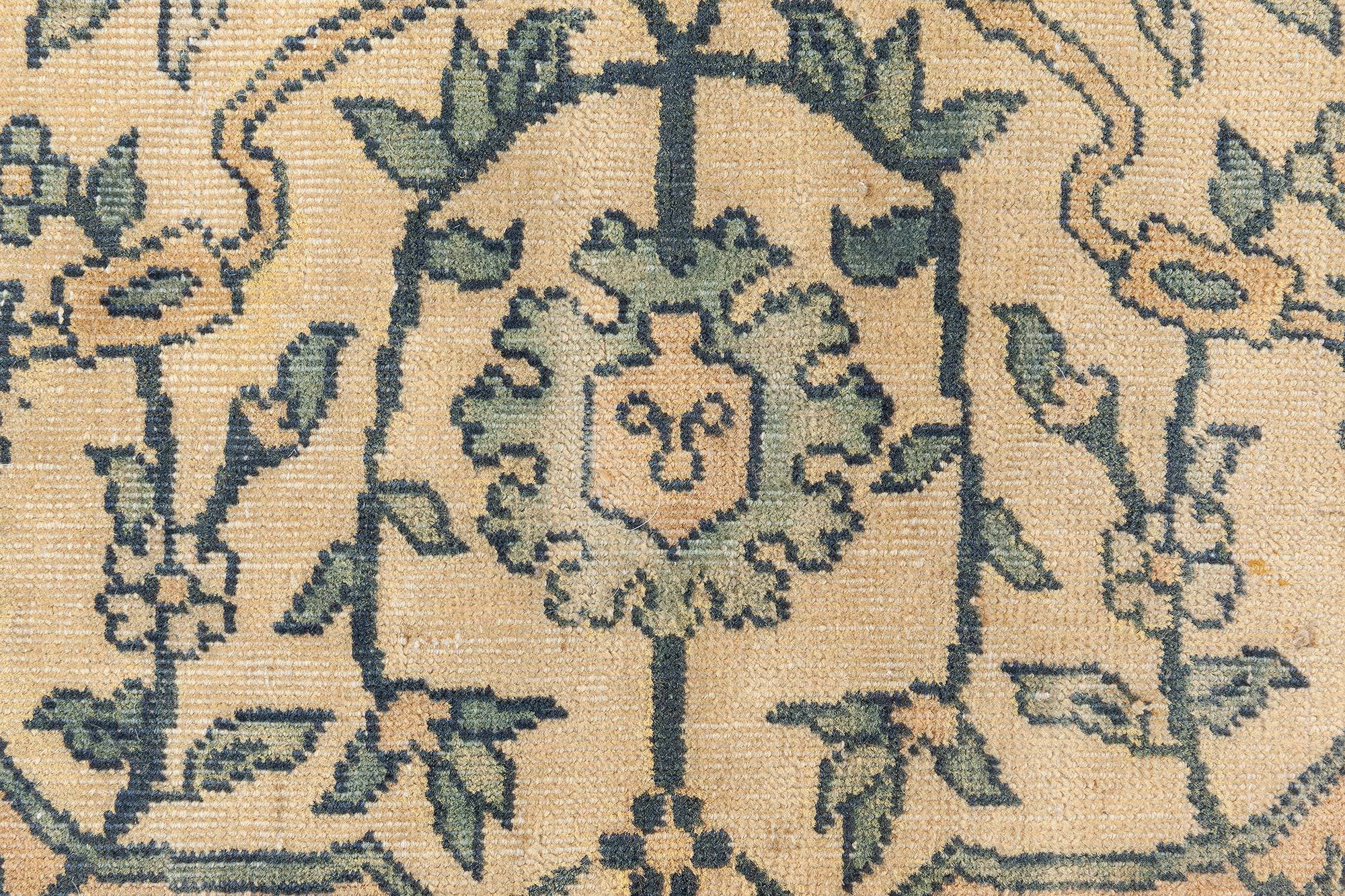
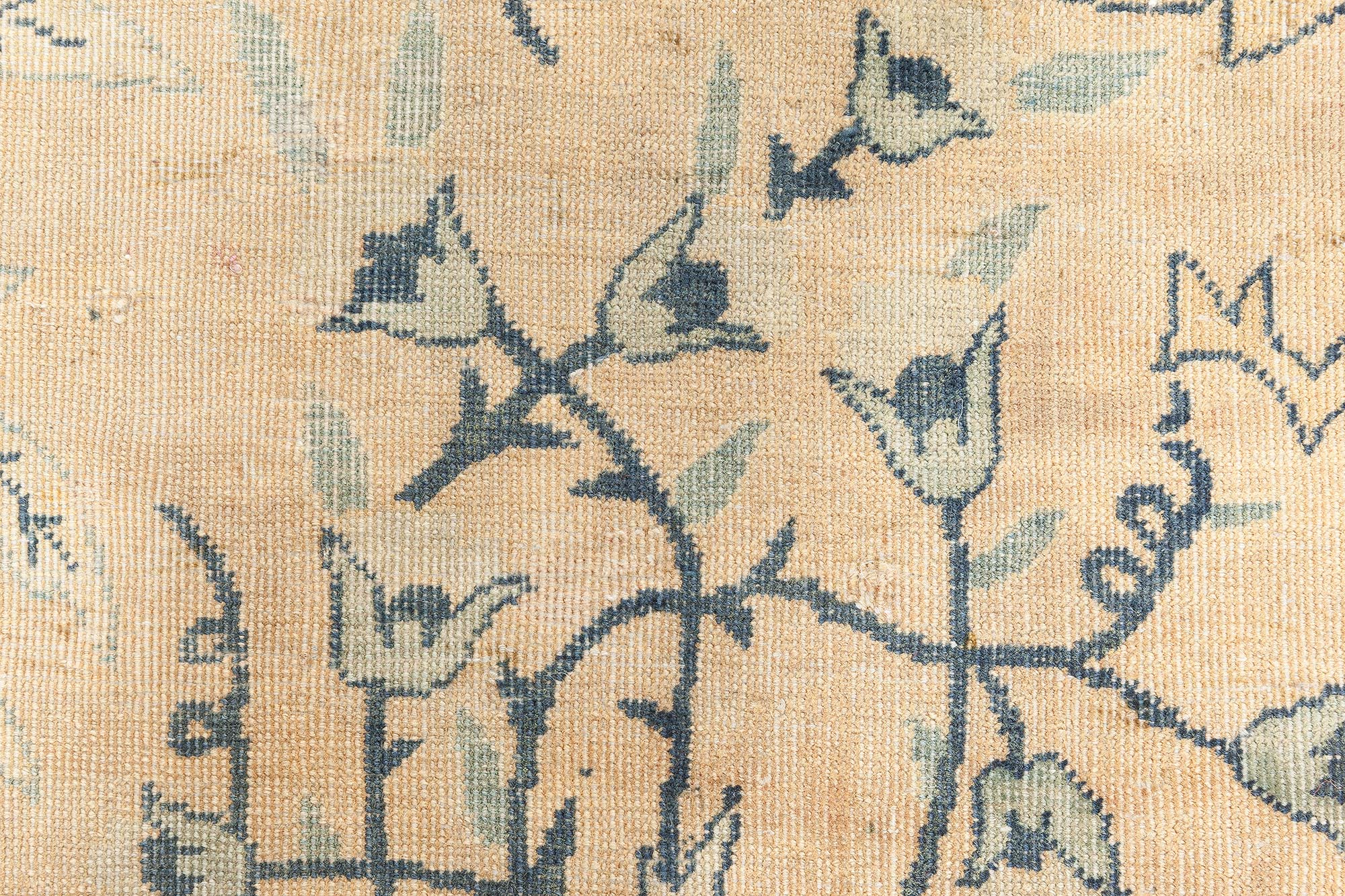
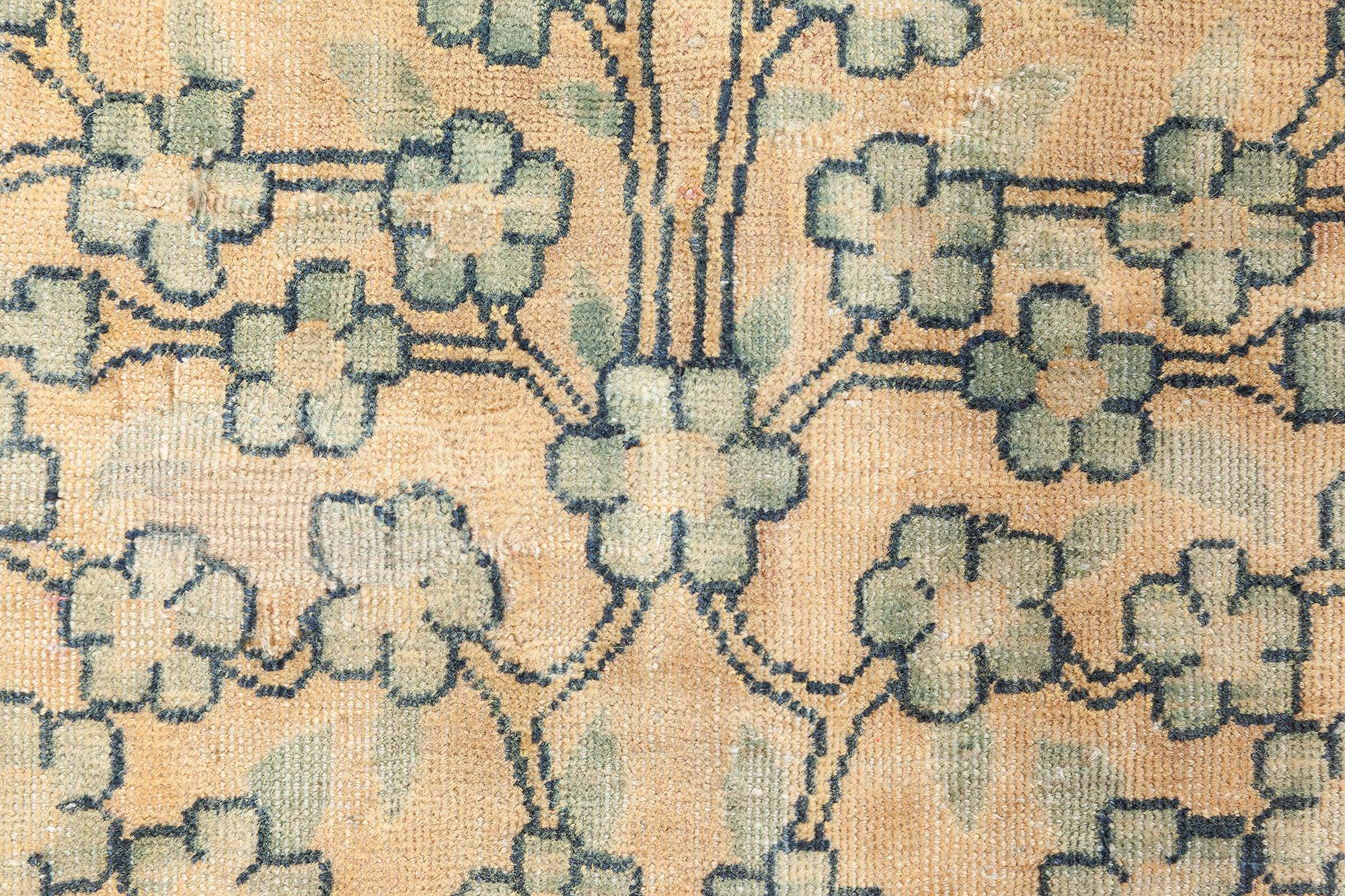
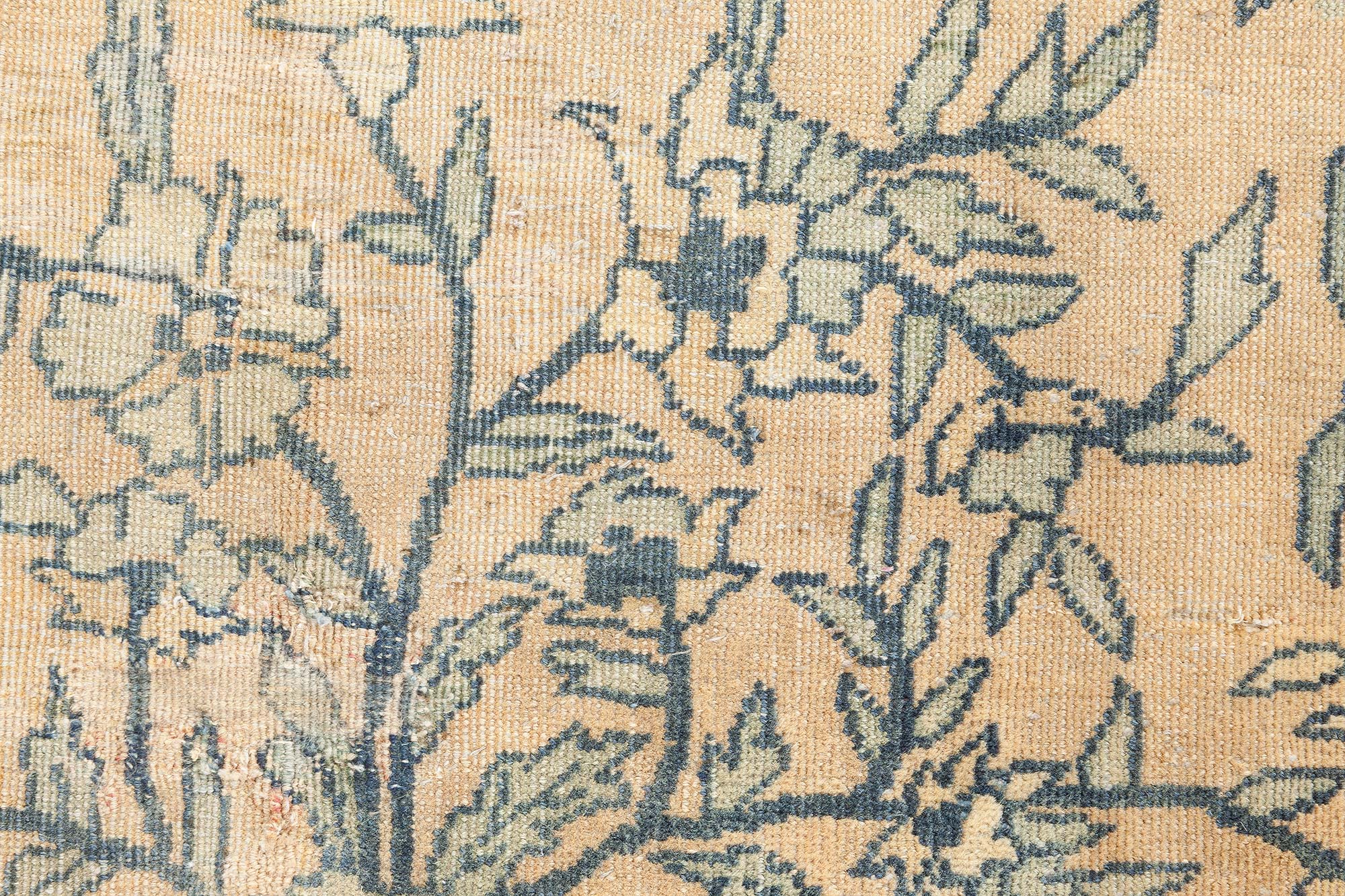
The carpet’s layout features a field teeming with delicately scrolling vines, interwoven with naturalistic blossoms, palmettes, rosettes, and foliate stems. The symmetrical composition gives the impression of an endless garden in bloom, structured around a subtle central medallion and vertical axis mirrored in the gentle repetition of stylized motifs. The border is particularly striking, showcasing interlacing vines, cartouches, and floral medallions—some of which incorporate zoomorphic or anthropomorphic imagery, hinting at Mughal pictorial storytelling traditions.
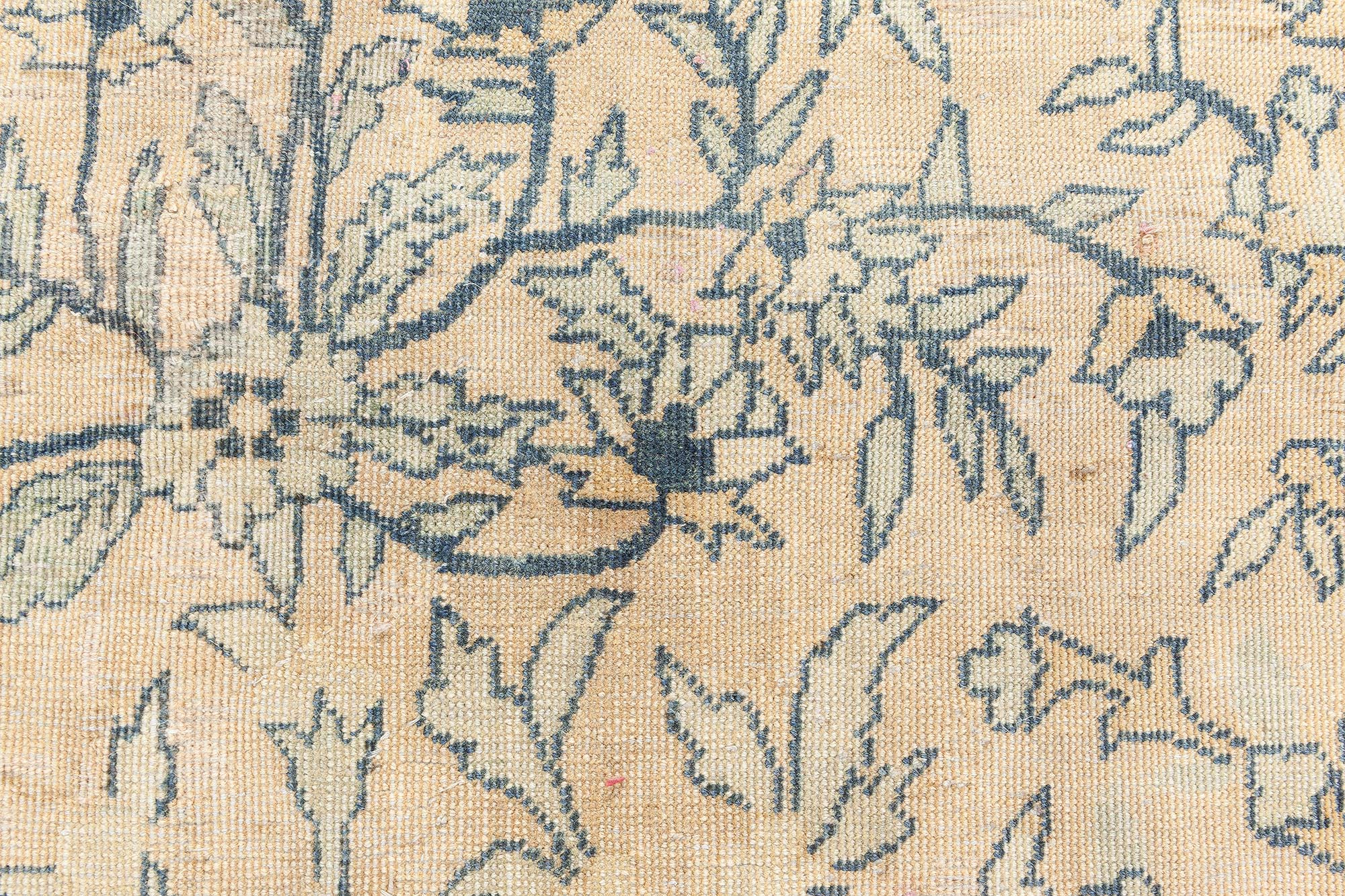
The palette of this rug is especially refined, relying on soft beige and sand tones as a ground that allows the blue-gray, sage green, and indigo botanical elements to emerge with an aged elegance. This soft coloration is the result of natural dyes and decades of gentle aging, imparting a dreamlike patina that enhances the carpet’s antique charm.
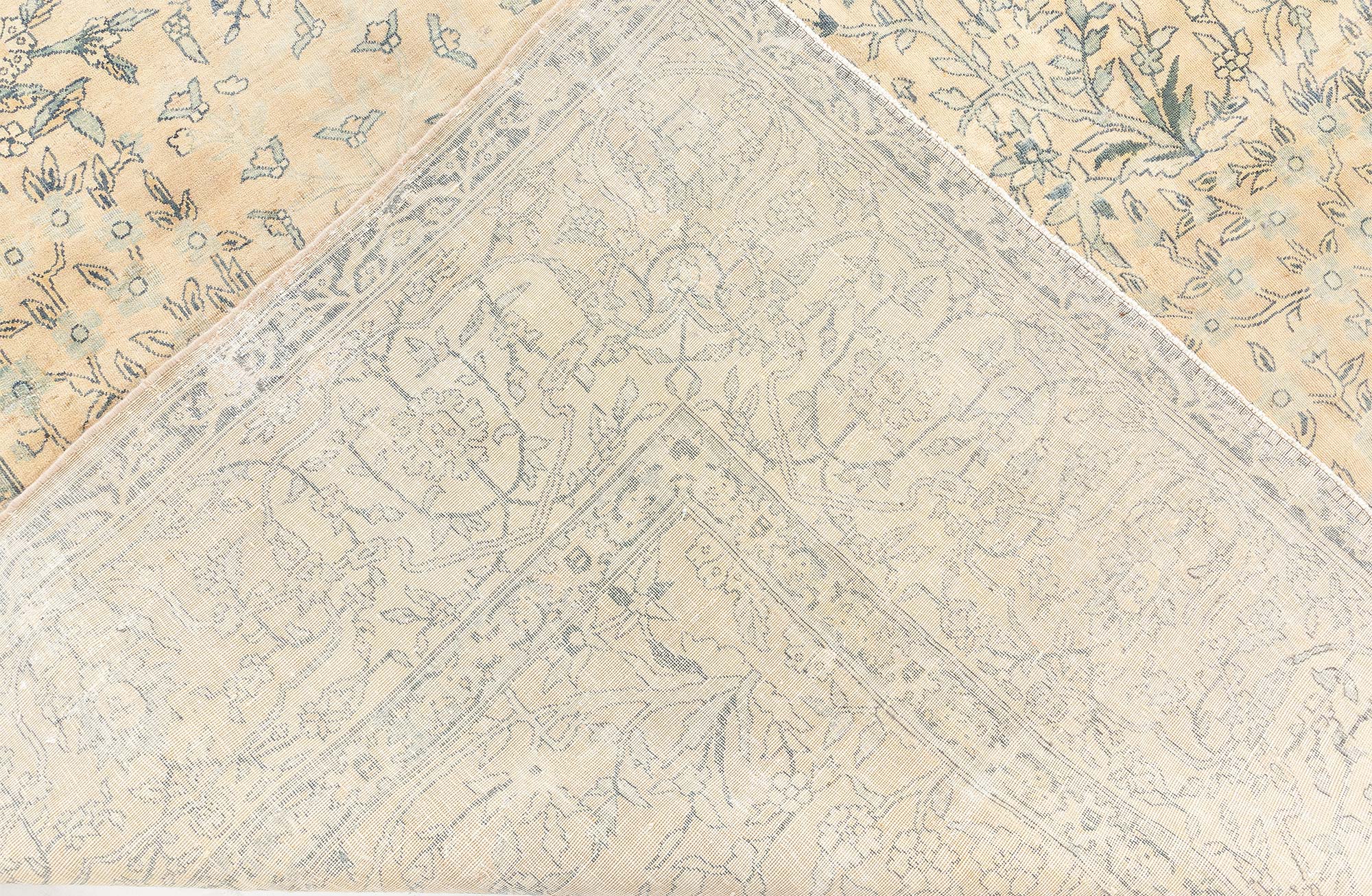
Woven by hand in India during the early 20th century, likely for export or as a commission for a colonial residence, this carpet demonstrates high-knot density and meticulous attention to botanical detailing. The surface wear, seen in the abrash and color fading, is authentic and consistent with its age, contributing to its rich character.
Its sophisticated yet subdued aesthetic makes this rug an ideal statement piece for both traditional and modern interiors. It can anchor a grand salon or drawing room with historical gravitas or bring texture and serenity to a minimalist contemporary space.
As part of the curated collection at Doris Leslie Blau, a brand celebrated for its dedication to quality and design heritage, this rug exemplifies their commitment to originality and artisanry. Doris Leslie Blau offers a vast selection of antique, vintage, and contemporary rugs in a wide range of styles, materials, and price points, making fine textile art accessible to both collectors and designers alike.
In stock
In stock
Login